





 Portuguese
  English
  Spanish
  7 min of reading
  0 comments


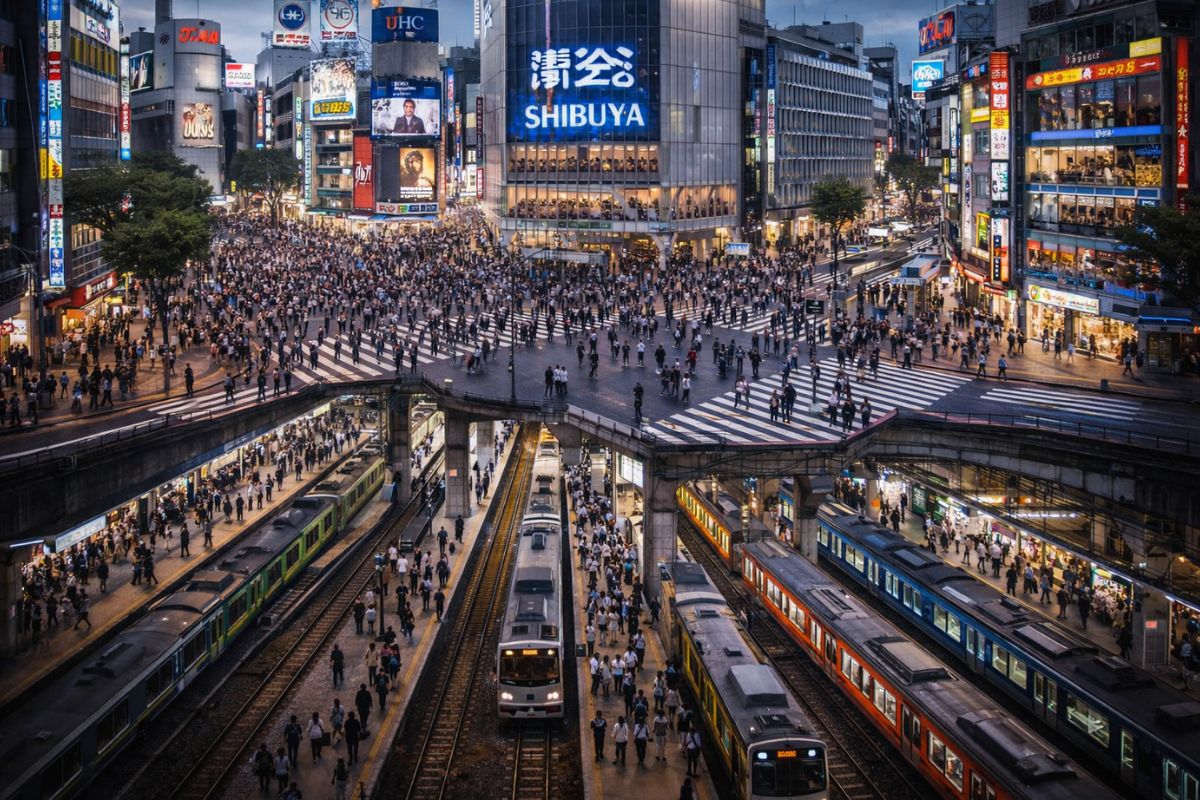
In Japan, The Logic Connecting Tokyo to Tachikawa Combines Frequent Public Transportation, Permissive Zoning, Mixed Land Use, and Profitable Rail Companies to Create Dense, Walkable, and Accessible Suburbs, Very Different from the North American Model, Where Station, Housing, and Commerce Tend to Be Separated by Rules That Stifle Urban Growth.
What stands out in Japan is not just the presence of efficient trains, but the fact that they shape the city around them. In Tachikawa, located 37 kilometers from Tokyo Station, the suburb does not function as a bedroom community dependent on cars. It operates as an active center, with people circulating, shops, restaurants, housing, and railway connections that push urban life outward from the historical core of the metropolis.
This difference does not happen by chance. The Japanese model brings together tracks, land use, and economic interest at the same point, creating a cycle in which the station generates value, the value attracts construction, and the construction returns passengers to the system. Instead of suffocating growth near the station, Japan makes room for the surroundings to become denser, more useful, and more profitable.
Tachikawa Shows That Suburb Doesn’t Have to Be Synonymous with Emptiness
In Tachikawa, the impact is evident right away in the scale of the place. Despite the distance from central Tokyo, the city maintains a level of activity that, in many parts of North America, would only be expected in central areas. There’s a constant flow of people, active commerce, and a station surrounded by diverse uses. The Japanese suburb is not designed to empty the street, but to concentrate access, consumption, housing, and mobility along the same axis.
-
A forgotten cord on the floor of a basement in Vienna leads a plumber to a box containing 30 kilograms of gold with Mozart’s face, hidden before World War II. The treasure, worth 2.3 million euros, was just centimeters away from a worker who ignored the sign a day earlier.
-
A couple buys an old chalet, breaks the kitchen floor for renovation, and finds over a thousand coins of gold and silver hidden since the English Civil War over 4 centuries ago.
-
Rigid bags with their days numbered: new trend prioritizes comfort in 2026.

-
YouTuber creates an excavator equipped with a giant 4.5-meter sword to challenge his brother to a rematch, and the invention quickly goes viral on social media.

The location of the station helps to understand this. The closer to it, the taller and denser the surroundings become. This happens because the station offers something valuable: quick access to a massive metropolitan area. With so many people able to come and go easily, the land around becomes naturally more sought after. In Tachikawa, this value has not been wasted on large parking lots or urban barriers. It has been converted into a city.
The case also dismantles a common idea that density means simply squeezing people into small blocks. In Tachikawa, there are apartments, hotels, commerce, and also areas with single-family homes and smaller buildings slightly farther from the station. The difference lies in the options, not in imposing a single housing model.
This helps to explain why the environment feels livelier. When the city allows for a mix of uses and concentrates activities near the mobility hub, the suburb begins to have its own routine. It no longer depends on the main center for everything. In Japan, this means that many peripheral neighborhoods have more walking, more local commerce, and more urban autonomy.
Public Transportation in Tachikawa Is Not an Afterthought, It’s the Structure of the Neighborhood
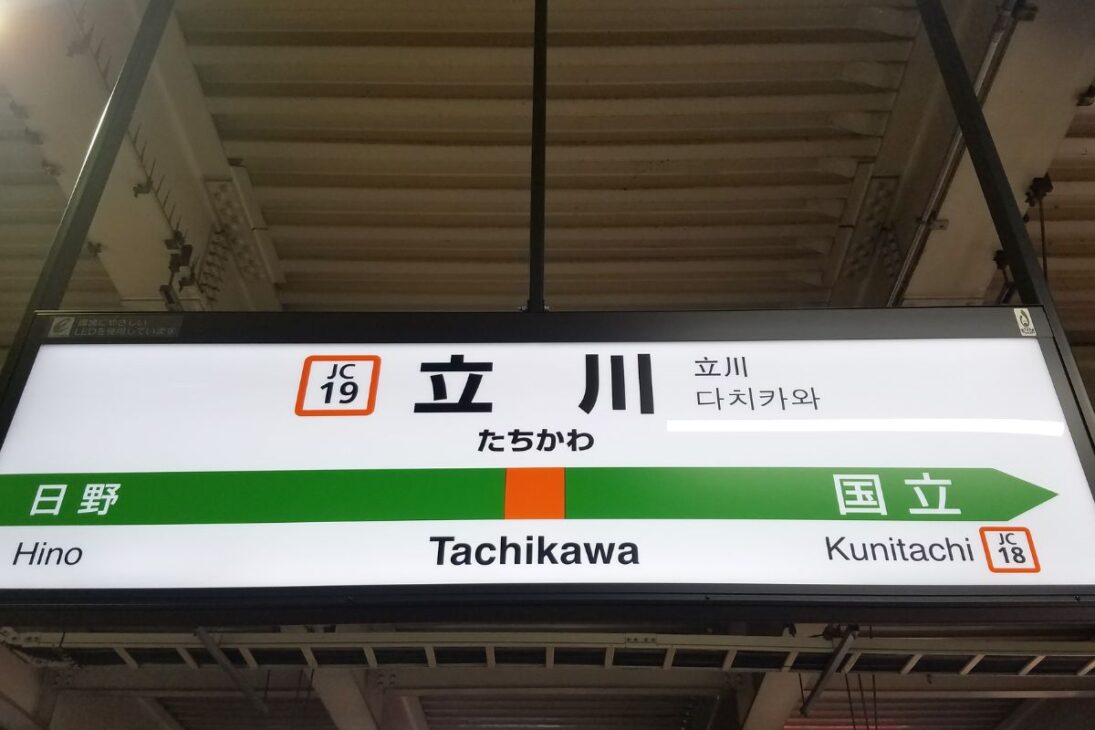
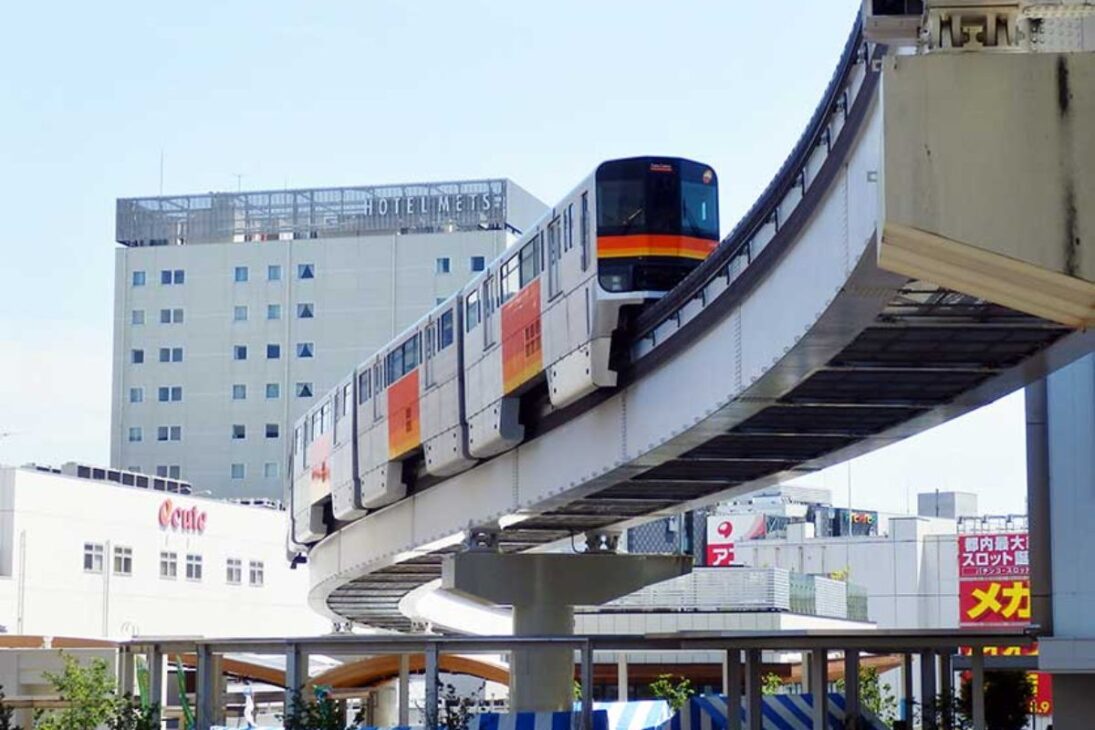
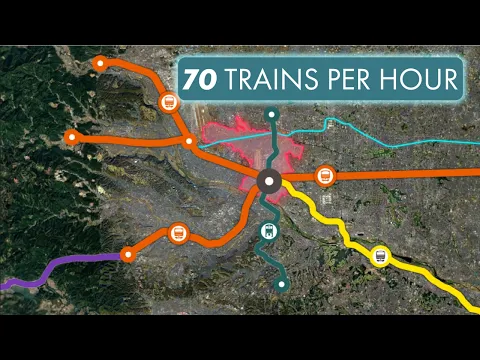
The strength of Tachikawa begins with the railway network. The Chuo Line, operated by JR East, connects the city to Tokyo Station and serves as the backbone for commuting to the center. There are also branches and connections with other lines, as well as a line between suburbs, a local monorail, and another operator serving the northern part of the city. In practice, this means that commuting does not depend on a single route or direction.
During peak hours, the frequency between Tachikawa and Tokyo reaches about one train every two minutes. These are large trains, many of them with ten cars and capacity for over 1,500 people. Other lines operate at intervals of ten to fifteen minutes, while the local monorail helps distribute passengers among neighboring neighborhoods. This is not symbolic public transport for a few times of the day, but a highly useful daily network.
Another important point is integration. A single card works for subways, buses, and suburban lines, even from different operators. This reduces friction, simplifies usage, and makes public transportation more competitive against cars. In daily life, convenience matters as much as speed, and Japan seems to understand this better than many metropolitan areas that invest in infrastructure without simplifying the passenger experience.
The urban consequence is direct. When the station offers so many departures, destinations, and connections, living near it becomes more valuable. And when living near it becomes more valuable, the surroundings attract more investment. The train, in this case, is not just a means of transport. It is a real estate engine and a organizer of urban space.
The Profit of Railways Helps Explain Why the System Remains Strong

One of the most important pieces of the model is that railway companies like JR East do not only operate tracks. They also capture part of the urban value generated by the system itself. In Tachikawa, the company controls the property built over the station and leases space to hundreds of retailers in a large shopping center. The station is not treated as a standalone cost, but as an asset that generates income.
This shifts everything. Instead of relying solely on fare revenue, the railway begins to earn from rent, consumer circulation, and real estate appreciation. Part of that money goes back to improve the service itself. Thus arises the virtuous cycle that helps explain the case of Tachikawa: the railway generates access, access generates value, value generates revenue, and revenue helps keep the railway strong.
In Japan, this logic has brought urban planning and railway operation together in a rare way. The station ceases to be merely a transit infrastructure and becomes an economic center. This helps sustain frequency, quality, and service expansion without relying exclusively on direct subsidy. Profitability does not appear against the city, but alongside it.
In many North American suburbs, the opposite occurs. The station is surrounded by parking lots, little commerce, and rules that prevent density or mixed use. The tracks indeed add value to the area, but much of that value is quickly consumed by empty spaces, low urban intensity, and dependence on cars. Japan takes advantage of this value. Other places often disperse it.
The Japanese Zoning Allows the City to Grow Where It Already Wants to Grow
If the tracks organize access, zoning defines what can arise around them. And that’s where Japan distances itself from much of North America. The country uses a simpler national system, with 12 zones and an inclusive logic. As the intensity of use increases, the less intense categories continue to be permitted. Rather than prohibiting almost everything, the Japanese system tends to allow more.
In practice, this means that even more residential areas can still accommodate small shops, offices, and other uses. There’s no obsession with rigidly separating each urban function. In many municipalities in the United States, zoning pushes housing to one side, commerce to another, and jobs to a third point, forcing long commutes for almost everything. It is this fragmentation that impoverishes suburbs.
In Tachikawa, more flexible zoning allowed development to follow the value generated by the station. Apartments, restaurants, hotels, and shops emerged where access was already strong. The city did not have to fight against its own logic of growth. It simply allowed the most accessible place to become the most useful as well.
This model expands choices. Those who prefer to drive can still do so. Those who prefer to live near public transport find more viable options. Those who want to live in an apartment or a house also find different combinations depending on whether they are closer to or farther from the station. In the end, zoning in Japan does not produce a single lifestyle. It allows for many.
More Housing, Less Extreme Prices, and More Controlled Urban Costs
Another important effect of this arrangement appears in housing. As zoning is more permissive and mandatory parking requirements hold less weight, building housing becomes easier. The Tokyo region delivers many more units than several comparable global cities, which helps contain price pressure. The data shows average rents of around 95,000 yen per month for a studio in the city of Tokyo, with annual salaries around 4.6 million yen. This is not cheap housing by any standard, but it is a level of accessibility rare among large global metropolises.
Suburbs like Tachikawa benefit directly from this. By allowing different types of housing and keeping public transport competitive, the city expands access without imposing the heavy cost of central living in more saturated areas. The result is a more functional periphery, where raising a family, moving around, and shopping do not depend on isolation or long daily commutes.
There is also a fiscal effect. More compact cities need fewer wide streets, less dispersed infrastructure, and less spending to maintain an extremely diluted occupancy. When more people use public transport, the area can operate with less space dedicated to cars. This reduces urban costs and improves efficiency, something that often goes unnoticed when the debate is stuck on individual preferences for driving or not.
That’s why the case of Japan is not limited to the pleasant aesthetics of a well-served suburb. It involves a concrete gear between railways, land, housing, and urban finances. Tachikawa seems organized because there’s a logical foundation pushing everything in the same direction. Without that, the station would merely be a station. With it, it becomes a city.
Japan shows in Tokyo and Tachikawa that a good suburb does not depend on miracles but on a coherent sequence: Frequent public transport, railway companies that capture urban value, and zoning that does not stifle growth near the station. The result is more walking, more housing, more commerce, and less obligation to use a car for everything.
In your view, what else do Brazilian and North American suburbs lack to come closer to this Japanese model: better tracks or less restrictive urban rules?








-

-

5 pessoas reagiram a isso.