





 Portuguese
  English
  Spanish
  3 min of reading
  18 comments


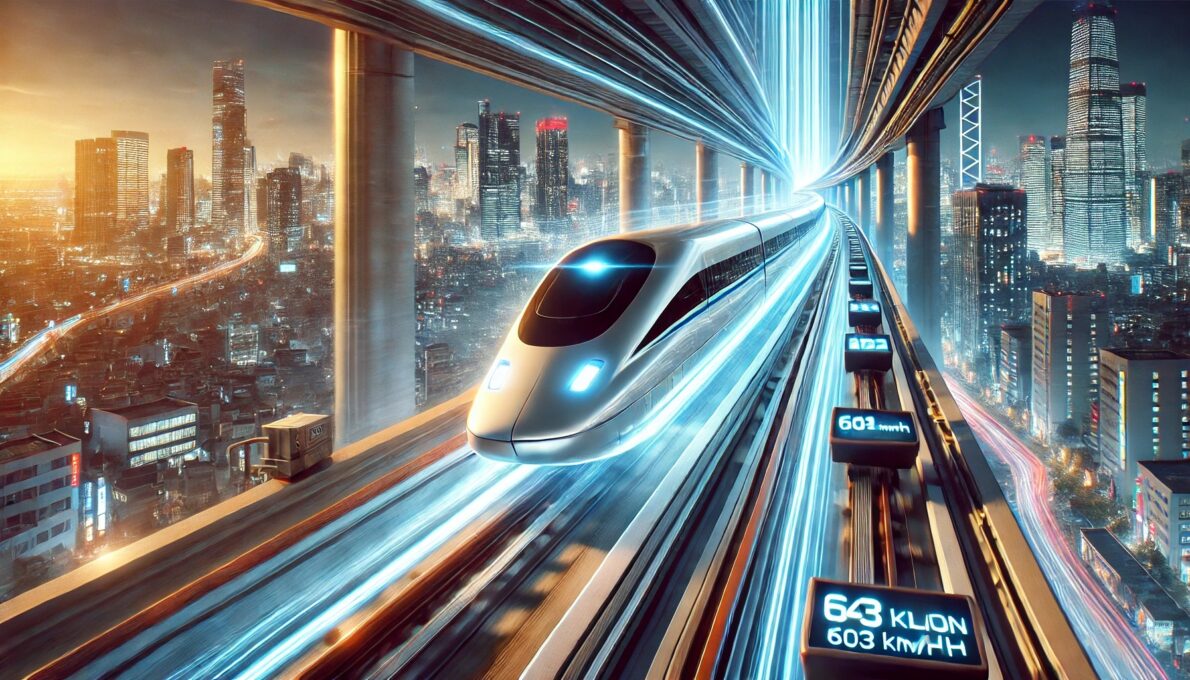


Japan Announced a Megaproject for a Magnetic Train That Promises to Be the Fastest Bullet Train in the World, Using Magnetic Levitation Technology. The Expectation Is That It Will Exceed the Amazing Mark of 600 km/h.
Japan is a country famous for its technology and ingenious feats and is now building the world’s fastest passenger magnetic train megaproject, a system that reaches up to twice the speed of normal bullet trains and will cut travel time in half by eliminating a rather fundamental component: the wheels.
Japan’s Magnetic Train Can Reach 603 km/h
Using magnetic levitation technology, this new bullet train floats 10 cm above the ground, eliminating the friction caused by contact with the tracks.
However, the megaproject has been deeply controversial, facing delays, rapidly rising construction costs, and a heated debate about environmental concerns. It is worth mentioning that Japan was the first in the world to develop high-speed trains with the construction of the Tokaido Shinkansen line, between Tokyo and Osaka, in 1959.
-
Does compulsive lying exist? What does science know about mythomania and why does it go beyond ‘lying too much’?

-
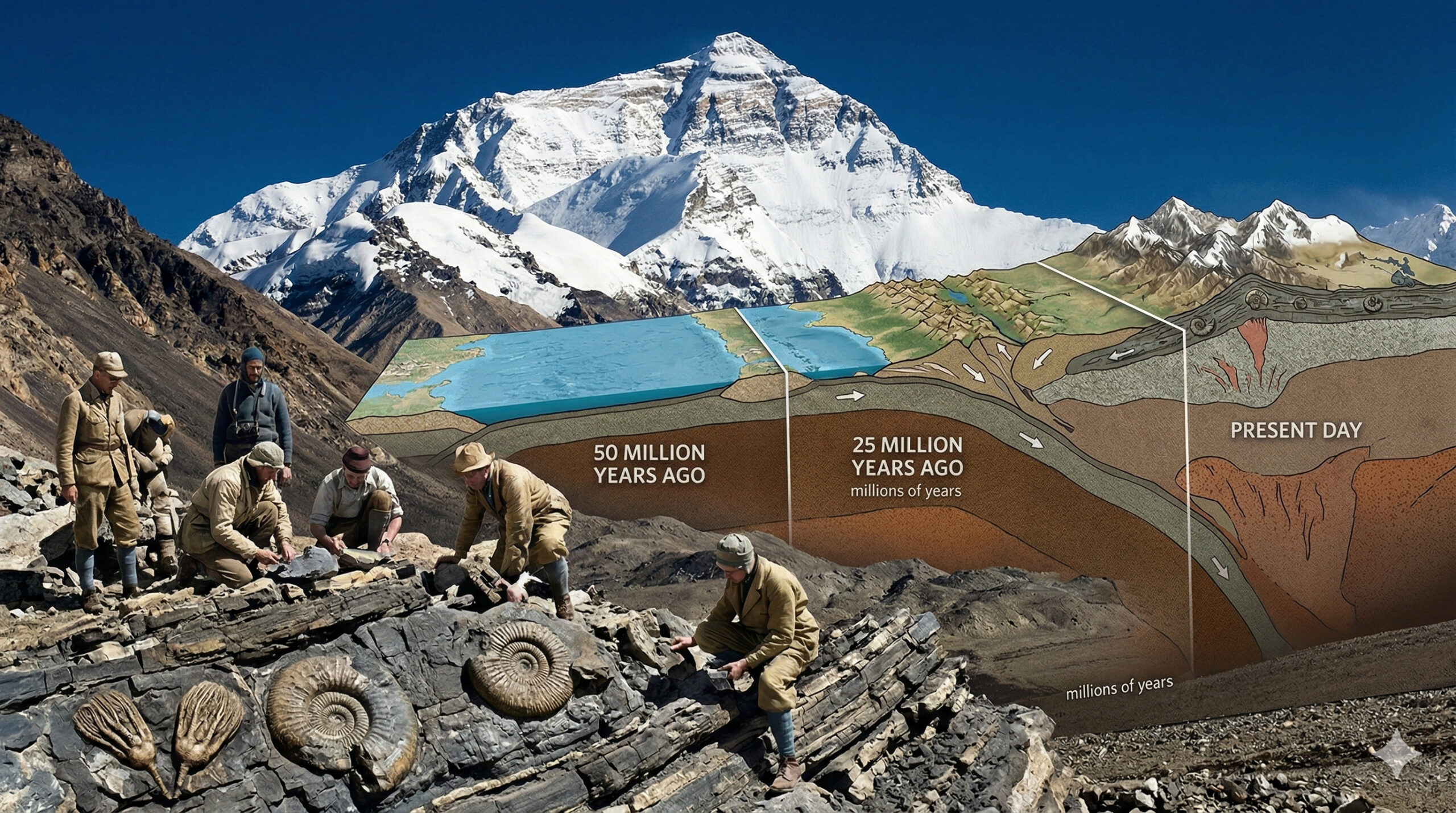
Marine fossils found at over 8,800 meters altitude on Everest and in large mountain ranges have proven that entire continents move, oceans disappear, and tectonic plates collide over millions of years, revolutionizing science in the 20th century.
-
What if the Sun disappeared suddenly? Simulation shows Earth in darkness within minutes, extreme cold, and rapid collapse of life on the planet.

-
A 2,400-year-old iron foundry has been discovered in Senegal with 100 tons of slag, 35 furnace bases, and signs of nearly eight centuries of continuous metallurgical activity.


When the megaproject is completed, a journey that currently takes about 2.5 hours with conventional trains will now be done in 67 minutes. At full speed, this magnetic levitation technology allows the bullet train to move at 500 km/h, although in a test in 2015 it reached an impressive 603 km/h—103 km/h more.
It is widely accepted that these speeds are virtually impossible for a conventional bullet train to achieve. They are eventually limited by the friction created by their wheels, and to solve this problem, Japanese engineers went back in time to a technology that has existed since the 1900s: magnetic levitation, also known as maglev.
How Will the Magnetic Levitation Technology Work?
In fact, the concepts of magnetic trains date back to the 1960s, and the first and, so far, only commercial line in the world has been in operation since 2004, between downtown Shanghai and its airport.
The Central Japan Railway Company modernized this magnetic levitation technology using superconducting magnets.
Electromagnets are refined to -269°C, allowing the trains to levitate higher above the tracks, but they need to be moving at a certain speed before the magnets come into action. Once the magnetic train reaches 150 km/h on its own, magnetic levitation kicks in and the carriage is lifted off its rubber wheels.
The Japanese bullet train with magnetic levitation technology then interacts with a set of coils on the track, one used to levitate its mass and the other to propel it forward. Now, without wheels, the magnetic train carriages can travel at incredible speeds. The trains are also fully autonomous, controlled by the track instead of an operator, a measure that makes collisions or accidents much less likely.
Bullet Train Will Pass Through Several Tunnels
Japan’s megaproject has been under construction since 2014 and is set to be inaugurated in 2027. An additional extension linking Tokyo to Osaka will begin construction immediately and is expected to be opened in 2037, 10 years earlier than planned. Unlike existing bullet trains, whose tracks curve along the Japanese coast, the new magnetic train will be 90% underground, passing through the Southern Alps.
Of the 285 km of the line, 256 km will be in tunnels, and there are dual reasons for this. First, magnetic levitation technology works best when traveling on the straightest line possible, and second, tunneling through the mountains avoids the more earthquake-prone Japanese coastline.
However, by adopting this approach, the Central Japan Railway Company has ended up digging some of the deepest tunnels ever seen in Japan, raising several environmental concerns, especially in Shizuoka Prefecture, where the excavation threatens the Ohi River basin, an important water source for the region.








Com a destruição anunciada daqui a 30 anos, seria melhor o Japão ir projetando trens bala voadores.
Como sempre essas surpresas da atualidade nos dividem sempre em ficção e realidade sempre a terra do sol nascente agora só falta os robôs na direção.
Ver esses tipos de notícias, da até vontade de chorar, os países lá fora progredindo e aqui não se pode fazer nada, por desculpas esfarrapadas, de terra de índio(ongs e outras porc4rias corruPT…), enquanto isso o povo brasileiro (em sua maioria) vai adoecendo e morr3ndo cada vez mais cedo, pois passa mais tempo, dentro de um m4ldito ônibus se estressando, vans lotadas correndo e trens sucateados, Ao invés de estar usufruindo de um sistema de transporte rápido e eficiente, fazendo com que o povo tenha mais qualidade de vida.日本頑張ってね