





 Portuguese
  English
  Spanish
  5 min of reading
  2 comments


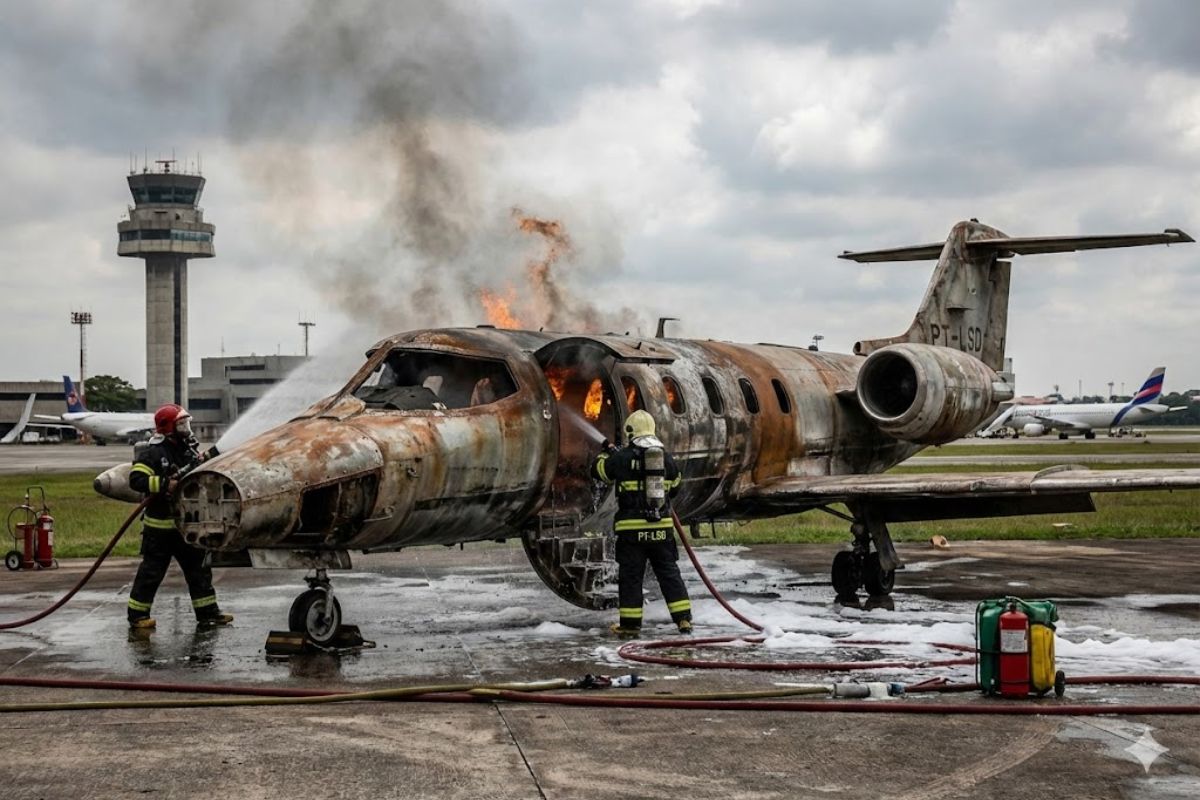


Almost Nine Years After The Emergency Landing In Guarulhos, The Jet That Carried The Then Senator Aécio Neves Remains Abandoned, Turned Into A Hull For Firefighter Training, Had Equipment Removed And Today Symbolizes The Limits Of Operational Safety In Political Flights In The Country, And Still Intrigues Those Who See From The Runway
On February 9, 2017, the jet carrying Aécio Neves from Brasília to a meeting with former President Fernando Henrique Cardoso in São Paulo went off course due to a problem with one of the tires. The aircraft, which was supposed to land in Congonhas, was diverted to the international airport of Guarulhos, where the longer runway, at 3,700 meters, offered greater safety margin for an emergency landing with a real risk of failure in the landing gear.
As it approached Guarulhos, the routine scenario of an executive flight turned into a critical maneuver. Upon touching down, the left landing gear broke, the jet went off axis, went beyond the runway limit and only stopped off the asphalt, tipped onto one side. On board were the then senator, now a federal deputy, and two pilots. No one was injured, but the episode made it onto the list of incidents that exposed the vulnerability of operations involving small aircraft engaged in high-caliber political agendas.
From Emergency Landing To Training Hull In Guarulhos

The jet, a Hawker 800 used for air taxi services and rented by the PSDB for transportation, suffered sufficient structural damage to be classified as a total loss.
-
Chaos On Airplane Could Be Expensive: Proposal Aims To Prevent Disruptive Passengers From Flying For Up To 1 Year In Brazil And Face Fines Of Up To R$17,500

-
Man Arrested After Halting Takeoff of Fire Department Helicopter During Child Rescue in Guaratuba

-
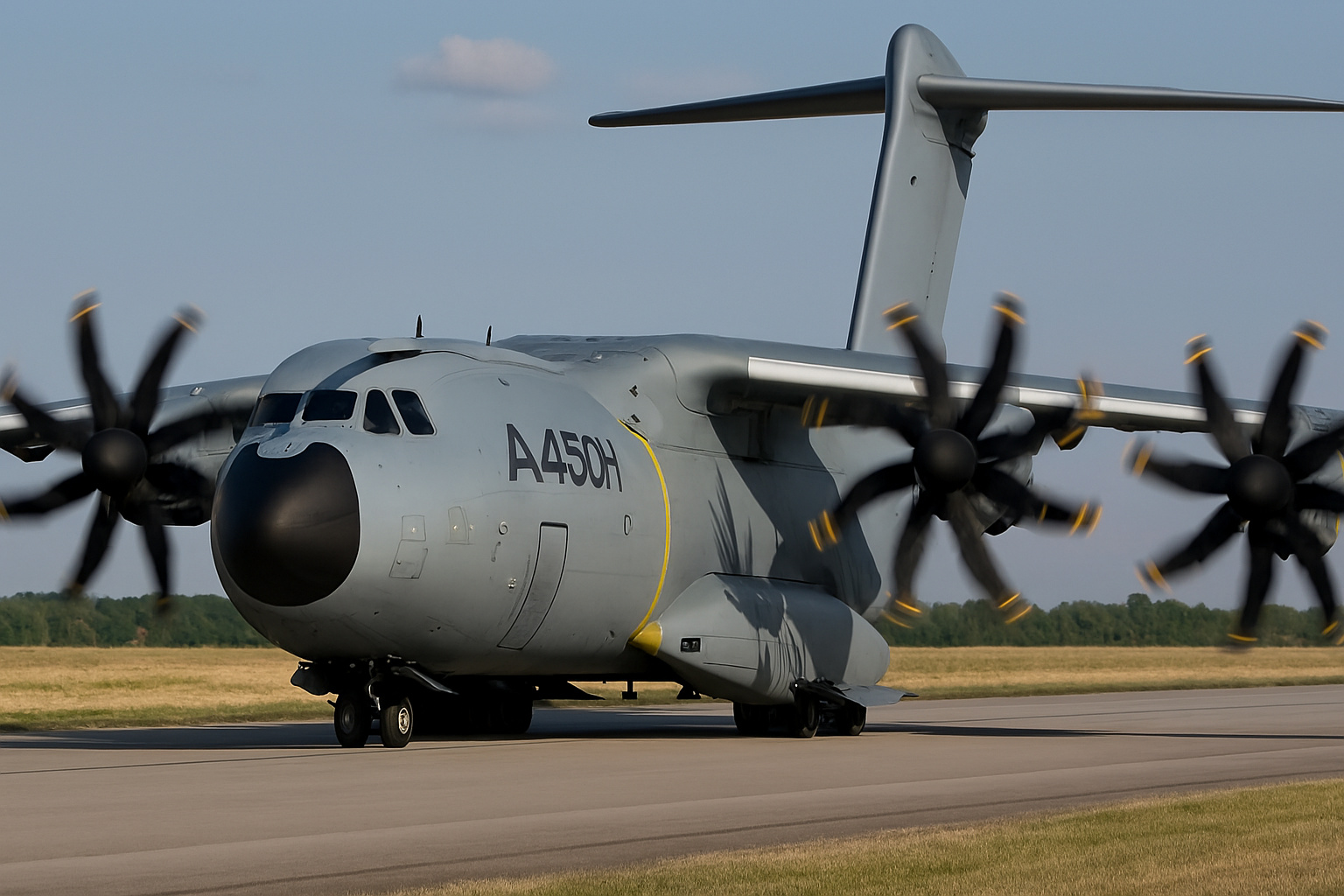
With 37 Tons of Cargo, Over 8,000 km Range, and Ability to Land on Unpaved Runways, the Airbus A400M Demonstrates How Europe Created a Military Giant That Transports Armored Vehicles, Aerially Refuels Fighters, and Operates in Conflict Zones and Humanitarian Missions Worldwide
-
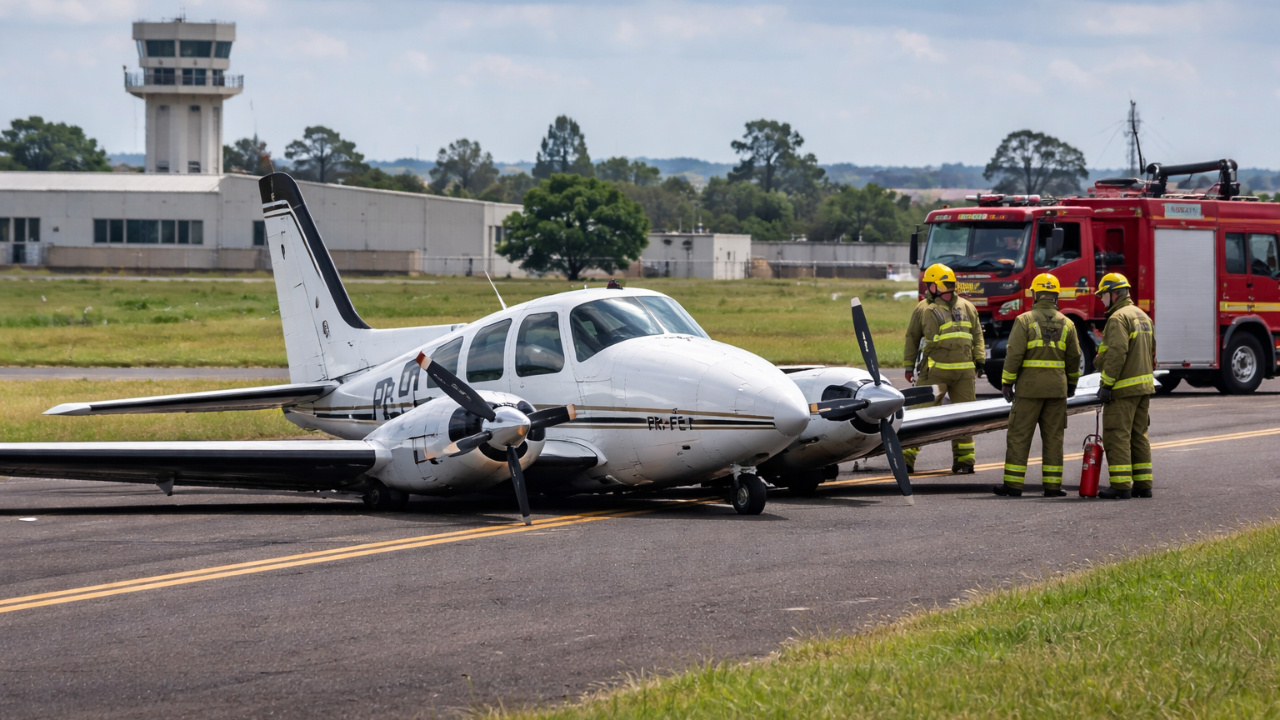
Emergency Landing in Campos Amarais After Bird Strike on Small Plane

After the investigation and administrative procedures, the owner Líder Aviação donated the aircraft to the Guarulhos airport in 2018, transferring to the terminal operator the responsibility for the final destination of that aluminum hull that almost starred in a tragedy with national repercussions.
Since then, what remained of the jet has occupied peripheral areas of the airport site, outside the taxi routes of commercial airplanes, but still visible from runway 10 and various operational points.
The fuselage remains intact, with the external structure preserved, but without the systems that characterize an operational aircraft, such as avionics, engines, control panels, and critical navigation components.
According to the airport administration, all mechanical and electronic equipment has been removed from the jet, which is now used in training exercises for firefighting teams.
The hull has become a practical laboratory for evacuation simulations, fire-fighting, and rescue in a realistic scenario, allowing firefighters to train procedures in an executive jet with dimensions and internal distribution typical of this type of operation.
How The Jet Became A Support For The Safety Of Other Flights
The transformation of the wrecked jet into a training platform follows a common operational logic in large airports: utilizing irrecoverable aircraft as tools for preparing for future emergencies.
In the case of Guarulhos, the Hawker 800 that once served the political elite transitioned to serving a function opposite to what it originally had, swapping fast transport for simulations of extreme scenarios.
In practice, this means that firefighter crews and crisis response teams can test, at full scale, approach maneuvers, door openings, access to the cockpit, use of foam and water lines at specific points on the fuselage.
The marks of the accident, the wear of the structure, and the absence of internal equipment help create a controlled but realistic environment for training that would be unfeasible in aircraft still in service.
The jet, now parked in an area of grass with uneven soil, also serves as a visual reference for those operating in the yard.
Amid large commercial aircraft in continuous cycles of takeoffs and landings, the silent hull serves as a reminder that the airport coexists daily with a calculated level of risk, mitigated by procedures, but never entirely eliminated.
Memory Of An Aerial And Political Episode That Almost Ended In Tragedy
The flight that took the jet to runway 10 in Guarulhos in 2017 had a well-defined political destination.
Aécio Neves had left Brasília heading to São Paulo for a meeting with Fernando Henrique Cardoso, amidst a tense party context.
The tire failure during takeoff, visually detected by the control tower in the federal capital, converted an agenda of negotiations into an emergency operation under maximum security protocol.
That day, the change of plans, with a diversion from Congonhas to Guarulhos, illustrated a basic principle of aviation: in a risky situation, absolute priority is given to the longest and best-equipped runway to receive an aircraft with potential landing gear failure.
The commander’s decision, confirmed by the controlled manner in which the landing was conducted, prevented the left gear failure from resulting in fuselage rupture, fire, or casualties.
After the incident, the agenda with FHC was maintained the following day, but the jet never left the airport in the metropolitan region again.
The episode remained present in operational safety records, in behind-the-scenes accounts and in the memory of crew members and controllers who witnessed the critical approach of that February 9.
The hull today at rest on the grass serves as a physical reminder of this event.
What The Jet Case Reveals About Risk Management And Public Image
The prolonged presence of the jet in Guarulhos highlights how incidents involving public figures transform into symbols of an era.
The aircraft that once represented efficiency, status, and high-standard mobility is now seen as dirty, immobile, marked by soot and the elements, almost camouflaged against the intense operational backdrop of the country’s largest airport.
In the realm of air safety, the case reinforces the importance of stringent pre-flight inspection protocols, communication between crew and control tower, and rapid decision-making regarding route deviation when anomalies are detected.
In the political sphere, the image of the abandoned jet in Guarulhos resonates with the recent memory of a troubled period in Brazilian institutional life, where the movements of leadership were closely watched and, in episodes like this, filled with apprehension.
For those observing from a distance, the contrast is evident. One day, the jet crossed the country connecting Brasília, São Paulo, and other power centers.
Today, it remains idle, used as a training tool in emergency scenarios, while larger aircraft, filled with anonymous passengers, take off and land without knowing that, just a few meters away, lies the hull of a near-disaster.
In your opinion, should cases like this jet be more remembered as public lessons in air safety, with visits and total transparency about what happened, or is it better that they remain restricted to the technical behind-the-scenes of airports?








Esse cara é tão e.s.c.r.o.t.o que nem o inferno quis.
Esse cara é tão **** que nem o inferno quis.