





 Portuguese
  English
  Spanish
  4 min of reading
  0 comments


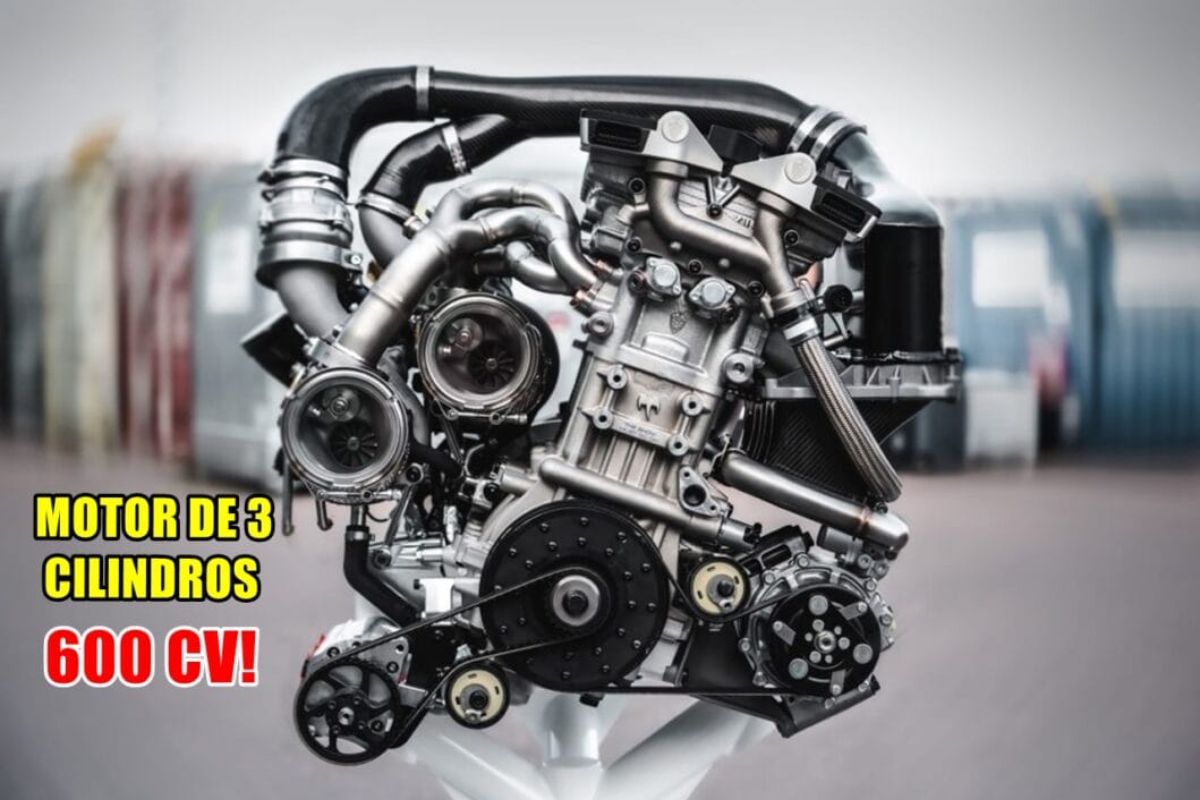
The TFG Engine of the Koenigsegg Gemera: 600 Hp with Just 3 Cylinders and Performance That Makes Any V8 Look Bad
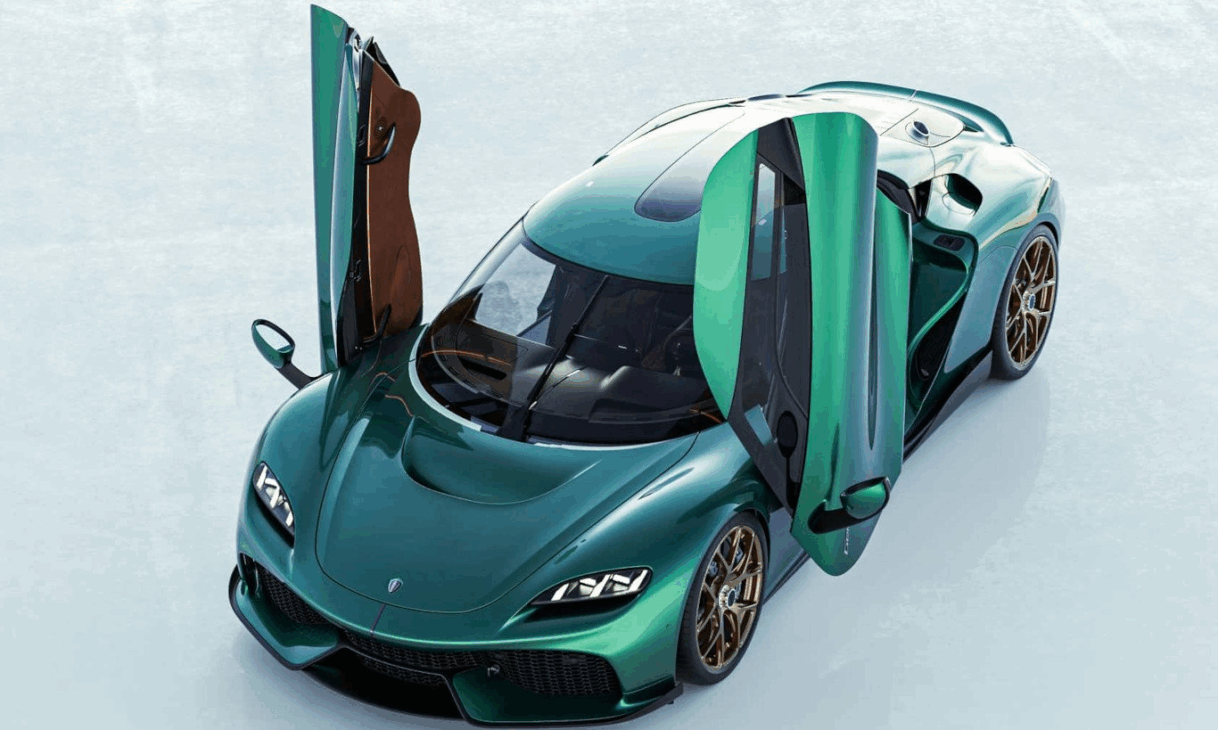
Who would have thought that a tiny 2.0 three-cylinder engine could compete with the fiercest V8s on the market? Well, that’s exactly what the Swedish Koenigsegg has achieved with the Gemera, one of the most incredible and innovative supercars ever created.
While many people still associate sports cars with massive, fuel-guzzling engines, the Scandinavian brand decided to toss the manual aside. Instead of a V8 or V12, the Gemera features an engine dubbed TFG (Tiny Friendly Giant) — which delivers no less than 600 hp on its own. And more: when combined with the car’s three electric motors, the total output reaches an insane 1,700 hp.
But how on earth does a 2.0 three-cylinder achieve this feat? The answer lies in the technology and the bold vision of Koenigsegg, which heavily invests in efficiency and sustainability without sacrificing brutal power.
-
Friends have been building a small “town” for 30 years to grow old together, with compact houses, a common area, nature surrounding it, and a collective life project designed for friendship, coexistence, and simplicity.

-
A French brand placed a car on four huge red balloons to prove that its suspension made the vehicle “float,” and the surreal scene became one of the most iconic and unusual images in automotive history.

-
This small town in Germany created its own currency 24 years ago, today it circulates millions per year, is accepted in over 300 stores, and the German government allowed all of this to happen under one condition.

-
Curitiba is shrinking and is expected to lose 97,000 residents by 2050, while inland cities in Paraná such as Sarandi, Araucária, and Toledo are experiencing accelerated growth that is changing the entire state’s map.


Freevalve: The Technology That Reinvents the Engine
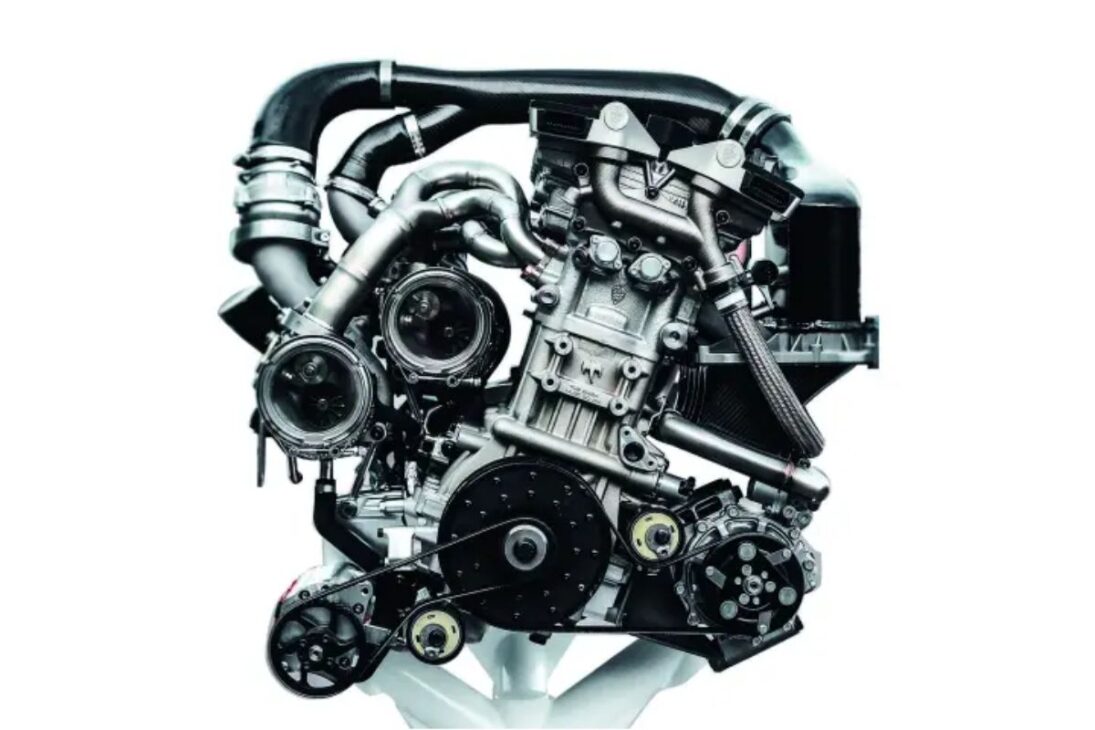
The secret of the TFG engine lies in a system that seems like something out of science fiction: the Freevalve technology. Instead of using camshafts to open and close the valves, the engine utilizes independent electropneumatic actuators for each valve. This allows for much more precise control over the air and fuel flow, optimizing efficiency and performance in any situation.
According to Christian von Koenigsegg, the founder of the brand, this technology has been in development for nearly two decades. “We wanted to free engines from the limitations of traditional mechanical systems and give them a brain of their own,” he stated in an interview with Top Gear.
The engine also features a super square design — with a diameter of 95 mm and a stroke of 93.5 mm — which facilitates high revs without compromising durability. The maximum power reaches 7,500 rpm, with a remarkable redline of 8,500 rpm. As for torque? It delivers 61.1 kgfm at less than 3,000 rpm, and it remains practically flat until 7,000 rpm.
Two Turbos, Zero Lag
Another asset of this engine is the sequential twin-turbo setup. Here, a smaller turbo ensures quick response at low revs, while a second, larger turbo kicks in at higher revs, allowing the engine to continue breathing well and delivering power across all rev ranges.
This arrangement helps to solve a classic turbo engine problem: the dreaded turbo lag. In the case of the TFG, torque delivery is virtually immediate, making the experience of driving the Gemera visceral and exciting.
The official Koenigsegg channel features a video that showcases how this works in practice.
A Flexible Engine and Friend of the Environment
In addition to all the onboard technology, the TFG impresses with its versatility. It can operate on multiple combustion cycles, including Otto and Miller, and even in tests with a two-stroke cycle.
What’s even more interesting is its ability to run on a wide variety of fuels: from traditional gasoline to ethanol and methanol. By using biodiesel, the engine significantly reduces emissions without compromising performance.
This commitment to sustainability is one of the pillars of Koenigsegg’s philosophy. “We believe that supercars can also be part of the environmental solution, and not just part of the problem,” Christian von Koenigsegg said in an interview with Road & Track.
Artificial Intelligence for a Smarter Engine
And there’s more: Koenigsegg is working with the American company SparkCognition to integrate a software with artificial intelligence into the system capable of dynamically adjusting the engine parameters in real-time.
In practice, this means that the car will be able to adapt to the driver’s driving style, road conditions, and even the type of fuel used, optimizing performance at every moment.
According to Amir Husain, CEO of SparkCognition, “this collaboration represents the future of the automotive industry, where hardware and software work in perfect harmony.”
The Future of Supercars Begins Here
In the end, the Koenigsegg Gemera is not just another supercar with absurd power numbers. It is a manifesto of innovation that proves it is possible to combine high performance with environmental responsibility and cutting-edge technology.
By betting on an engine that is both compact and revolutionary, the Swedish brand not only redefines what we expect from a supercar, but also paves the way for a new era in the automotive industry.
With the Gemera, the message is clear: you don’t need a giant engine to deliver insane power. You just need technology, vision, and courage to reinvent the rules of the game.










-

-

-

8 pessoas reagiram a isso.