





 Portuguese
  English
  Spanish
  4 min of reading
  0 comments


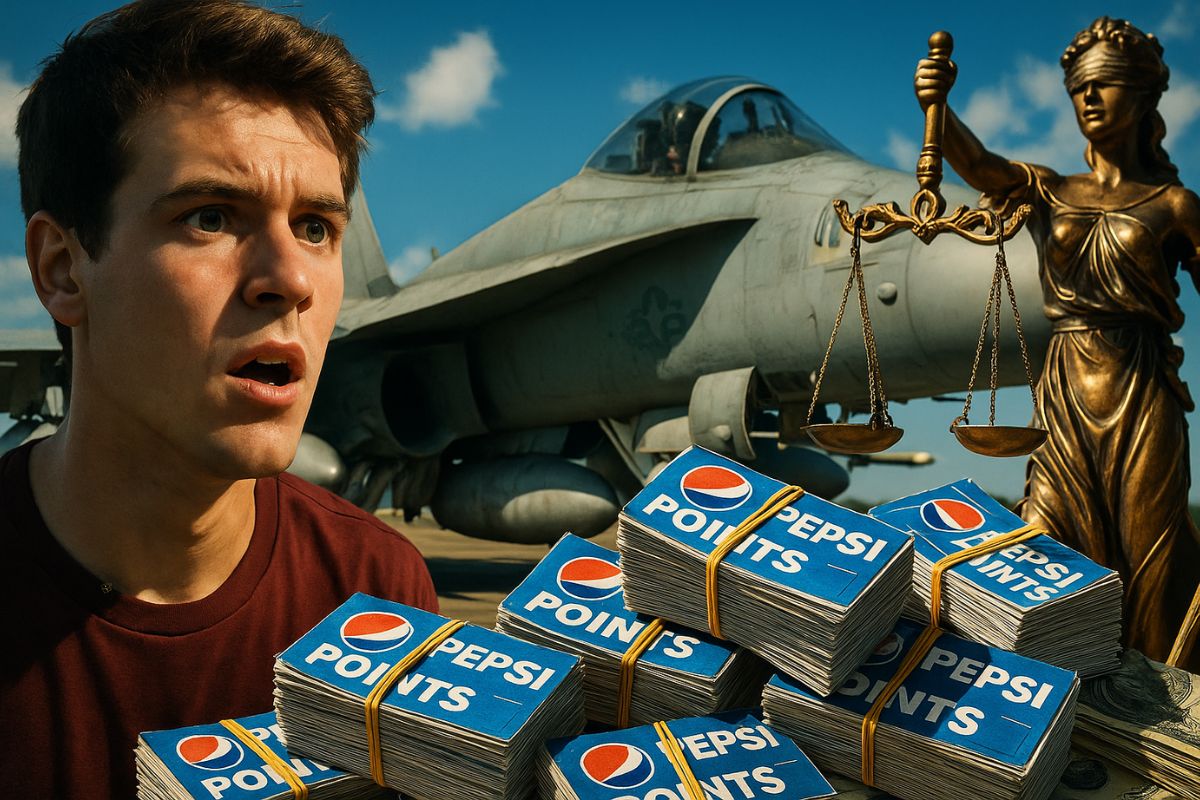
The Real Story of the Student Who Tried to Trade Pepsi Points for a Military Jet and Turned an Advertisement into a Historic Lawsuit in the United States
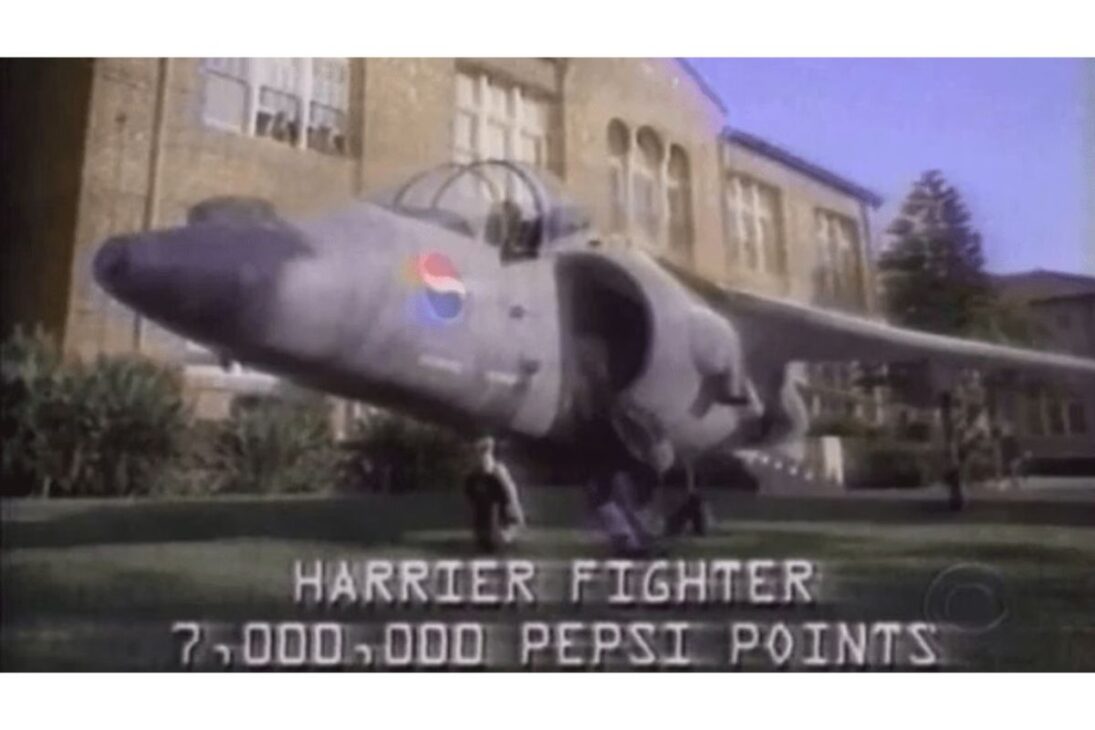
In 1996, a Pepsi advertisement promised prizes for those who accumulated Pepsi Points on soda packaging. Among T-shirts, jackets, and sunglasses, the commercial ended with a comical scene: a military jet Harrier Jet landing in front of a school, with the caption “Harrier Jet – 7,000,000 Pepsi Points”. What seemed like an advertising joke turned into a legal dispute when John Leonard, a 21-year-old student, decided to take the offer literally and demanded the company’s warplane.
The case, known as Leonard v. PepsiCo, quickly became a landmark in American contract law. What started as a marketing ploy turned into a legal discussion about advertising limits, offer validity, and consumer common sense.
The “Pepsi Stuff” Promotion and the Literal Reading of the Advertisement
The “Pepsi Stuff” campaign allowed consumers to exchange caps and codes for official brand prizes.
-
Italian researchers have detected what appears to be a second Sphinx buried under the sands of Egypt, and satellite scans reveal a gigantic underground megastructure hidden beneath the Giza Plateau for over 3,000 years.

-
There are 4,223 drums and 1,343 metal boxes concreted with 50-centimeter walls that store the radioactive waste from Cesium-137 in the worst radiological accident in Brazil, just 23 kilometers from Goiânia, with environmental monitoring every three months.

-
Giant Roman treasure found at the bottom of Lake Neuchâtel in Switzerland reveals an advanced trade system, circulation of goods, and armed escort in the Roman Empire about two thousand years ago.
-
He buried 1,200 old tires in the walls to build his own self-sufficient house in the mountains with glass bottles, rainwater, and an integrated greenhouse.


The catalog included simple products like T-shirts, caps, and backpacks.
However, the TV commercial took the idea to the extreme with a touch of humor: a teenager landed a military jet at school and said it was the “new way to get to class.”
For most of the audience, it was an obvious joke. But John Leonard, a business student in Seattle, saw a real opportunity.
By reading the official rules of the promotion, he realized that it was possible to buy additional points for US$ 0.10 each, provided the participant had at least 15 physical points.
So, he did the math: 7 million points would cost US$ 700,000, a value much lower than the actual price of a military jet, estimated at US$ 37 million.
The Young Man Who Took the Commercial Seriously and Challenged the Soft Drink Giant
Determined to turn the “joke” into reality, Leonard raised the money from investors and sent Pepsi 15 physical points, a check for US$ 700,008.50, and an official redemption form, demanding the promised Harrier Jet from the commercial.
The company’s response was direct: the request was denied.
Pepsi argued that the advertisement was clearly humorous, with no intention of constituting a real offer.
The company returned the check and stated that “no reasonable person could believe that a military jet was actually in play.”
The Lawsuit That Became a Global Reference
Leonard did not accept the response and filed a suit against PepsiCo, alleging breach of contract and false advertising.
Pepsi reacted by filing a declaratory action, asking the court to confirm that the commercial did not constitute a valid offer.
In 1999, Judge Kimba Wood of the federal court in New York ruled in favor of PepsiCo. In her ruling, she emphasized that “no rational person would view the commercial as a serious contractual proposal.”
The court concluded that the tone of the advertisement was clearly satirical and that the image of a teenager landing a military jet at school could not be interpreted as a legitimate invitation to purchase.
The Consequences and Lessons of the Case
After the controversy, Pepsi changed the commercial, raising the value of the jet to 700 million points and adding the phrase “Just Kidding!” on the final screen, an attempt to avoid further misunderstandings.
The case, however, continued to be studied in law and marketing schools as a classic example of misinterpretation of offer and advertising communication.
The story also gained a cultural tone. In 2022, Netflix released the documentary “Pepsi, Where’s My Jet?”, which revisits the episode with testimonies from Leonard, lawyers, and executives involved.
The series revives the absurdity of the situation and shows how a simple detail from a commercial can lead to a million-dollar legal battle.
What Happened to John Leonard After the Case
Although he lost the lawsuit, John Leonard became a symbolic figure of the 1990s, an example of persistence, boldness, and literal interpretation of the rules.
Years later, he left the business world and began working as chief park ranger at Denali National Park in Alaska, leading a quiet life away from the spotlight.
Even today, the case Leonard v. PepsiCo is cited in courses and books on contract law as a reference on what constitutes a “real offer”.
He is also remembered as one of the greatest examples of how a creative campaign can escape the control of the brand itself.









-

-

-

-

-

30 pessoas reagiram a isso.