





 Portuguese
  English
  Spanish
  5 min of reading
  1 comment


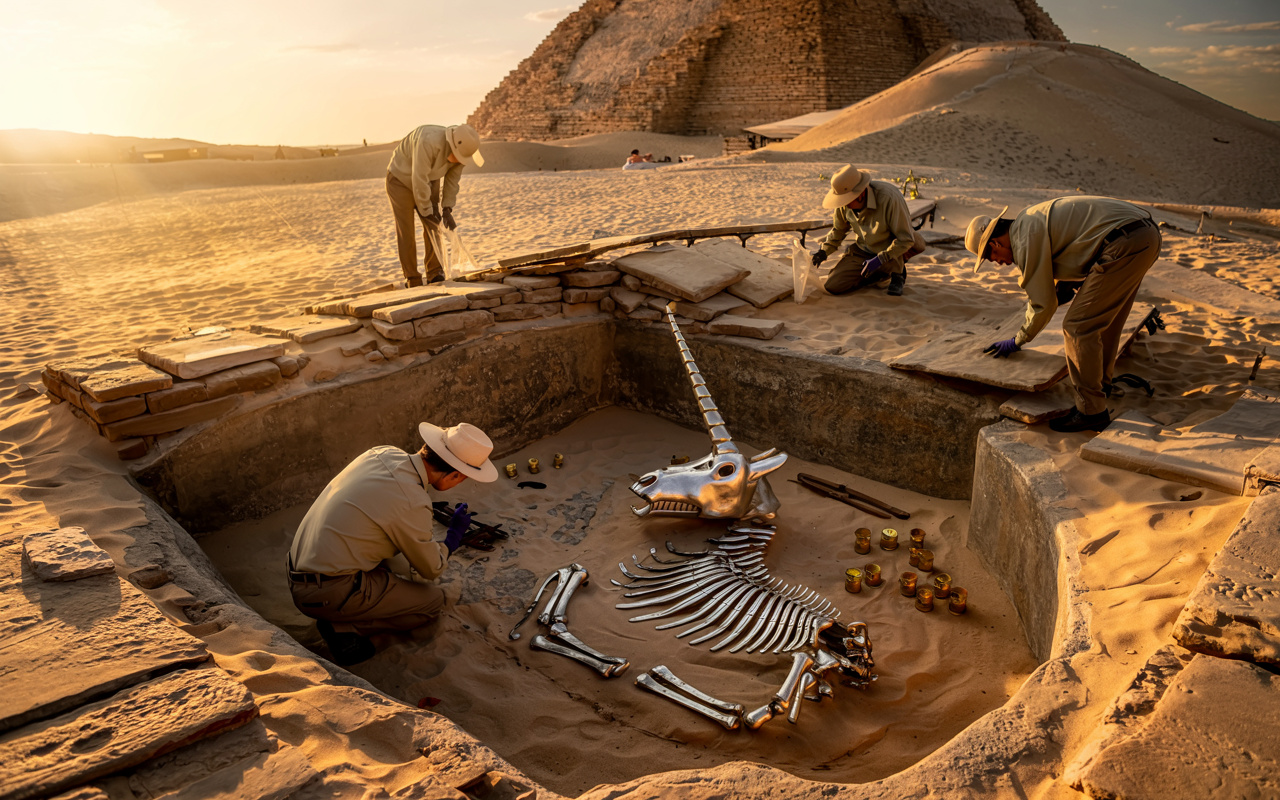


Archeological And Paleontological Discoveries Made In July Reveal Pyramids With Unprecedented Inscriptions, Prehistoric Fossils, Lost Tomb For Centuries And Even A Supposed Unicorn; See What Surprised The Archaeologists.
The month of July brought archeological and paleontological discoveries that challenge ancient narratives, unearth legends, reveal new species, and reignite centuries-old mysteries. In different parts of the world, archaeologists have found traces that reconstruct forgotten episodes of human history and prehistoric life. The news ranges from unprecedented inscriptions inside the largest pyramid in Egypt to a supposed unicorn found near the legendary castle of King Arthur. Each of these discoveries reinforces the value of archeology as a bridge between the present and the past, revealing hidden layers beneath the surface of the Earth — and history.
Unprecedented Inscriptions In The Pyramid Of Cheops Debunk Myth About Slavery In Ancient Egypt
Among the most impactful archeological finds of July is the revelation of new inscriptions inside the Pyramid of Cheops in Giza, Egypt. Dated to around 4,500 years ago, the marks rediscovered by Egyptian archaeologists confirm that the monument was not erected by slaves, as has been suggested for centuries, but by organized teams of skilled workers who were well-fed and paid by the state.
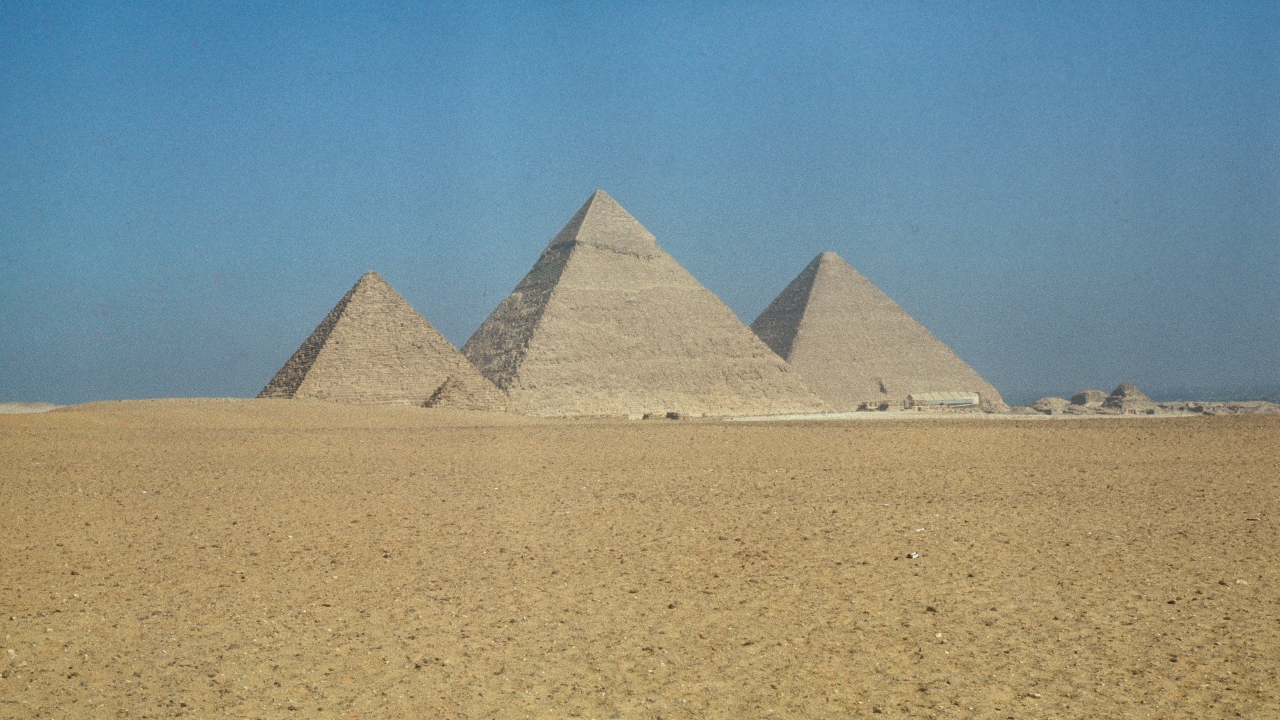
The evidence includes graffiti on internal blocks and tombs to the south of the complex, where tools, statuettes, and hieroglyphs with administrative functions, such as “supervisor of the side of the pyramid,” were found.
-
From sertanejo star to international investor: Ana Castela invests millions in a mansion in the USA, creates a themed accommodation in Orlando, and shows that the “boiadeira” also wants to grow away from the stage.

-
The 10 most stunning motorhomes in the world: a $3 million trailer with a rooftop nightclub and garage for a Ferrari, “palaces on wheels” with Italian marble, private cinema, and five-star hotel luxury for billionaires.

-
Trump wanted to spend $400 million on the White House, but the courts prohibited the million-dollar construction.

-
How the Egyptians erected giant structures like pyramids, temples, and obelisks without modern technology, cranes, or engines still amazes the world and reveals the power of engineering based on ramps, levers, ropes, and colossal organization.
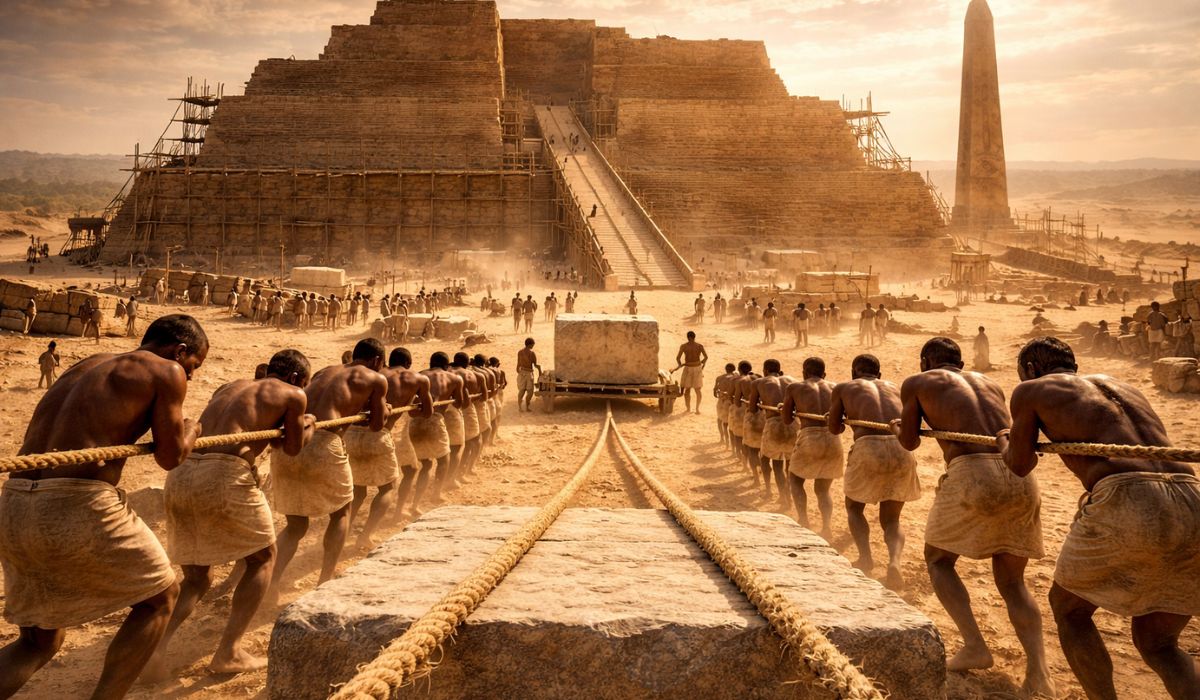

This archeological revelation redefines how ancient Egyptian society was structured, and how it treated its workers. According to Egyptologist Zahi Hawass, who leads the excavation, “no slave would be buried in the shadow of a pyramid, with a tomb prepared for eternity.”
In addition to its historical value, the discovery also stirs contemporary debate about cultural appropriation and historical stereotypes that persist even in the face of scientific evidence. Archeology, in this case, fulfills its role not only by revealing the past but also by reeducating the present.
New Species Of Prehistoric Shark Identified In The United States
In the field of paleontology, Mammoth Cave National Park in Kentucky (USA) was the site of an extraordinary discovery: a fossilized tooth about 1.3 centimeters long, approximately 340 million years old, belonging to a previously unknown species of shark. Named Macadens olsoni, the animal swam in shallow seas during the Carboniferous period and fed on mollusks, worms, and small crustaceans.
The fossil was found in the Ste. Genevieve Formation, the largest cave network in the world. The animal’s dental arch reveals curved teeth adapted for crushing, something unusual for sharks from that period.
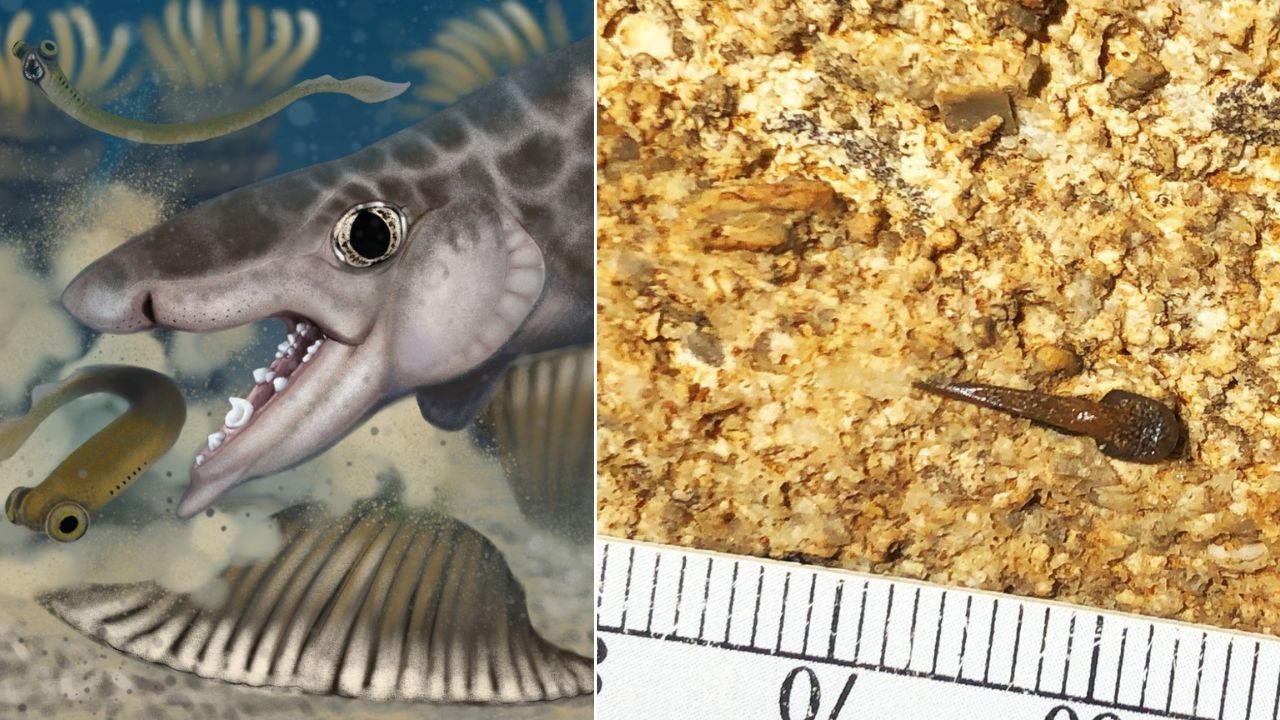
The paleontological discovery significantly expands our understanding of marine biodiversity in the past and reinforces the importance of conserving national parks as natural repositories of the Earth’s prehistory.
According to Barclay Trimble, superintendent of the park, “this discovery not only enriches our knowledge about primitive marine ecosystems, but also highlights the critical role of paleontological research in our preservation territories.”
Skull With Horn Found In England Reignites Legend Of British Unicorn
The third discovery, although surrounded by controversy, has generated massive interest among enthusiasts of popular archeology and European mythology.


During a hike on a trail near Tintagel Castle, purported birthplace of King Arthur, a Canadian tourist named John Goodwin came across a peculiar skull: it had a structure resembling that of a horse, but with a single horn fixed to its forehead.
The supposed “unicorn” quickly became a topic of discussion among paleontologists, historians, and the general public.
David Norman, a paleontology professor at the University of Cambridge, analyzed images and stated that the skull likely belonged to a pony, with a bovine horn artificially affixed — a possible hoax, but extremely well-executed.
Even considered a hoax, the episode reignited the debate over how mythology intertwines with archeology and how popular legends influence the search for historical vestiges.
In the United Kingdom, the unicorn is the national animal of Scotland and is deeply rooted in Celtic and Arthurian narratives. The discovery, although possibly fake, generated mass engagement and visits to the site surged.
New Study Reveals That Stones Of Stonehenge Were Transported By Humans For Over 200 Km
Another highly relevant archeological find involves the eternal enigma of Stonehenge. A new geological analysis conducted in July compared fragments of the blue stones of the monument with rocks from the Craig Rhos-y-Felin region in Wales.
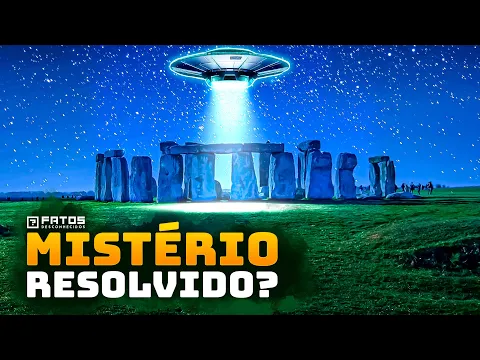
The conclusion was definitive: contrary to the theory that supported transportation by glacial action, the blocks weighing up to three tons were displaced by humans over a distance of more than 200 km.
This revelation reinforces the thesis that the Neolithic builders of England possessed advanced logistical capabilities, territorial knowledge, and social organization far beyond what was previously assumed.
The study, published in specialized journals, suggests that transporting the stones took years and involved waterways and terrestrial dragging with sleds and rudimentary pulleys.
Archeology, once again, debunks myths to reveal an even more impressive reality: a prehistoric people capable of monumental feats without the aid of modern technology.
Lost Tomb Of The Wife Of The King Of Prussia Located In Berlin Church
In Germany, a routine excavation in a historic church in Berlin resulted in a find of immense symbolic value: the tomb of Julie von Voss, the second wife of King Frederick William II of Prussia, was rediscovered during restoration works at the Schlosskirche Buch. Born into a poor family, she rose to the court as a lady-in-waiting and married the king in a morganatic union, which granted her the title of Countess of Ingenheim.
Julie died in 1789 of tuberculosis and was buried as per her wishes in the church where she was born. However, over time, the location of her tomb was forgotten. The newly discovered coffin displays gilded details, neoclassical medallions, and is extremely well-preserved. Historical confirmation was made based on records from the time and decorative features consistent with the status she acquired at court.
The discovery sheds new light on the history of the Prussian period and illustrates how archeology also serves as a tool for restoring memories erased by urban transformations.
Archeology And Paleontology Show That The Past Is More Alive Than Ever
The archeological finds of July show that even in a connected and fast-paced world, there is still much to be revealed beneath our feet. With discoveries ranging from forgotten tombs to unique fossils and re-evaluated pyramids, science continues to challenge simplified versions of human history.
Each new artifact, fossil, or structure recovered carries not only scientific value but also plays a role in the collective reeducation about who we were — and how much we still ignore about our own trajectory. Archeology is not about the past.
It’s about the present rediscovering itself with each fragment of stone, bone, or hieroglyph revealed to the world.








…