





 Portuguese
  English
  Spanish
  7 min of reading
  0 comments


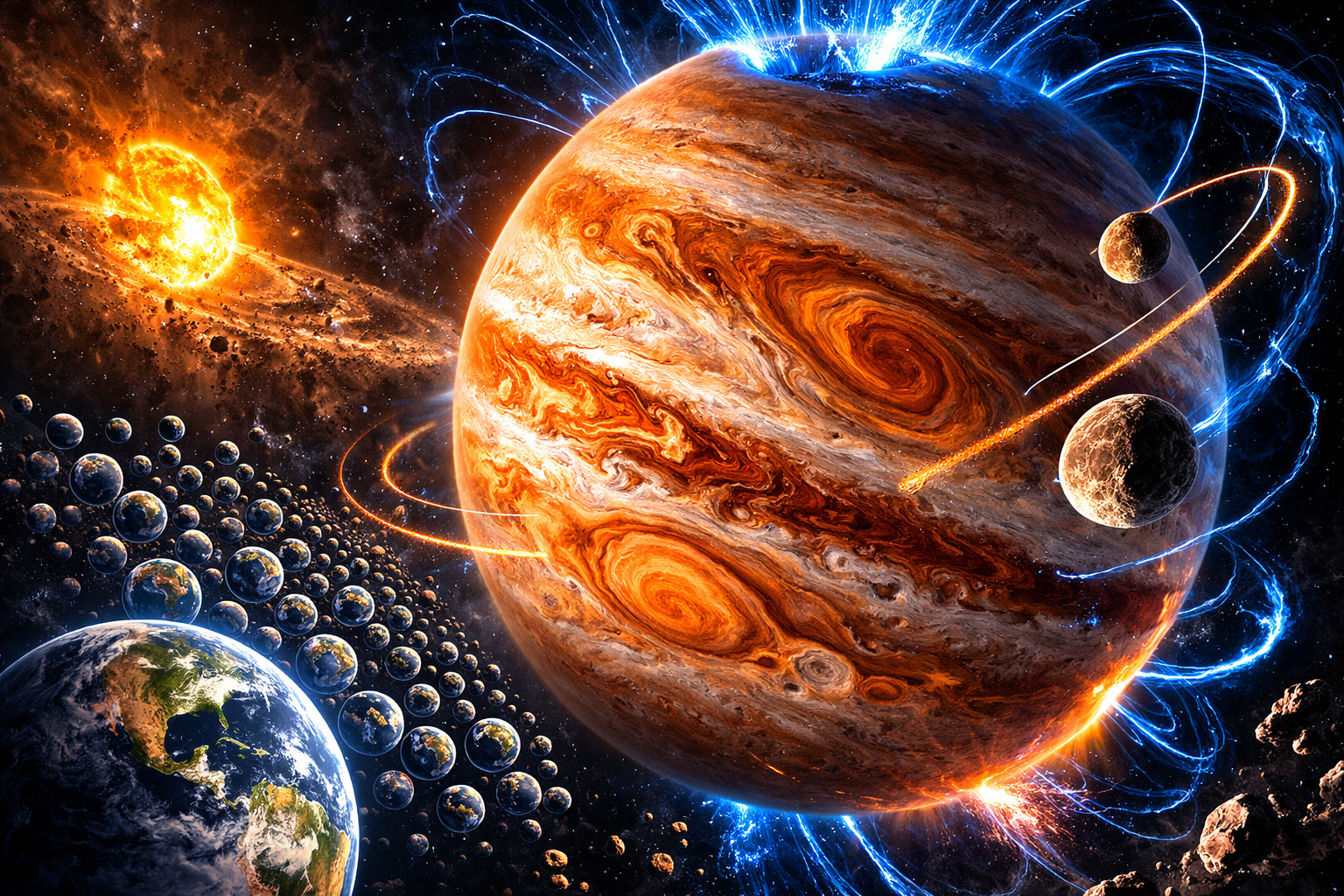
Study Reveals That Jupiter Was Twice Its Size at the Beginning of the Solar System; Calculation Based on the Orbits of Two Small Moons Indicates Primitive Giant Planet.
The astronomer Konstantin Batygin, known for proposing the Ninth Planet hypothesis in 2016, drew attention from the scientific community again in May 2025 with a different discovery. Instead of predicting a new celestial body, he attempted to answer a fundamental question about the formation of the Solar System: what was Jupiter’s size when the planets were still forming? In a study published in the scientific journal Nature Astronomy, Batygin and astrophysicist Fred C. Adams from the University of Michigan reconstructed the physical conditions of Jupiter about 3.8 million years after the birth of the Solar System.
The result was surprising: the primordial Jupiter was much larger than the planet we see today, with up to 2.5 times the current radius. The most unusual aspect is the method used by the researchers. Instead of relying on complex theoretical models, the study used observable data from two small moons of Jupiter — Amalthea and Thebe — whose orbits preserve gravitational records from billions of years ago.
These two moons function as true orbital fossils from the youth of the Solar System.
-
In a flooded well, archaeologists found a 1,700-year-old Roman egg that still contains clear and yolk intact inside the very thin shell.

-
Something is happening around the Earth: Inside the huge explosion of fireballs in 2026

-
A hot air bubble coming from Argentina expands over Brazil, causing thermometers to exceed 38 degrees with a thermal sensation of 40 degrees in late March, affecting 6 states at once.

-
The radish leaf that almost everyone throws away has more polyphenols, flavonoids, and fiber than the consumed root, and a 2025 study showed that the leaf contains compounds that protect the intestine, combat inflammation, and may inhibit the growth of cancer cells.

Amalthea and Thebe: The Small Moons of Jupiter That Hold Clues from 4.5 Billion Years Ago
Amalthea and Thebe are two inner moons of Jupiter that rarely appear in popular discussions about the planet. They orbit the gas giant at distances shorter than Io, the innermost of the four large Galilean moons discovered by Galileo Galilei in 1610. Amalthea completes an orbit around Jupiter in less than 12 hours, while Thebe takes just over 16 hours.
Despite their small and irregular shapes, these moons have an orbital characteristic that caught researchers’ attention: their orbits are slightly inclined relative to Jupiter’s equator. The inclination is small, just a few degrees, but this seemingly simple detail reveals an ancient gravitational history.
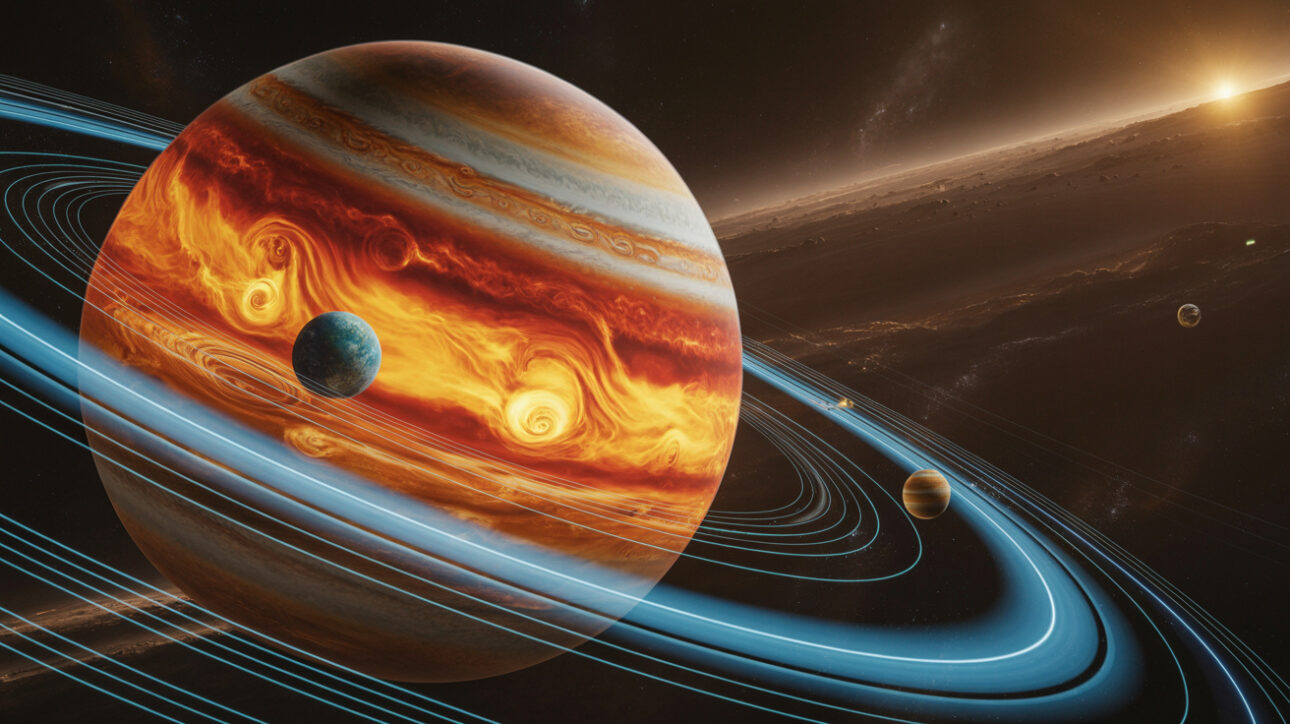
According to Batygin and Adams, this inclination is the fossilized result of gravitational interactions that occurred billion of years ago, when the Solar System was still forming. At that time, Io orbited much closer to Jupiter and gradually migrated to more external regions due to tidal forces.
During this orbital migration, Io entered into gravitational resonance with Amalthea and Thebe. This interaction slightly altered the orbital planes of these two moons.
The intensity of this gravitational disturbance directly depends on the gravitational force of Jupiter, which in turn depends on the size of the planet at that moment.

In other words, the current orbital inclinations of these moons serve as an indirect record of Jupiter’s size in the past. Fred C. Adams described these orbits as impressive testimonies of the primitive phase of the Solar System, stating in a statement that it is surprising that such ancient physical clues can still be detected after 4.5 billion years of orbital evolution.
The Calculation That Allowed for the Reconstruction of Young Jupiter’s Size
Much of the traditional planetary formation models depend on variables that are difficult to observe directly. Among them are factors like:
- the gas accretion rate by the planet
- the opacity of the primitive atmosphere
- the amount of solid material present in the core
These parameters introduce significant uncertainties into the simulations. Batygin and Adams chose a different path. Instead of relying on these uncertain parameters, they used two directly measurable physical quantities: the orbits of Jupiter’s inner moons and the conservation of the planet’s angular momentum.
Angular momentum is a fundamental property of physics that remains constant when there are no external forces acting on the system. A classic example is that of a figure skater. When they pull their arms closer to their body, they spin faster because angular momentum must be conserved.
The Same Principle Applies to Planets
As Jupiter shrank over billions of years, its rotation accelerated. Knowing the planet’s current angular momentum — measured with high precision by the NASA Juno probe — the researchers could retroactively calculate what the planet’s size should have been in the past.
This calculation was combined with chronological data about an important event in the history of the Solar System: the dissipation of the protoplanetary nebula, the cloud of gas and dust surrounding the young Sun. Studies based on primitive meteorites indicate that this dissipation occurred about 3.8 million years after the formation of the first solids in the Solar System.
Interestingly, an independent study published in 2023, based on preserved magnetism in meteorites, reached the same timeframe. This coincidence provided a reliable chronological reference for Batygin and Adams’s model.
The Size of Jupiter at the Beginning of the Solar System
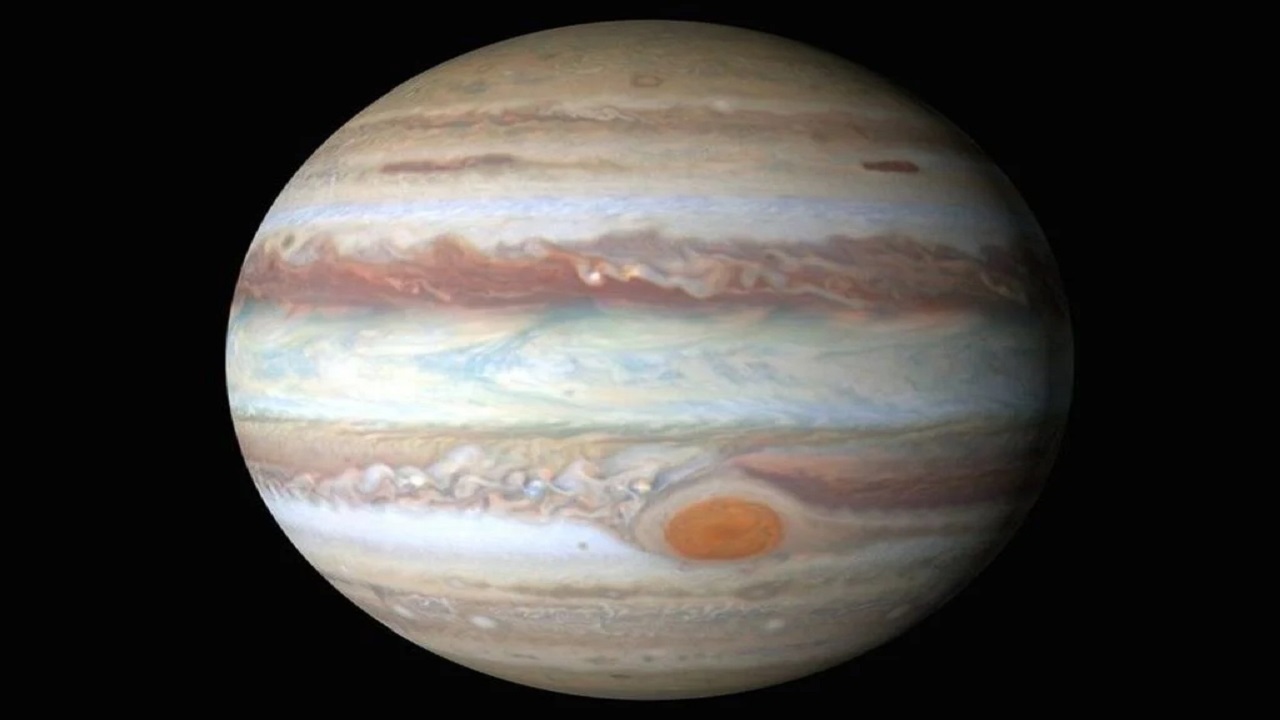
Results published in Nature Astronomy indicate that, approximately 3.8 million years after the onset of planetary formation, Jupiter had between two and two and a half times its current radius. Today, Jupiter’s average radius is around 71,400 kilometers, about 11 times the radius of Earth. At the beginning of its history, the planet likely had between 142,000 and 178,000 kilometers in radius.
In terms of volume, the difference is even more dramatic. The current Jupiter has enough volume to accommodate about 1,321 Earth-sized planets. The primordial Jupiter, on the other hand, could hold more than 2,000 Earths.
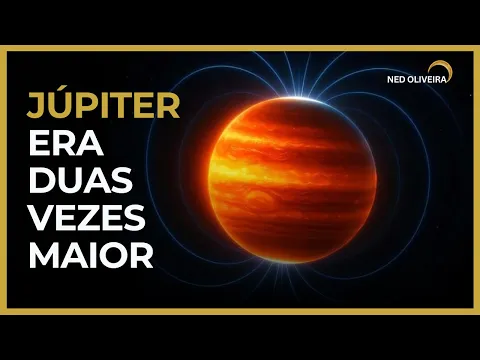
This gigantic planet was still in the process of gravitational contraction and was accumulating gas from the solar nebula at an estimated rate between 1.2 and 2.4 Jupiter masses per million years.
The Magnetic Field of Young Jupiter Was 50 Times Stronger
Another significant result of the study involves Jupiter’s magnetic field at the beginning of the Solar System. According to the researchers’ calculations, young Jupiter had a magnetic field of around 21 milliteslas, approximately 50 times more intense than the current value.
This extremely powerful magnetic field interacted directly with the circumplanetary gas disk that fed the planet during its formation. This interaction generated magnetic torques, which simultaneously regulated the planet’s rotation and the gas accretion rate.
The process formed a feedback system between magnetic field, rotation, and gas flow, leaving gravitational imprints on the orbits of the inner moons. These imprints can still be observed today in the orbits of Amalthea and Thebe.
The Scientific Debate on the Birth of Gas Giants
This discovery also helps clarify an old debate in planetary cosmogony: whether gas giants were born with a “hot start” or a “cold start”. These terms refer to the amount of thermal energy retained by the planet during its formation.
In cold start models, the planet forms more gradually and compactly, dissipating much of the energy released during gravitational collapse.
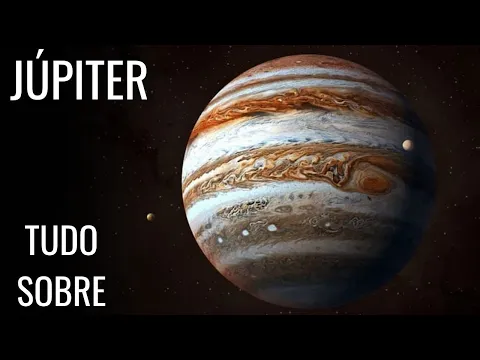
In hot start models, the planet is born much more inflated and hot, retaining a significant fraction of that energy.
The result obtained by Batygin and Adams — a Jupiter with up to 2.5 times its current radius — is consistent with a scenario of warm or moderately warm formation, described by the authors as a “warm start”.
This result also reinforces the dominant theory of gas giant formation: the core accretion theory. In this model, a solid core composed of rock and ice grows to about 10 Earth masses. From this point, the planet rapidly attracts large amounts of gas from the solar nebula.
The Impact of Young Jupiter on the Architecture of the Solar System
Jupiter is not only the largest planet in the Solar System. It also plays a central role in the gravitational architecture of the system. During the initial phase of planetary formation, a Jupiter twice as large and with a much stronger magnetic field exerted an even stronger gravitational influence on the bodies around it.
This influence helped shape various structures in the Solar System. The Asteroid Belt, for example, exists between Mars and Jupiter precisely because Jupiter’s gravity prevented material in that region from consolidating into a planet. Jupiter’s presence also influences the orbits of Saturn, Uranus, and Neptune.
Some dynamic models even suggest that Jupiter may have contributed to expelling a fifth giant gas planet from the primitive Solar System, a body that would have been thrown into interstellar space during ancient gravitational instabilities.
How Two Small Moons Allowed for the Reconstruction of Jupiter’s History
According to Batygin, knowing the size and magnetic field of Jupiter at a specific moment in the history of the Solar System represents an important reference point for reconstructing the evolution of the planetary system. The work demonstrates how seemingly subtle gravitational records can preserve extremely ancient information.
Essentially, what Batygin and Adams did was use the fundamental laws of mechanics as a sort of scientific time machine. Without the need for new telescopes or space missions, the researchers utilized only the slightly inclined orbits of two small moons — Amalthea and Thebe — and the laws of physics formulated by Isaac Newton over three centuries ago.
These laws are still precise enough to reveal what the largest planet in the Solar System was like about 4.5 billion years ago, when the planetary system was still forming.






Seja o primeiro a reagir!