





 Portuguese
  English
  Spanish
  6 min of reading
  0 comments


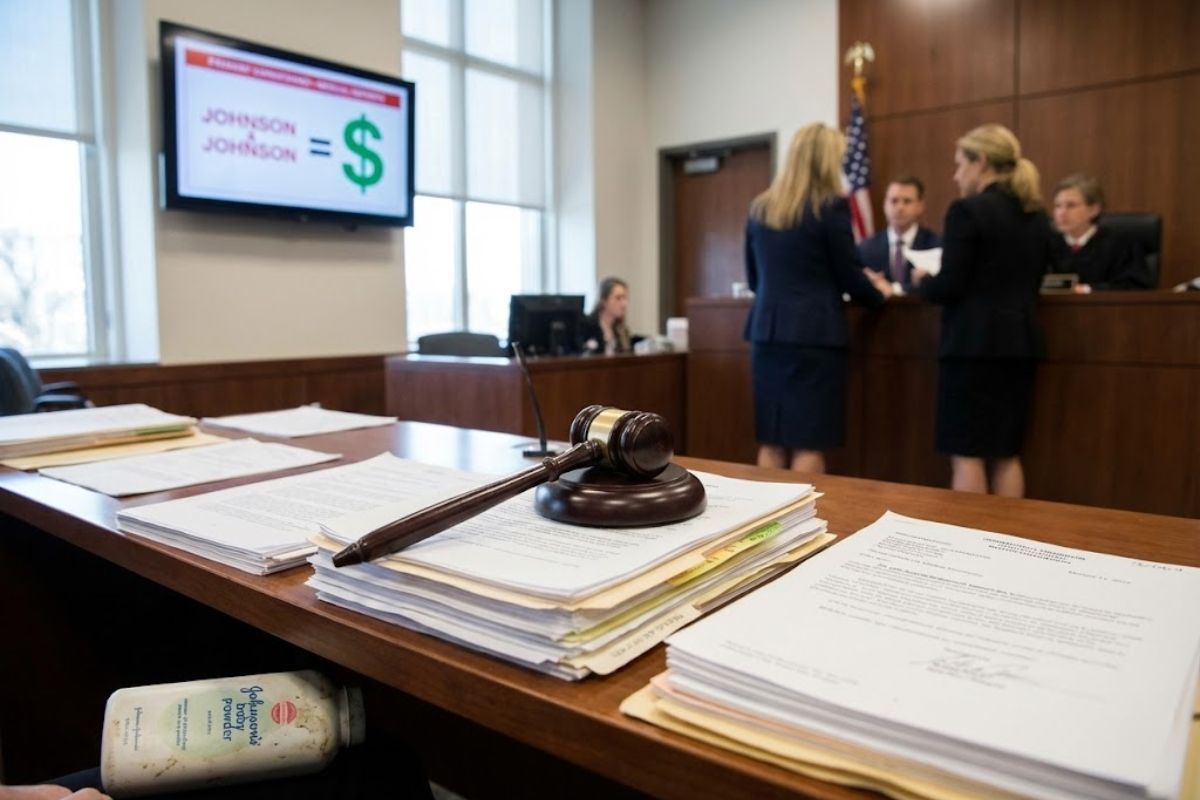
Decision In Los Angeles Involves Two Patients With Ovarian Cancer Who Used Johnson & Johnson Talc For Decades, Focuses On Asbestos Claims In Containers, Questions Consumer Warnings And Pressures Thousands Of Pending Lawsuits In US Justice Observed By Investors And Regulatory Authorities Worldwide.
In a report published on December 13, 2025, the decision of a California jury was made public, condemning Johnson & Johnson to pay 40 million dollars in damages to two women with ovarian cancer, both users of the brand’s baby powder for about four decades after bathing. The verdict was delivered by the Superior Court of Los Angeles and awarded 18 million dollars to Monica Kent and 22 million dollars to Deborah Schultz and her husband.
The decision was updated on December 14, 2025, when the company reiterated that it would appeal and classified the outcome as an isolated adverse verdict. While the patients point to the Johnson & Johnson talc as a determining factor in the development of tumors, the company maintains that there is no scientific consensus or support from health authorities in the United States to establish this direct causal link.
How The Verdict Against Johnson & Johnson Was In California
The California jury analyzed the history of baby powder use by two residents of the state, Monica Kent and Deborah Schultz, both diagnosed with ovarian cancer in 2014 and 2018.
-
The Senate approves a bill that criminalizes misogyny, hatred, or aversion towards women, and includes the crime in the Racism Law with a penalty of up to 5 years.

-
Chamber Approves Bill That Allows Pepper Spray for Women Over 16 and Imposes Strict Rules for Purchase, Possession, and Use as Self-Defense

-
Chamber Approves Law to Combat Leucaena, Fast-Growing Plant That Dominates Land and Threatens Native Species in Various Regions of the Country

-
Asset Division: Know What Cannot Be Divided in Case of Divorce


Both reported daily use of the product for approximately 40 years, always after bathing.
According to the trial records, the treatments included major surgeries and dozens of chemotherapy sessions, which reinforced, before the jury, the devastating nature of the disease in the families’ lives.
The patients’ lawyers argued that Johnson & Johnson knew, since the 1960s, that its talc-based products could pose cancer risks, but did not include clear warnings on the labels nor halted the sale of traditional talc.
The jury accepted a central part of this narrative and concluded that the company should be financially accountable for the damages. However, the 40 million dollar conviction does not end the controversy.
Johnson & Johnson announced that it would immediately appeal, seeking to overturn the decision in higher courts or, at the very least, reduce the amount of compensation.
What The Patients And Their Lawyers Allege
The line of accusation presented to the jury directly associates Johnson & Johnson talc with the ovarian cancer of the two women.
The central argument is that the product would be contaminated with asbestos, a substance globally recognized as carcinogenic, and that chronic exposure for decades would have significantly increased the risk of developing gynecological tumors.
Lawyer Andy Birchfield stated that internal documents would show that Johnson & Johnson had been aware for many years of potential risks related to talc and asbestos but chose not to inform the public.
In his closing argument, he accused the company of trying to “bury the truth about the dangers” of the products, transforming a line originally aimed at babies and personal care into a focus of a large-scale civil liability crisis.
For the patients, the central point is not only the financial compensation but the recognition that the use of Johnson & Johnson talc was part of the exposure context that preceded the ovarian cancer.
Alongside the surgeries and chemotherapy, they report a drastic change in routine, loss of work capacity, and long-lasting psychological impacts, factors that weighed in the quantification of moral damages by the jury.
The Defense Of Johnson & Johnson And The Scientific Dispute
On the other side, Johnson & Johnson’s defense insists that ovarian cancer cases cannot be attributed, based on available evidence, to the use of baby talc.
Lawyer Allison Brown informed the jurors that the only people linking the product to tumors were the patients’ attorneys, as no relevant health authority in the United States has formally recognized this causal link.
The company maintains that there is no conclusive study showing that talc particles can migrate from external skin application to female reproductive organs in sufficient quantities and conditions to cause cancer.
In Johnson & Johnson‘s assessment, the association between talc and ovarian cancer remains controversial, and the data presented by the prosecution would be insufficient to support liability.
Even under strong public pressure, the company claims that its talcs are safe, do not contain asbestos, and do not cause cancer, based on internal analyses and laboratory evaluations commissioned over the years.
The California jury’s decision, therefore, is treated by Johnson & Johnson as a one-off result that should be reviewed in appellate courts.
Talc, Asbestos And Changing Product Strategy
The lawsuits against Johnson & Johnson focus on the accusation that the talc used in the formulation of popular products, such as Johnson’s Baby, may have been contaminated with asbestos in certain batches and production periods.
Asbestos is a widely recognized carcinogenic agent, and the mere suspicion of its presence in a commonly used product has amplified the case’s repercussions.
In 2019, the company released results of analyses that, according to its own version, did not identify asbestos in the evaluated talcs.
However, tests conducted by the Food and Drug Administration, the federal health agency in the United States, found traces of the carcinogenic material in products from the brand, which fueled regulatory controversy and strengthened the argument of some plaintiffs.
In May 2020, Johnson & Johnson announced the suspension of sales of Johnson’s Baby talc in the United States and Canada, replacing the formula with corn starch-based versions.
Officially, the company linked the change to a portfolio reevaluation during the pandemic and decreased demand, but the measure occurred after a surge in litigation and public questioning regarding the safety of traditional talc.
At the same time, the cancer agency of the World Health Organization has classified talc as “potentially” carcinogenic, which does not equate to an absolute confirmation of risk but reinforces the need for long-term exposure assessments.
In this scenario of scientific uncertainty and strong regulatory sensitivity, decisions like California’s gain symbolic weight.
Avalanche Of Lawsuits And The Impasse Of The Billion-Dollar Settlement
The case of Monica Kent and Deborah Schultz is just a fraction of a massive litigation.
Johnson & Johnson currently faces tens of thousands of lawsuits related to talc.
Documents submitted in court speak of more than 67 thousand claimants, while reports from outlets like the New York Times mention over 90 thousand claims filed in North American courts.
To try to end the litigation globally, Johnson & Johnson resorted to a controlled bankruptcy strategy, through Chapter 11 filings, a mechanism equivalent to judicial recovery in the United States system.
The idea was to concentrate all claims in a specific structure and enable a collective settlement of around 9 billion dollars with people alleging to have developed cancer after using talc.
Federal courts have rejected these attempts on three occasions.
The most recent decision, at the end of March 2025, came from a bankruptcy judge in Houston, who rejected Johnson & Johnson’s plan and kept the path open for individual lawsuits to continue.
The bankruptcy attempts had temporarily suspended most processes, and the cases of Kent and Schultz are among the first to go to trial after this latest legal setback.
In practice, this means that the company will face, case by case, the risk of new juries recognizing links between Johnson & Johnson talc and different types of cancer.
Each unfavorable verdict tends to strengthen the position of other claimants while simultaneously pressuring the company to recalibrate its defense and negotiation strategy.
What Is At Stake For Consumers And Investors
The dispute surrounding Johnson & Johnson talc goes beyond accountability for two individual cases.
It questions how large pharmaceutical and hygiene companies deal with evidence of risk, labeling, transparency, and decisions to withdraw products from the market.
It also reignites the debate about the role of regulatory agencies and courts in protecting consumers in the face of scientific uncertainties.
For investors, the outcome of the trial in California acts as a financial and reputational risk thermometer.
A history of unfavorable decisions may lead to billion-dollar provisions in balance sheets, downgrading of governance perception, and revision of business strategies.
For consumers, the case serves as a warning about the importance of following technical information, medical recommendations, and regulatory positions before maintaining prolonged use of any potentially controversial product.
In light of this scenario, after following the arguments of the jury, the defense, and the patients, do you believe that decisions like this should change the way the public perceives Johnson & Johnson and the use of talc in daily life?










-

-

2 pessoas reagiram a isso.