





 Portuguese
  English
  Spanish
  3 min of reading
  1 comment


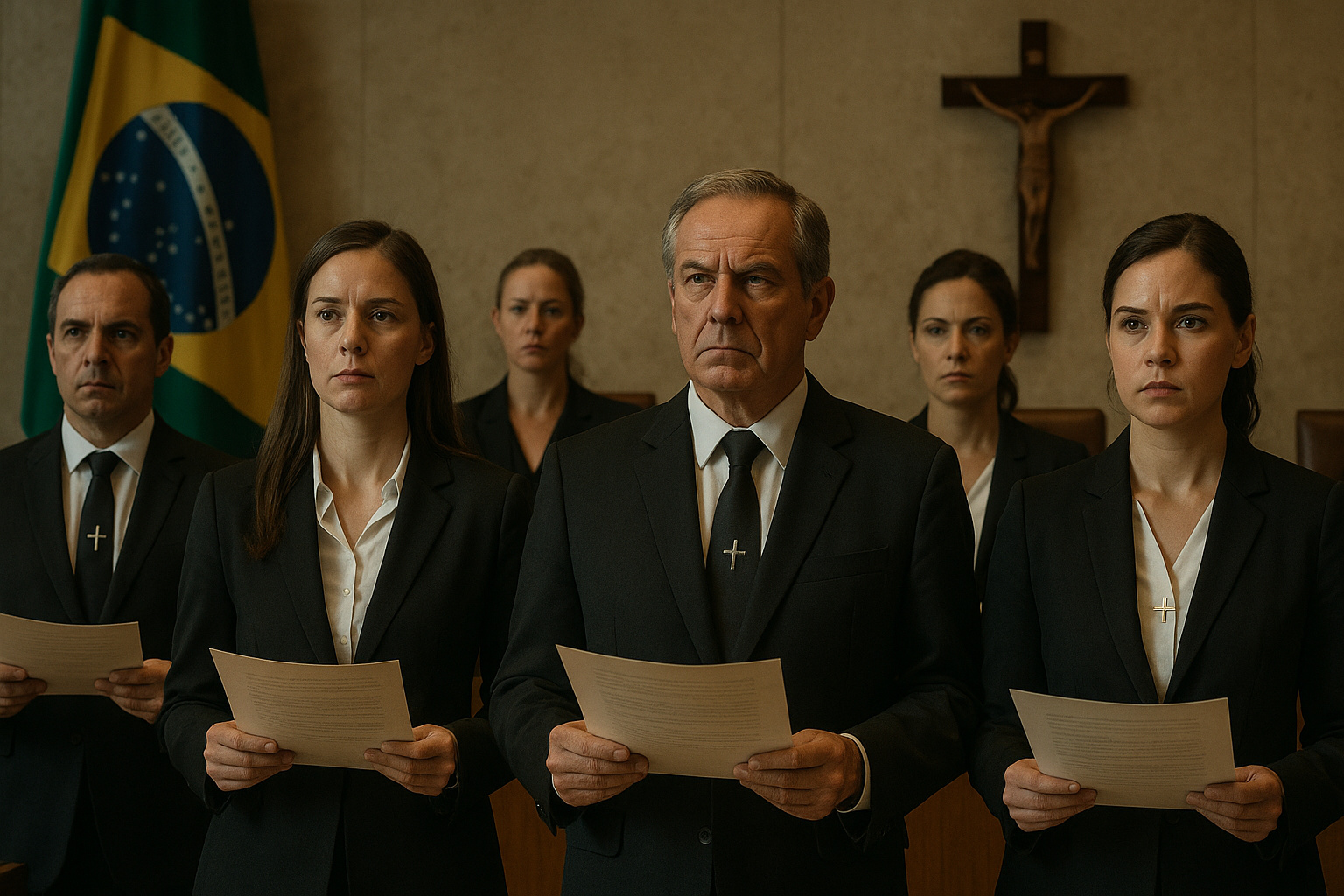


Group Led by Ives Gandra and Thiago Vieira Questions Fachin’s Decision and Claims That Barroso’s Early Vote Compromises the Impartiality of the Court and Challenges the Role of Congress
A group of Catholic jurists filed a formal petition with the Supreme Federal Court (STF) demanding that the vote of former minister Luís Roberto Barroso — in favor of decriminalizing abortion up to 12 weeks of gestation — be nullified. The request, filed on Tuesday (21), was addressed to the court’s president, Minister Edson Fachin, and reignited the legal and moral debate surrounding the issue.
The action is signed by the Union of Catholic Jurists of São Paulo (UJUCASP) and the Brazilian Institute of Law and Religion (IBDR), with endorsements from Ives Gandra da Silva Martins and lawyer Thiago Rafael Vieira. According to the group, the former minister would have anticipated his statement in the Arguição de Descumprimento de Preceito Fundamental (ADPF) 442, proposed by PSOL, to ensure that his vote was counted before his retirement, formalized on October 18.
Allegations of Violation of Due Process and Bias in Judgment
The jurists argue that Barroso’s act violates due process and compromises the impartiality of the judgment. For them, the minister acted with the aim of preventing his successor from participating in the vote on an issue of “such moral and constitutional relevance.”
-
Spain surprises the world by erecting 62 artificial dunes, mixing sand with natural remains of posidonia, and causing the structure to lose only 1.4% of its volume in 1 year.

-
With 16 Bulava missiles, improvements in acoustic stealth, and a design focused on silent patrols, Russia’s nuclear submarine was born to ensure Moscow’s invisible retaliation and has become one of the pillars of its maritime strength.

-
‘Populous’ city in Rio among the worst in Brazil in national ranking and exposes silent development crisis.

-
Couple buys house in the South Zone of São Paulo, opens a hidden door in the garage, and finds a secret wine cellar with dozens of old wines forgotten since the 1970s.


The document also questions the application of Article 2 of the Civil Code, which recognizes the rights of the unborn since conception, suggesting that this principle should equally apply to the right to life. If the vote is not annulled, the group requests that the Supreme Court formally clarify the scope of this article within the decision on abortion.
As published by the portal O Antagonista, Barroso’s vote was presented in an extraordinary virtual session that started at 8 PM on the 20th, just four hours before his retirement. At that time, he aligned with the position of former minister Rosa Weber, in favor of decriminalizing abortion up to the fourth month of gestation.
Fachin Maintained Barroso’s Vote, But Judgment Remains Suspended
The judgment was set to conclude at 11:59 PM that same day, but was interrupted when Minister Gilmar Mendes requested a highlight, bringing the case to the physical plenary. Consequently, the new rapporteur, Minister Flávio Dino, requested the withdrawal of the process from the agenda — a measure accepted by Fachin, who decided to keep Barroso’s vote in the records.
The Supreme Federal Court confirmed that Fachin authorized the vote by understanding that it would not be legitimate to prevent an individual manifestation from a sitting minister. Nonetheless, the case remains suspended and without a date for resumption, awaiting the appointment of Barroso’s successor.
For the jurists, the decision sets a dangerous precedent and threatens the institutional integrity of the court. They highlight that the STF has faced a similar situation in the past and opted to consider only votes from sitting ministers in order to preserve the legitimacy of the court’s composition.
STF vs. Congress: The Debate on the Limits of Judicial Action
In the petition, the authors also emphasize that the Supreme cannot replace the National Congress in matters of a legislative nature. “The Constitution did not delegate legislative powers to the Judiciary,” they wrote. The group reinforces that decisions on sensitive topics, such as abortion, should be debated by elected representatives, and not defined through votes of ministers about to retire.
The judgment of ADPF 442, filed in 2017 by PSOL, remains pending and will only be resumed after the full recomposition of the court. Meanwhile, the controversy surrounding Barroso’s actions and the scope of judicial decisions on moral issues promises to keep the case among the most discussed topics in Brazilian politics and law in the coming weeks.







I never thought about it this way before. Your post gave me a fresh perspective.