





 Portuguese
  English
  Spanish
  4 min of reading
  0 comments


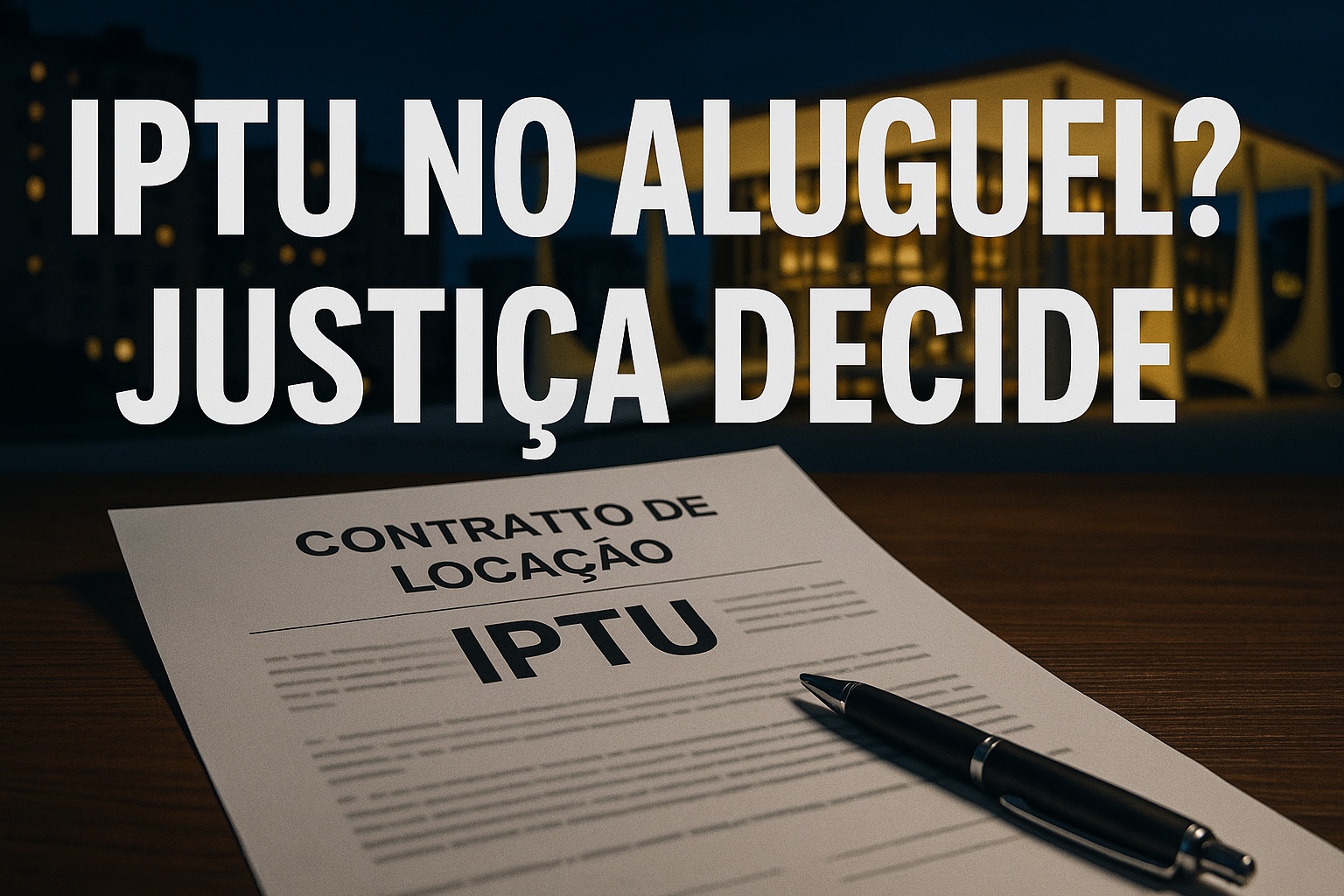
Court Confirms: IPTU Can Only Be Charged to Tenants If Clause Is Clear in the Contract; Hidden Charges Have Been Annulled in Several Courts.
Every year, the Urban Land and Property Tax (IPTU) weighs heavily on property owners. In many rental contracts, this cost is passed on to the tenant. The problem arises when this charge is made without clarity due to hidden clauses or a lack of formal provision. In recent years, courts across the country have annulled the abusive charging of IPTU, confirming that the obligation lies with the owner when the contract does not transparently specify the tenant’s responsibility.
What the Tenancy Law States
The Law No. 8.245/1991, which regulates rental contracts in Brazil, establishes in its article 22 that it is the landlord’s obligation (property owner) to pay taxes, fees, and charges, unless there is a contractual provision to the contrary.
This means that:
-
The noise law will no longer be in effect at 10 PM starting in June with a new rule valid during the 2026 World Cup.

-
The Chamber opens a debate on driver’s licenses at 16 years old as part of a reform that includes around 270 proposals to change the Brazilian Traffic Code and may redesign rules for licensing, enforcement, and circulation in the country.

-
The new Civil Code could revolutionize marriages in Brazil with “express divorce” and changes that could exclude spouses from inheritance.
-
Banco do Brasil sues famous influencer for million-dollar debt and intensifies debate on delinquency, risks of seizure, and direct impact on Gkay’s credibility.


- By default, the IPTU must be paid by the property owner.
- It can only be transferred to the tenant if there is a clear and express clause in the contract.
- If the clause is not clear, the charge is considered abusive.
The Position of the Courts
The Superior Court of Justice (STJ) has confirmed in several rulings that the charging of IPTU is only valid when there is a clear and transparent provision in the rental contract.
- In analyzed cases, generic clauses referring to “charges” or “property obligations” were deemed insufficient.
- The Justice understood that the contract needs to explicitly mention the IPTU.
- If the contract is silent, the obligation remains with the owner.
This understanding has protected tenants from unexpected or even retroactive charges.
Cases that Reached Justice
A case judged by the TJSP annulled the IPTU charge made against a tenant whose contract did not specify this obligation. The court ruled that the responsibility was the owner’s and even required reimbursement of the amounts paid by the tenant.
In Minas Gerais, the TJMG decided that, even if there is a clause in the contract, if the wording is not clear and direct, the charge is null. According to the judges, the tenant cannot be surprised by costs not specified in an objective manner.
The Financial Impact on Tenants
The amount of IPTU varies depending on the municipality and the property, but it can be quite significant. In capitals like São Paulo, Rio de Janeiro, and Belo Horizonte, the annual tax can reach thousands of reais.
If a tenant pays IPTU without the clause being correctly provided in the contract, they can go to court and demand a refund. In some cases, the refund occurs with monetary correction and interest.
What Contracts Should Specify
To avoid problems, the rental contract should:
- Clearly specify whether the IPTU is paid by the owner or the tenant.
- Explicitly mention the term “IPTU.”
- Define the payment method (directly by the invoice issued by the city or reimbursement to the owner).
Any omission can lead to legal disputes and, ultimately, to the cancellation of the charge.
What to Do in Case of Abusive Charging
If the tenant is improperly charged, they should:
- Check the contract: if there is no clear clause about the IPTU, the charge is not valid.
- Seek an agreement with the owner: often, the solution can be negotiated without legal action.
- Seek legal advice: if there is no agreement, it is possible to file a lawsuit to suspend the charge and even request the refund of amounts paid.
The Owner’s Side
For the owner, the lesson is simple: if they wish to transfer the payment of IPTU to the tenant, they must draft a clear and objective clause in the contract. This ensures legal security and avoids future disputes.
Many property owners still use generic contracts or old models that do not address the subject in detail, leaving room for annulments.
Court Confirms: IPTU Cannot Be Charged Stealthily
Recent court decisions make it clear that IPTU cannot be passed onto the tenant without notice. The obligation lies with the owner, and can only be transferred if the contract makes this crystal clear.
This measure protects tenants from unfair charges and reinforces the duty of transparency in contractual relations. For tenants, it represents a significant victory: besides avoiding unexpected costs, it opens the possibility of recovering improperly paid amounts.










-

-

-

-

-

-

13 pessoas reagiram a isso.