





 Portuguese
  English
  Spanish
  3 min of reading
  2 comments


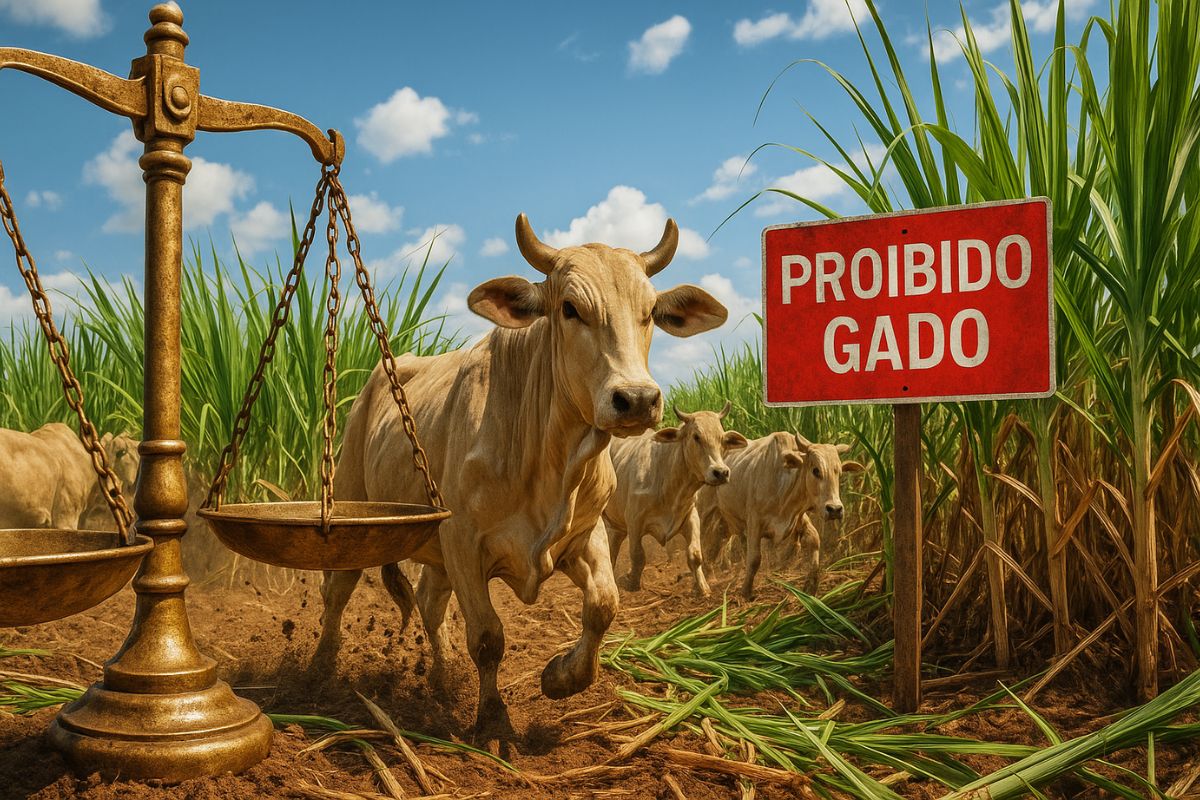


São Paulo Court of Justice Confirmed That Owner Is Responsible for Damages Caused by His Animals in Sugarcane Plantation.
The Justice of São Paulo upheld the decision that obligates a farmer to compensate an agricultural company in R$ 32.8 thousand, after his cattle invaded and destroyed a sugarcane plantation in Nhandeara (SP). The case was judged by the 36th Chamber of Private Law of the São Paulo Court of Justice (TJ-SP).
According to Conjur, the judges understood that the duty to monitor and safeguard the animals rests exclusively with the owner, removing any possibility of shared responsibility between the parties.
The Case and the First Decision
The dispute began when the agricultural company claimed that the farmer’s cattle repeatedly invaded the cultivation area, causing significant damage to the sugarcane field.
-
The Senate approves a bill that criminalizes misogyny, hatred, or aversion towards women, and includes the crime in the Racism Law with a penalty of up to 5 years.

-
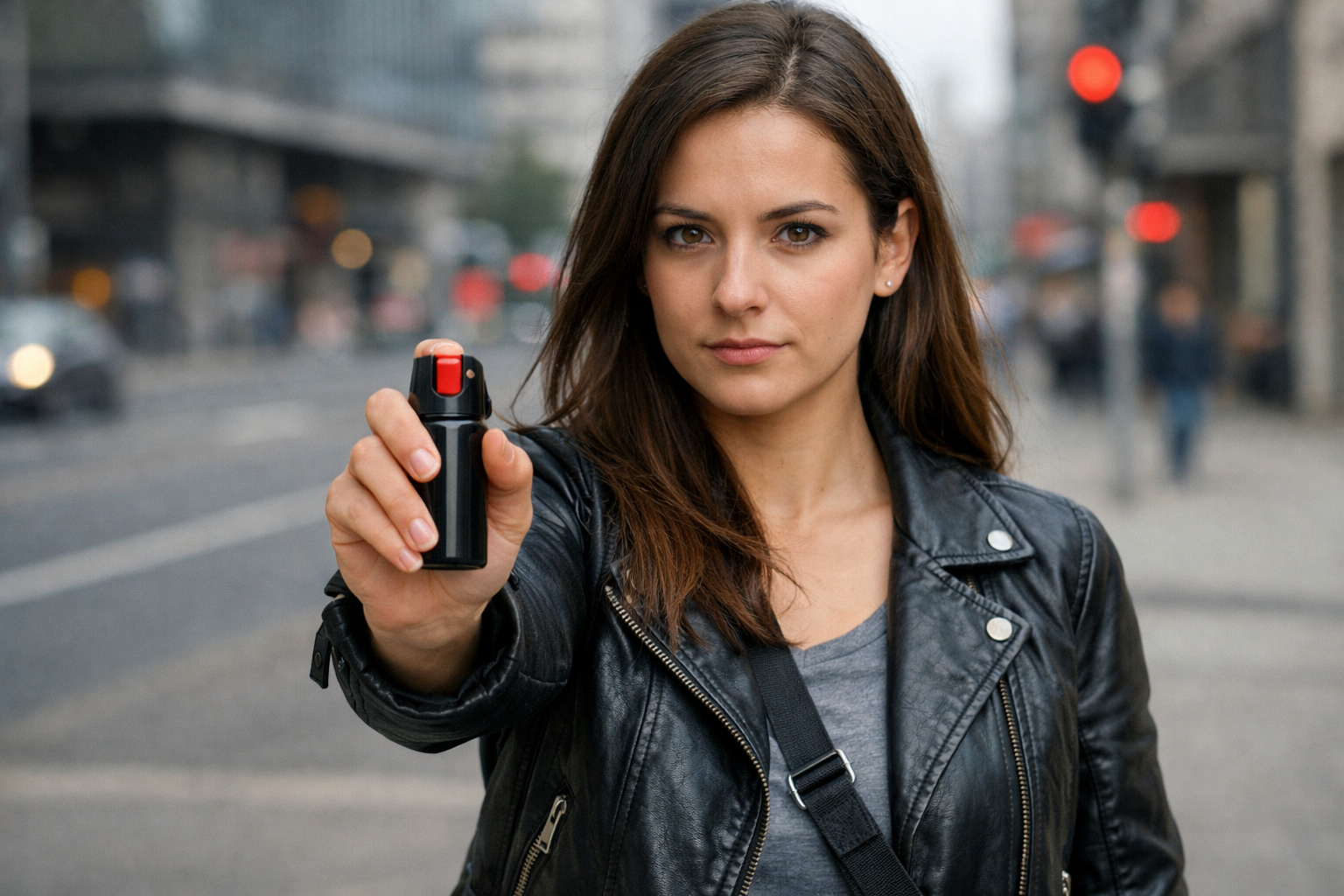
Chamber Approves Bill That Allows Pepper Spray for Women Over 16 and Imposes Strict Rules for Purchase, Possession, and Use as Self-Defense
-
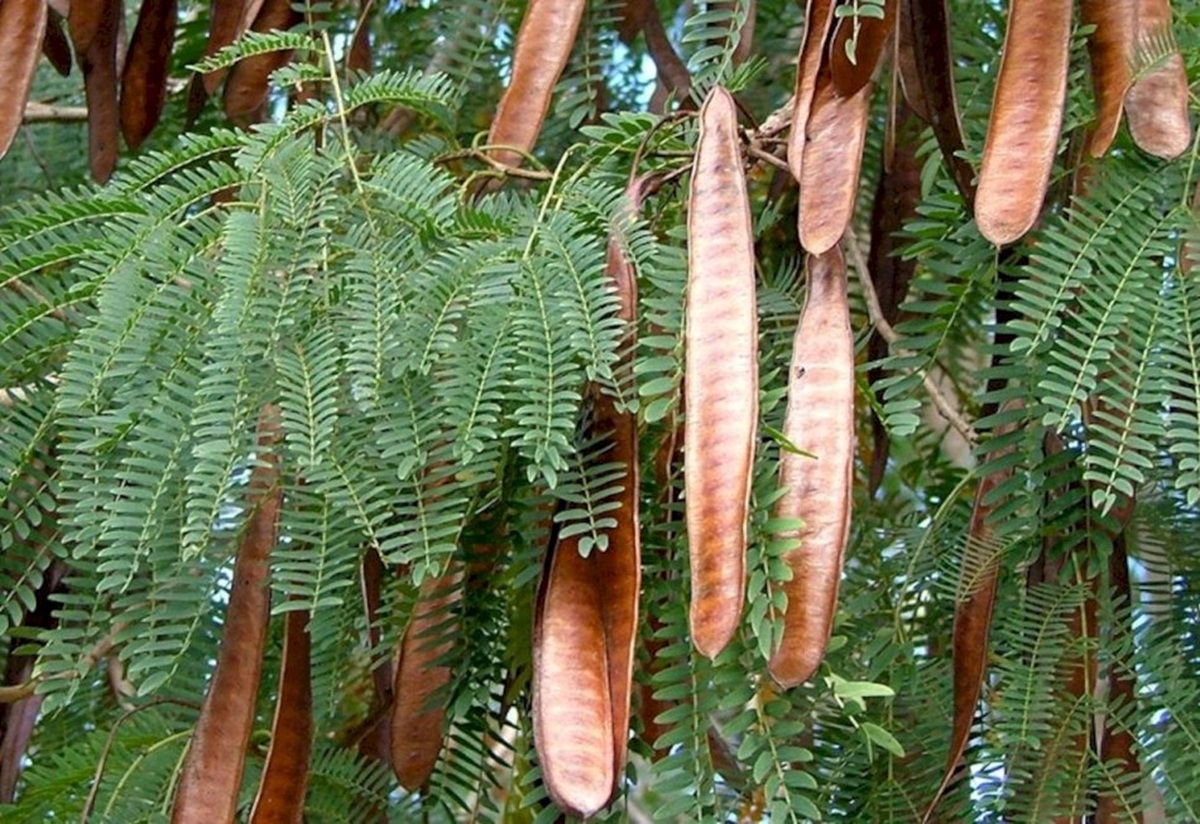
Chamber Approves Law to Combat Leucaena, Fast-Growing Plant That Dominates Land and Threatens Native Species in Various Regions of the Country
-
Asset Division: Know What Cannot Be Divided in Case of Divorce


At first instance, Judge Wendel Alves Branco, from the Single Court of Nhandeara, condemned the defendant to pay R$ 32.8 thousand for material damages.
In addition to the compensation amount, the decision ordered the owner to take concrete measures to prevent further invasions, reinforcing the obligation to care for the animals.
The Farmer’s Defense
The farmer appealed, arguing that an open passage allowed access to the sugarcane field and that, therefore, it was not possible to prevent the cattle from entering the neighboring area.
For him, there would be shared responsibility since the company’s property also had not made the necessary containment.
The Court, however, did not accept the argument. The rapporteur of the case, Judge Milton Carvalho, was clear in stating that “the responsibility to safeguard and monitor the cattle lies with the appellant”, and that there was no basis for discussing shared fault.
The Decision by TJ-SP
The trial also included judges Lidia Conceição and Arantes Theodoro, who fully supported the rapporteur’s vote.
The decision was unanimous, consolidating the understanding that the owner of the animals is fully responsible for the damages caused.
According to the technical report attached to the case, the damage to the plantation was duly proven, which reinforced the conviction.
The court emphasized that the failure to monitor the animals cannot be transferred to the victim of the damages.
The case reinforces the importance of civil responsibility in the rural environment and serves as a warning for owners who do not maintain adequate control over their animals. For the Justice, those who own cattle must be fully accountable for the damages they cause.
And you, do you think the Court’s decision is fair? Should the farmer share the responsibility or truly bear the loss alone? Leave your opinion in the comments.









Sou fazendeiro e avisa toda tive cerca dividida com vizinhos em compartilhamento.
50% para um e 50% para o outro.
É assim que funciona.
A cerca na divisa das propriedades rurais não poder de responsabilidade apenas de um dos proprietários, caso ele crie **** e o vizinho não
Tb tenho cercas de divisas com vários outros proprietários na mesma modalidade, mas é para conservação. Se um **** arrebentar a cerca e levar outros com ele causando prejuízos financeiros ao vizinho, o proprietário do (s) **** (ais) tem que arcar com o prejuízo causado, qto ao conserto da cerca poderá ser dividido entre os dois ou não de acordo com o que for definido pelos dois. Principalmente se não for estabelecido por escrito como será a parte que cada um será responsável por conservar a cerca em perfeitas condições.