





 Portuguese
  English
  Spanish
  5 min of reading
  8 comments


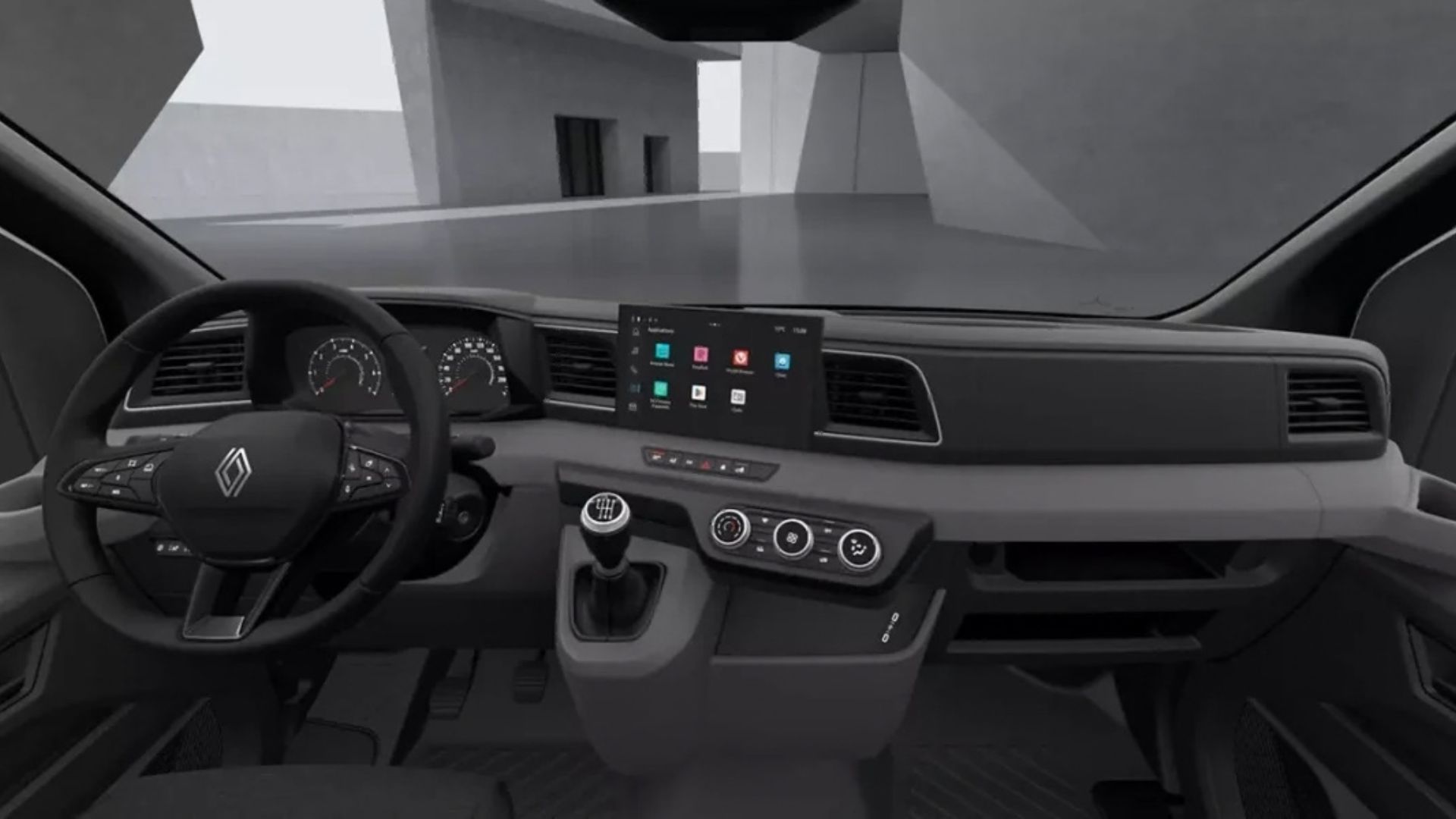


Generation Change Repositions The Renault Master With Focus On Efficiency, More Embedded Technology, And Versions For Different Types Of Operation, While The Electric Offer Expands The Range Of The Line And Strengthens The Dispute In The Large Vans Segment.
The new generation of the Renault Master is expected to mark a significant shift in the brand’s offensive for light commercial vehicles, with a project already presented in Europe and a combination of diesel and electric engines that broadens the utility’s range of use in urban, highway, and fleet operations.
In Brazil, however, local production and the launch schedule have not been officially detailed by Renault in the sources consulted, although the current Master continues to be manufactured at the Ayrton Senna Complex in São José dos Pinhais, Paraná.
In practice, the model that emerges in Europe does not literally represent the return of the Kombi, but rather a deep renewal of the Master within the large van segment, aimed at cargo, passenger transport, and professional transformations.
-
The car stored for 38 years: when opening the barn door, what appears is breathtaking and looks like a scene from a movie!

-
Fiat works miracles in the Brazilian market, lowers the price of its 0 km hatch to R$ 69,990, reestablishes the model as the cheapest car in the country, and reignites the battle against Kwid and C3.
-
Chevette with cooking gas: How the gas cylinder ends up being used in cars clandestinely and why this makeshift solution can result in leaks, explosions, damaged engines, and seized vehicles.
-
Fiat launches the new 2027 Toro hybrid with 48V, 176 hp, an electric motor of 15.5 hp, a 0.85 kWh battery, up to 7% fuel savings, 8% fewer emissions, and possible exemption from IPVA.

The current line sold in the Brazilian market already occupies this space with van, minibus, and chassis-cab versions, and the next generation maintains this vocation as a multi-platform for different types of operation.
New Engine For The Renault Master 2027

Among the main innovations of the new generation is the adoption of the 2.0 liter Blue dCi family in Europe, with options reaching 170 hp, in addition to manual transmission or the new nine-speed EAG9 automatic transmission.
This set replaces the old diesel architecture of the previous European generation and was presented by Renault as part of the strategy to reduce consumption and emissions, without compromising work capacity on longer trips.
In the Brazilian market, the current Master is still offered with a 2.3 turbo diesel engine, and there are discrepancies among recent materials about the commercially advertised power in the country, with official pages mentioning 150 hp and catalogs from other phases of the line indicating 136 hp.
Therefore, the secure information is that the new European generation raises the mechanical standard with the 2.0 Blue dCi and opens the door for the anticipated debut of the automatic transmission in the range, if this configuration is nationalized.
Electric Version Of The Van Expands The Offer
The deepest change is in the electric offer, treated by Renault as the centerpiece of the new Master.
In the European launch, the van started to feature electric motors of 96 kW and 105 kW, both with 300 Nm of torque, associated with 40 kWh and 87 kWh batteries, with autonomy that can reach 460 kilometers on the WLTP cycle, depending on the version and body configuration.
This data alters one of the most sensitive points of the project for professional use, as the larger battery makes the van more suitable for more extensive distribution operations, while the smaller option is indicated for urban routes and services with frequent returns to base.
Renault itself reports that the 87 kWh configuration delivers the best range of the electric line, while the 40 kWh variant comes close to 200 kilometers under the European homologation standard.
Rapid Recharging And Connectivity For Fleet Owners

For recharging, the manufacturer informs that the new electric Master accepts rapid charging in direct current of up to 130 kW, with a gain of up to 252 kilometers of autonomy in 30 minutes, in addition to charging in 22 kW AC and lower power solutions for domestic or corporate use.
This package brings the van closer to a more flexible routine for fleet owners, especially in operations that require the vehicle to be reused on the same day, with short downtime windows.
In addition to the powertrain, the cabin underwent significant reformulation and gained the openR link system with integrated Google, a feature that Renault describes as unprecedented in a light utility from the brand in this range.
This includes navigation with Google Maps, access to applications via Google Play, and voice commands via Google Assistant, in an environment designed to reduce time lost with routes, communication, and operational management in daily use.
The connectivity directly aligns with another growing focus in the segment, that of telematics and fleet management, although the exact availability of these services depends on the market and the adopted configuration.
Still, the new Master was presented by Renault as a van designed to meet the needs of companies that require energy efficiency, monitoring, and greater integration between driver, vehicle, and logistical operation.
Body Versions And Professional Use

Renault also preserved the versatile character of the line by maintaining different lengths, heights, and transformation possibilities in the new generation.
In Europe, the Master was presented as a base for multiple professional conversions, with versions aimed at cargo, specialized services, and passenger applications, reinforcing one of the model’s historical strengths in the utility market.
In Brazil, the current range already meets this profile with van, minibus, and chassis-cab, produced in Paraná, and the logic of the new generation indicates the maintenance of this strategy, even though the definitive composition of the local line has not been confirmed by the manufacturer in the official sources consulted.
The Brazilian catalog of the current generation shows the continuity of the Master as an adaptable work platform, while the new European architecture reinforces this same proposal with more embedded technology.
Design Of The New Renault Master And Aerodynamic Efficiency
In its design, the van has adopted a more vertical front, LED lighting, redesigned grille and elements aimed at aerodynamic efficiency, an aspect that Renault highlighted explicitly during the international launch.
The brand claims that the project was reviewed in a wind tunnel and that this evolution helps reduce consumption and emissions, a particularly relevant point for those who travel long distances or operate with tight margins in commercial transport.
The new Master, therefore, signals a broader shift by Renault in the large van segment, with updated diesel, automatic option, and a much more competitive electric variant than that offered in previous phases of the model.
The technical advancement is already concrete in the European market, but the central details for Brazil, such as the start of production of the new generation, national electric versions, and final specifications for charging and autonomy, still depended on official confirmation from the consulted public sources.





Cadê a Kombi.
É um veículo de trabalho espetacular, muito moderno e que foca exatamente no que o motorista profissional precisa: conforto (câmbio automático), conectividade (Google nativo) e eficiência (diesel atualizado ou elétrico de boa autonomia). Esqueça a comparação com a Kombi; ela é, na verdade, uma máquina de logística pesada altamente tecnológica.
Pontos Fortes do Novo Projeto
Salto na Motorização a Combustão: A troca do antigo motor 2.3 para o novo 2.0 turbodiesel de 170 cv é um avanço significativo. Mais potência com menor litragem geralmente significa maior eficiência térmica. Além disso, a introdução de um câmbio automático de 9 marchas é um divisor de águas para quem trabalha o dia todo no trânsito urbano, reduzindo drasticamente o desgaste físico do motorista.
Versão Elétrica Realmente Viável: A grande estrela parece ser a versão elétrica com a bateria de 87 kWh. Uma autonomia de até 460 km (ciclo WLTP) é mais do que suficiente para rotas urbanas de entrega diárias (last-mile delivery). A capacidade de recarga rápida (130 kW), recuperando mais de 250 km em meia hora, torna o veículo muito prático para frotistas que não podem deixar o carro parado.
Tecnologia e Conectividade Embutida: A integração nativa com o Google (openR link) no painel é uma sacada inteligente. Em veículos de trabalho, depender de suportes de celular pendurados no vidro é ruim. Ter Google Maps e Assistente nativos melhora a segurança e a produtividade da rota.
Tu só pode comparar alguma coisa com a eterna kombi quando estiver escrito no ducumento: uso misto…onde se pode usar o utilitário tanto pra carga quanto pra passageiros.. Some isso a CNH B.. Aí sim tem moral pra ser comparado à kombi..