





 Portuguese
  English
  Spanish
  10 min of reading
  0 comments


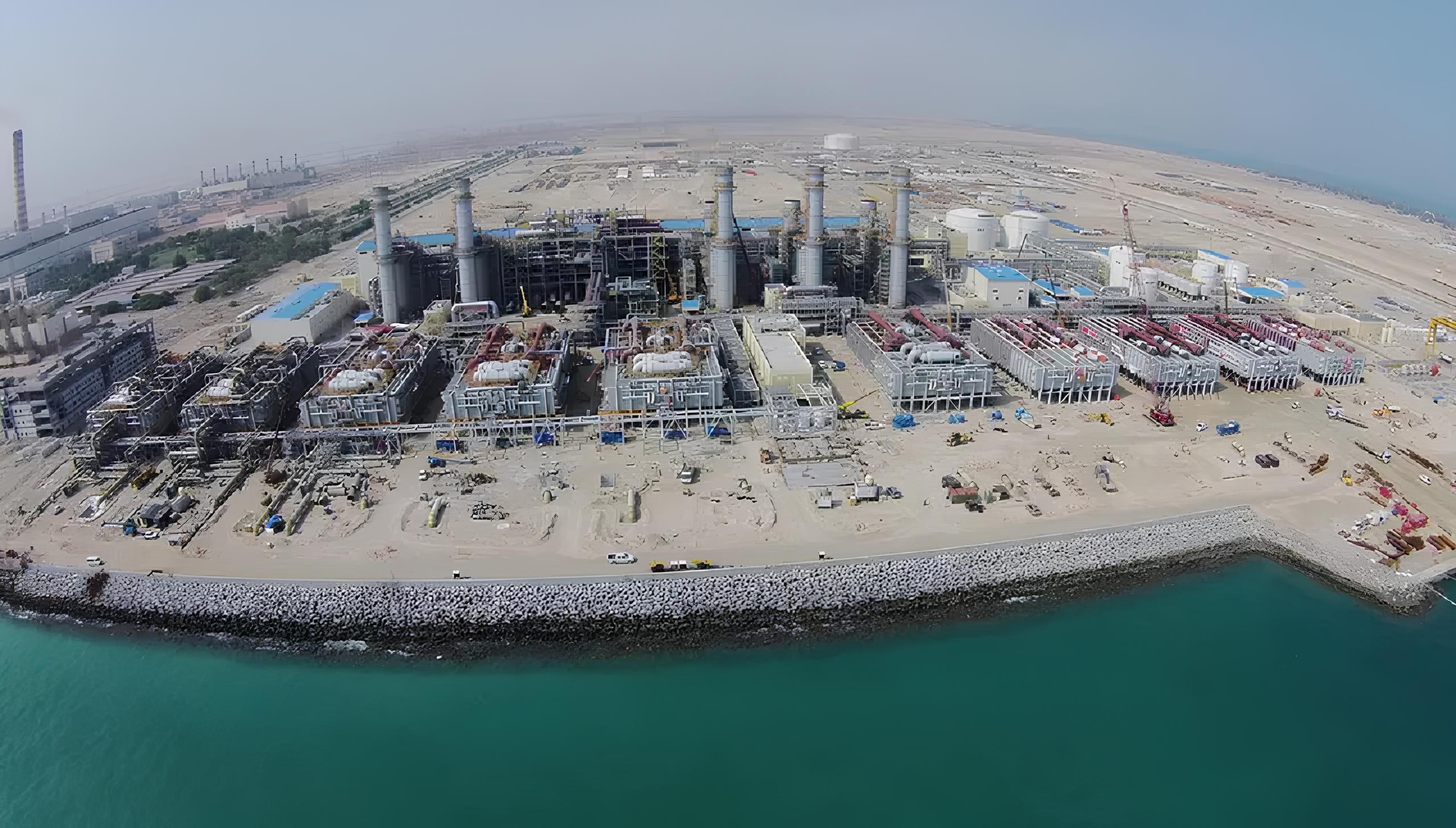
Kuwait Was A Pioneer In Desalination By Installing The World’s First Modern Potable Water Plant In The Early 1950s And Today Depends On Eight Plants Along The Gulf To Supply Nearly 90% Of National Demand In A Country Without Rivers, With An Average Rainfall Of 110 Mm Per Year And Strong Pressure On Water Security.
Kuwait is one of the most extreme examples of water scarcity on the planet. Located in one of the driest areas of the Middle East, the country has virtually no conventional freshwater natural resources. There are no permanent rivers, no significant freshwater streams, and the average annual precipitation is around just 110 millimeters. Practically speaking, this means that Kuwait’s water security has never been able to rely on natural geography, but rather on engineering, energy, and the state’s ability to transform seawater into drinking water.
Today, the availability of water per capita in Kuwait is estimated at only 5 cubic meters per year, one of the lowest in the world. Still, per capita consumption remains among the highest on the planet, reaching about 500 liters per person per day, with an average annual demand growth of around 3.6%. The Kuwaiti paradox is precisely this: a country with extreme water scarcity and, at the same time, one of the highest consumption standards in the region. Nearly 90% of the national water demand is met by desalination, which makes this infrastructure central to the country’s economic, health, and social stability.
History Of Desalination In Kuwait Began In The Early 1950s And Placed The Country At The Global Forefront
The modern history of water in Kuwait changed in the early 1950s. The country is widely recognized as the first in the world to install a desalination plant aimed at producing potable water on a modern scale. Historical references vary between 1951, 1952, and 1953 for the initial operation at Shuwaikh, but the consensus is that it was during this interval that Kuwait inaugurated the infrastructure that would open a new chapter in the history of global water engineering.
-
After so many blackouts, a family transforms an electric truck into a power source for their home and shows how a 100 kWh battery can keep everything running for days.

-
Ukraine is already testing, and China has already shown the world, and now the Brazilian Army is developing its own swarm of autonomous drones with artificial intelligence that share data in real time and operate without centralized control, uniting military and universities.

-
Few people know, but the most nutritious part of wheat has been discarded for decades to produce white flour, and the “polyamine” spermidine activates cellular cleaning, reduces mortality, and may slow down memory loss.

-
NASA and China issued a joint alert because a 60-meter rock could hit the Moon, and the impact could generate a storm of debris in space that would knock out the internet, satellites, and GPS worldwide for years.
The first facility in Shuwaikh, near the port, used a submerged pipe system and marked the transition from a water economy based on rain, wells, and imports to an industrial logic of continuous production of potable water.
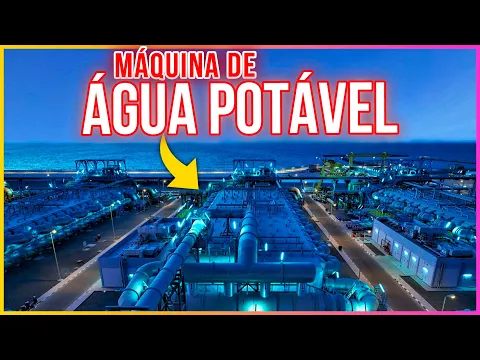

Before desalination, life in Kuwait depended on extremely limited sources. In previous periods, the population relied on rainwater, underground wells, and, in critical moments, water brought by dhows from the Shatt al-Arab in Iraq.
When rainfall dropped sharply in 1907, maritime water transport became even more important. Every day, dozens of large dhows crossed the region carrying freshwater to supply a society established in the middle of the desert.
In 1939, Kuwait created its first formal water transport company to try to respond to the growing demand. Shortly thereafter, the government began buying private wells, centralizing control over supply.
Desalination, in this context, did not arise as a technological luxury but as an emergency response from a country that needed to literally manufacture its own survival. Kuwait was the first country in the world to transform desalination into state policy to produce drinking water.
Shuwaikh Plant And MSF Technology Placed Kuwait At The Forefront Of Modern Desalination
The pioneering Shuwaikh plant was eventually replaced and expanded in the early 1960s by a system based on Multi-Stage Flash Distillation, the famous MSF technology, which would become the backbone of desalination in the Gulf for decades.
The Al-Shuwaikh station is often described as the world’s first commercial MSF plant, a technical milestone that placed Kuwait at the center of the development of this technology.
The logic of the MSF system was revolutionary for its time. Seawater was heated and subjected to successive stages of evaporation and condensation, allowing for the separation of salt and the production of potable water on a larger scale.
Kuwait quickly accumulated operational experience and began to expand the capacity of its units. By 1958, new units had already been added, and the technology evolved with more precise controls of temperature and operational stability. At that moment, the country was not only seeking water; it was also helping to build the industrial standard for modern desalination.
This leadership had regional and global importance. While other nations still treated desalination as experimental or niche technology, Kuwait was already placing it at the center of its supply strategy. Throughout the 1950s and 1960s, the country established itself as a real laboratory for large-scale desalination expansion.
Eight Desalination Plants In Kuwait Now Support An Integrated National Water And Energy System
Currently, Kuwait operates eight desalination plants along the coast, with a total installed capacity in the range of 3.11 million cubic meters per day.
The effective desalination capacity appears in various surveys with specific cutouts, but is around 1.65 million cubic meters per day, of which about 1.47 million comes from MSF technology and approximately 0.17 million from reverse osmosis.
The Kuwaiti model has historically been based on cogeneration. Instead of building completely isolated water plants, the country integrated desalination plants with power generation stations. Thus, oil or gas is used to produce electricity, and the waste heat from the process is used to desalinate seawater. This design reduced relative costs and allowed for rapid scaling of production in a country that needed both electricity and drinking water.
The produced water goes to underground reservoirs, pumping stations, and elevated towers before entering the distribution networks. Pumping and distribution are monitored by the Water Control Center in Shuwaikh, a central piece of operational management. In 2019, the number of connections to private, commercial, and industrial buildings had already exceeded 185,000 for freshwater and more than 76,000 for brackish water.
Water System In Kuwait Uses Two Separate Networks For Freshwater And Brackish Water
One of the most interesting elements of Kuwait’s water infrastructure is the existence of two distinct networks: one for freshwater and another for brackish water. Each has its own reservoirs, pumping stations, and elevated towers.
The desalinated and better quality water is reserved for direct domestic use, while the brackish water is used in a mixture, irrigation of green areas, public parks, agriculture, and certain urban and residential purposes.
In regions that are not yet fully connected to the main networks, the population can also rely on supply stations distributed throughout the country. Meanwhile, Kuwait has heavily invested in the reuse of treated effluents. About 0.4 million cubic meters per day of tertiary treated wastewater are produced and reused, mainly for irrigation.
The Sulaibiya treatment plant, inaugurated in 2005, gained international prominence for applying membrane technology with reverse osmosis and ultrafiltration on a large scale to treat the effluents generated in Kuwait City and Hawalli. In a country where every cubic meter counts, reuse has become an important complement to desalination.
Shuwaikh, Shuaiba, And Doha Plants Formed The Industrial Base Of Kuwaiti Water Security
Over the decades, Kuwait has built an integrated water-energy park. The Shuwaikh plant, founded in the early 1950s, became a symbol of the birth of national desalination. Later came the Shuaiba plants, in 1965, and a second unit in 1970, in addition to the Doha plant in 1977.
These plants increased the production of water and electricity in parallel, keeping up with the urban and economic growth of the country.
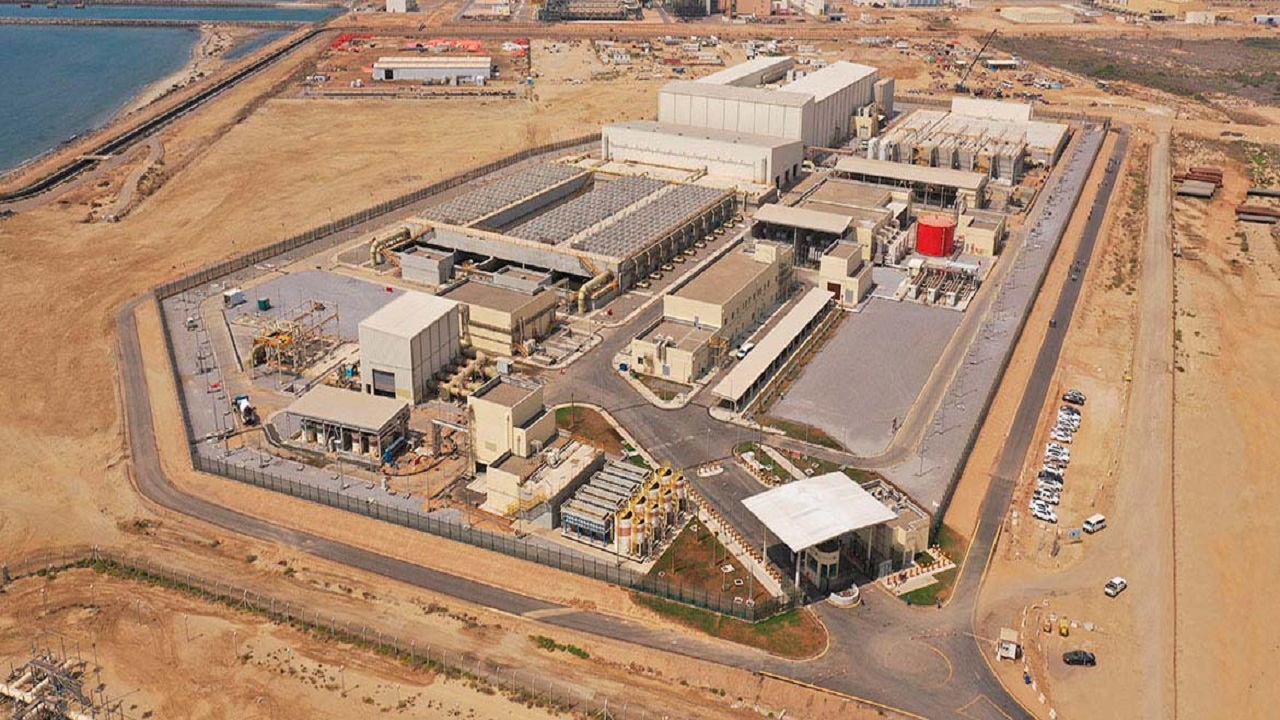
The case of Shuwaikh remains symbolic not only for being the first step, but because it summarizes the historical transition of Kuwait: from a country that depended on water brought by vessels to a state that began to manufacture its own water on an industrial scale. The accelerated urban advancement and population growth made this transformation inevitable.
Gulf War Destroyed Kuwait’s Water Infrastructure And Highlighted The Vulnerability Of Desalination
The dependence on desalination, however, also brought strategic vulnerability. During the Iraqi invasion in 1990 and the subsequent Gulf War, much of Kuwait’s energy and desalination infrastructure was deliberately sabotaged and destroyed.
The impact on water supply was devastating. At the same time, millions of barrels of oil were dumped into the Persian Gulf, creating one of the largest spills in history and exacerbating environmental risk to the maritime base of the system.

In the face of collapse, Kuwaiti authorities had to resort to emergency measures, including tankers coming from Turkey and Saudi Arabia, as well as the importation of bottled water and the use of mobile desalination units supplied with international support.
The reconstruction of the system took years and solidified a lesson that remains relevant today: Kuwait’s water depends on highly technical, coastal infrastructure that is vulnerable to military and geopolitical shocks.
This fear has resurfaced in recent years with drone and missile attacks against Saudi facilities in the Gulf. Even without lasting damage to the aforementioned plants, the region has begun to discuss the physical security of desalination systems that sustain millions of people more intensely.
Az-Zour North And Az-Zour South Are The New Frontier Of Desalination And Cogeneration In Kuwait
The largest integrated energy and water project in Kuwait is now Az-Zour North, whose expansion through phases 2 and 3 is expected to further increase national water and electric capacity.
The undertaking, located about 100 kilometers south of Kuwait City, is described as capable of generating at least 2,700 MW of electricity and producing 545 million liters of water per day when fully operational, in a project with an estimated investment of €3.5 billion and a timeline associated with 2029.
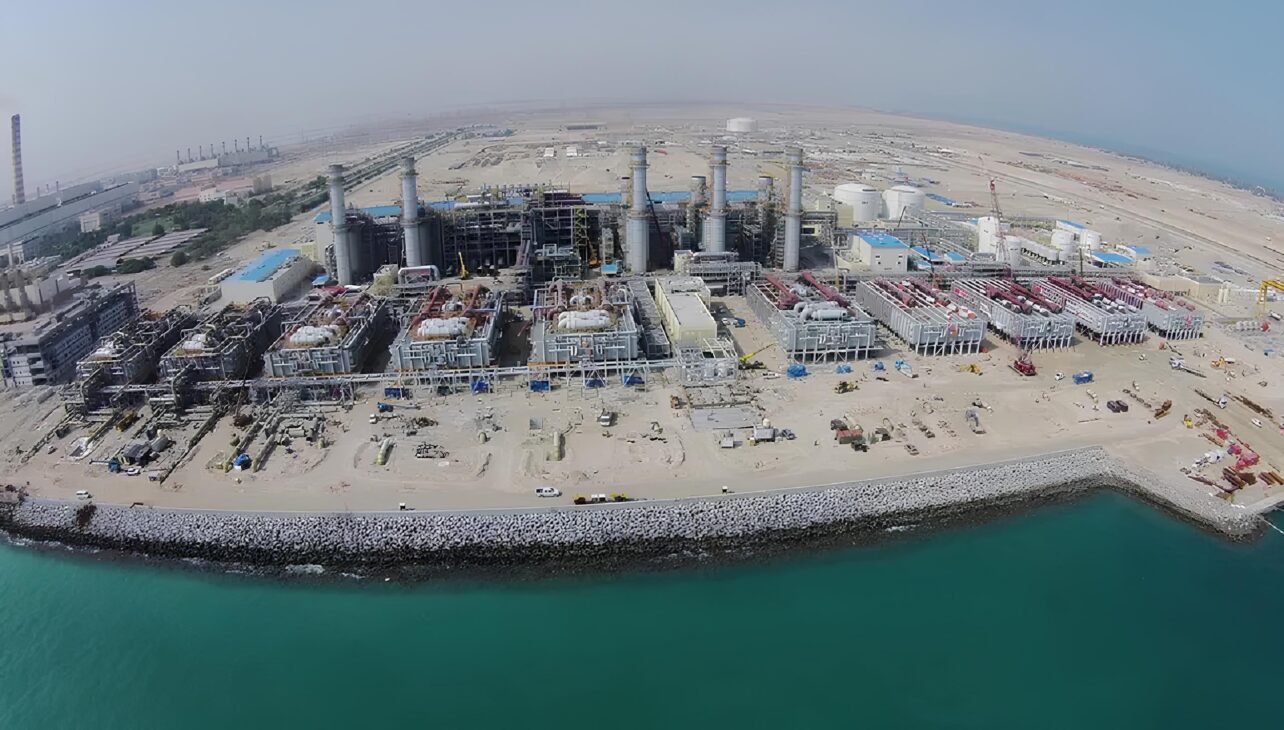
The complex follows the public-private partnership logic and BOT model, where consortia lead project, financing, construction, operation, and maintenance for a specified period before transferring to the State.
Phase 1 of Az-Zour North, commissioned in 2016, was already a milestone by combining 1,500 MW of gas generation with a desalination plant in the range of 486,000 cubic meters per day, accounting for approximately 10% of the country’s electric generation capacity and 20% of its desalination capacity.
Az-Zour South, in turn, stands out for utilizing seawater that has been preheated by the neighboring plant, increasing energy efficiency. In Az-Zour North, technologies such as MED, or Multi-Effect Distillation, were chosen for their ability to adapt to demand variations and for offering a better relationship between energy consumption and operational reliability. Az-Zour North represents Kuwait’s most significant recent leap in combined water and energy security.
Desalination In The Gulf Sustains Cities But Also Expands Environmental Risks And Energy Dependence
Kuwait is far from being a regional exception. More than 400 desalination plants are distributed along the coast of the Persian Gulf, sustaining one of the driest regions on the planet.
GCC countries account for about 60% of the global desalination capacity and nearly 40% of the world’s desalinated water production. In Kuwait, around 90% of drinking water comes from this process; in Oman, 86%; and in Saudi Arabia, about 70%.
This system has made possible the urban, industrial, and tourism development of the region. But it also has a high environmental cost.
Desalination is energy-intensive and contributes to significant carbon emissions, in addition to producing concentrated brine discharged into the sea, with potential effects on benthic habitats, coral reefs, and marine organisms at the base of the food chain. In many cases, seawater intake systems also affect larvae, plankton, and small organisms.
Researchers point out that the volume of desalinated water produced daily in the region would already be sufficient to fill thousands of Olympic swimming pools. Moreover, the total amount of processed water is even larger because the freshwater generated represents only a fraction of the total captured and handled, with a large portion returning to the sea as brine.
Water Demand In Kuwait Will Continue Growing And Demand Conservation, Reuse, And Renewable Energy
Projections indicate that Kuwait’s water demand will continue to grow strongly. Studies mention ranges that can go from 722 million to over 3 billion cubic meters per year in the coming decades, depending on the scenario adopted. This situation makes it inevitable to increase the capacity of non-traditional sources, especially desalination, treated brackish water, reuse of wastewater, and strategies for aquifer revitalization.
At the same time, experts point out that the technical success of desalination has reduced the impetus for robust conservation policies. In other words, since the country has managed to produce water, it took longer to create strong incentives to save water. The challenge now is to do both: expand supply and curb waste.
In this context, the use of solar energy and other renewable sources has begun to integrate Kuwait’s Vision 2035. The idea is to reduce the energy footprint of desalination and make future plants more sustainable. Companies involved in new projects highlight more efficient technologies, heat recovery, and greater operational flexibility.
Kuwait, A Pioneer In Desalination, Has Become A Global Reference In Manufactured Water
Kuwait’s trajectory is one of the most emblematic in the history of water in the 20th century and the early 21st century. A country without rivers, with minimal rainfall and extremely low per capita availability, managed to build a national structure based on desalination, reuse, cogeneration, and integrated reservoirs. This choice was not only technological; it was civilizational.
By inaugurating the first plants in the early 1950s, Kuwait paved the way for the entire Gulf to adopt desalination on a large scale. Bahrain and Oman would advance in the 1970s, as would the United Arab Emirates, and the region would solidify as a global center for desalinated water. The Kuwaiti experience helped establish the modern standard for desalination in the Gulf and the world.
But the same case also serves as a warning. The extreme dependence on desalination makes the country vulnerable to energy shocks, conflicts, attacks, and cumulative environmental impacts. In a hotter, drier, and more unstable world, manufactured water will continue to be indispensable for Kuwait. The challenge from here on is to ensure that this dependence comes with resilience, efficiency, and much more rigorous water management.




-

-

-

-

-

-

198 pessoas reagiram a isso.