





 Portuguese
  English
  Spanish
 3 min of reading
  0 comments


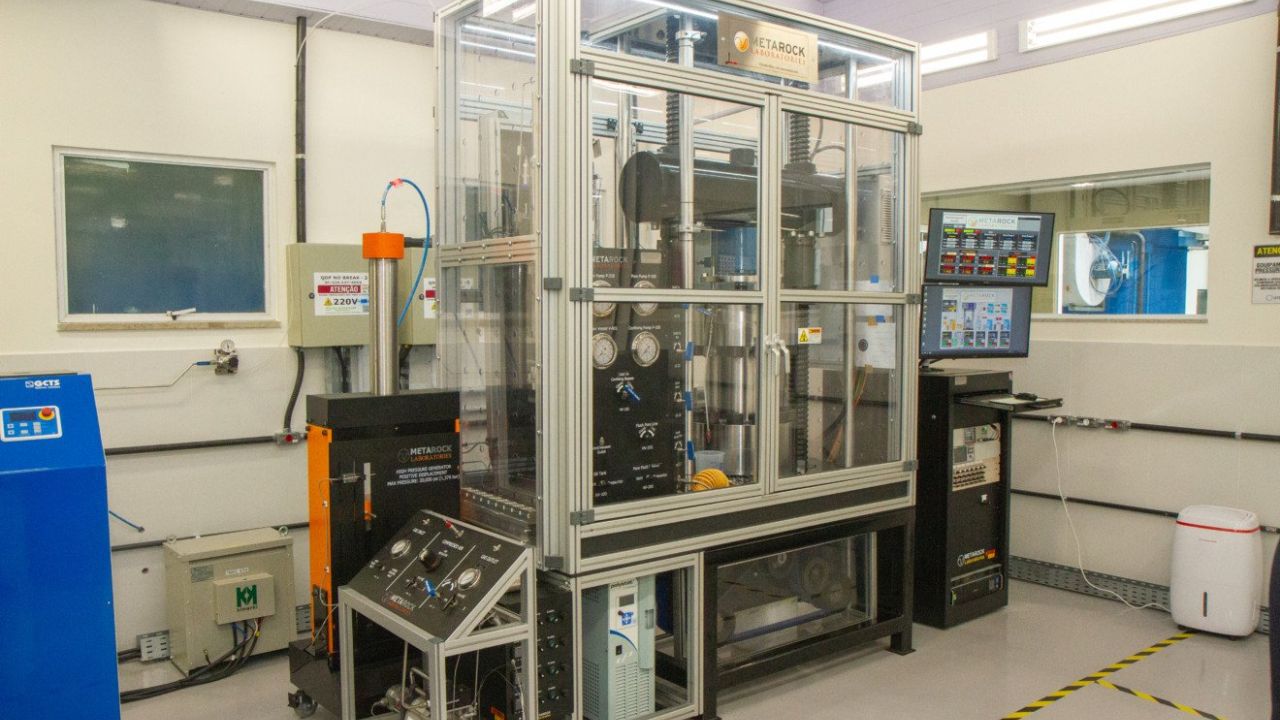
PUC-Rio’s Geomechanics Laboratory, Supported by Equinor and ANP, Reinforces Safe Exploration in the Pre-Salt.
Equinor and PUC-Rio inaugurated a modern laboratory dedicated to the research of Brazilian pre-salt rocks in Rio de Janeiro on Wednesday (9).
The space, fully renovated and equipped with cutting-edge technology, received R$ 21 million in investments through the Research, Development, and Innovation (PD&I) clause of the ANP – National Agency of Petroleum, Natural Gas, and Biofuels.
The initiative aims to deepen knowledge about the dynamics of carbonate and saline rocks found in oil fields, such as Bacalhau, operated by Equinor itself.
-
Petrobras evaluates suspension of sales to distributors and considers canceling the cooking gas auction following guidelines from the Federal Government.
-
Lula reveals a masterstroke by Petrobras to undo a deal made by Bolsonaro, which involves the return of an important refinery that currently produces less than half of what was expected and makes Brazil dependent on international diesel.

-
A study confirms that the natural gas sector will reduce greenhouse gas emissions in Brazil by 0.5% and accelerate the energy transition by 2026.

-
Petrobras implements a severe adjustment and confirms a 55% increase in the price of aviation kerosene with a proposal for installment payments for the companies.


The partnership between the university and the Norwegian multinational promises to transform the way operations are conducted in the pre-salt, combining technical knowledge and international experiences.
State-of-the-Art Equipment Will Simulate Extreme Conditions of the Pre-Salt
The new PUC-Rio laboratory, with support from Equinor, now features a custom triaxial press capable of simulating different pressures and temperatures.
This technology will allow for tests on real samples of pre-salt rocks collected from the Bacalhau field, the first layer to be operated by a foreign company.
These tests aim to predict how oil reservoirs behave during production and injection processes, contributing to the safety and efficiency of offshore operations.
According to Equinor, this data will be essential for optimizing well performance and extending the lifespan of fields.
Technical Exchange Between Equinor and PUC-Rio Strengthens Innovation in the Sector
In addition to laboratory tests, the project stands out for the knowledge exchange between Equinor professionals and PUC-Rio researchers.
Multidisciplinary teams from Brazil and Norway will work together to expand the database on pre-salt rocks and refine geomechanical modeling, such as well stability analyses.
“The new laboratory and the research line will undoubtedly be very important for our operations in the pre-salt. We are contributing to research through
samples and field data, as well as the exchange of experiences between the university and Equinor”, stated Andrea Achoa, PD&I manager at Equinor Brazil.
Equinor Expands Its Presence in Energy and Innovation in Brazil
In addition to the partnership with PUC-Rio, the ANP authorized over R$ 120 million this week for PD&I projects across various institutions. Petrobras, for example, will invest R$ 10 million in another laboratory at the Rio de Janeiro university and R$ 1.5 million at Unicamp.
A project from Senai/Cimatec in Bahia will receive R$ 72.3 million with participation from companies such as TotalEnergies, Shell Brasil, and CNODC Brasil. Petrobras was also given the green light to allocate R$ 36.2 million for infrastructure at Cenpes, its research center.
Present in Brazil with various projects, Equinor maintains around 38 ongoing PD&I initiatives, with investments totaling R$ 640 million. Besides Bacalhau, the company operates the Raia field in the Campos Basin and has a stake in the Roncador field, operated by Petrobras.
In the renewable energy sector, Equinor is also present with the Apodi and Mendubim solar complexes. In 2023, the company strengthened its market position by acquiring Rio Energy, responsible for the Serra da Babilônia hybrid complex.








Seja o primeiro a reagir!