





 Portuguese
  English
  Spanish
  3 min of reading
  0 comments


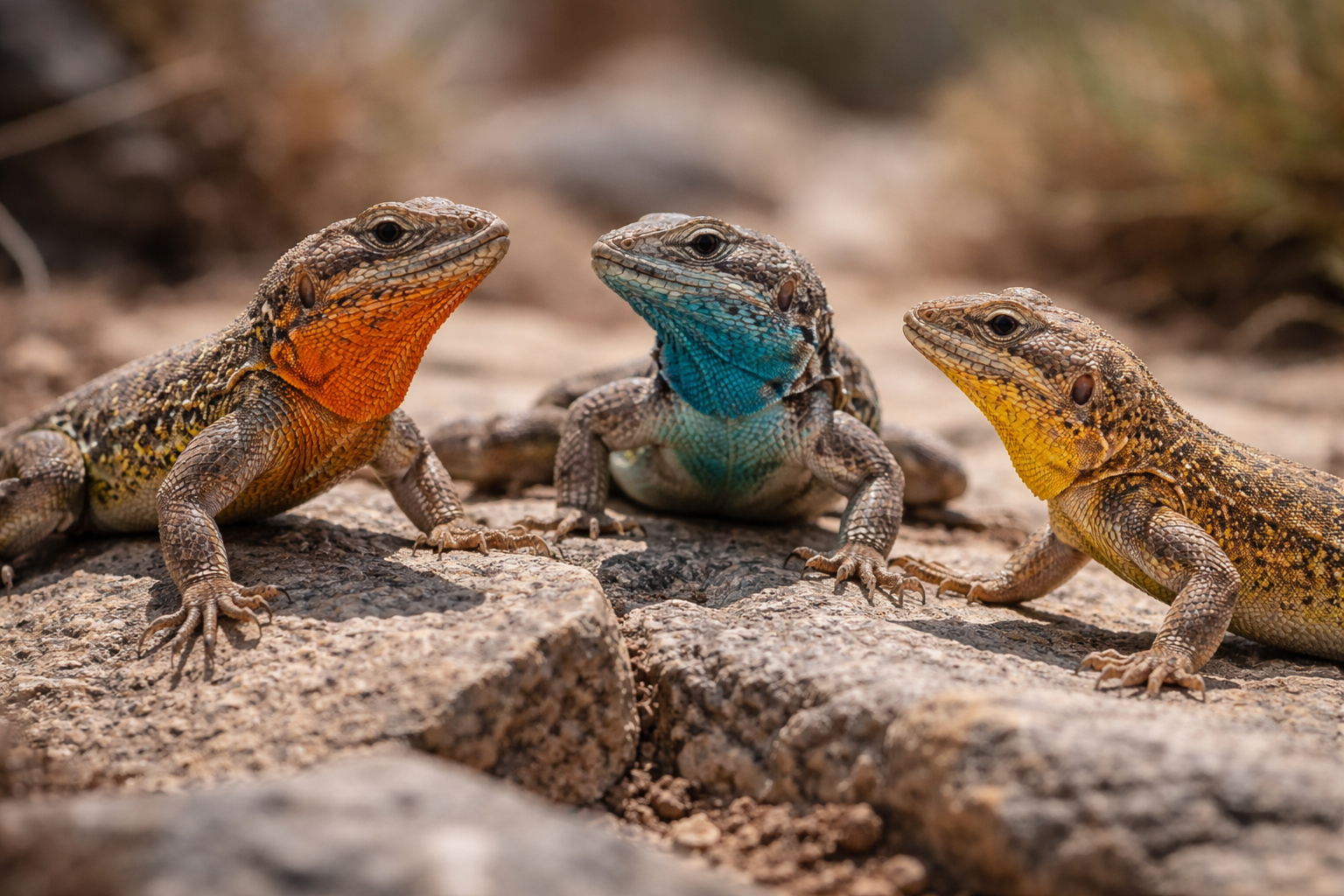
Mating Strategies, Territorial Competition, and Genetics Combine to Explain Why No Type of Male Permanently Dominates the Population
A major evolutionary dynamic has been observed for decades in the western United States and northern Mexico, drawing attention from evolutionary biology.
The species Uta stansburiana, known as the side-blotched lizard, exhibits three distinct reproductive strategies that cycle in a manner similar to the game rock, paper, scissors.
This pattern was described based on field studies initiated in the early 1990s and scientifically solidified in 1996, when researchers identified that no strategy wins definitively.
Reproductive Strategies Define the Competitive Cycle
The population of these lizards is made up of three types of males, differentiated by throat color and behavior.
Each color represents a specific reproductive tactic, which consequently creates a non-linear competition system.
This mechanism prevents the permanent supremacy of a single group and thus preserves genetic diversity.
- Orange-throated males display highly aggressive and territorial behavior. They control extensive areas and maintain several females under constant surveillance.
- Blue-throated males on the other hand defend smaller territories and form more stable bonds, effectively protecting their partners.
- Yellow-throated males adopt a sneaky strategy, mimicking female behavior to access territories dominated by orange males.
This arrangement creates a predictable cycle: oranges dominate blues, blues block yellows, and yellows exploit oranges, repeating the classic rock-paper-scissors pattern.
-
Scientists have created robots made with living cells that have their own nervous system, swim on their own, explore the environment, and self-organize without any genetic engineering, and now they want to do the same with human cells.

-
Students create a solar-powered ambulance that operates without a plug, without fuel, and still keeps medical equipment running in remote areas.

-
French “ghost” submarine lost in World War II reappears after more than 80 years on the seabed near the coast of Spain.

-
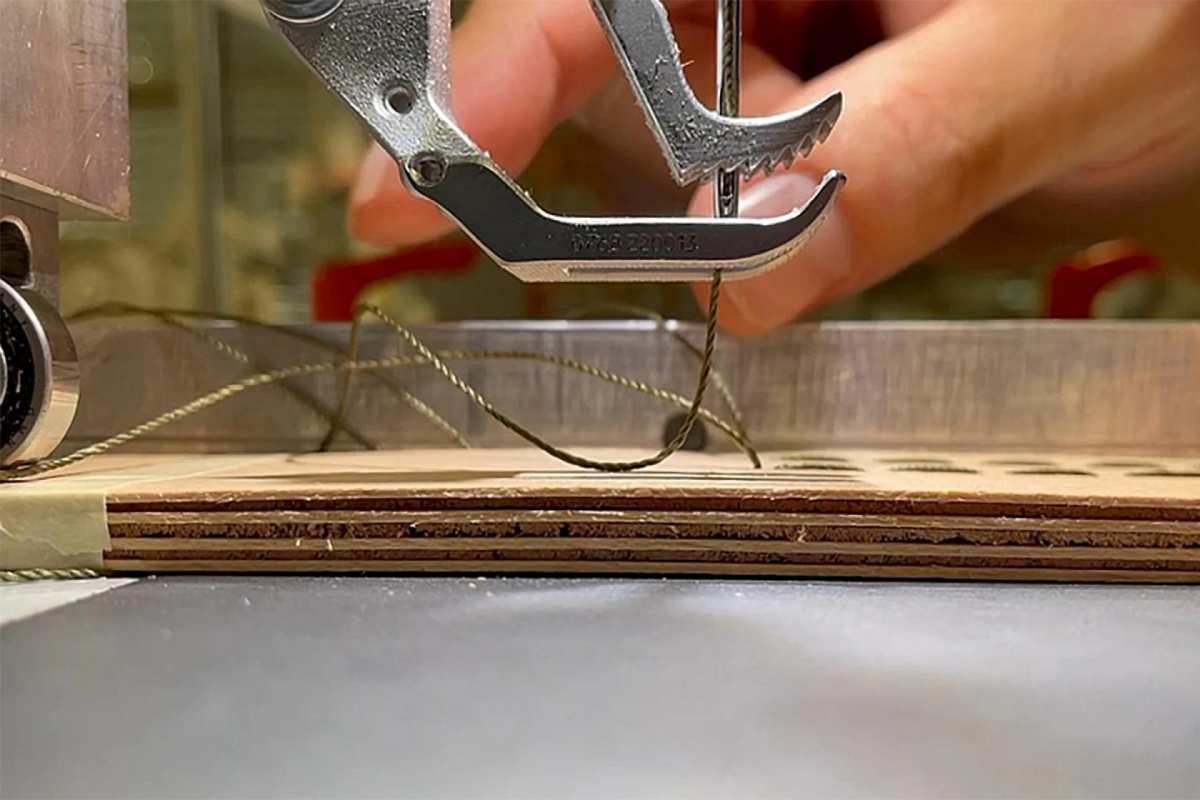
A simple stitch in wood with nylon thread can reduce adhesives, speed up production, and make sheets up to 4 times stronger and 14 times more difficult to break.

Long-Term Observations Confirm the Evolutionary Pattern
Between 1990 and 1995, studies conducted in California tracked successive generations of these lizards.
The data showed that the frequency of each type of male varies over the years, always in response to the predominance of the previous type.
When the oranges become numerous, the yellows thrive. Then, the blues gain an advantage over the yellows. After that, the oranges grow again, restarting the cycle.
This behavior does not occur by chance.
It results from relative advantages, which only exist while another strategy dominates the environment.
Thus, reproductive success directly depends on the population context of each period.
Genetic Bases Sustain the Biological Game
In addition to behavior, later research, especially from the 2010s onward, indicated that colors and strategies are associated with genetic differences.
These variations influence hormones, aggression, and reproductive patterns, reinforcing that the game is not only behavioral but also biological.
Thus, genetic inheritance ensures that the three strategies continue to arise from generation to generation.
Scientific Importance of the Rock, Paper, Scissors Model
The system observed in Uta stansburiana has become a classic model of game theory applied to evolution.
It practically demonstrates how competing strategies can coexist without one eliminating the others.
Furthermore, this type of interaction helps explain how nature maintains balance and diversity even in highly competitive environments.
Evolutionary Cycle and Species Balance
Over time, the evolutionary game prevents population collapses and inhibits genetic homogenization.
Each strategy, although temporarily advantageous, creates conditions for the emergence of the next.
Thus, the system self-regulates, ensuring stability for the species in a challenging environment.
Given this clear example of competition and natural balance, to what extent might other organisms also be caught in similar evolutionary games without us realizing it?







-

-

-

3 pessoas reagiram a isso.