





 Portuguese
  English
  Spanish
  4 min of reading
  3 comments


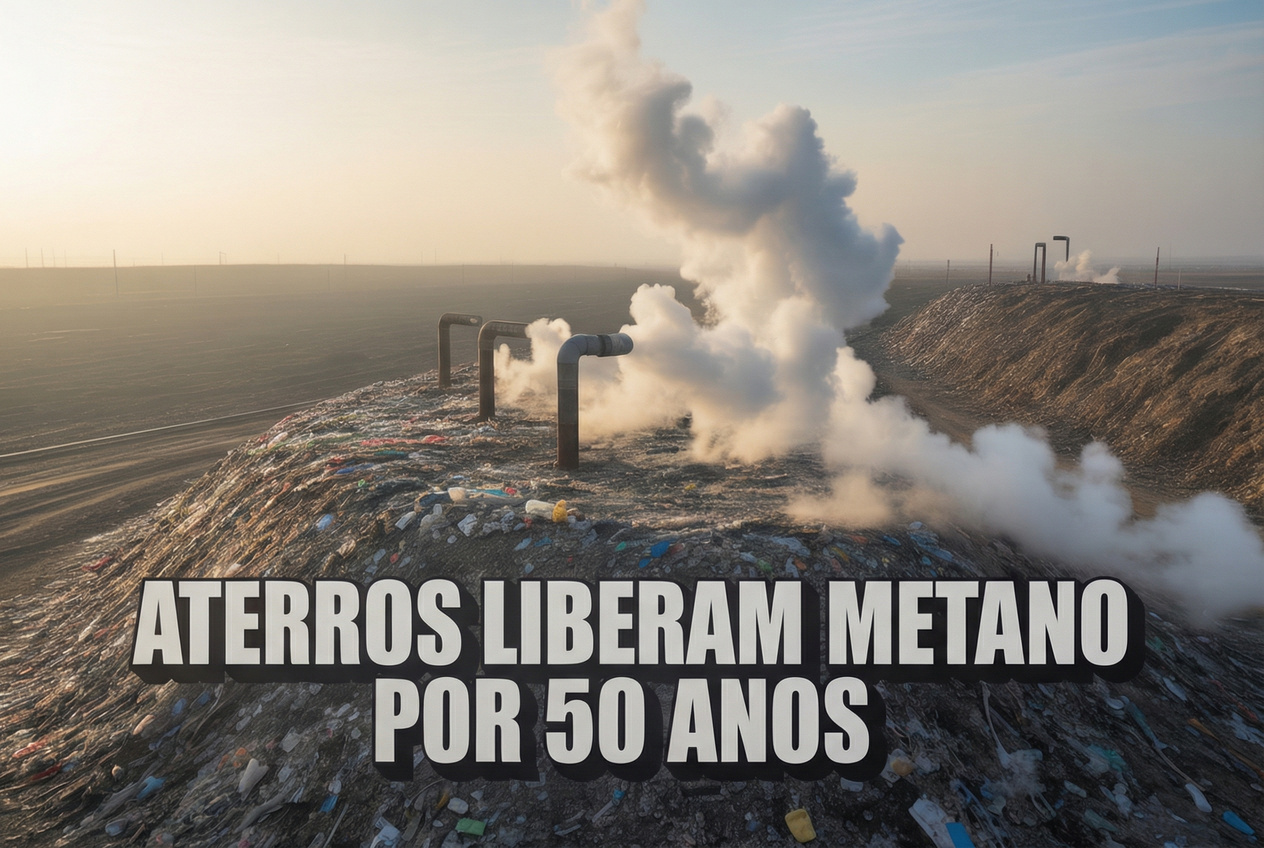


Even After Closure, Landfills Continue to Emit Methane for Decades. Understand Why Urban Waste Became One of the Largest Invisible Sources of Greenhouse Gases.
When a landfill is officially closed, the common perception is that the environmental problem ends there. The reality is quite different. According to technical assessments consolidated by the IPCC, the US EPA, and the Global Methane Initiative, “sealed” landfills continue to release methane (CH₄) for 30 to 50 years — and in some cases, for even longer periods.
This occurs because the buried waste does not stop decomposing when the landfill closes. On the contrary, organic waste continues to be slowly degraded by microorganisms in low-oxygen environments, exactly the ideal conditions for methane production.
Why Methane Is So Critical to the Climate
Methane is a greenhouse gas that is much more potent than carbon dioxide in the short term. According to the IPCC, its global warming potential is about 84 times greater than that of CO₂ over a 20-year horizon. This means that small amounts of methane have a disproportionate climate impact.
-
Friends have been building a small “town” for 30 years to grow old together, with compact houses, a common area, nature surrounding it, and a collective life project designed for friendship, coexistence, and simplicity.

-
This small town in Germany created its own currency 24 years ago, today it circulates millions per year, is accepted in over 300 stores, and the German government allowed all of this to happen under one condition.

-
Curitiba is shrinking and is expected to lose 97,000 residents by 2050, while inland cities in Paraná such as Sarandi, Araucária, and Toledo are experiencing accelerated growth that is changing the entire state’s map.

-
Tourists were poisoned on Everest in a million-dollar fraud scheme involving helicopters that diverted over $19 million and shocked international authorities.



In national emission inventories, this factor weighs heavily. In several countries, the urban solid waste sector already appears among the top individual sources of methane, surpassing or rivaling specific industrial segments such as cement, steelmaking, or heavy chemicals.
Sealed Landfills Still “Breathe”
Even after closure, the mass of buried waste operates as an underground biological reactor. Food scraps, paper, wood, fabrics, and other organic materials undergo a process called anaerobic digestion, which occurs in three main stages:
- Hydrolysis and Acidogenesis, in which complex molecules break down;
- Acetogenesis, producing intermediate compounds;
- Methanogenesis, the phase in which bacteria produce methane and carbon dioxide.
This process can last for decades because the waste is compacted, moisture levels vary, and access to oxygen is minimal. In many old landfills, especially those built before modern environmental engineering standards, gas control is limited or non-existent.
When Waste Rivals Industry
Data compiled by the EPA and European environmental agencies show that in highly urbanized countries, landfills represent the single largest source of human-origin methane. In the United States, for example, landfills have led national CH₄ emissions for years. In the European Union, the waste sector competes with intensive agriculture for prominence.
In Brazil, inventories from the environmental sector indicate that urban waste accounts for a significant share of methane emissions, especially in metropolitan areas where large landfills operated for decades before being closed or replaced.
Gas Capture: Partial, Not Definitive Solution
Modern engineering anticipates systems for capturing and burning or utilizing biogas. Perforated pipes drain the gas generated within the landfill, reducing direct leaks into the atmosphere. In some cases, this gas is used to generate electricity. However, technical reports indicate that:
- No system captures 100% of the generated methane;
- Efficiency decreases as the landfill ages;
- Old landfills were often not designed for this technology.
As a result, a significant fraction of methane continues to escape diffusely through cracks, cover failures, or poorly sealed areas.
The Long-Term Climate Liability
One of the most critical points highlighted by the IPCC is that landfills create an intergenerational climate liability. Cities that closed dumps and landfills decades ago still deal with emissions today — and will continue to do so in the future.
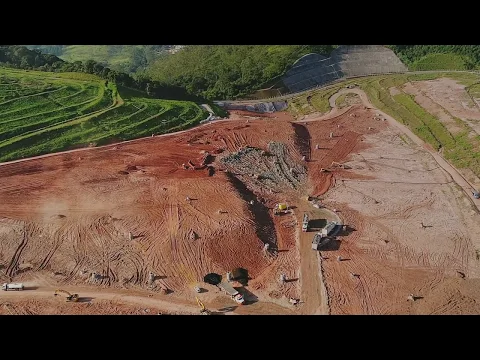
This creates a paradox: public policies celebrate the closure of landfills while emissions continue to occur silently, off the radar of public debate. The environmental cost, however, remains active.
Why This Problem Is So Hard to Eliminate
There are three main obstacles to eliminating methane emissions from landfills:
- Accumulated Volume of Waste: decades of disposal have generated mountains of waste that cannot simply be removed.
- Technical Limitations: capture systems have limited efficiency and require ongoing maintenance.
- Financial Cost: monitoring and mitigating emissions for 30 to 50 years poses a high cost for municipalities.
Therefore, experts point out that the real solution lies less in treating the closed landfill and more in the reduction of organic waste sent to land, through composting, biodigestion, and structural changes in waste management.
An Invisible Yet Crucial Problem
Landfills are often seen as a closed chapter in urban history. In practice, they remain active, emitting highly impactful gases for the global climate. By rivaling entire industrial sectors in emissions, urban waste makes it clear that the climate challenge lies not only in smokestacks and factories but also underground, where mountains of waste continue to “breathe” methane silently for decades.
This invisible liability helps explain why combating global warming requires looking beyond the obvious sources — and directly confronting the environmental legacy left by the traditional waste disposal model in cities.










Ir misturando terra nesse lixo, impede saída de gazes e vai o transformando em excelente adubo orgânico.
Mas e o chorume? O líquido que vem ee baterias e outros líquidos nocivos?
Porque não transformar esse lixo orgânico em adubo ?