





 Portuguese
  English
  Spanish
  6 min of reading
  3 comments


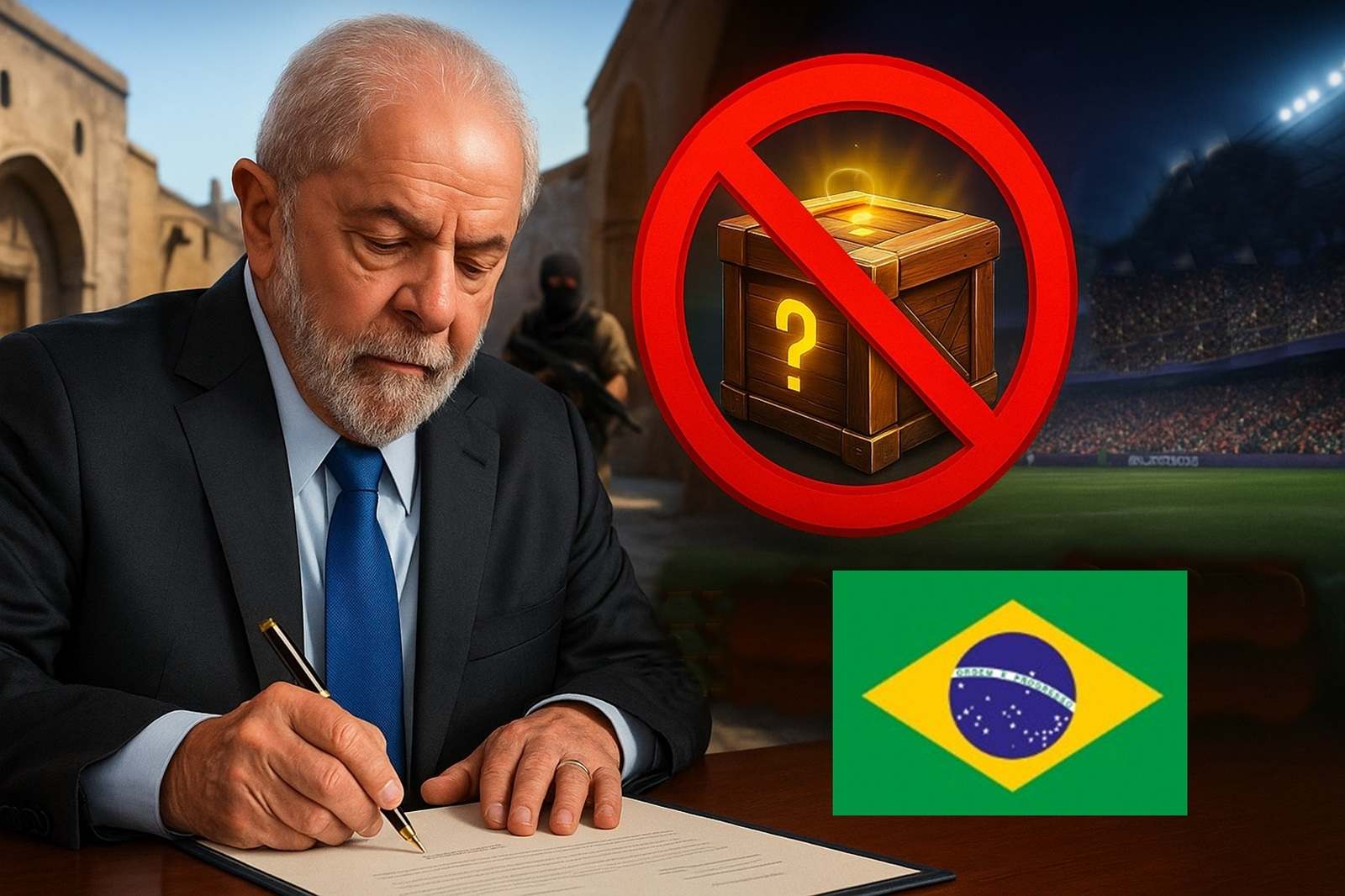


The Controversy of Loot Boxes Has Reached a Decisive Chapter in Brazil. With the Sanction of Law 15.211/2025 by President Luiz Inácio Lula da Silva, games like Counter-Strike and EA FC will have to adapt to new rules, as reward boxes aimed at minors under 18 are now banned in the country. The measure imposes severe penalties, with fines that can reach R$ 50 million for companies that violate the law.
The debate about loot boxes in Brazil has entered a new phase with the sanction of the Digital Statute for Children and Adolescents (Law No. 15.211), also known as the Felca Law.
Originating from the Bill 2628/22, the law was approved on September 17, 2025, by President Luiz Inácio Lula da Silva and brings profound changes to the digital market, including the gaming industry.
From this point forward, reward boxes in electronic games accessible to children and adolescents are prohibited. Companies will have to adapt to new standards and review strategies in Brazil.
-
77.2% of Brazilians support lowering the age of criminal responsibility and reinforce pressure for changes in criminal legislation in the country, a national survey indicates.

-
The law that many elderly people are still unaware of protects those aged 60 and over against abusive charges from banks, guarantees debt renegotiation, and prevents loans and credit cards from consuming their entire retirement pension.

-
Portugal approves Nationality Law: Brazilians from CPLP will have to live for 7 years to obtain citizenship (waiting for title does not count), rules tighten for children born in the country, Sephardim are excluded, and it awaits a decision from President António José Seguro.

-
Your neighbor is undergoing construction and debris has fallen on your property? This could lead to compensation and make the owner, responsible party, and construction company pay for the damages.


The measure is part of a larger effort to combat the so-called “adultification” of minors on the internet, a topic that mobilized civil society, politicians, and specialists after reports of exploitation of young people in virtual environments.
The issue gained prominence after a viral video by influencer Felca, who denounced abusive practices. From this mobilization emerged a broad law that affects social networks, digital platforms, and the universe of electronic games.
What Are Loot Boxes?
Loot boxes, known as reward boxes, are features in games that offer random items in exchange for payment in real money or virtual currencies in the game itself.
These items range from simple cosmetic customizations, like skins and emotes, to elements that influence gameplay, such as characters, weapons, and special abilities.
The mechanic appears in popular titles like Counter-Strike 2, Overwatch, and EA FC, and can be represented by boxes, chests, cards, or other formats.
The main point of controversy is the uncertainty: the player never knows what they will receive. This randomness creates an experience similar to gambling, raising concerns about addiction risks, lack of transparency, and exposure of minors to practices akin to gambling.
Several countries have already discussed or applied restrictions on loot boxes, precisely because of this similarity to casinos. In Brazil, the sanction of the Felca Law places the topic under strict regulations, aligning the country with laws in Belgium and Japan.
What Does the Felca Law Say About Loot Boxes?
Art. 20. Reward boxes (loot boxes) offered in electronic games directed at children and adolescents or likely accessible to them, according to their respective age classification, are prohibited.
The article 20 of the Felca Law establishes that the use of loot boxes in games directed at minors under 18 years old or likely accessible to this audience, according to age classification, is prohibited.
In practice, this means that:
- Games aimed at children and adolescents cannot offer loot boxes under any circumstances;
- Mixed-access titles, such as free-to-play, can also be included if they do not effectively restrict minors;
- Companies that violate the rule may receive fines of up to 10% of revenue or amounts reaching R$ 50 million.
The impact will be broad. Games like Counter-Strike 2, Overwatch, EA FC, and platforms like Roblox will need to adapt their mechanics or restrict access for minors to avoid heavy penalties.
Adjustment Period and Start of Changes
Although the law is already in effect, the government set a period of six months for companies to adjust their products. This interval serves as a phase for developers and publishers to adapt.
Changes, therefore, are expected to begin to be perceived in the Brazilian market starting in March 2026.
As Brazil is one of the largest consumers of games in the world, companies are already studying how to adapt business models. The risk of heavy financial sanctions accelerates the need for adjustments.
Why Are Loot Boxes Considered a Risk?
Senator Flávio Arns (PSB-PR), rapporteur for Bill 2628/22, advocated for a total ban. He cited research showing that loot boxes share psychological structures with gambling, potentially leading to compulsion, frustration, and stress—especially in developing youth.
Studies conducted in the United Kingdom, Denmark, and Australia also indicated a correlation between loot boxes and gambling-related issues among adolescents. Experts believe that transparency measures or disclosure of probabilities wouldn’t suffice to protect the youth audience.
For this reason, the final version of the project included a complete prohibition for minors.
Arns’ report emphasized: “If current legislation considers illegal gambling directed at adults, then we have even more reason to prohibit gambling directed at minors, who are vulnerable individuals.”
Other Changes in the Digital ECA
The Felca Law goes beyond loot boxes and creates a set of rules to make the internet safer for children and adolescents. Among the measures are:
- Mandatory age verification with reliable methods, going beyond simple self-declaration;
- Parental supervision on social networks, with privacy control, purchase restrictions, and contact monitoring;
- Immediate removal of content linked to sexual exploitation, kidnapping, or abuse, with notification to authorities;
- Blocking of features that encourage excessive use, such as autoplay, persistent notifications, and constant rewards.
Additionally, the law creates an autonomous regulatory authority, responsible for overseeing and applying penalties, reinforcing the role of technology companies in protecting the child audience.
Possible Losses for the Gaming Industry
The new legislation brings direct impacts to the gaming market:
- Company Revenue: free-to-play games heavily rely on loot boxes for monetization. With the restriction, companies may lose a significant portion of their revenue, as many consumers are adolescents.
- Attraction of Investments: international studios may consider Brazil less attractive, as microtransactions will have lower financial returns. This may delay releases or reduce updates for major franchises.
- Competitiveness of the National Market: Brazilian developers, who already operate with smaller margins, may face more challenges in financing their projects or maintaining servers.
Mitigation and Adaptation Pathways
Despite the challenges, experts point to possible ways to adapt:
- Alternative Models: the industry can invest in seasonal passes, directly sold cosmetic content, subscriptions, or in-game advertising;
- Image Protection: by abandoning loot boxes, companies can improve their reputation and gain the trust of parents and regulatory bodies;
- Preserved Adult Market: the ban does not affect games aimed only at adults, allowing part of the monetization to be maintained.
In summary, there will be financial impact, especially in titles based on loot boxes and aimed at young audiences, but the industry has room for adjustments. In the long term, credibility may even be strengthened.
Reactions and Controversies
Investigations into loot boxes in Brazil began in 2021 and culminated now in the approval of the Felca Law. Among gamers, reactions are divided:
- Some support the measure, considering it essential to protect children and adolescents from predatory practices;
- Others express skepticism regarding enforcement, believing that developers may find ways to circumvent the law;
- There are still those who argue that responsibility should lie with parents, not the government.
The implementation of Law 15.211 will therefore represent a milestone for the Brazilian gaming market and for the digital protection of minors. With changes set to come into effect in March 2026, the sector will need to reinvent itself in light of a new regulatory landscape.










Imbecilidade! Isso é dever dos pais em impor limites e não jogar a responsabilidade para as empresas.
Enquanto isso a molecada acessa xvideos, fazem sexo virtual em varias redes por aí, bem como utilizam de outros meios virtuais para fazer um monte de besteiras que adultos tem acesso. Não ira dar certo, ainda mais que burlar idade na internet é mais fácil que dirigir um carro sem carteira. O proibido é sempre mais emocionante.
Educar os jovens é mais importante que impor regras quando se tem que segui-las.
A adolescência já começa aos 5 anos ja dizem os entendidos então está na hora de incutir discernimento de verdade pra elas….
Ta certo muito melhor o menor fora dos jogos digitais . E estar nas ruas com o tráfico com as bandidagem e formando exército para a esquerda soberana
Meu, tão proibindo as loot Boxes e NÃO os jogos, isso vai ser MAIS saudável ainda pras crianças