





 Portuguese
  English
  Spanish
 4 min of reading
  0 comments


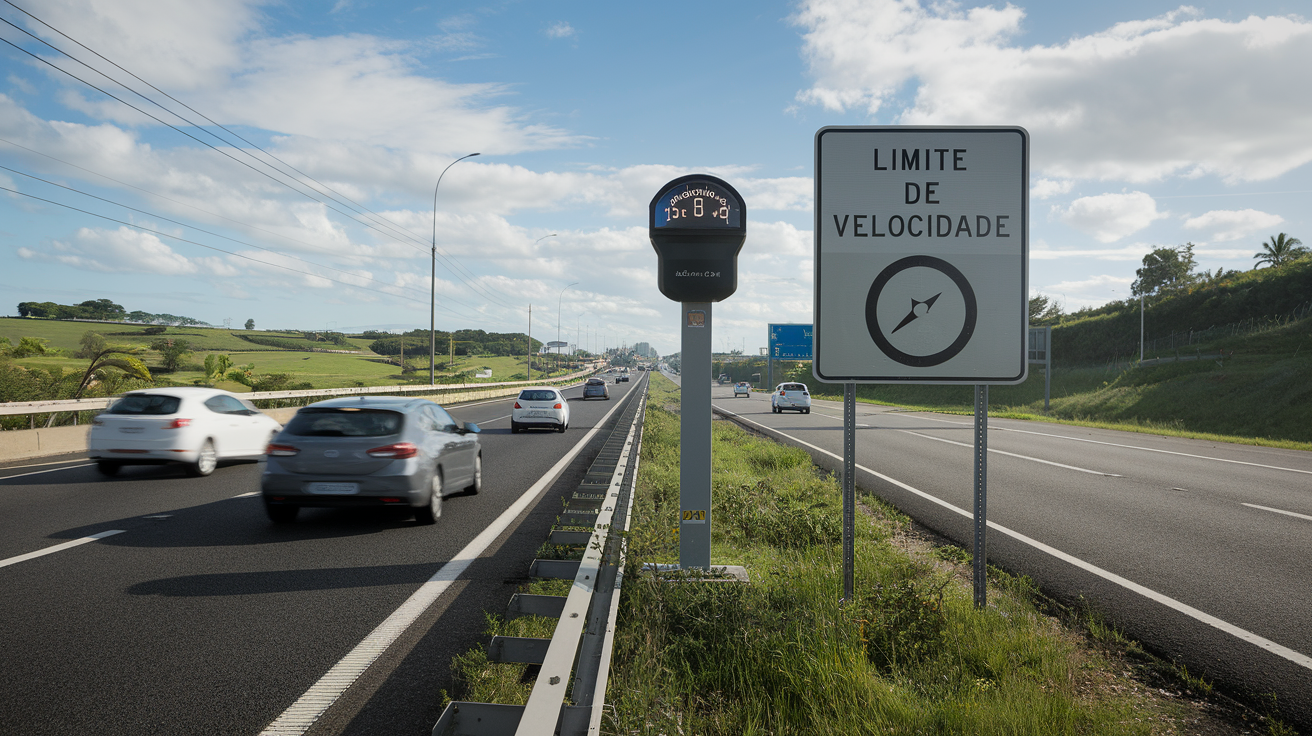
Two Bills Are Underway to Prohibit Mobile Radars in Brazil, Under Criticism That These Devices Prioritize Revenue Over Safety. A Federal Bill Tries to Alter the Brazilian Traffic Code, While a State Proposal Aims to Limit Enforcement.
Imagine a future without mobile radars on the roads of Brazil. With the increase in the number of vehicles and the circulation of people, these devices, seen by many as “speed traps,” have become the subject of a heated debate.
Two bills are underway at the federal and state levels, proposing an end to mobile radars, a measure that could eliminate so-called surprise fines. But will this change go through?
At the national level, the Bill (PL) 4059/2024, presented by deputy Carolina de Toni (PL-SC), seeks to prohibit the use of mobile radars throughout Brazilian territory.
-
“No one will make us change the Pix,” says Lula after the US report.

-
Less than a Tera TSI, up to 710 km of range and charging in 9 minutes: the new BYD Song Ultra expands the Chinese brand’s bet on increasingly faster, more technological, and competitively priced electric SUVs.

-
Lula responds directly to Trump and says that Pix is from Brazil and will not change under pressure from anyone, after a report from the United States pointed out the Brazilian payment system as an American trade barrier.

-
Amazon has just announced a new fee on all deliveries, and your online purchases will become more expensive starting April 17, including for those buying from the United States here in Brazil.


The proposal aims to amend the Brazilian Traffic Code (CTB) to prevent the installation of these speed measuring devices, under the justification that, in many cases, they have a more “revenue-generating” character than preventive.
In Santa Catarina, as published by CPG, a similar project is also gaining traction and proposes restrictions on speed enforcement.
National Bill: The End of Mobile Radars?
PL 4059/2024, currently under review in the Chamber of Deputies, promises to change traffic on Brazilian highways.
Presented by deputy Carolina de Toni, the bill aims to prohibit the use of mobile radars, that is, portable devices that monitor vehicle speed.
According to the parliamentarian, these tools are often not placed to protect drivers but to generate revenue.
According to de Toni, the purpose of the project is to “protect the individual from abuses of this nature, without compromising the safety of those traveling on the roads”.
From the deputy’s perspective, the proposal contributes to eliminating “revenue-generating” fines – those primarily aimed at generating profit for the state.
The bill was presented in the Chamber on October 23, 2024 and is awaiting review by a temporary committee, which will be formed exclusively to study the case.
If approved, the change could impact millions of drivers and the way speed enforcement occurs in Brazil.
Santa Catarina: A State Model for Enforcement
In parallel, the Bill 475/2024 is underway in the Legislative Assembly of Santa Catarina.
Proposed by deputy Sérgio Guimarães (União Brasil), the bill establishes that, in the state, only fixed and properly marked radars may be used for speed enforcement on state highways.
In addition to restricting mobile radars, PL 475/2024 also prohibits the use of drones to monitor vehicle speed, a measure that has generated significant controversy.
For Guimarães, the idea is to “ensure transparency and predictability in enforcement actions” and avoid enforcement viewed as abusive or merely revenue-generating.
The bill was unanimously approved by the Constitution and Justice Committee of the Legislative Assembly of Santa Catarina, now proceeding for review in other committees – including those on Finance and Taxation, Public Security, and Urban Development and Infrastructure.
Constitutional Challenges and Possible Blockages
Despite the enthusiasm of many drivers for the possibility of ending mobile radars, both bills face significant challenges.
In the case of the bill in Santa Catarina, an important constitutional issue exists: the Federal Constitution assigns to the Union the responsibility to legislate on traffic and transportation, according to Article 22, Item XI.
This detail raises doubts about the legality of the state measure, which could be overturned for being deemed unconstitutional.
The federal project, affecting all of Brazil, faces another type of obstacle: the security policy on highways.
Many legislators and experts argue that mobile radars help maintain safety on the roads by discouraging speeding, a key factor in reducing serious and fatal accidents.
Next Steps: What to Expect?
Both the project in Santa Catarina and the federal one will have to undergo more detailed analyses before any approval.
At the federal level, the project will go through a temporary committee that will assess the feasibility of the proposal.
As for the state project, it will still require approval from internal committees and the Legislative Assembly before proceeding to the governor’s sanction or veto.
If de Toni’s project can overcome the bureaucratic hurdles, the change could be historic, altering the enforcement model in Brazil.
But the question remains: is the end of mobile radars really possible, or will these projects run up against public safety and revenue interests?
A New Era for Traffic in Brazil?
The two bills could mark a new chapter for traffic in Brazil, where surprise fines, seen as unfair by many drivers, could be reduced or even eliminated.
However, with political and constitutional difficulties, there is still a long way to go before this idea becomes a reality.
Do you believe that the end of mobile radars would make Brazilian traffic safer or increase the number of accidents on the roads? Leave your opinion in the comments!








Seja o primeiro a reagir!