





 Portuguese
  English
  Spanish
  5 min of reading
  20 comments


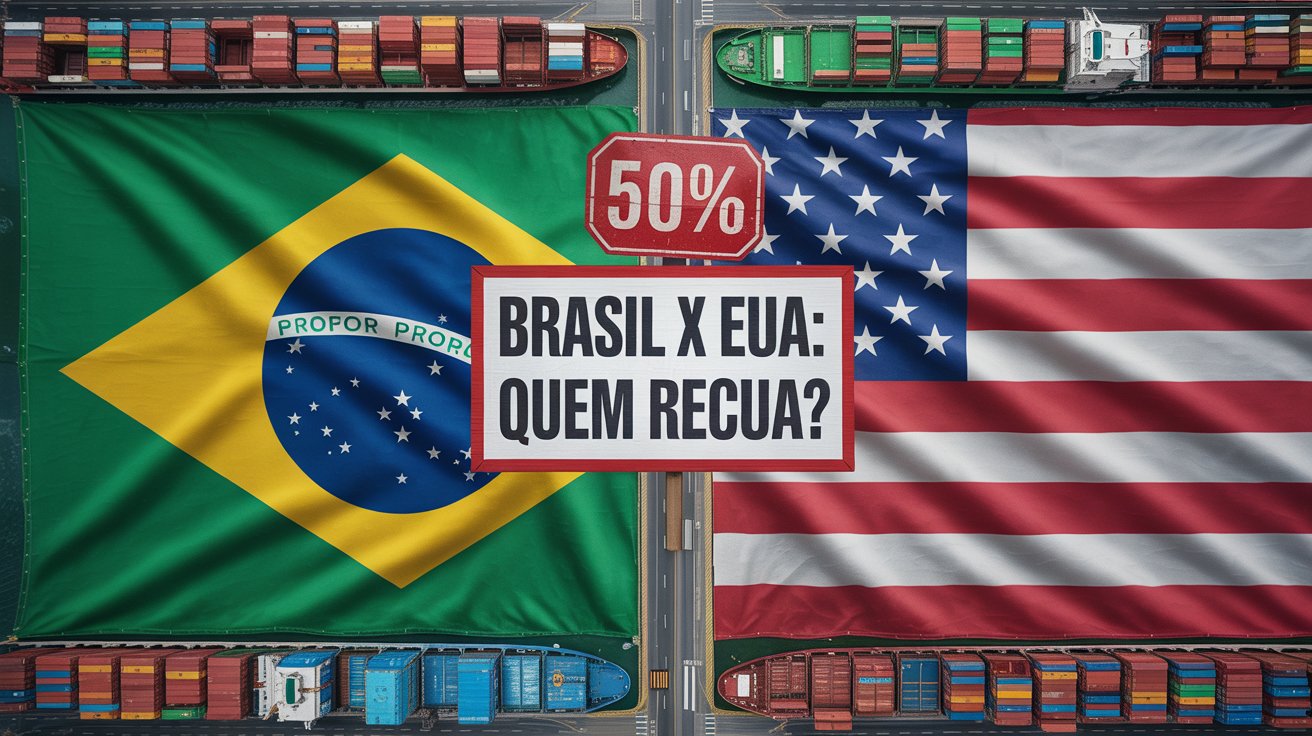


National Confederation of Industry Asks for Caution Regarding the Application of the New Law, While a Business Delegation Heads to Washington to Try to Reverse Tariffs Imposed by the United States.
The National Confederation of Industry defended prudence in light of the advancement of the process to apply the Economic Reciprocity Law (Law No. 15.122/2025) against the United States, following authorization from President Luiz Inácio Lula da Silva.
In a statement released on August 29, CNI President Ricardo Alban stated that “the industrial sector will continue seeking dialogue” and assessed that “it is not the time” to activate the law, a position he attributes an untimely character to the use of the new instrument at this stage of the dispute.
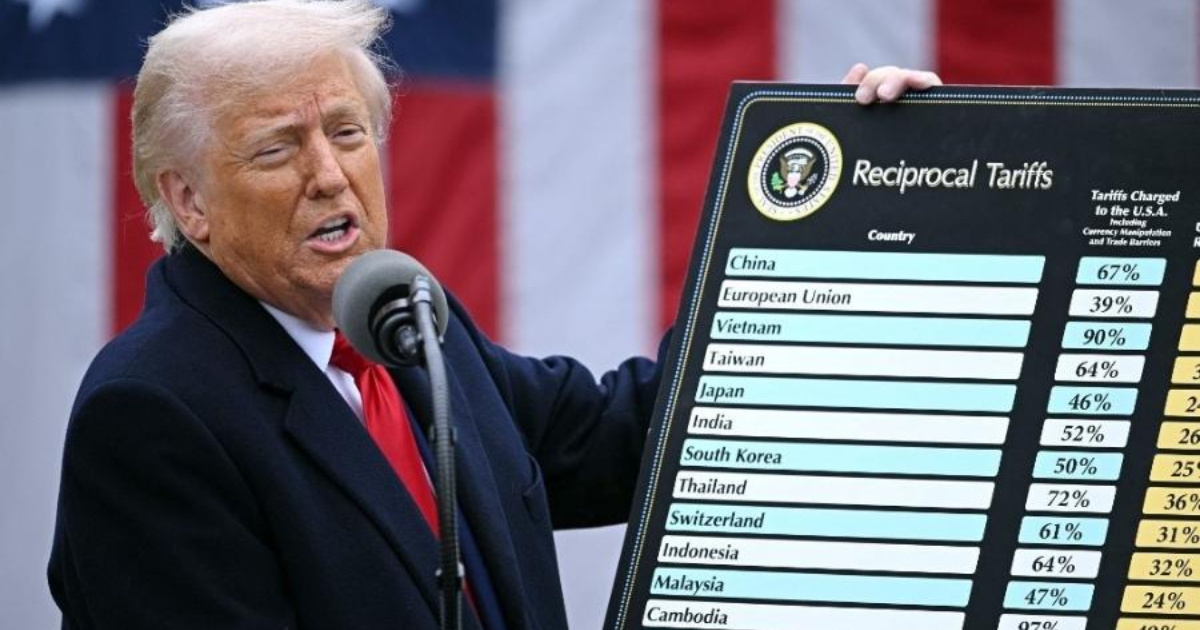
The statement comes in response to the 50% tariffs imposed by the Donald Trump government on Brazilian products.
-
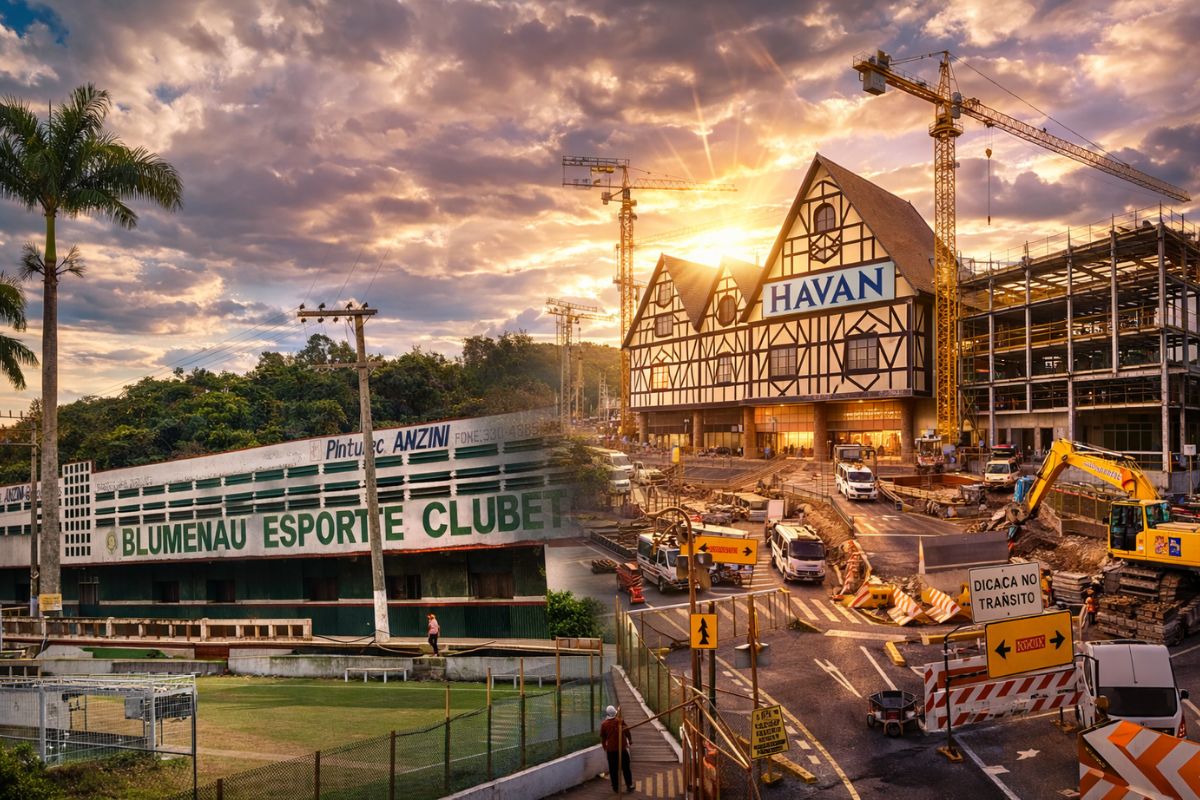
Havan buys historic football land in Blumenau for a million-dollar amount protected by a confidentiality clause and is already planning to change even the layout of streets to build a megastore in half-timbered style costing 80 million reais.
-
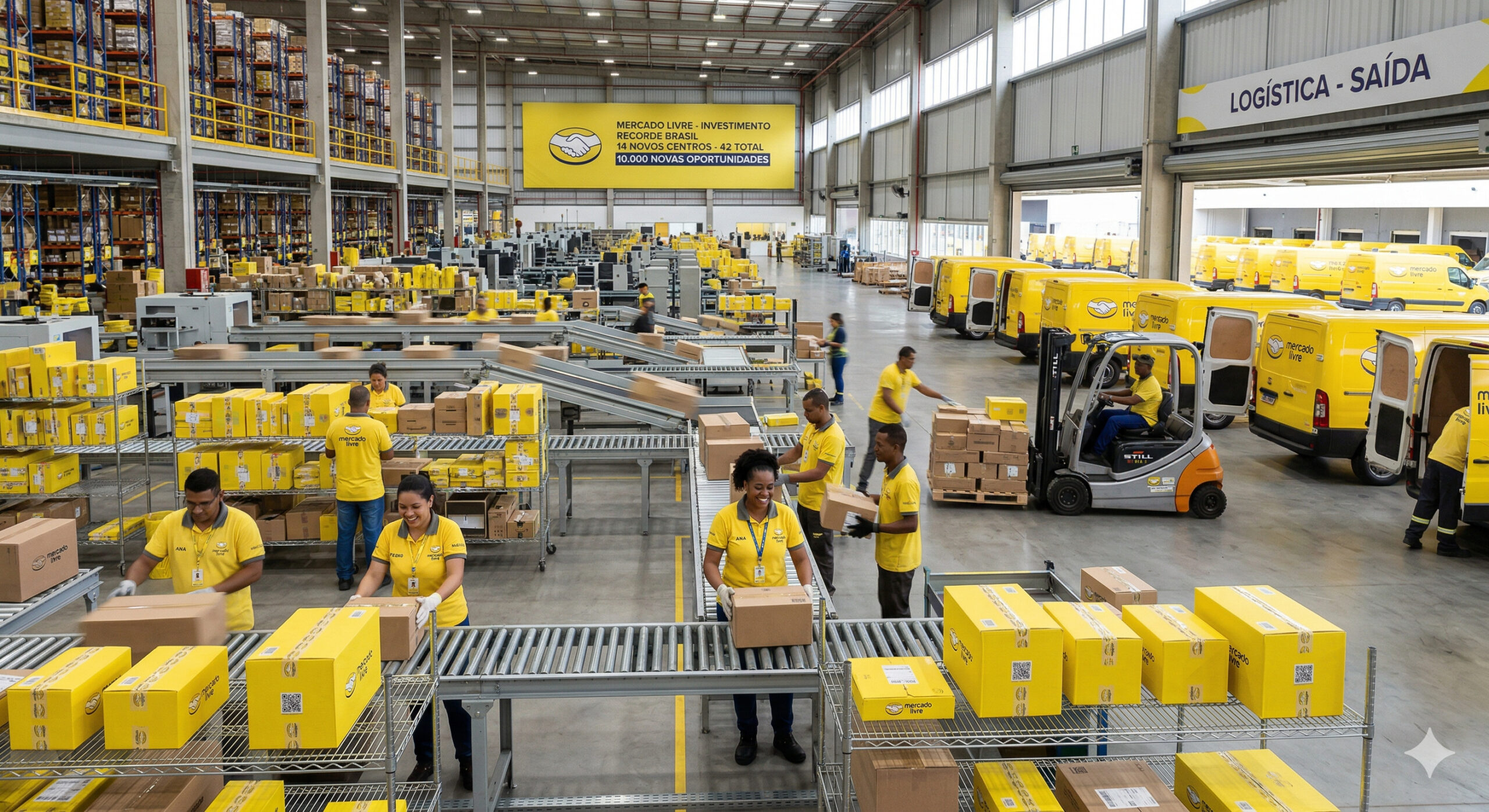
Mercado Livre “opens the vault” and announces a record investment of R$ 57 billion in Brazil in 2026, a value 50% higher than the previous year, with an expansion plan that includes 14 new logistics centers, totaling 42 units in the country and hiring an additional 10,000 employees.
-
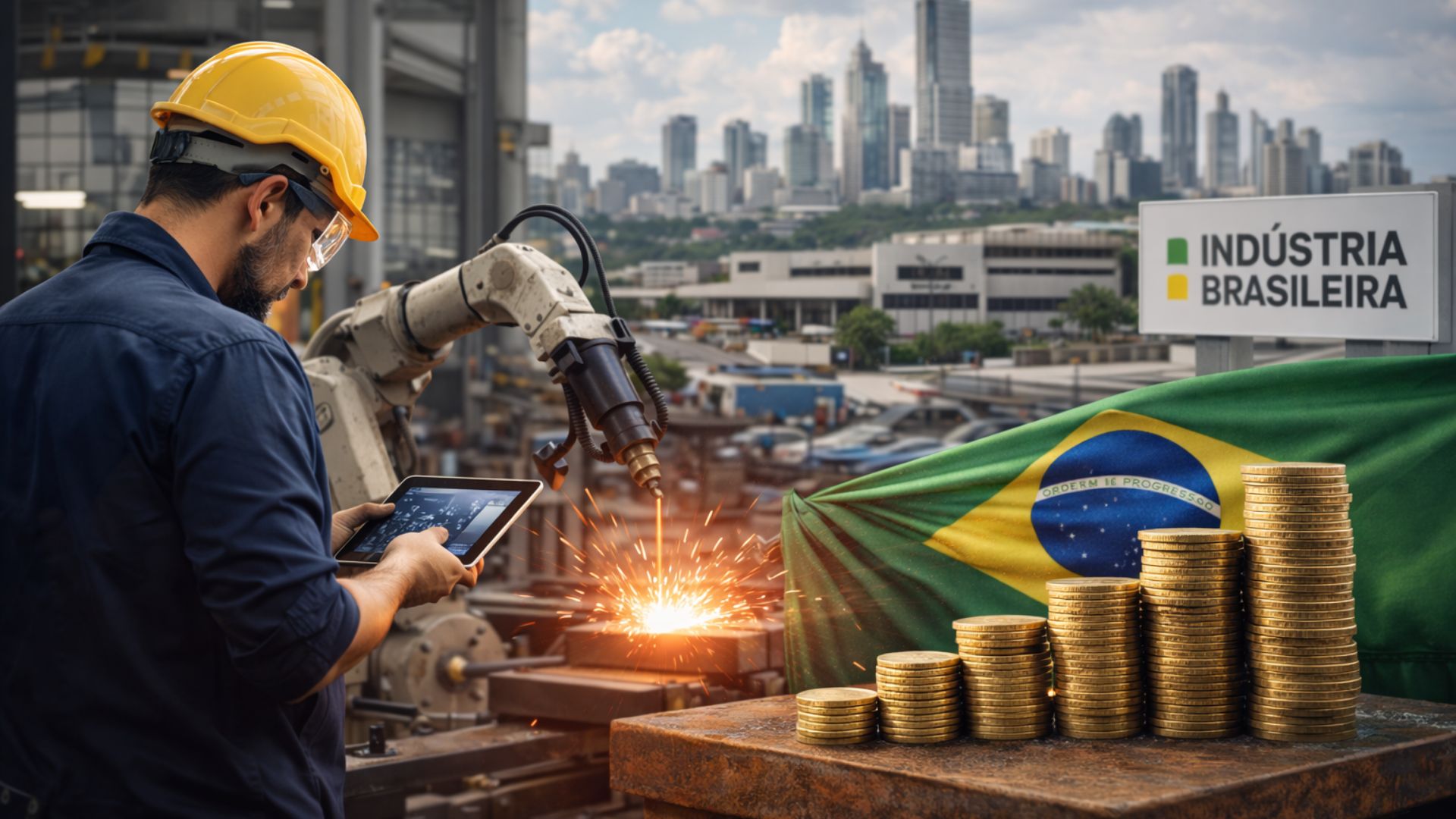
How investment in technology can revolutionize the national economy and enhance industrial gains, according to a study that highlights the direct impact on productivity, innovation, and wealth retention within Brazil.
-
The largest food company on the planet, JBS, has just opened a 4,000 square meter laboratory in Florianópolis to develop customized proteins that modulate muscle mass gain, immune response, and metabolic performance.


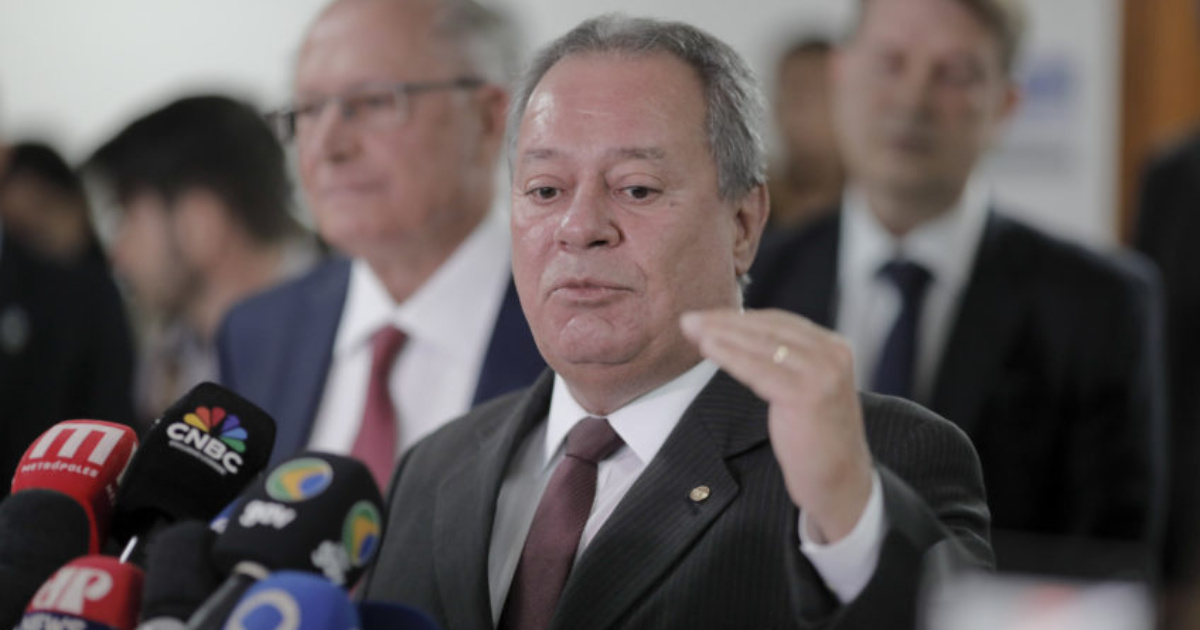
CNI Prioritizes Dialogue and Asks for Caution
According to the entity, the priority is to insist on negotiations to reverse the tariff or widen exemptions for national items.
“We need to seek to maintain the firm and proactive relationship of over 200 years between Brazil and the United States,” Alban said.
He added that the goal is to “open paths” for a negotiated solution without hastening retaliatory measures.
The CNI maintains that the economies are complementary and that a large part of bilateral trade involves intermediate goods.
In the last decade, these inputs accounted for about 58% of the total traded between the two countries, an argument used to advise against immediate escalation.
Business Mission to Washington
While advocating for moderation, the confederation is organizing a mission with more than 100 business leaders and representatives of sector associations to Washington, already at the beginning of this week.
The agenda includes meetings with U.S. authorities and companies and technical preparation for the public hearing scheduled by the USTR under the Section 301 of the Trade Act of the U.S.
The commitments aim to equip the Brazilian private sector with information and open political and business channels that facilitate a negotiation to reverse the 50% tariff or at least widen the exemptions already granted.
Section 301 Hearing Takes Place on September 3
The U.S. investigation was opened in July and examines acts and policies of Brazil in areas such as digital trade, payment services, intellectual property, and the environment.
The public hearing of Section 301 is scheduled for September 3, 2025, with the possibility of continuation on the 4th, and serves to receive testimonies from interested parties for and against additional measures.
According to the USTR, an official transcript will be published after the session, which will not be broadcast live.
Brazilian companies and entities have registered to participate with technical and sectoral contributions.
What the Economic Reciprocity Law Provides
Sanctioned in April 2025, the Law No. 15.122/2025 authorizes the Brazilian government to adopt suspension of commercial concessions, investments, and obligations related to intellectual property in response to unilateral measures by other countries that affect Brazil’s international competitiveness.
The text came into effect on April 14 and serves as a legal basis for proportional countermeasures, following a technical procedure conducted by Camex.
Within this process, the government needs to assess the impact of foreign sanction, consult stakeholders, and calibrate potential responses.
The adoption of measures depends on technical justification and tends to occur in stages, reinforcing the reading that the process is gradual.
50% Tariff from the U.S. and Reaction of the Brazilian Government
On July 30, 2025, the White House published an executive order that formalized a 50% additional tariff on Brazilian products, in addition to existing charges.
The measure took effect on August 6 and was justified by the Trump administration based on “national emergency,” combining foundations of trade law and executive powers.
Some items, such as aircraft, were granted exceptions, but sectors such as coffee and meats were listed among the most affected.
In response, the Itamaraty communicated the beginning of the process for possible application of the Reciprocity Law, while also initiating consultations at the WTO and strengthening legal defense with a U.S. law firm contracted by the AGU.
The Arnold & Porter Kaye Scholer LLP was selected to represent Brazil in administrative and judicial measures related to tariffs and associated sanctions.
Lula Says He Is in No Rush and Keeps Door Open for Negotiation
Although he authorized Camex to proceed with the procedure, President Lula stated, on August 29, that he “is not in a hurry” to retaliate against the United States and that the priority is to seek a deal.
In an interview with Rádio Itatiaia, he stated that the process “takes time” and that Brazil remains available for conversation “24 hours a day” if there is willingness on the U.S. side.
The Planalto reiterated that the country has already formalized consultations at the WTO.
In this context, the CNI’s signal for caution converges with the government’s strategy to use the process as a pressure instrument without hastening retaliation, in order to encourage the reversal or widening of exemptions to the tariff increase.
Bilateral Trade and Potential Effects
Brazil-U.S. trade is intensive in productive inputs, a condition that raises the risk of collateral effects if there is reciprocal escalation.
According to CNI, 58% of the trade flow of the last decade consisted of intermediate goods, and the potential increase in tariffs could raise costs in integrated supply chains involving everything from machines and equipment to wood, coffee, and ceramics.
This topic is part of the technical agendas that Brazilian businessmen are bringing to U.S. authorities and the private sector this week.
Although Brazilian law allows for suspending commercial and intellectual property concessions, the decision to use it depends on an assessment of proportionality and the potential economic impact domestically and on partners.
CNI emphasizes, therefore, that direct negotiations and Brazil’s defense in appropriate forums are, at this moment, the preferred routes.
The debate now focuses on Washington, with testimonies at the USTR, and in Brasília, where the government monitors developments and the private sector pressures for a solution that reduces uncertainties.
Will the joint strategy of government and industry be enough to unlock concessions from the U.S. side without opening a new front of retaliation?







A CNI, que deveria se preocupar muito com a industrialização do país, mantermos nosso parque industrial, preferiu se calar, sob alegação que a importação de bens e serviços estrangeiros era “mais barato”. A escravidão alheia no estrangeiro, lhe convinha, mesmo com o empobrecimento industrial brasileiro. O que importava era ganhar, serem ricos, mesmo detonando os empregos e indústrias no Brasil. Agora, novamente pedindo calma?:
O Brasil tá certo os EUA MANDA EM OUTRO país.
Não sou nada diante de tudo isso.
Sou apenas um trabalhador CLT que vivo do meu simples e humilde salário de motorista carreteiro o que sou ”
Mas nada mas justo do que tratarmos com gentileza quem nos trata com gentileza;
O que o nosso presidente está fazendo com os usa é mas que justo acho até que demorou demais para ser feito .
Na minha humilde opinião acho que o usa deve viver a vida dele como todo um resto “CADA UM FAÇA POR SE QUE DEUS FARA POR TODOS”
Nós ficamos aqui com nossas vidas e eles fiquem pra lá com suas vidas .
Nós resolvemos nos problemas eles resolva os deles . Nós comemoramos nossas vitórias eles comemorem as vitórias deles simples e fácil assim.
Que me perdoe quem achar que estou errado mas é que eu sou do tempo que um homem como também uma mulher tinha ****.
Gosta de mim eu gosto de você ‘ não gosta de mim vamos pra **** que o pariu .
Atenciosamente
José Francisco Alves
GUANAMBI
08/09/2025
É isso mesmo. Os USA sempre mantiveram um bem estar social invejado porque sempre explorou o mundo todo. Porque nunca enviou militares para tirar tiranos do Poder em África, Serra Leoa? Para os USA, lidar com governantes tiranos era bem mais barato para poder sugar os diamantes, **** que lhes interessavam, e fazer uma guerra sairia mais caro talvez. E o Panama, partiu o pais ao meio para fazer o canal e sair mais barato trazer petroleo pelo canal que encurta a distancia de países petrolíferos até USA. E todos os países destruídos por eles? Sempre fantasiavam algo, criavam mentiras internacionais. Ou era terrorismo, ou comunismo, ou trafico, como se fossem os “paladinos da democracia”, anjos de candura, quando de vdd são ****, nazistas, traficantes, usurpadores. O interesse é sempre money, desculpa para lhes retirar petróleo, despejar as armas encalhadas nos fabricantes nos USA que financiam sua campanhas. Governantes americanos podem mudar, mas a maioria é belicista.