





 Portuguese
  English
  Spanish
  6 min of reading
  71 comments


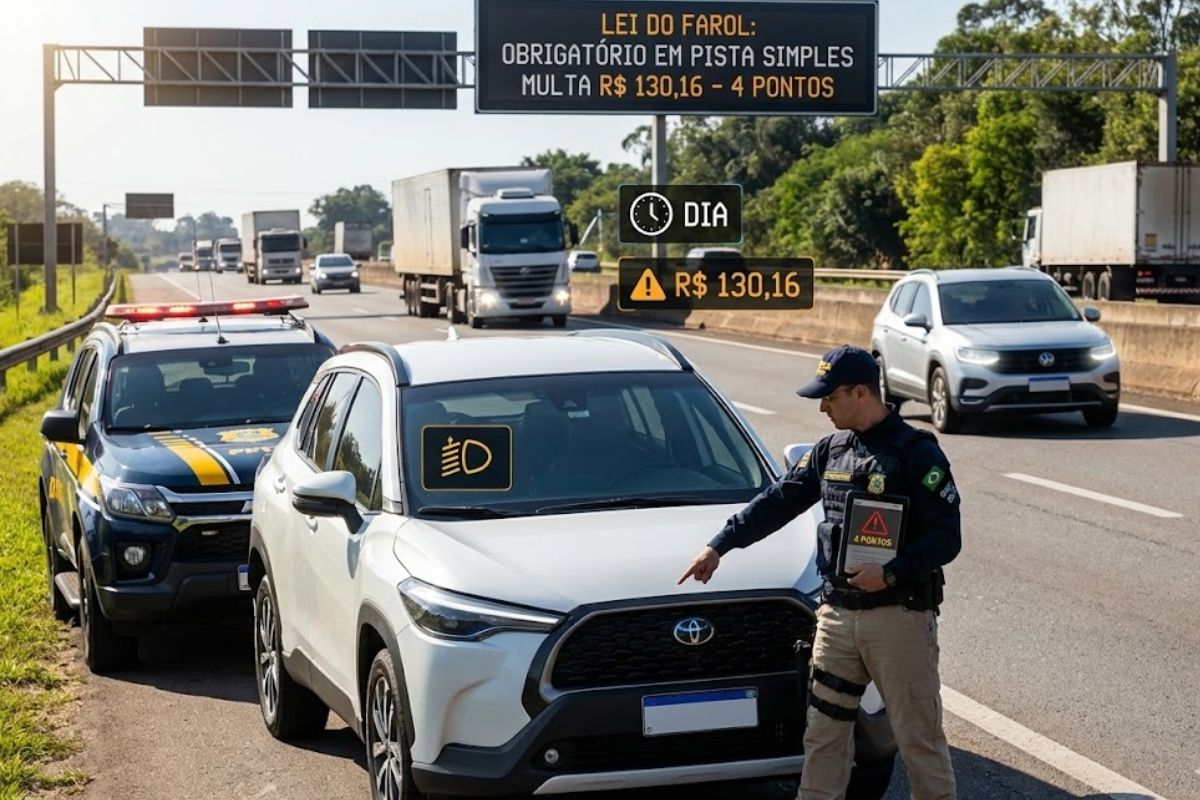


The Headlight Law, created by Law 14.071/2020 and in force since April 2021, defines when to turn on low beams or DRL on highways, standardizes behavior on single-lane roads, penalizes those who do not comply with an average fine and four points, but prioritizes visibility and accident prevention throughout the national territory.
The Headlight Law, nickname for Law 14.071/2020, has been in effect throughout Brazil since April 2021 and returns to the center of debate by clarifying the rules for using low beams or DRL on highways. The regulation updates the Brazilian Traffic Code to increase vehicle visibility and reduce the risk of collisions on increasingly busy roads.
In practice, the Headlight Law makes it mandatory to use low beams during the day on single-lane highways outside urban areas for vehicles that do not have DRL, leaves the use optional on dual-lane roads, and considers noncompliance with this rule a medium infraction, with a fine of R$ 130.16 and an addition of four points on the driver’s license for distracted drivers who do not turn on the lighting where it is required.
What Is the Headlight Law and What Changed in the Traffic Code
Law 14.071/2020, known as the Headlight Law, amended the Brazilian Traffic Code focusing directly on road safety on highways.
-
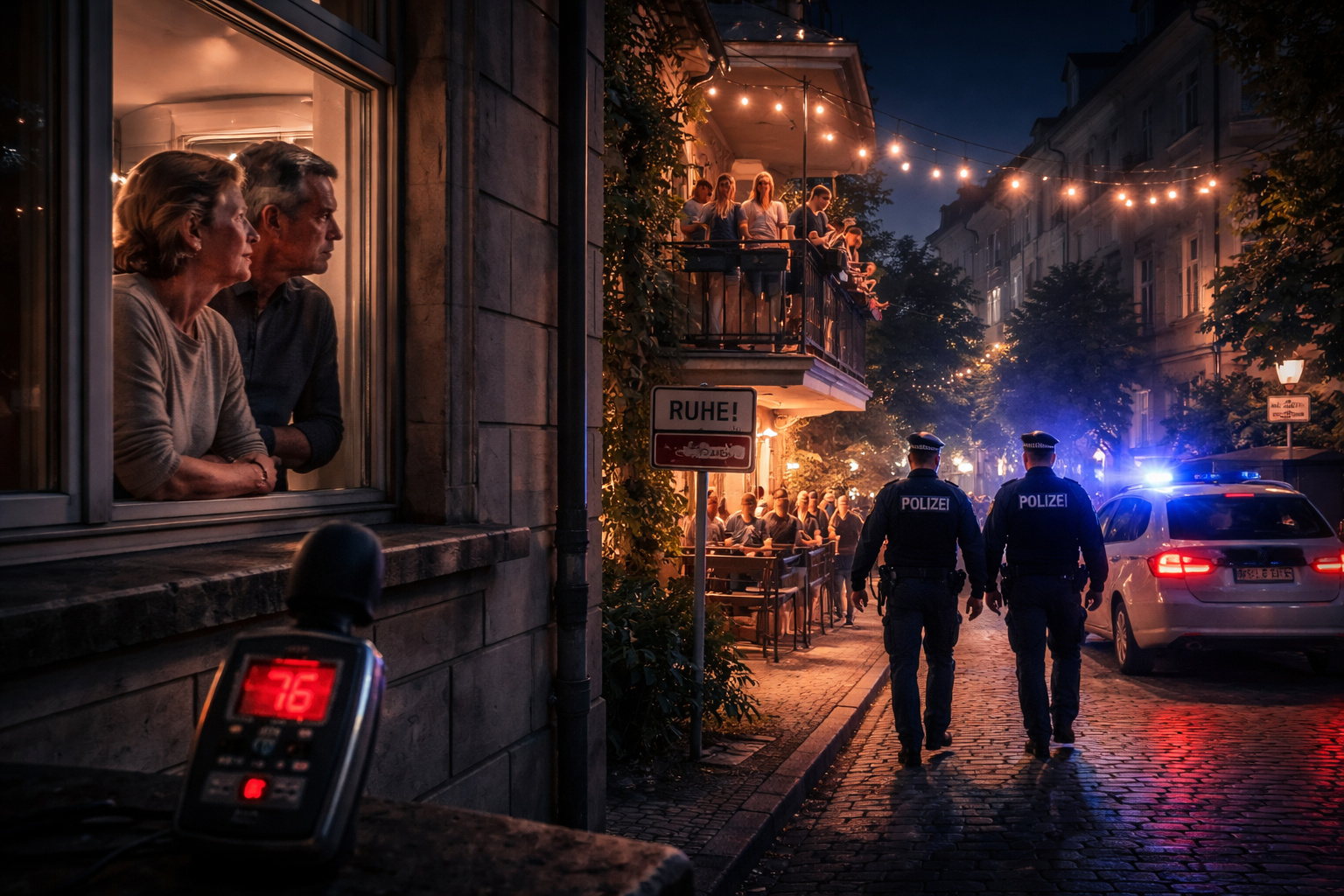
The noise law will no longer be in effect at 10 PM starting in June with a new rule valid during the 2026 World Cup.
-
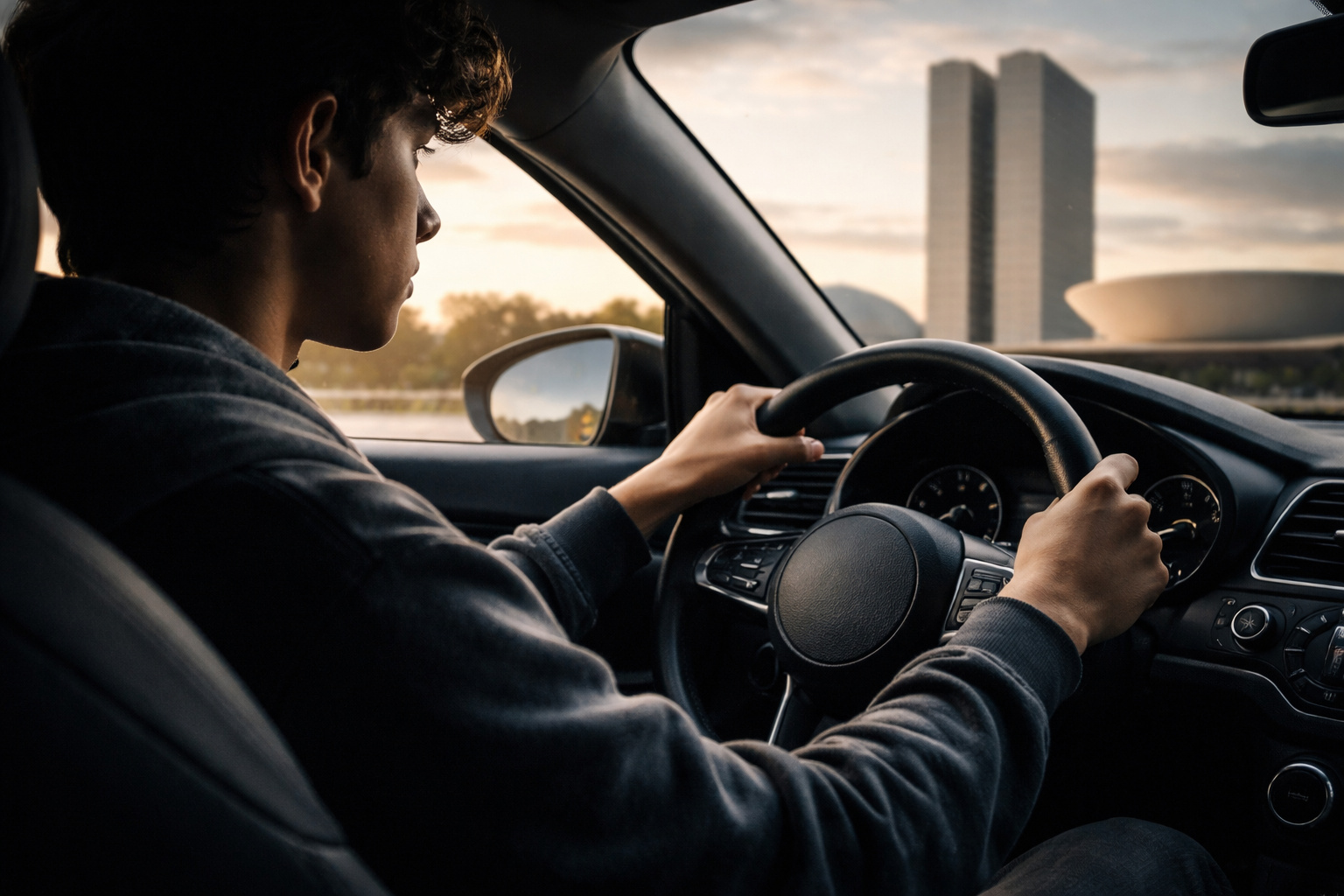
The Chamber opens a debate on driver’s licenses at 16 years old as part of a reform that includes around 270 proposals to change the Brazilian Traffic Code and may redesign rules for licensing, enforcement, and circulation in the country.
-
The new Civil Code could revolutionize marriages in Brazil with “express divorce” and changes that could exclude spouses from inheritance.

-
Banco do Brasil sues famous influencer for million-dollar debt and intensifies debate on delinquency, risks of seizure, and direct impact on Gkay’s credibility.


The update took into account the increase in the flow of cars, motorcycles, trucks, and buses on single and dual-lane roads, as well as the growing presence of technologies such as daytime running lights, DRL.
The central goal of the Headlight Law is to standardize driver behavior on highways so that everyone can see and be seen with sufficient advance notice.
Instead of leaving the decision to the driver’s “feeling,” the legislation precisely defines when low beams or DRL must be on, reducing doubts and confusion in traffic.
In addition to detailing the use of lighting, the Headlight Law reinforces that prevention is the priority, not just punishment.
The regulation aims to guide the driver on how to become more visible in different traffic, weather, and lighting scenarios, especially in critical stretches where a delayed reaction can cost lives.
When to Turn on Low Beams or DRL During the Day
The significant practical change of the Headlight Law lies in the routine of anyone driving on highways. On single-lane highways, outside the urban area, having low beams on during the day is mandatory for vehicles that do not have DRL.
The intention is to increase the contrast between the vehicle and the environment, even on clear days, so that it can be perceived from a distance.
On dual-lane highways, using low beams during the day is considered optional.
Even so, the recommendation is clear: in stretches with heavy traffic, sharp curves, inclines, declines, or a history of accidents, keeping low beams on is a simple measure that improves traffic reading for all road users.
At night, there is no room for doubt. The Headlight Law reinforces that low beams must remain on on any road open to traffic, whether urban or rural.
The same rule applies to tunnels, underground passages, and any situation of low visibility, such as heavy rain, fog, or haze, regardless of the time of day.
In these scenarios, the legislation requires that the front lighting allows the vehicle not only to see the road but also to be seen from a safe distance, reducing sudden surprises, abrupt braking, and emergency maneuvers.
Fine of R$ 130.16 and Four Points for Those Who Do Not Comply with the Headlight Law
Failure to comply with the main obligation of the Headlight Law on single-lane highways outside urban areas constitutes a medium offense.
Those driving without their low beams on during the day, when DRL is not present or not sufficient, are subject to a fine of R$ 130.16 and four points on their driver’s license.
This punishment is specifically triggered in situations where the law mandates the use of low beams.
In other words, the focus is on single-lane highways outside the urban area, where the risk of frontal and side collisions is greater due to the sharing of the same lane between opposing flows.
The fine provided by the Headlight Law adds to the other responsibilities of the driver, such as keeping the vehicle in good condition and respecting speed limits, signage, and overtaking rules.
More than just penalizing, the amount and points serve as a financial and administrative reminder that neglecting visibility can be costly, both financially and in terms of safety.
Benefits of the Headlight Law for Highway Safety
The expected benefits of the Headlight Law focus on reducing serious accidents on highways, especially frontal and side collisions typical of single-lane roads.
Low beams on during the day increase the contrast between the vehicle and the surrounding environment, facilitating identification by other drivers and pedestrians, even under bright sunlight.
International studies cited in the debate about the Headlight Law indicate that the use of daytime lights improves reaction time when identifying an approaching vehicle in overtaking, intersections, and sharp curves.
On Brazilian highways, many of which are single-lane and have high traffic of cargo and passengers, this anticipation of seconds can make the difference between a safe maneuver and a serious accident.
Among the gains pointed out by the application of the Headlight Law are:
- Better perception of vehicles from afar, reducing surprises and abrupt maneuvers.
- Support in adverse weather conditions, such as rain, fog, or haze, even during the day.
- Standardization of behavior, making it easier to read traffic for drivers with different experiences.
- Reduction of frontal and side collisions on single-lane highways, with a tendency to decrease the severity of accidents.
Maintenance of Headlights Is Part of Complying with the Headlight Law
Complying with the Headlight Law does not only depend on remembering to turn on the headlights. It also relies on the condition of the vehicle’s lighting system.
Burnt-out bulbs, misaligned headlights, or cloudy lenses compromise visibility and may result in fines, even when the driver attempts to follow the regulation.
Therefore, the guidance is for the driver to adopt a basic routine of verification, especially for those who frequently drive on highways:
- Check if all front lights turn on correctly.
- Verify if the low beams illuminate the road effectively, without blinding oncoming traffic.
- Ensure that the headlights’ lenses are not yellowing, cracked, or overly cloudy.
- Assess if the electrical system has no faults, fluctuations, or momentary outages.
Maintaining the lighting system in good condition is as important as respecting the Headlight Law itself.
Besides avoiding fines, it improves the driver’s visibility and makes the vehicle more predictable for other road users.
Cars with DRL: When Daytime Light Replaces Low Beams
The Headlight Law also takes into account the technological evolution of the fleet. Vehicles equipped with daytime running lights, DRL, may use them as a substitute for low beams during the day on single-lane highways outside the urban area.
The DRL was designed precisely to improve daytime visibility and usually turns on automatically when the engine starts.
Even so, the presence of DRL does not exempt the driver from using low beams in critical situations.
There are scenarios where the main lighting is still indicated or mandatory:
- At night, low beams are mandatory for everyone, with or without DRL.
- In tunnels and underground passages, the main lighting must be activated by legal requirement.
- In heavy rain, fog, or haze, low beams enhance safety even with the DRL on.
- In poorly lit urban areas, low beams help identify obstacles, pedestrians, and cyclists.
For vehicles without DRL, the rule remains strict on single-lane highways outside urban areas: low beams must be on during the day.
In any case, the central purpose of the Headlight Law is to increase vehicle visibility, reduce risks, and promote safer traffic on Brazilian roads.
Have you gotten used to turning on your headlights whenever you enter highways, or do you still have doubts about when the Headlight Law requires the use of low beams or DRL?










Falo não só como motorista mas também como pedestre, quando atravesso a rua principalmente na rodovia onde moro, quando o farol está acesso é muito mais fácil de ver o carro e a distância que está.
Pra que farol de dia que já tá claro e só para roubar o povo
Os buraco ninguém quer tampar
Só os políticos e todos os representantes, não enxergam os buracos,os quebra mola ,falta de todos os tipos de sinalização em todos território nacional. E uma lei para tirar dinheiro da população!