





 Portuguese
  English
  Spanish
  4 min of reading
  9 comments


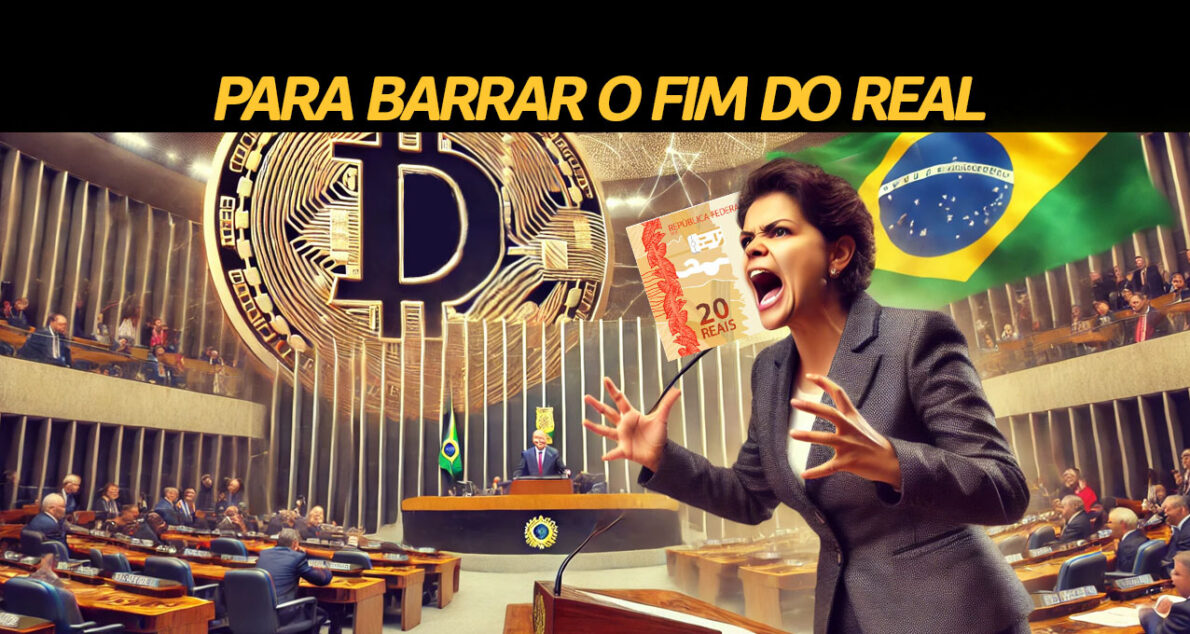

Did You Know That a New Law Could Block the Creation of the Digital Currency Drex and Prevent the Physical Real from Disappearing?
Last Tuesday (27), federal deputy Julia Zanatta (PL-SC) presented a bill aimed at preventing Drex, the digital Real, from completely replacing physical currency.
The proposal, already under consideration in the Chamber of Deputies, raises a heated debate about financial freedom and government control. But why is the deputy so concerned about this change?
Deputy Zanatta’s proposal is clear: to prevent Brazil from becoming hostage to an exclusively digital financial system.
-
A new Brazilian shopping center worth R$ 400 million will be built in an area equivalent to more than 4 football fields, featuring 90 stores, 5 cinemas, a supermarket, a college, and parking for 1,700 cars, potentially generating 3,000 jobs.

-
Larger than entire cities in Brazil: BYD is building a 4.6 km² complex in Bahia with a capacity for 600,000 vehicles per year, but the discovery of 163 workers in conditions analogous to slavery has shaken the entire project.

-
With an investment of R$ 612 million, a capacity to process 1.2 million liters of milk per day, Piracanjuba inaugurates a mega cheese factory that increases national production, reduces dependence on imports, and repositions Brazil on the global dairy map.

-
Brazilian city gains industrial hub for 85 companies that is equivalent to 55 football fields.


According to her, the Drex, while representing a technological advancement, could endanger fundamental freedoms of Brazilians.
If approved, the bill will prohibit the extinction of physical currency and establish strict oversight over any changes to the national currency.
“They want to control the citizens!” warns the deputy, who also accuses the Workers’ Party (PT) of trying to impose a regime of exclusively digital transactions to increase control over the population.
Details of the Bill: The Digital Currency and the Protection of Physical Currency
The bill presented by Julia Zanatta arises amid heated discussions about the digitization of the Brazilian economy.
According to the proposal, any change in the format of money must pass through the scrutiny of the National Congress, ensuring that physical currency remains available for those who prefer not to adopt Drex.
In her justification, Zanatta argues that the replacement of physical currency with a digital version could modernize the economy but may pose a threat to citizens’ privacy and financial freedom.
The deputy emphasizes that the introduction of Drex needs to be accompanied by essential checks and balances.
For her, the Central Bank of Brazil, responsible for creating the digital currency, cannot have a free hand to eliminate physical currency without broad and democratic discussion in Congress.
Furthermore, Zanatta underscores the importance of physical currency in society, pointing out that its extinction could exacerbate issues like financial exclusion and a lack of autonomy over one’s own money.

Julia Zanatta Accuses the PT of Wanting Total Control Over Financial Transactions
In Zanatta’s view, there is more at stake than just the modernization of the financial system. She believes that the PT, the party of current president Lula, is behind dangerous initiatives that seek to eliminate physical currency and impose exclusively digital transactions.
For the deputy, these changes would pave the way for unprecedented government control over citizens, seriously compromising economic freedom and the financial privacy of every Brazilian.
Zanatta warns that projects like Drex could turn the government into a sort of “big brother,” capable of monitoring and controlling all financial transactions made in the country.
According to her, it is crucial that any change in the format of money occurs gradually and democratically, respecting the popular will and individual freedoms.
What Lies Behind Drex: The Start of Digital Currency in Brazil
Although Drex is a novelty for many, the digital currency project in Brazil is not as new as it seems.
The initiative began during Jair Bolsonaro’s government, when then-economy minister Paulo Guedes announced in 2020 that the country was preparing to launch a digital version of the Real.
The Central Bank of Brazil, which has become an autonomous authority, is responsible for developing Drex, which is already in the testing phase and may be implemented soon.
However, the implementation of Drex divides opinions. According to proponents of the digital currency, it will bring more efficiency and security to the national financial system.
But critics, like deputy Julia Zanatta, fear that the change could mean the end of financial freedom and the imposition of government control over the personal finances of Brazilians.
And Now? The Battle Between Digital and Traditional
Julia Zanatta’s bill promises to further intensify the debate about the future of money in Brazil.
On one side are those who see Drex as an inevitable and positive evolution for the country’s economy. On the other are those who fear that replacing physical currency with a digital version could open the door to abuses of power and restrictions on individual freedoms.
It remains to be seen how the National Congress will react to this proposal and whether Brazilians will be willing to give up physical currency in the name of modernity.
Do you think digital currency represents an advancement or a threat to financial freedom? Comment below and take part in this crucial debate for the future of our country.







A deputada Julia Zanata acertou bastante em propor este Projeto de lei,pois eu como um recentemente formado em TI e tendo conhecimento sobre algumas coisas a mais, terei de concordar pelos motivos que são citados
Isso pode sim ser um controle social e das massas e uma total quebra dos direitos a liberdade e privacidade,fora que mata o único sustento de muitas famílias que não tem internet e isso atropela totalmente a escolha de como escolher pagar algo fora que vai totalmente contra a acessibilidade de muitos que não tem um celular,conta em bancos por escolhas pessoais ou não,idosos,leigos de internet,etc
É propensamente maior a chave de ter ataques hackers ou falhas que os mesmos podem se aproveitar,pois do jeito que muitos são eu não duvido que eles consigam aproveitar das falhas
Em caso de apagões de energia que podem durar muito tempo,pode ser um caos total,nosso país quase sempre tem fortes ventanias ou chuvas e desastres que detonam a energia elétrica !
Em si esse projeto precisaria sim entrar em um debate público e uma Audiência pública antes de tudo,e ainda tendo pesquisas e pesquisas de campo antes de se propor a abolição do dinheiro físico!
E não esqueçam da possibilidade de uma tempestade solar que pode pegar a terra em cheio!
O caos na Nigéria que deu algo do tipo deve ser lembrado como exemplo do que não se fazer !
Moeda digital tem que existir em harmonia com a moeda física independente das tecnologias !
Por causa de um **** projeto do PT ligado a este mesmo assunto eu tenho quase todo dia chorado de desespero pelo motivo que o dinheiro físico salva muito na hora H, tenho familiares que usam muito o dinheiro físico,o projeto 4068/2020 do PT é um dos projetos mais sem coração e alma possível que eu já ví neste país!
O ponto é que isso pode ser super ruim elevado a 3x mesmo com tudo, então esse é o ponto a se discutir quais implicações esse tipo de coisa vai trazer !
Ela está completamente certa. Além de que temos um país com dimensões continentais com povoados afastados que não tem acesso a tecnologia o que inviabilizaria o comércio local, principalmente daqueles que pouco tem. Simplesmente o Drex até pode existir como o pix, mas JAMAIS acabar com o papel moeda que torna facilitado o transporte e entendimento para idosos e pessoas que não tem muito acesso sobre tecnologia. Terminantemente APOIO a Julia Zanatta. Ela acertou em cheio nos pontos que falam ainda sobre o controle estatal. Eles podem definir, saber, liberar, restringir, proibir e até BLOQUEAR sob a vontade e termômetro deles. É poder demais nas mãos de poucos. Independente da visão política, tanto poder de controle jamais deveria estar disponível. Então SIM o dinheiro de papel tem que existir, até porque numa tragédia com panes elétricas (que podem ocorrer também com enchentes, com falta de sinal ou quedas de redes, o digital fará o que já seria difícil virar um caos). Só esses são alguns exemplos de que o fim do papel moeda é INVIÁVEL e beneficia só grandes centros (e até certo ponto).
Acho que a moeda digital é verdadeiramente um grande avanço para o País. E realmente vai inibir as lavagens de dinheiro.
Coitado ! Hoje existe as criptomoeadas, como o bitcoin, é só o governo fazer uma licitação maior e falar que “o Governo” vai ter que negociar em criptomoedas, pronto, lavagem de dinheiro feita com sucesso. O governo quer te proibir de ser malandro com eles, mas o próprio governo nunca vai deixar de ser malandro com você(nós).
Eu não duvido que esse tipo de coisa possa já estar ocorrendo,do jeito que o mundo tá uma loucura eu não sei de mais nada
Mas isso me dá medo genuíno,e eu ainda por cima tenho ansiedade e bronquite o que pra min qualquer fagulha de desespero é extremamente perigoso pra min !