





 Portuguese
  English
  Spanish
  5 min of reading
  3 comments


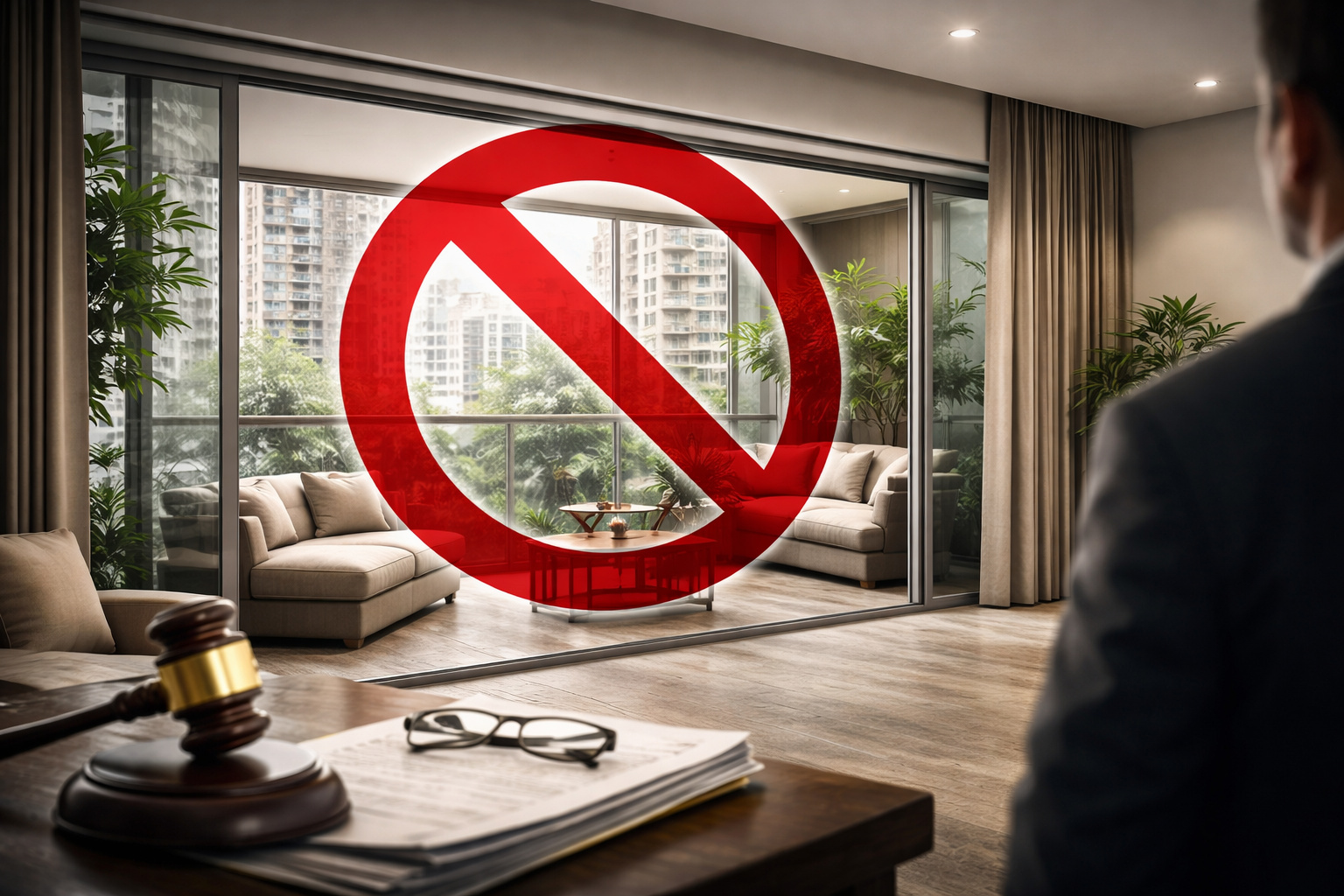


Closing a Balcony or Integrating a Living Room Without Authorization Can Generate Fines, Court Orders to Reverse the Work, and Conflicts; Understand What the Law Really Allows.
Few people know, but not all work done “inside the apartment” is free. In residential condominiums, seemingly simple renovations — such as closing the balcony with glass, integrating the balcony into the living room, or replacing window frames — can be considered changes to the facade and lead to consequences that go far beyond an informal warning. High fines, lawsuits, and even the obligation to reverse the entire renovation are increasingly common outcomes in the Brazilian judiciary.
The problem begins with the misinterpretation of property rights. Many residents believe that, since they own the property, they can renovate as they please. The law, however, imposes clear limits when the intervention goes beyond individual interest and affects the building as a whole.
Few People Know, but Not All Work “Inside the Apartment” is Allowed
Integrating spaces has become a trend, especially in older properties where balconies and living rooms were compartmentalized. Closing balconies with glass has also become popular as a solution to expand usable space and reduce noise.
-
The noise law will no longer be in effect at 10 PM starting in June with a new rule valid during the 2026 World Cup.

-
The Chamber opens a debate on driver’s licenses at 16 years old as part of a reform that includes around 270 proposals to change the Brazilian Traffic Code and may redesign rules for licensing, enforcement, and circulation in the country.

-
The new Civil Code could revolutionize marriages in Brazil with “express divorce” and changes that could exclude spouses from inheritance.

-
Banco do Brasil sues famous influencer for million-dollar debt and intensifies debate on delinquency, risks of seizure, and direct impact on Gkay’s credibility.


What almost no one realizes is that these changes can alter the external appearance of the building, even if carried out from within the unit.
This is precisely where the legal conflict begins. For condominium law, a facade is not just the external wall visible from the street. It includes everything that interferes with the visual aspect of the building, such as windows, doors, frames, balconies, and terraces.
What the Law Really Says About Closing Balconies and Facades
The central point is in the Article 1,336, Section III, of the Civil Code, which imposes on the condominium owner the duty to not alter the shape and color of the facade, external parts, and frames, without the condominium’s authorization. This rule is reinforced by Law No. 4,591/1964, the Condominium Law, which requires collective consent for changes that impact the building’s aesthetics.
In practice, this means that any modification visible externally — even if made inside the apartment — can be deemed irregular if not previously approved at a meeting.
Why Integrating a Living Room, Closing a Balcony, or Changing Frames Can Be Illegal
Closing a balcony with glass, removing walls to integrate spaces, and replacing windows with different models than the original standard alter the uniformity of the building. For the law, this standardization is not a mere aesthetic whim, but an essential element of collective coexistence.
Courts understand that the facade belongs to all condominium owners and not just to the resident of that unit. Therefore, even discreet changes can be questioned if they do not follow the approved standard.
Fines, Court Orders to Reverse the Work, and Real Judicial Decisions
When the work is deemed irregular, the condominium can impose fines provided for in the bylaws. The Civil Code itself authorizes penalties that can reach up to five times the amount of the condominium fee, depending on the severity and recurrence.
Additionally, court decisions in state courts and the Superior Court of Justice confirm that the condominium can legally demand the removal of what was built. There are numerous cases where residents were forced to remove glass, undo balcony enclosures, and reinstall original frames, bearing all the financial losses of the renovation.
Even Being the Owner, the Resident Can Be Punished
One of the biggest shocks for those facing this type of action is discovering that being an owner does not guarantee total freedom.
The right to property in condominiums is limited by collective interest. When purchasing an apartment, the resident automatically accepts the by-laws and internal regulations, which serve as mandatory contractual rules.
Thus, even if the work was done with private resources and within the unit, it can be deemed illegal if it violates condominium rules or civil legislation.
When the Work Can Be Legally Authorized
This does not mean that all balcony integrations or balcony closures are prohibited. The law allows these changes as long as there is prior authorization. Normally, this authorization occurs in a meeting, with a quorum defined in the condominium’s by-laws. In some cases, approval by a qualified majority is required.
There are buildings that approve a unique standard for closing balconies or frames, allowing all residents to carry out the work uniformly. The mistake lies in renovating first and trying to regularize afterward.
Why This Rule Exists: Safety, Structure, and Coexistence
Besides aesthetics, there are technical reasons behind these restrictions. Poorly executed alterations can compromise the structure, cause leaks, affect ventilation, or pose safety risks. When this happens, the responsibility can fall on the condominium as a whole, including the property manager.
The rule aims to prevent individual decisions from harming the community and generating shared costs or risks.
In most cases that reach the courts, the conflict could have been avoided with a simple prior consultation with the property manager or the condominium’s by-laws. Many residents renovate relying on informal reports from neighbors or the idea that “everyone does it,” without realizing that each situation needs formal authorization.
When the condominium acts after the work is completed, the financial and emotional damage is often high.
What to Do Before Renovating to Avoid Losing Money
Before any intervention, the safest path is to analyze the by-laws, verify previous decisions from the meeting, and formalize the request for authorization. This is especially true for closing balconies, integrating spaces, and changing frames.
In condominiums, renovating without authorization can end up being much more costly than following the correct procedure.
In the end, the rule is simple: what seems like internal work can be legally considered a collective change. Ignoring this is what turns common renovations into long legal disputes.










Além desta condição referente a modificação da fachada, temos ainda uma norma do Corpo de Bombeiros que dá regras para estes fechamentos, norma está que consta do Decreto Estadual de São Paulo e da IT 9/2025 do Corpo de Bombeiros !
Por isso nunca irei compra apartamento ou casa em condomínio!
Cheio de regras cheio de frescura vc compra paga caro e não pode nada melhor pagar mais caro em uma casa normal do que essas bombas de condomínio
A verdade é que tudo nesta gozolandia chamada Brasil o cidadão não é dono de nada, o cidadão trabalha para ter um carro , um imóvel ou qualquer outro bem Ele paga literalmente para alugar aquilo que já foi pago e se não pagar o aluguel (os impostos) ou qualquer outra coisa que eles inventam pra arrecadar você ainda corre o risco real de perder e não receber nem o que pagou pesando que era Seu, mais era deles, Sempre foi.