





 Portuguese
  English
  Spanish
  4 min of reading
  10 comments


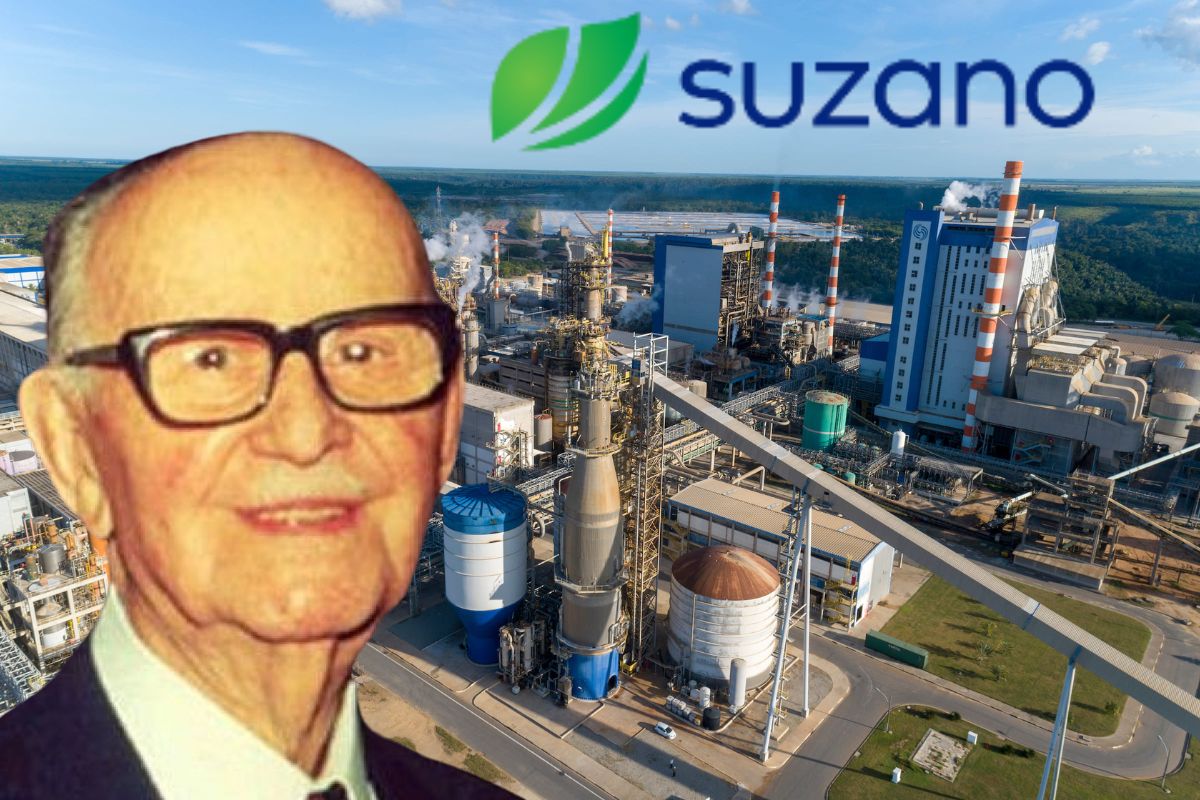

The Story of How Ukrainian Immigrant Leon Feffer Started a Paper Business That Would Become the Largest Producer of Eucalyptus Pulp in the World.
Few imagine, but one of the largest industrial empires in Brazil was born from a modest paper trade. The journey of Suzano begins with Leon Feffer, an immigrant who arrived in São Paulo in the 1920s as a peddler and, with vision and boldness, planted the seeds of the company that is now the world leader in eucalyptus pulp, present in dozens of countries.
The story of Suzano starts with the arrival of Ukrainian immigrant Leon Feffer in Brazil in 1921. Not speaking Portuguese, he began his life in São Paulo like many other immigrants of the time: working as a peddler, selling a little bit of everything on the streets. Going door to door, Leon Feffer realized that paper, used for wrapping and printing, was an increasingly valued yet expensive item since almost all of the supply had to be imported.
Leon Feffer & Company
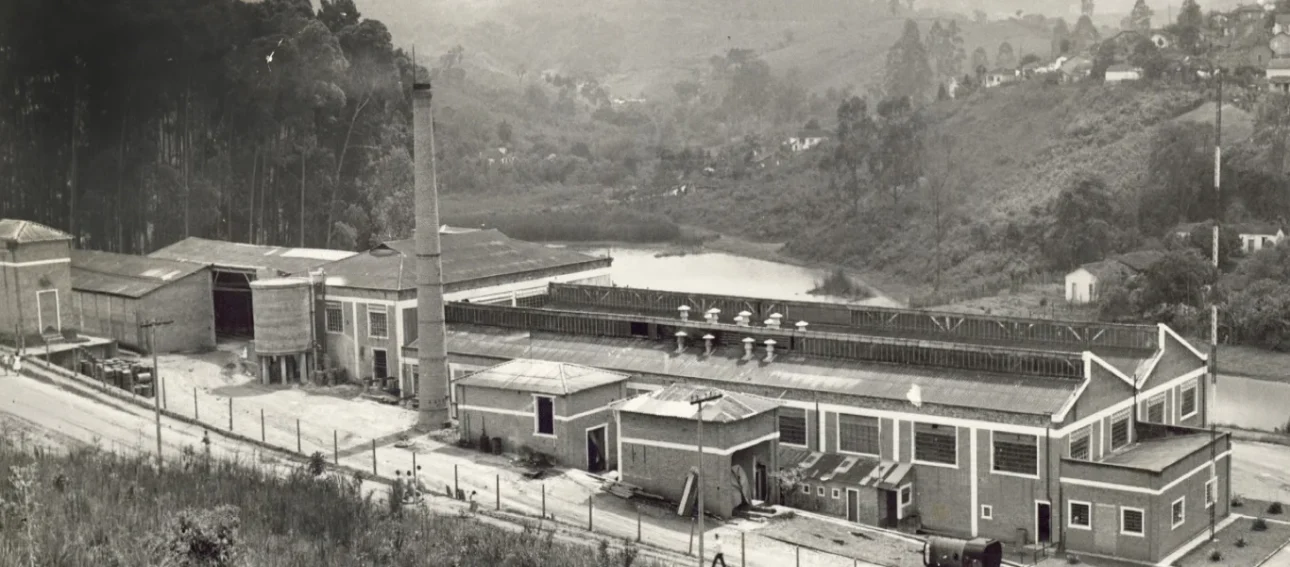
With this insight, he decided to invest. In 1924, he founded Leon Feffer & Company, a firm dedicated to the paper trade. The company bought ready-made paper, often imported, and resold it in the domestic market to merchants and printers. The business grew rapidly, and in 1929, Leon Feffer expanded his activities, setting up a small paper bag factory and a printing press.
-
Italian researchers have detected what appears to be a second Sphinx buried under the sands of Egypt, and satellite scans reveal a gigantic underground megastructure hidden beneath the Giza Plateau for over 3,000 years.

-
There are 4,223 drums and 1,343 metal boxes concreted with 50-centimeter walls that store the radioactive waste from Cesium-137 in the worst radiological accident in Brazil, just 23 kilometers from Goiânia, with environmental monitoring every three months.
-
Giant Roman treasure found at the bottom of Lake Neuchâtel in Switzerland reveals an advanced trade system, circulation of goods, and armed escort in the Roman Empire about two thousand years ago.

-
He buried 1,200 old tires in the walls to build his own self-sufficient house in the mountains with glass bottles, rainwater, and an integrated greenhouse.

From Reselling to Own Paper Manufacturing (1941)
The 1930s brought turbulence with the Great Depression and then World War II. Imports became restricted, and paper became a luxury item. In the face of this challenging scenario, Leon Feffer made a bold decision: to manufacture paper in Brazil, a market dominated by foreigners.
To realize his dream, he bet all his savings. He sold the house where he lived, the work truck, and even his wife’s jewelry. With the gathered resources, he opened his first paper factory in 1941 in the Ipiranga neighborhood of São Paulo. This unit was the embryo of the future Suzano and marked the beginning of a company culture rooted in hard work, innovation, and long-term vision, established by Leon Feffer.
The Eucalyptus Revolution: Max Feffer’s Vision and Initial Expansion
In 1949, Max Feffer, son of Leon Feffer, joined the family business with transformative ideas. Max saw the untapped potential of eucalyptus, a fast-growing tree (7-year cycles) abundant in Brazil, as an alternative to the long-fiber trees traditionally used in the global pulp industry, which took decades to grow.
Producing pulp industrially from eucalyptus was unprecedented in the world. Max Feffer led intense research, and in 1956, Suzano achieved the revolutionary feat: producing 100% eucalyptus fiber pulp on an industrial scale. This positioned Brazil as an innovative player in the sector. By 1961, the operation was already on a large scale. The first export occurred in 1964 (to Argentina), followed by Europe in 1975. The company adopted the name “Suzano” in homage to the São Paulo city where it established its main manufacturing unit in 1955. In the 1980s, it invested in biotechnology to enhance its forests.
Suzano Towards the New Millennium
As Suzano grew, competitors like AraCruz and Klabin also strengthened. In the 1980s and 1990s, the company expanded its presence in Brazil, including the creation of Bahia Sul Celulose in partnership with CVRD. However, in the 1990s, it faced a global pulp price crisis and the depreciation of the real.
Under the leadership of the third generation, represented by David Feffer, Suzano chose to reinvent itself. Starting in 2003, it hired external professional managers, adopting more modern governance practices while the Feffer family remained on the strategic board. Significant acquisitions marked this period, including that of Ripasa (in consortium with Votorantin) in 2006 and control of the former Ripasa (Conpac) and distributor KSR in 2010. Internationalization advanced with the creation of Suzano America in the U.S. in 2005.
The Pulp Superpower: Merger with Fibria


In 2012, Suzano went public on the São Paulo Stock Exchange. The boldest step came in 2018, with the announcement of the merger with Fibria, then the largest market pulp producer in the world. Completed in 2019, the merger created Suzano S.A., the absolute world leader in eucalyptus pulp.
The new giant began operating with impressive production capacity, heavily investing in innovation and sustainability. It developed products such as Eucafluff (hygiene) and Lignin (substitute for petroleum derivatives). The strong ESG agenda attracted global investors. In 2023, it acquired Kimberly-Clark’s tissue business in Brazil (including the Neve brand).
In 2024, upon completing 100 years, it inaugurated the Ribas do Rio Pardo (MS) unit, the largest single production line of pulp in the world (a project of over R$ 22 billion), and purchased carton paper factories in the U.S. The company maintains initiatives such as the Biomas Project (forest restoration) and Suzano Ventures (startups). With direct operations in over 60 countries and a commercial presence in about 100, Suzano set ambitious goals for 2030, focused on carbon removal, productivity, and reducing water consumption, consolidating its commitment to biomaterials and a low-carbon economy.










Muito bom saber a trajetória do fundador da Suzano pois trabalho nela como segurança patrimonial e uma horra fazer parte dessa gigante
PARABÉNS SUZANO QUE DEUS CONTINUE ABENÇOANDO TODOS CRIADORES DESSA MARAVILHOSA EMPRESA.
Tive o imenso prazer de ter visto de perto e conhecer sr Leon , sr max , Davi e Jorge Feffer .
Trabalhei 27 anos no grupo e conheci várias unidades .
Só gratidão a família FEFFER