





 Portuguese
  English
  Spanish
  5 min of reading
  0 comments


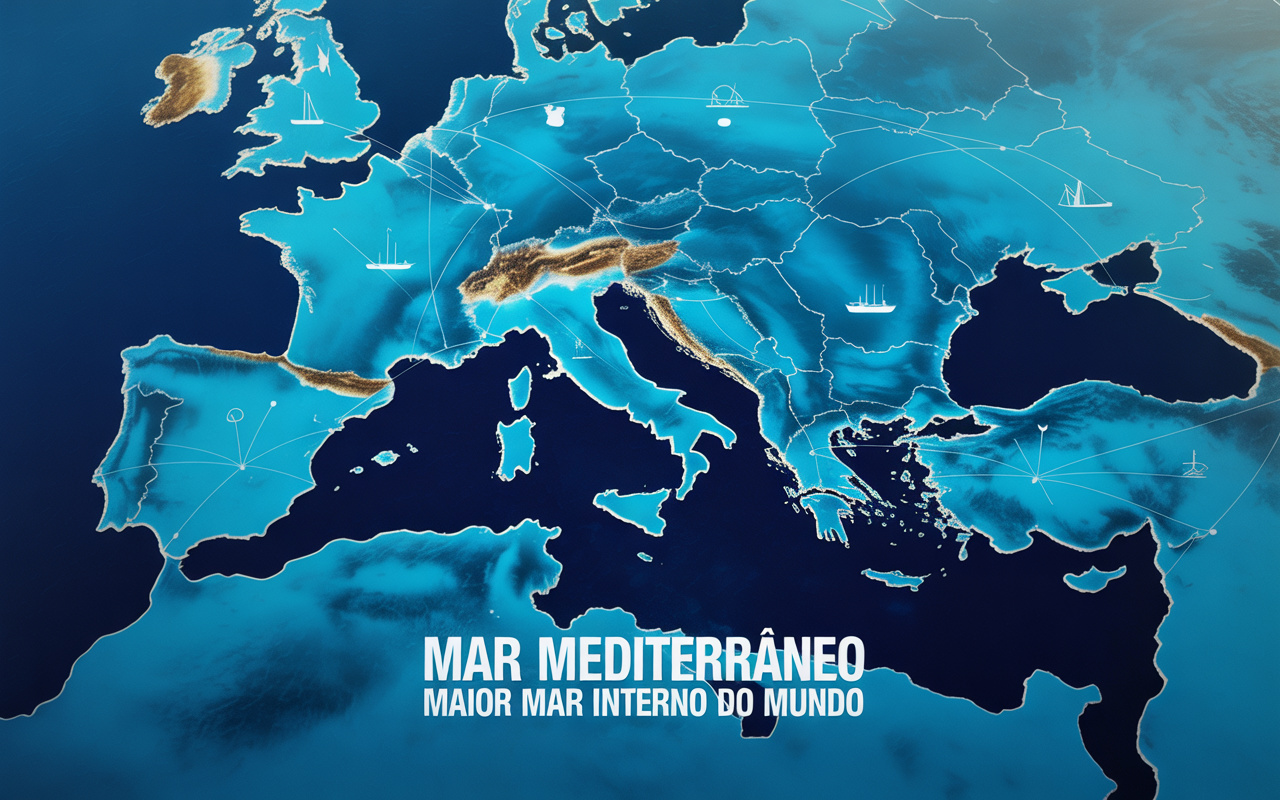
The Mediterranean Sea Is the Largest Inland Sea in the World, Connects Three Continents, and Influences Climate, Trade, and Geopolitics for Millennia.
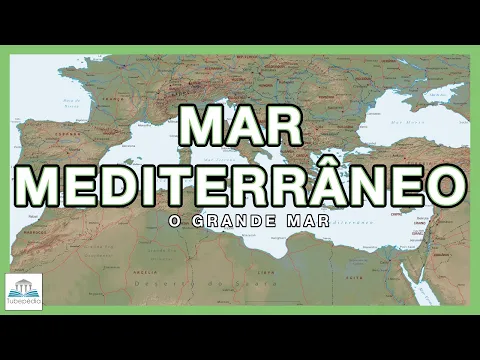
Few people realize that a large part of human history was shaped not in oceans or rivers, but in a gigantic inland sea that lies between three continents and serves, even today, as a kind of liquid bridge between cultures, economies, and environmental systems. This is the Mediterranean Sea, the largest inland sea on the planet, covering approximately 2.5 million km², surrounded by 22 countries, and connected to the Atlantic Ocean only by the Strait of Gibraltar, about 14 km wide at its narrowest point. It is a rare geographical configuration — almost an oceanic lake — whose presence has influenced trade routes, imperial expansion, religious formation, geopolitical conflicts, and even the way climate functions in the Old World.
The Mediterranean Sea as Geographical and Oceanic System
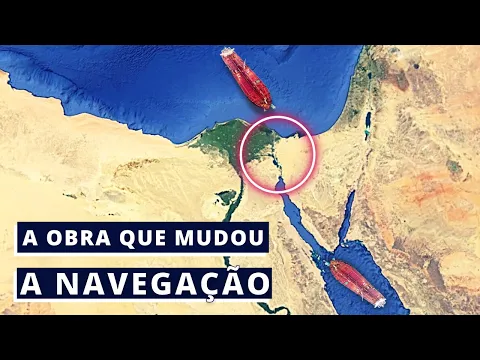
The Mediterranean is classified by oceanography as a semi-enclosed sea, which means that its communication with the open ocean is limited. In addition to Gibraltar, it connects to the Black Sea through the Marmara–Bosphorus–Dardanelles system, and to the Red Sea via the Suez Canal, built in 1869. These corridors define much more than trade: they determine biological exchanges, marine species interchange, salinity circulations, and socioeconomic impacts.
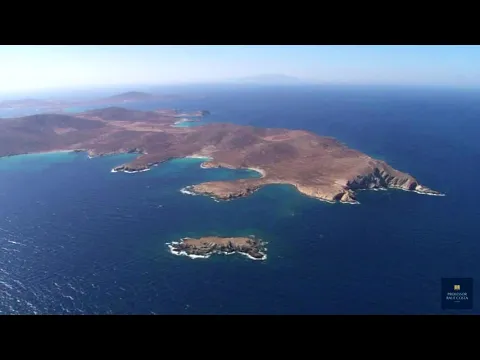

The relative isolation causes the salinity of the Mediterranean to be higher than that of the Atlantic, averaging around 38‰ (parts per thousand), compared to 35‰ in the Atlantic. This occurs because evaporation exceeds precipitation, and the input of freshwater is small compared to the total volume.
-
Friends have been building a small “town” for 30 years to grow old together, with compact houses, a common area, nature surrounding it, and a collective life project designed for friendship, coexistence, and simplicity.

-
This small town in Germany created its own currency 24 years ago, today it circulates millions per year, is accepted in over 300 stores, and the German government allowed all of this to happen under one condition.

-
Curitiba is shrinking and is expected to lose 97,000 residents by 2050, while inland cities in Paraná such as Sarandi, Araucária, and Toledo are experiencing accelerated growth that is changing the entire state’s map.

-
Tourists were poisoned on Everest in a million-dollar fraud scheme involving helicopters that diverted over $19 million and shocked international authorities.


To compensate, less salty waters enter through the strait while denser, saltier waters exit through the deep layers — an invisible but essential exchange for global ocean dynamics.
A Basin That Shaped Civilizations
No other sea has surrounded so many relevant civilizations in such a small space. The Phoenicians dominated navigation; the Greeks shaped philosophy and politics; the Romans built an empire of 5 million km² that surrounded their entire coast; the Arabs, centuries later, reorganized science, trade, and architecture; and North Africa connected the African continent to Europe long before any modern concept of borders existed.
The Mediterranean allowed something that no ocean could offer with the same intensity: quick connections between ports, controllable crossings, and a geographical space where maritime distance was shorter than land distance. Therefore, the expression Mare Nostrum, used by the Romans, is not a rhetorical exaggeration — it was a description of logistical dominance.
Wars, Routes, and Strategic Disputes
The military history of the Mediterranean also reveals its geopolitical importance. The Punic Wars between Rome and Carthage were essentially disputes for maritime control.
Centuries later, the Byzantine Empire and the Ottoman Empire consolidated power from Asia Minor, advancing over the Aegean Sea, Ionian Sea, Adriatic Sea, and Tyrrhenian Sea, which are sub-basins of the Mediterranean.
Even in the modern era, the sea maintained its strategic significance. During World War II, control of the western and eastern Mediterranean was decisive for supplying North Africa, for British projection from Malta, and for the Allied advance through Italy.
The opening of the Suez Canal further transformed the landscape, creating a corridor between Europe and Asia that drastically and permanently reduced the African circum-navigation trade routes.
Today, a significant portion of maritime tensions in the Mediterranean involves gas exploration, migration routes, maritime borders, fishing, and jurisdiction of EEZs (Exclusive Economic Zones), mainly between Turkey, Greece, Cyprus, Israel, Egypt, and Lebanon, revealing that the sea remains a stage for strategic disputes in the 21st century.
The Mediterranean as Climatic Zone
Beyond history, the Mediterranean has created its own climatic zone, present not only in Europe but also in California, Chile, Australia, and South Africa. This is known as the Mediterranean climate, characterized by warm, dry summers and mild, wet winters. This climate pattern made the region ideal for agricultural crops such as olive trees, grapes, citrus fruits, and wheat, which have sustained economies and societies for millennia.
The sea, by acting as a thermal regulator, smooths temperature variations and creates an environment conducive to dense cities, diversified agriculture, and constant maritime modalities — factors that, combined, formed the foundation of one of the greatest civilizational continuities ever seen.
Biodiversity and Relative Isolation
From an ecological standpoint, the Mediterranean is a special case. It is home to approximately 4% of all known marine species, despite representing less than 1% of the global ocean area. This is due to a combination of factors:
• complex geological history, including the closing and reopening of the strait;
• variations in salinity, temperature, and depth;
• upwelling regions in North Africa;
• deep zones over 5,000 meters in sub-basins like the Hellenic Basin.
The relative isolation also facilitates biological invasions, especially after the opening of the Suez Canal, which allowed the so-called Lessepsian phenomenon, migration of species from the Red Sea to the Mediterranean. Among the most studied cases are fish such as Siganus rivulatus and Lagocephalus sceleratus, which alter coastal ecosystems and artisanal fishing.
Economy, Ports, and Energy
Today, the Mediterranean hosts some of the oldest and most active ports in the world, such as Marseille, Piraeus, Alexandria, Genoa, Barcelona, and Istanbul. It is also a critical corridor for:
• transporting oil and gas from the Middle East to Europe;
• tourist routes and cruises;
• agricultural exports;
• container movement.
The recent discovery of natural gas reserves in the eastern Mediterranean, especially off the coasts of Israel, Egypt, and Cyprus, has reignited debates over maritime boundaries and energy, revealing that the sea continues to be a center of power, not just a historical landscape.
In the End, a Sea That Shaped the World
When we look at the map, the Mediterranean seems just a body of water surrounded by landmass. But in practice, it is more than a sea: it is a historical mechanism, a climatic corridor, an economic canal, and a geopolitical articulator.
It has been the stage for wars, cultural exchanges, nautical innovations, religions, empires, and ideas that spread to other continents.






-

-

-

-

7 pessoas reagiram a isso.