





 Portuguese
  English
  Spanish
 5 min of reading
  0 comments


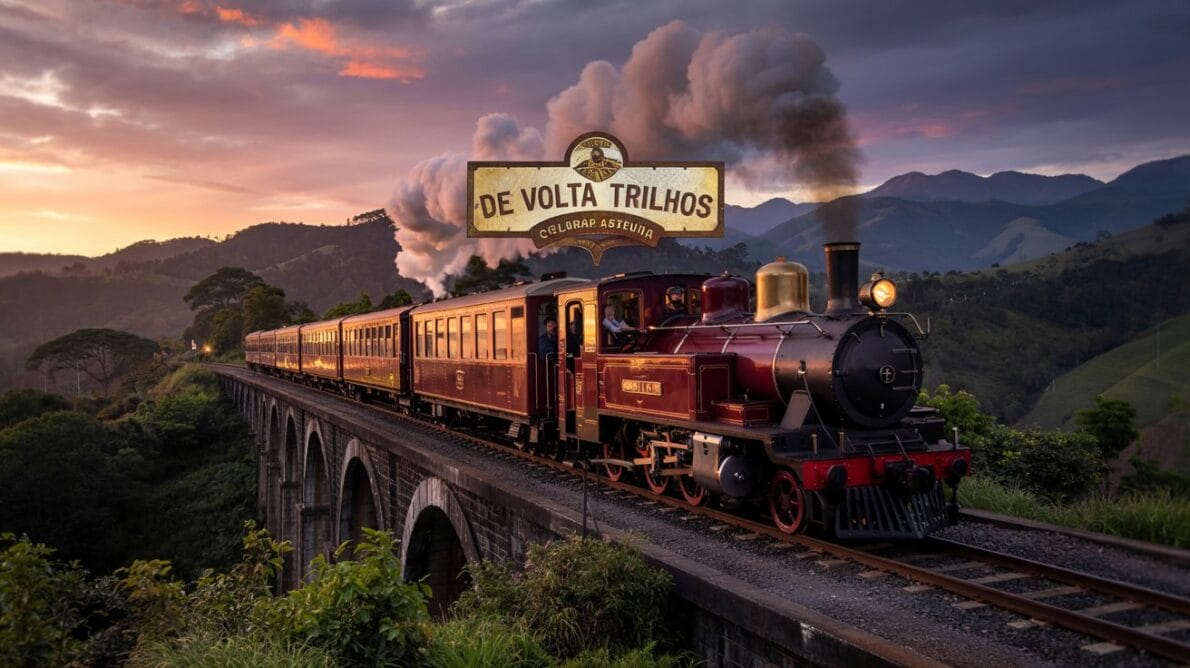
Minas Gerais and São Paulo Authorities Discuss Reopening an Old Tourist Train Line That Crossed Breathtaking Landscapes of the Mantiqueira Mountains, Awakening Nostalgia, Curiosity, and Expectations About the Cultural and Economic Impacts of Possible Reactivation of the Railway.
After decades of inactivity, the traditional railway route between São Paulo and Minas Gerais may soon be reactivated, this time focusing on tourism and historical appreciation.
Representatives from municipalities in Minas Gerais and São Paulo recently met to discuss the resumption of the service, which promises to revive one of the symbols of the cultural and economic connection between the two states.
The proposal aims to transform the old railway line into a tourist route with stops in historic cities and lush landscapes of the Mantiqueira Mountains.
-
The government requests the Federal Revenue Service for a new system to automate the income tax declaration, reducing errors, time, and bureaucracy for millions of Brazilians.

-
Friends have been building a small “town” for 30 years to grow old together, with compact houses, a common area, nature surrounding it, and a collective life project designed for friendship, coexistence, and simplicity.

-
Pix in installments, international Pix, and contactless payment without internet: the Central Bank revealed the new features coming to the tool that is already used by almost every adult in Brazil.

-
This small town in Germany created its own currency 24 years ago, today it circulates millions per year, is accepted in over 300 stores, and the German government allowed all of this to happen under one condition.


The plan, still in the structuring phase, includes defining a realistic timeline to bring the project to life and ensure political and financial support from state governments.
Meeting Between Authorities Revives Railway Project
According to information released by the involved municipalities, the most recent meeting between authorities from São Paulo and Minas Gerais aimed to primarily define a medium- and long-term planning for reactivating the tourist train.
The meeting brought together public managers, specialists in railway infrastructure, and representatives from the tourism sector.
The central idea is to join efforts to make the return of activities feasible with a modern, safe, and economically viable structure.
Still in the preliminary phase, the initial route of the line foresees starting from Bauxita Station, of the Brazilian Aluminum Company (CBA), heading to the city of Aguaí (SP).
Along the way, the train is expected to make stops at different stations for passengers to explore the local landscapes and attractions.
Additional Cities May Integrate the Route
One of the advances of the new proposal is the expansion of the itinerary to include more municipalities in the region.
Among the names being considered to integrate the route are São João da Boa Vista (SP) and Aguaí again, strengthening the cultural bond between the locations.
With an expanded technical team, the project coordination aims to intensify dialogue with the state governments of Minas and São Paulo.
The goal is to obtain funding and institutional support to ensure that the plan materializes with adequate structure without compromising the existing railway network.
Glorious Past Inspires Resumption
The history of this railway dates back to the 19th century when the line was officially inaugurated to facilitate the transport of people and goods between the interior of Minas Gerais and the state of São Paulo.
The line was deactivated for regular passenger transport around 1976 but had a brief revival in the 1990s as a tourist train.
During the 1990s and early 2000s, the route operated as a tourist ride and quickly won the hearts of residents and visitors, who enjoyed the journey to closely experience the terrain, culture, and the small towns along the Mantiqueira Mountains.
This initiative, at the time, stood out as an alternative for sustainable leisure and tourism, attracting thousands of people from different regions of the country.
However, due to structural issues and a lack of ongoing maintenance, the service was suspended.
Economic and Tourist Impact for the Region with the Return of the Train
If it resumes operation, the tourist train could boost the local economy by creating jobs, stimulating trade, and enhancing the natural and historical attractions of the region.
Tourism sector experts say that initiatives like this significantly contribute to the sustainable development of small municipalities.
Additionally, the proposal reinforces the importance of preserving Brazilian railway memory, retrieving traditions and encouraging experiential tourism, which is an increasingly valued trend among travelers seeking unique itineraries.
According to data from the Ministry of Tourism, over 35% of Brazilians express interest in nature and cultural trips, a niche where railway tours fit perfectly.
With the return of the train, Brazil would follow the example of countries such as Argentina, Peru, and Switzerland, which maintain operational tourist trains as icons of regional tourism.
Railway Projects Are on the Rise in Brazil
The resumption of railway sections for tourism and logistics purposes has gained prominence in recent years.
Other successful examples include the Serra do Mar Train in Paraná and the Wine Train in Rio Grande do Sul.
Both have managed to establish themselves as permanent and economically viable tourist attractions.
In the case of the project between Minas Gerais and São Paulo, the expectation is that, with political support and partnerships with the private sector, it will be possible to replicate these good experiences.
The idea is not only to recover the route but also to transform the line into a tourist product that includes adequate infrastructure, safety, and quality services.
The reactivation is also aligned with federal government initiatives aimed at expanding the country’s railway network, focusing on reducing road transport and promoting regionally-based tourism.
Next Steps and Challenges for the Return of the Train
Among the challenges of resuming operations are the recovery of damaged sections, land regularization of areas near the railway, and institutional coordination among federal, state, and municipal agencies.
Experts warn of the need for a detailed plan that involves technical and environmental feasibility studies, as well as listening to local communities.
In the short term, the working group responsible for the proposal should present a report with technical guidelines, cost estimates, and potential sources of funding.
From that point, it will be possible to seek investments and begin the physical recovery of the line.
If realized, the return of the tourist train between São Paulo and Minas Gerais could become one of the hallmarks of national tourism this decade, uniting tradition, nature, history, and sustainable development.
And you, would you board a nostalgic train through the Mantiqueira Mountains? Which cities would you like to see on the route? Tell us in the comments!








-

Uma pessoa reagiu a isso.