





 Portuguese
  English
  Spanish
  4 min of reading
  0 comments


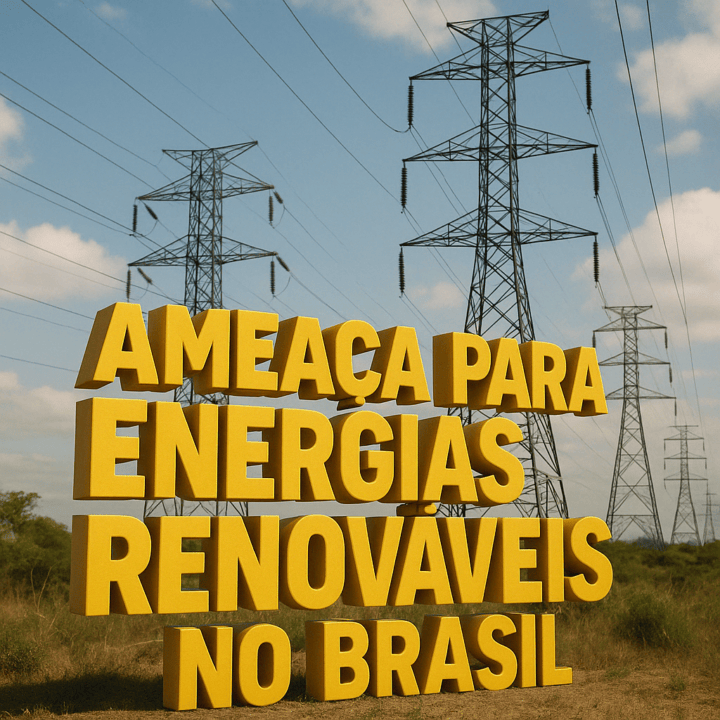
Brazil Faces Structural Challenges to Distribute Renewable Energy and Advance in Strategic Sectors Like Data Centers and Green Hydrogen; Understand the Risks, Impacts, and Solutions
Currently, Brazil faces an invisible yet strategic obstacle: the low capacity of transmission lines.
Therefore, sectors such as data centers and green hydrogen are already feeling the direct impacts of this limitation.
Since 2022, with the advancement of digitalization and the increase in renewable generation, the need to transport energy has grown exponentially.
Moreover, projects are constantly being postponed, redirected, or abandoned due to a lack of reliable electrical infrastructure.
As a result, Brazil’s competitiveness in essential areas for the future is threatened.
Thus, the absence of adequate energy connectivity directly hinders the attraction of international investments.
-
The Brazilian state accelerates industrial competitiveness with a focus on the extraction of strategic minerals to boost the energy transition in Goiás.

-
A Canadian retiree creates a hydroelectric system on a real river, generating energy continuously throughout the day and demonstrating how the power of water can supply a house with stability even in a simple structure.

-
Petrobras reaffirms its commitment to the market and ensures that it will carry out the energy transition safely to maintain national sovereignty.

-
Researchers discover a possible hydrogen deposit of up to 46 million tons beneath an ancient coal basin, and the volume could exceed half of the entire global production.

However, Brazil May Lose Its Protagonism in the Global Energy Transition
Initially, it is essential to remember that Brazil has one of the cleanest and most diversified energy matrices in the world.
Still, this energy does not reach the main consumption and export hubs.
According to the Energy Research Company (EPE), in a report published in 2023, Brazil could lead the production of green hydrogen in the world.
However, this potential depends on robust infrastructure, which currently does not exist in a distributed manner.
Consequently, projects focused on green hydrogen, which require high electrical loads, have been blocked or suspended since the second semester of 2023.
In fact, foreign investors are already expressing concerns about the instability of the energy transport infrastructure.
Thus, even with an abundance of renewable sources, the country cannot transform them into immediate commercial advantages.
Therefore, Brazil may lose ground in the global clean energy market to better-structured countries like Chile and Australia.
Simultaneously, Generation Grows — But Transmission Does Not Keep Up
According to data from ANEEL published in July 2023, more than 110 GW of renewable energy have been authorized in recent years.
However, approximately 30% of these projects are still not connected to the National Interconnected System.
Additionally, studies from the Brazilian Wind Energy Association (ABEEólica) estimate that by 2030, the country will need an additional 30,000 kilometers of transmission lines.
Thus, the growth in generation becomes ineffective without proper transport.
In other words, Brazil is generating clean energy but cannot deliver it to those who need it.
Therefore, while production advances, the lack of secure transmission limits the real benefits for the population and the economy.
Simultaneously, Data Centers Also Face Obstacles
Similarly, data centers, which depend on continuous and stable energy, face serious difficulties in establishing themselves in promising regions.
According to a study released in August 2023 by Brasscom, Brazil could demand over 2 GW in data center consumption by 2030.
In this scenario, technology companies are preferring to invest in places with more consolidated infrastructure.
Consequently, many of them end up migrating to the Southeast, even with higher operational costs.
As a result, regions with potential — like the North and Northeast — remain underutilized.
Furthermore, the concentration of data centers in already developed areas accentuates existing regional imbalances.
Finally, international providers express concern about investing in places with low electrical security.
This perception was reinforced during the Brazil-Germany Economic Forum held in November 2023.
In The Meantime, the Electricity Sector Advances — But Not At The Necessary Speed
Despite efforts, the electricity sector still cannot keep up with the surge in demand for reliable and well-distributed energy.
For example, Eletrobras, even with 74,000 km of lines, cannot meet the current needs.
Since its privatization, completed in June 2022, the company has started new investments.
However, as reported in its 2023 balance sheet, projects face delays due to environmental licensing and land-related issues.
At the same time, companies like Neoenergia are expanding their networks in several states.
Nonetheless, even with over 6,000 km in operation and construction planned for 2024, investments are still not sufficient to meet the pent-up demand.
In Light of This, Urgent Solutions Need to Be Implemented
In this way, sector specialists point out the need for coordinated and urgent actions to unlock transmission infrastructure.
According to the Ministry of Mines and Energy, in a statement made in February 2024, there are plans to expedite transmission auctions.
First, it is essential to accelerate auctions focused on critical regions with industrial and renewable potential.
Moreover, the creation of public-private partnerships could boost the construction of new electrical networks.
It is also necessary to expedite environmental licensing without compromising socio-environmental protection standards.
Finally, energy planning must prioritize zones that concentrate IT and clean energy projects.
Therefore, managers should treat the expansion of transmission not as a technical issue but as a short-term national priority.
What Is Truly At Stake?
In summary, Brazil may waste significant opportunities if it does not resolve the energy bottleneck in time.
As a result, other countries may redirect billions of reais in investments in technology and clean energy.
Additionally, countries may fail to meet environmental goals set in the Paris Agreement, such as reducing emissions by 50% by 2030.
Indeed, the risk of exacerbating regional inequalities becomes even greater.
Thus, the country must decide whether it wants to lead the energy transition or let its own infrastructure keep it trapped. Therefore, quick and strategic decisions are essential to ensure a competitive, sustainable, and integrated future.









Seja o primeiro a reagir!