





 Portuguese
  English
  Spanish
  4 min of reading
  0 comments


School Supply Fee Can Be Abusive. See When There Is Illegal Charging in Schools and How Parents Can Protect Themselves by Law.
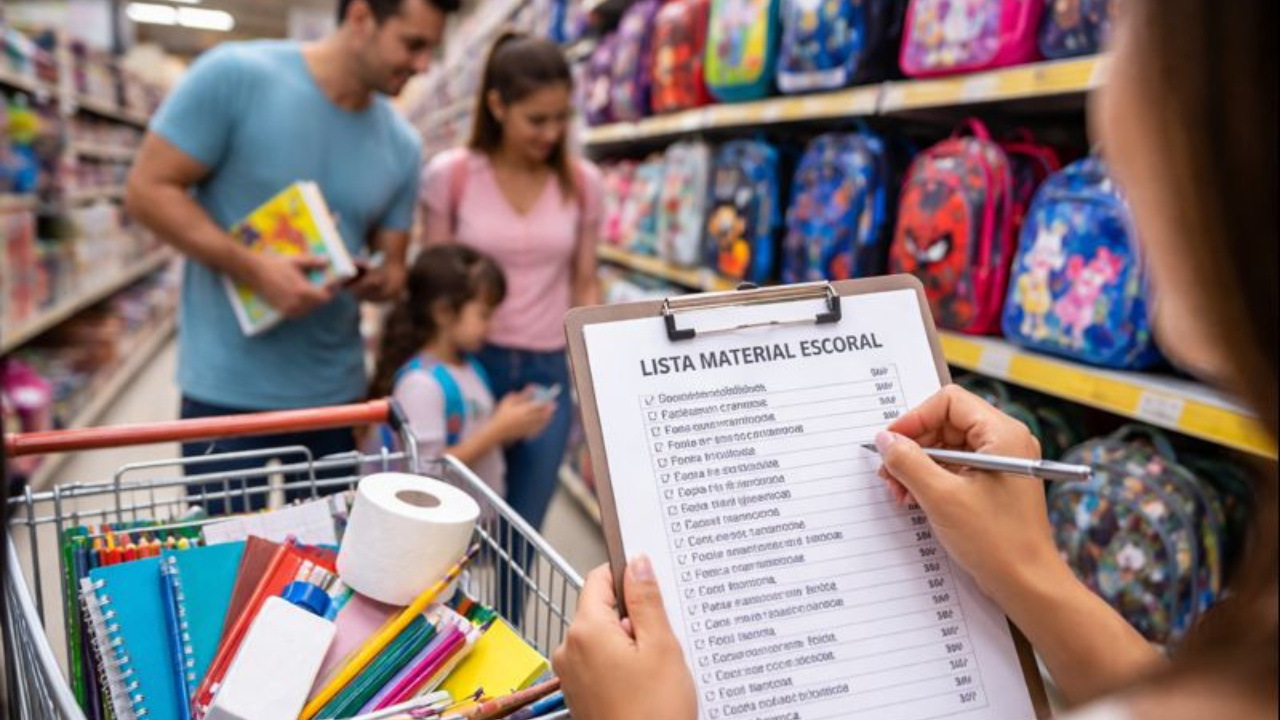
Thus, at the beginning of the school year, parents and guardians across the country face abusive school supply lists that include collective-use items and even cleaning products, a practice considered irregular by legislation.
Moreover, Consumer Law experts warn that this type of demand made by private schools constitutes illegal charging in schools, violates the rights of parents at school, and contravenes the Consumer Protection Code.
Especially when it involves school supply fees without transparency or a clear educational purpose.
-
The noise law will no longer be in effect at 10 PM starting in June with a new rule valid during the 2026 World Cup.

-
The Chamber opens a debate on driver’s licenses at 16 years old as part of a reform that includes around 270 proposals to change the Brazilian Traffic Code and may redesign rules for licensing, enforcement, and circulation in the country.

-
The new Civil Code could revolutionize marriages in Brazil with “express divorce” and changes that could exclude spouses from inheritance.
-
Banco do Brasil sues famous influencer for million-dollar debt and intensifies debate on delinquency, risks of seizure, and direct impact on Gkay’s credibility.
Abusive School Supply List Is a Recurring Practice at the Start of the Year
With the return to classes, it is common for families to receive extensive lists filled with items that go beyond the individual use of the student.
Toilet paper, packages of A4 sheets, cleaning products, and large quantities of glue are some frequent examples.
According to Consumer Law specialist lawyer, Laura França, it is essential to separate what constitutes educational demand from what represents the institution’s operating costs.
“At the beginning of the school year, it is common for doubts to arise about supply lists and school charges, and it is important to separate what is educational demand from what is the operating cost of the school.”
The specialist explains that collective-use items should be included in the tuition, as determined by the School Tuition Law (Law No. 9,870/99).
Illegal Charges in Schools Affect Family Budget
For years, secretary Cláudia Rodrigues, 37, bought everything that appeared on her three children’s lists, unaware that it was an abusive school supply list.
“At one of the schools my children attended, they even asked for disinfectant and other cleaning products.
I bought them because I had that mindset of ‘my children need to be in a clean environment’.”
She reports that the demands directly impacted the household budget, making even basic expenses difficult.
“It was a horrible feeling to see the children asking me for something and I buying something else because I had to save for other items.”
Backpacks, Notebooks, and High Prices Aggravate the Problem
Furthermore, music teacher Marcos Figueiredo, 30, also feels the financial weight of the school demands.
With two daughters of school age, he states that backpacks and notebooks are the items that most increase the bill.
“This year, I went to buy two backpacks and paid R$150 for one with wheels and almost R$300 for another. Notebooks are also very expensive.”
According to him, high prices cause many families to stop meeting simple desires of children, amplifying the emotional impact of illegal charges in schools.
Textbooks and Workbooks Are Also Included in the Cost
In addition to stationery, many guardians must bear high costs for textbooks.
Nurse Maria Laura Diniz, 31, reports that she spent around R$1,500 on workbooks required by her son’s school.
“After informing all the amounts, I was told that the textbooks would cost almost R$2,000.”
Moreover, when questioning alternatives, she was suggested to use borrowed materials or copies, which raised concerns about exposing her son.
Parents’ Rights at School: What the Law Says
According to the legislation, the school cannot require materials that are not directly used by the student.
Thus, lawyer Rita de Cássia emphasizes that consumers should research prices and assess whether there is abuse.
She points out clear signs of irregularity:
unjustified difference in relation to the average market price;
lack of relation to the age group or educational proposal;
simultaneous charging for materials and a school supply fee;
items that are not effectively used by the student.
“Once abusiveness is identified, the consumer can question it judicially or administratively.”
School Supply Fee Requires Transparency
Moreover, the so-called school supply fee is only allowed when there is complete detailing of the items, quantities, and purpose.
Otherwise, it may characterize illegal charging in schools.
Laura França stresses that the person in charge should have the freedom to buy the materials independently.
“The minimum expected is clarity on what is included to avoid generic charging.”
How to Act in the Face of Abuses
Thus, specialist Ilmar Muniz advises that parents and guardians question any irregular demand and refuse to pay undue amounts, without causing harm to the student.
In case of abuse, it is possible to seek Procon, the Public Ministry, or the Judiciary.
“Any form of retaliation constitutes a violation of the Consumer Protection Code.”










-

Uma pessoa reagiu a isso.