





 Portuguese
  English
  Spanish
  4 min of reading


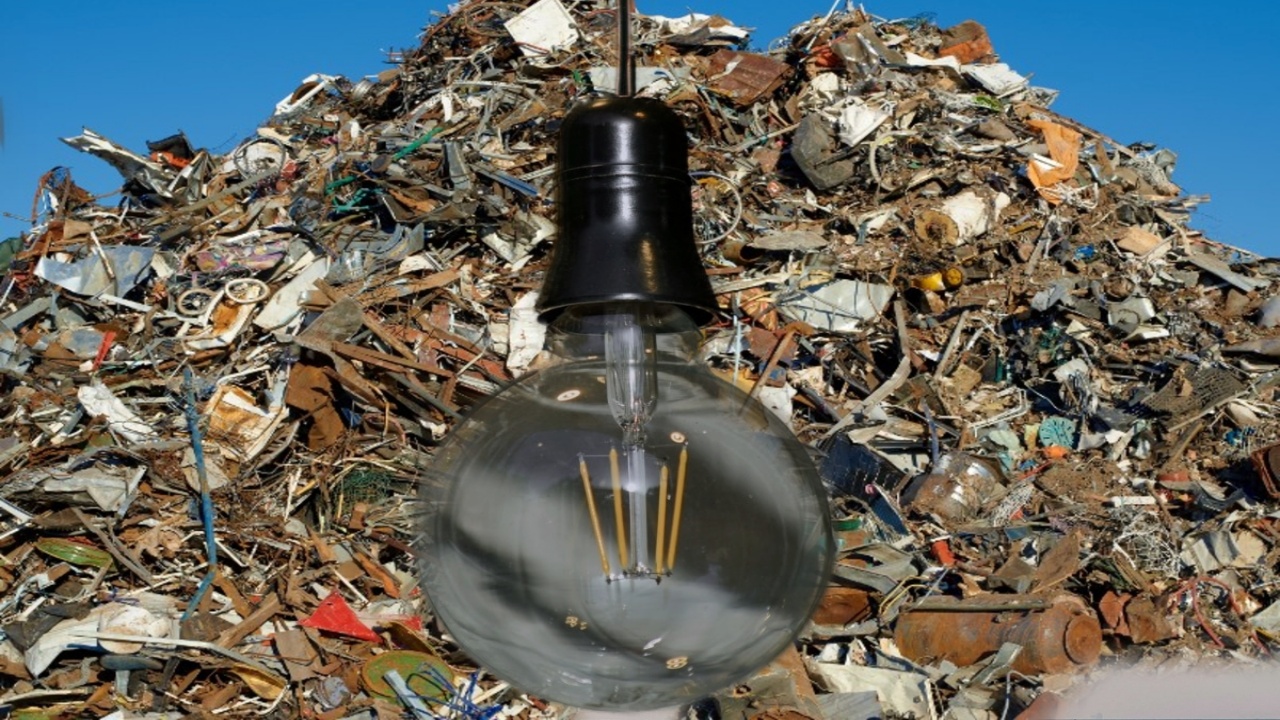
Technology That Turns Trash into Electricity Has Been Used for 50 Years in Europe and Asia, But It Is Still a Novelty in Brazil.
A survey conducted by the Brazilian Association of Energy Recovery from Waste indicates that urban waste produced by the 28 metropolitan regions of Brazil with more than 1 million inhabitants can generate electricity for 27 million households in the country and supply an average of 100 million people, with potential investments exceeding R$ 79 billion.
The study on Brazil’s potential to generate energy from waste was presented last week during the 3rd Forum on Energy Recovery from Waste, organized by ABREN and hosted by the FRG Media and Events Group.
First Energy Recovery Plant Is Under Construction in São Paulo
According to Schmitke, president of ABREN, “energy recovery, a technology that transforms the non-recyclable fraction of waste into electricity, has been used for about 50 years in Europe and Asia, for example, but it is still a novelty in Brazil. The first Energy Recovery Plant is under construction in Barueri (SP) and will certainly be the first of many.”
-
Renewable energy advances over protected areas in Brazil, and a survey by the Energy Transition Observatory reveals silent impacts that challenge environmental conservation and pressure sensitive traditional territories.

-
Rio Grande do Sul accelerates energy transition: State invests in renewable technologies and consolidates decarbonization strategies and pathways to attract billions in new industrial investments.

-
With 160,000 m² of collectors, an area larger than 20 football fields, Silkeborg, in Denmark, hosts a solar thermal plant that heats 19,500 homes and could become the largest solar heating plant in the world.

-
A study reveals the expansion of renewable energy procurement in Brazil and shows how companies are taking advantage of opportunities to reduce expenses, ensure energy efficiency, and strengthen strategic environmental commitments.


Rubens Aebi, vice-president of ABREN, also spoke at the event and highlighted the benefits of energy recovery. “This technology directly contributes to two essential sectors for Brazil: basic sanitation and electricity. Moreover, it also brings public health benefits, as waste that would be sent to a landfill or illegal dump is now directed to an environmentally correct destination.”
The Waste-Derived Fuel, or CDR, is another form of energy recovery, and this topic had a specific panel to assess the challenges and opportunities of this technology in Brazil.
According to the study, the country has 38 factories with environmental licenses to use waste-derived fuel, but only replaces 31% of fossil fuel with CDR, a rate that is much higher in European countries.
For Francisco Leme, vice-president of the Deliberative Council of ABREN and CDR specialist, “Brazil has great potential to expand the generation and use of waste-derived fuel, which would bring benefits such as job creation, attraction of investments, reduction of greenhouse gas emissions, and preservation of natural resources.”
The 3rd Forum on Energy Recovery from Waste, held in-person in São Paulo and simultaneously broadcast online, featured participation from authorities, including representatives from the Ministry of Mines (MME) and Energy and the National Agency for Water and Basic Sanitation (ANA), large companies, and sector specialists.
“A study conducted by NASA using more modern technologies, such as planes and drones, created a new methodology to measure methane emissions, and the result is very concerning: landfill emissions are 250% higher than the official data released regarding the methane emissions inventory,” highlighted Gerson Sampaio, CEO of Teknergia.
New Energy Auctions A-5 and A-6 Will Have a Category Exclusively for Electricity Generation from Waste or Urban Solid Waste (USW)
In addition to the Barueri Energy Recovery Plant, contracted in 2021 and scheduled to begin operations in 2025, New Energy Auctions A-5 and A-6, set to take place on September 16 of this year, will have a category exclusively for electricity generation from waste or urban solid waste (USW). In this category, there are 10 projects registered in Auction A-5, totaling 180 MW, and 9 projects registered in Auction A-6, totaling 176 MW. In total, there are 19 USW projects and 356 MW—enough to supply around 1.2 million households.
The 3rd edition of the Forum on Energy Recovery from Waste brought together more than 550 participants in both in-person and online formats and was held at the Novotel São Paulo Jaraguá Conventions. The event was supported by the Coalition for Energy Recovery from Waste, a movement integrated by ABREN, WtERT Brazil, ABIMAQ, ABEMI, ABGD, ABERH, ANIP, ABEAMA, COGEN, CervBrasil, CONATREC, Coopercaps, SOBRATEMA, and SINDESAM.
According to Tiago Fraga, CEO of the FRG Media and Events Group, “the event, in partnership with ABREN, is part of the project ‘Smart Cities Brazil,’ by the FRG Group, which focuses on topics related to smart cities and the correct disposal of waste, including energy recovery from waste. The event was a success in every aspect—attendance, engagement, and connected countries—and it will certainly contribute to facilitating significant business and partnerships in this sector.”
Learn more about ABREN by visiting the website, Linkedin, Facebook, Instagram and YouTube of the association.










Seja o primeiro a reagir!