





 Portuguese
  English
  Spanish
  6 min of reading
  1 comment


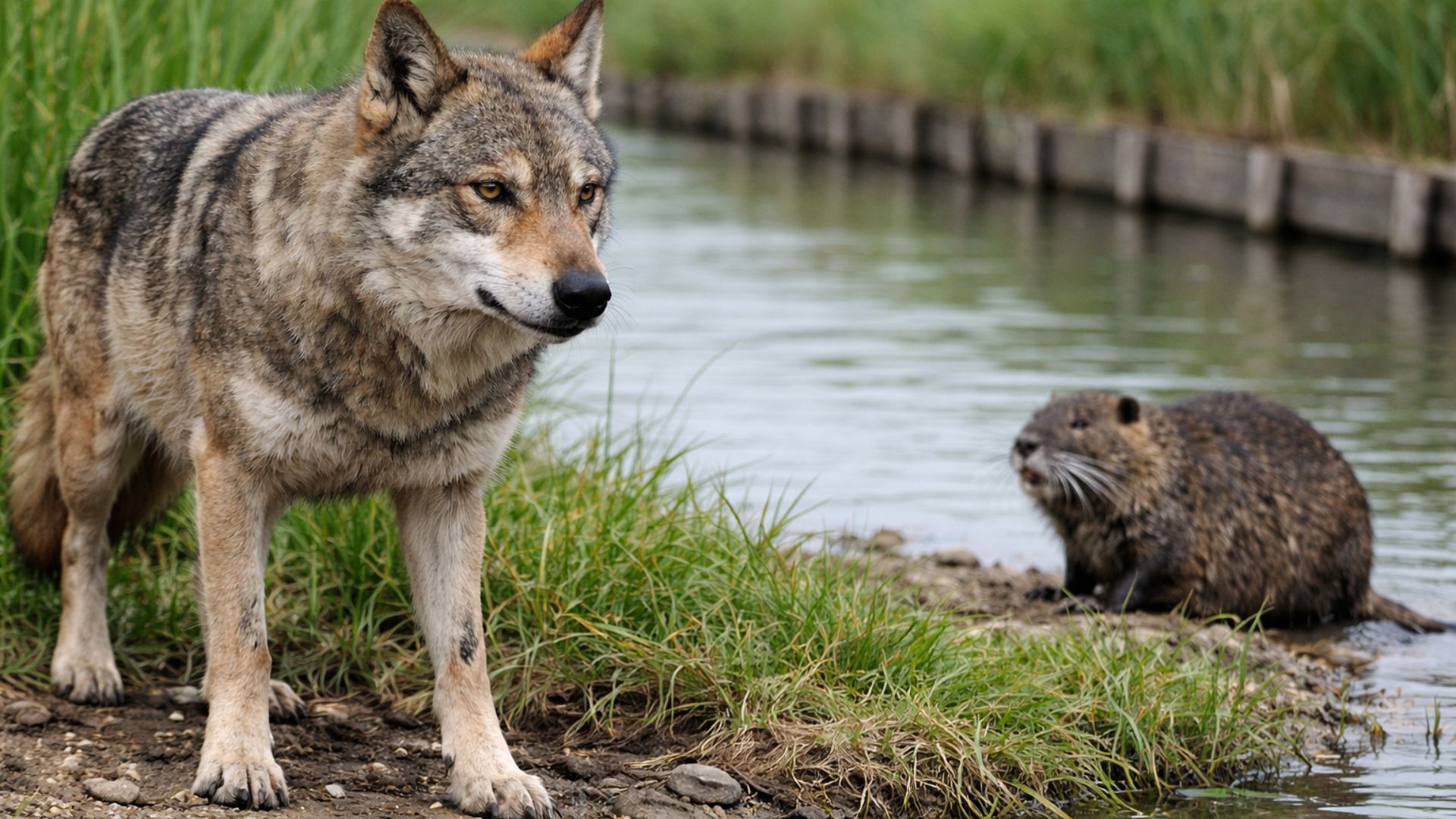


Return of the Wolf to Floodplains and Wetlands of Northern Italy Coincides With Confirmation of Invasive Nutrias on the Menu, in a Scenario of Channels and Levees Weakened by Burrows and Erosion, While Research Details How the Recolonization of the Predator in Agricultural Landscapes Changes the Reading on Biological Control.
The return of the wolf to agricultural landscapes and wetlands in northern Italy has been accompanied by a detail that changes the more common narrative about large predators: in sections of the Po Valley, where channels, levees, and riverbanks mix with urbanized areas, researchers have begun to confirm the presence of an unlikely item on the animal’s menu, the nutria — a semi-aquatic invasive rodent that has spread through parts of Europe and has become a recurring problem for the maintenance of banks and drainage systems.
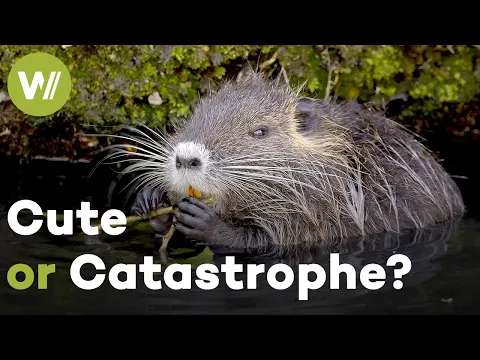
The nutria, also known as coypu, is native to South America and, in areas where it establishes itself outside its original habitat, it is associated with impacts that go beyond the consumption of vegetation.
One characteristic that concerns environmental managers is the habit of digging burrows and galleries in riverbanks, channels, and levees, which can weaken structures and accelerate erosion processes.
-
Friends have been building a small “town” for 30 years to grow old together, with compact houses, a common area, nature surrounding it, and a collective life project designed for friendship, coexistence, and simplicity.

-
This small town in Germany created its own currency 24 years ago, today it circulates millions per year, is accepted in over 300 stores, and the German government allowed all of this to happen under one condition.

-
Curitiba is shrinking and is expected to lose 97,000 residents by 2050, while inland cities in Paraná such as Sarandi, Araucária, and Toledo are experiencing accelerated growth that is changing the entire state’s map.

-
Tourists were poisoned on Everest in a million-dollar fraud scheme involving helicopters that diverted over $19 million and shocked international authorities.


This behavior appears in assessments and technical surveys on the species and is cited in studies conducted in northern Italy itself as a damaging factor to banks and vegetation in flooded areas.
Invasive Nutria and Damage to Channels and Banks
At the same time, the wolf has ceased to be just an animal restricted to mountainous environments and more isolated forests in the European imagination.
The expansion into floodplains and coastal areas is described by researchers who are monitoring the recovery of the species, a process associated with legal protection and changes in land use.
In recent scientific publications, the population of wolves in Italy is presented as the result of decades of conservation and recolonization of different landscapes, including highly urbanized regions.

Wolf in the Po Valley and Recolonization in Urbanized Areas
The link between these two characters — the recovering predator and the invasive, hard-to-control species — became clearer when research teams combined approaches to accurately identify what is actually being consumed.
Instead of relying solely on direct observations, which are rare and opportunistic, studies have begun to cross morphological analyses and molecular methods in samples collected from the environment, such as feces and food remains.
This type of investigation allows for the confirmation of prey identity even when the material is fragmented, in addition to reducing identification errors that can occur with similar-looking species.
Research Confirms Nutria on the Menu With Morphological and Molecular Analyses
This logic was employed in a study published in the Journal of Vertebrate Biology documenting the predation of Italian wolves on species considered invasive in the Po Valley, including the nutria.
The study describes the confirmation of prey through morphological and molecular approaches and situates the finding within a larger context: the presence of the wolf in floodplain areas can bring ecological effects that interact with ecosystem services, by removing from the environment exotic animals that cause environmental and economic damage.
The central point, however, is not to turn the nutria into the wolf’s “preferred prey” nor to suggest that the predator will solve a management problem on its own.
What the data allows us to affirm is more objective: the nutria appears among the identified prey in specific areas, confirming that the wolf is capable of exploiting this food source and incorporating it into its trophic repertoire in environments dominated by mosaics of agriculture, waterways, and human occupation.
Proven Predation and What the Data Allows Us to Affirm
The relevance of this grows when we observe the practical difficulty of controlling the nutria through direct methods.
In regions where the rodent is abundant, capture and removal programs often require ongoing effort, with costs for personnel, equipment, and disposal, in addition to constant logistics due to the reproductive capacity and recolonization of managed areas.

Part of the literature on controlling the species in European environments describes that the influx of individuals from neighboring areas can reduce the effectiveness of localized measures, especially when management does not occur in a coordinated manner at the basin scale.
Invasive Control and Limits of Direct Removal
Another element that keeps the nutria at the center of the debate is the regulatory dimension.
The species appears as an invasive concern in the European Union, which connects to restrictions and obligations for prevention and management in different countries.
This classification helps to understand why, in many places, the rodent is treated as a species that requires long-term responses aimed at preventing expansion and reducing impacts, and not just as a one-off case of fauna “out of place”.
Why the Nutria Is Treated as Invasive in Europe
The entry of the wolf into this scenario draws attention because it occurs in areas where coexistence with humans is intense, and therefore any changes associated with the predator are accompanied by controversy.
On one hand, projects and entities monitoring wolf packs in the floodplain seek to understand diet and movement precisely to reduce noise in the public debate and separate anecdotal reports from verifiable data.
On the other hand, the presence of the predator near populated centers often raises concerns about safety and impacts on livestock, which increases the value of research that transparently describes what the animals are eating in a given area.
Coexistence With Humans and Monitoring the Predator
It is at this frontier that information about nutria consumption gains repercussion.
The invasive species lives precisely in water corridors and wetlands that can also serve as movement routes for wolves in fragmented landscapes.
Channels and vegetated banks provide cover and ecological connectivity, while the abundance of small and medium vertebrates near water can increase hunting opportunities.
In this context, the record of nutria as prey confirms that the wolf does not depend solely on wild ungulates and can exploit a semi-aquatic prey, present in environments where the invasive species concentrates.
Water Corridors, Movement Routes, and Wolf Diet
The results observed in research are not presented as a “miracle solution,” but as an additional component in a complex management picture.
In scientific terms, the wolf is described as a predator that has returned to perform ecological roles in regions where it had been hunted and reduced for long periods.
When this return occurs in areas with established invaders, part of the predation effect may fall on exotic species, and in some contexts, this is discussed as a potential contribution to reducing the pressure from harmful species.
Ecological Role of the Wolf and Ecosystem Services
The very idea of biological control by native predators, however, depends on solid evidence and the correct framing.
The confirmation of nutria in the diet does not mean that the population of the invader will automatically decrease nor that damage to banks will disappear.
What studies prove is the occurrence of predation and the wolf’s capacity to incorporate the invasive species into its consumption in specific areas, offering concrete data for policies and debates on coexistence in highly humanized landscapes.
What Science Confirms, Without Promising Total Solution
While institutions and teams continue to monitor the recolonization of the wolf in floodplains and the behavior of invasive fauna in wetlands, the case of the nutria on the predator’s menu becomes a rare type of news that crosses three globally appealing themes: the return of large animals, the crisis of invasives, and the attempt to “fix” ecosystems with natural processes rather than just human removals.
In a continent where many rivers and channels serve both as infrastructure and habitat, the question remains to what extent recovered predators can measurably influence the fate of invaders that already seemed uncontrollable?








Wolves hunting and eating this simi aquatic rat really isn’t that shocking, not when there is a group of wolves in canada eating sea otters and fish. I hope for Europe as well as North America learn to coexist with these beautiful and amazingly adaptable ****. We need to put aside our prejudices and look at them as they are an Apex predator and extremely important to ever ecosystem they live and have lived in.