





 Portuguese
  English
  Spanish
  4 min of reading
  0 comments


New Submarine Drone From Lockheed Martin Targets Persistent Naval Surveillance, With In-Motion Recharging and Space for Sensors in Operations With Ship and Submarine
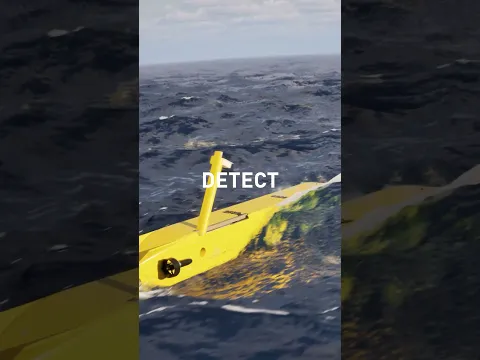
Lockheed Martin has revealed the Lamprey, a submarine drone designed for long missions in a naval environment, focusing on operating with more discretion and resilience in electronic warfare scenarios.
The report was published by Lockheed Martin, a technology and defense company from the United States. The concept aims to increase autonomy by allowing the drone to conserve energy during transit and arrive at its operating area with preserved battery, utilizing support from allied ship and submarine.

Lockheed Martin Submarine Drone Bets on Autonomy for Long Naval Missions
The Lamprey operates autonomously, with onboard computers and sensors, and has been designed as a multi-mission platform within military technology.
-
For the first time, humanoid robots will compete in a full half-marathon without any human assistance in Beijing, with over 100 teams from China registering machines that need to complete the course with autonomous navigation on two legs.

-
Submarine cables installed to transmit the internet now also help scientists detect earthquakes.
-
After so many blackouts, a family transforms an electric truck into a power source for their home and shows how a 100 kWh battery can keep everything running for days.

-
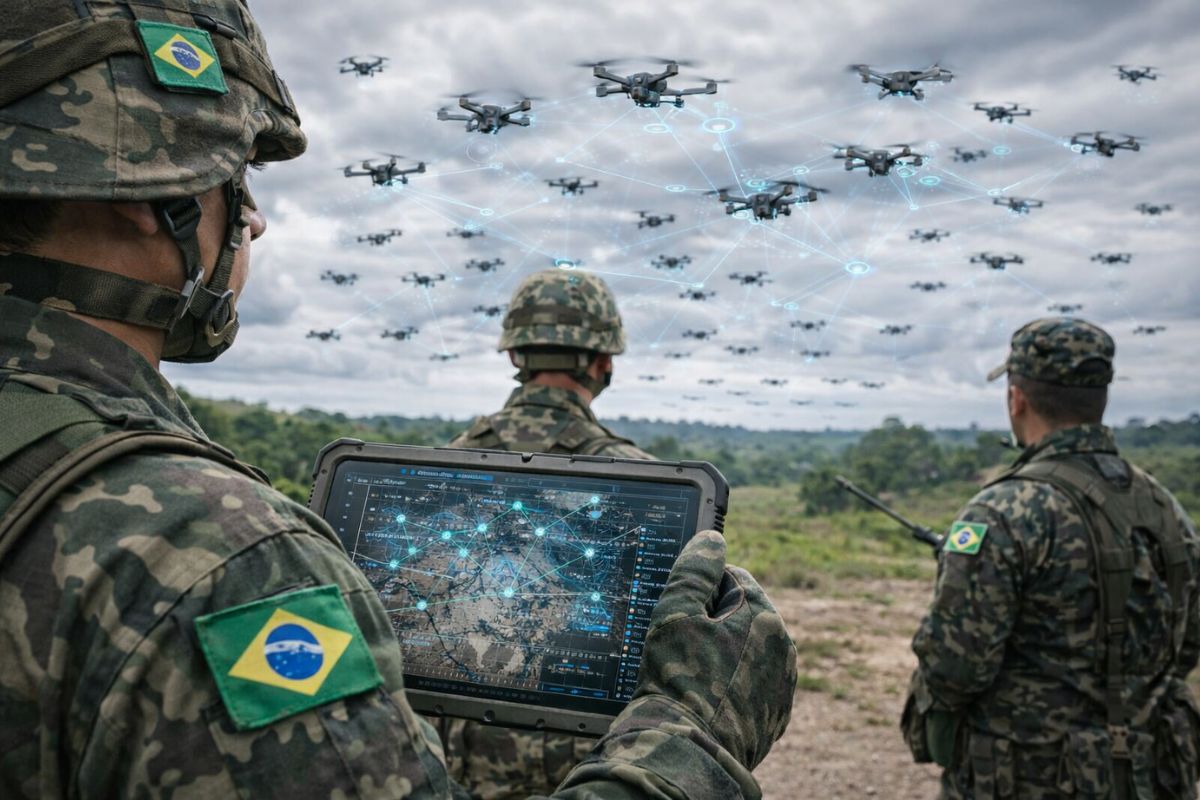
Ukraine is already testing, and China has already shown the world, and now the Brazilian Army is developing its own swarm of autonomous drones with artificial intelligence that share data in real time and operate without centralized control, uniting military and universities.
The logic is to address a recurring problem in the underwater environment: getting far without consuming the energy that should be used for the primary activity, such as surveillance, data collection, and monitoring extensive areas.
Instead of relying solely on what it carries when leaving the base, the design extends usable time by combining assisted movement and energy generation during the journey, keeping the naval drone more available for the critical phase of the mission.
How the Lamprey Attaches to the Hull of Ship and Submarine to Save Energy
The Lamprey body has a more rectangular shape and uses a fastening system to attach to the hull of an allied ship or submarine. This connection reduces the need for constant propulsion during transit.
Recharging occurs in motion through integrated hydrogenerators, capable of generating electricity from movement through water. The proposal is to allow the drone to arrive at its destination with 100% battery available for propulsion, sensors, and onboard systems.
The system also includes a mast for communication, capable of operating both on the surface and below it, facilitating the sending and receiving of information when necessary.
Compartment of 0.68 Cubic Meters Opens Space for Sensors and Military Technology Cargo
The Lamprey has been designed with an open architecture, allowing for module swaps according to the mission. The internal compartment has 24 cubic feet, equivalent to 0.68 cubic meters, space intended for different types of cargo.
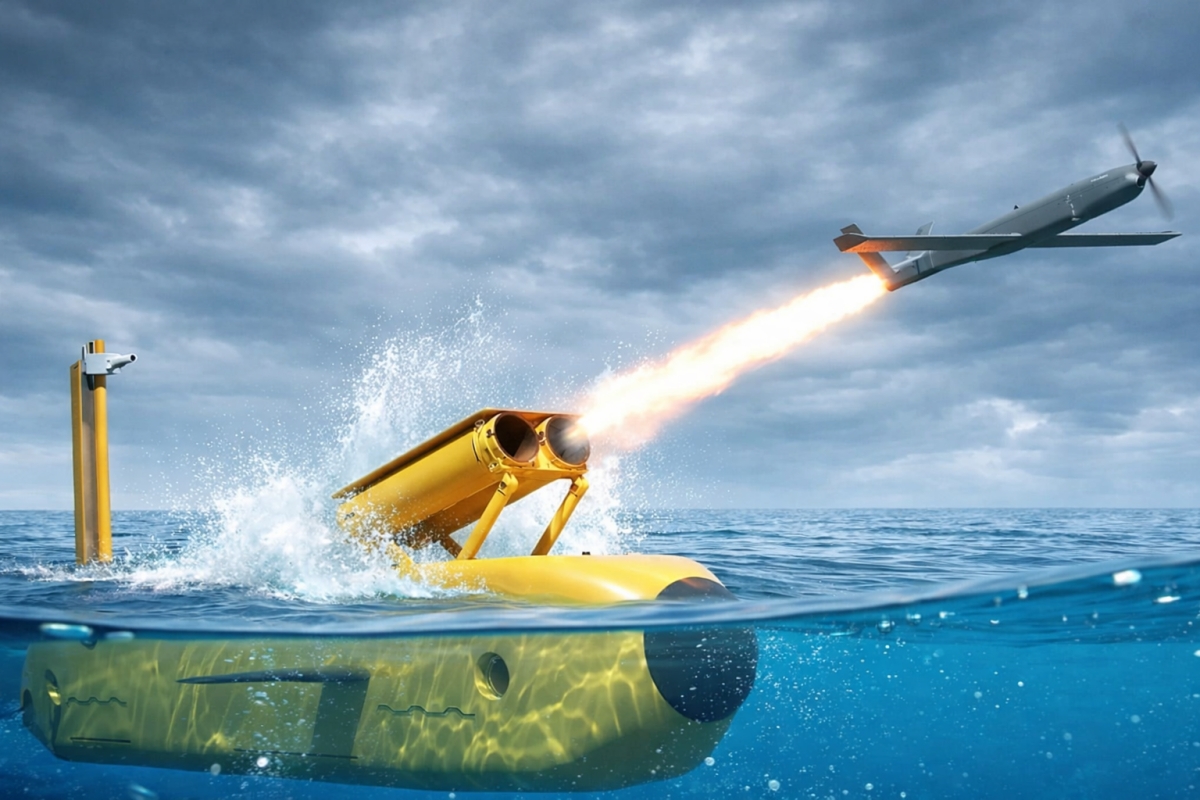
Among the mentioned possibilities are data collection sensors, resources related to electronic warfare, acoustic decoys that imitate other vessels, and retractable launchers for aerial drones.
There is also the option of lightweight torpedoes for anti-submarine operations, expanding the usage profile for scenarios that go beyond observation, within the proposal of a flexible system for naval operations.
Silent Operation on the Ocean Floor Expands Naval Surveillance and Complicates Electronic Warfare
The concept includes group behavior, with multiple vehicles positioned on the seabed to observe and collect data with low exposure.
The idea is to keep the submarine drone on standby, operating under command to transmit information, change areas, or initiate an action, reducing direct intervention and increasing the persistence of presence in the naval environment.
This type of posture tends to elevate the complexity in disputes over detection and concealment, especially when systems and communications must withstand interference and pressures from electronic warfare.
Lockheed Martin Reinforces the Strategy of Persistent Presence With Modular Naval Drone
Lockheed Martin, a technology and defense company from the United States, positions the Lamprey as a piece of a race for prolonged underwater presence, with platforms capable of remaining active for longer and covering larger areas.
The combination of hull attachment, in-motion recharging, and cargo modularity aims to reduce the classic autonomy limitation, without relying solely on initial batteries for the entire journey.
For operations with ship and submarine, the practical effect is to have a drone with a better chance of reaching the right spot with preserved energy, enhancing utility in patrol, surveillance, and support missions in military technology.
The Lamprey’s proposal places autonomy at the center of the underwater competition, with a naval drone capable of conserving energy during transit, recharging in motion, and carrying various cargo in a 0.68 cubic meter compartment.
In a scenario where distance and silence remain crucial, solutions that prolong time at sea can influence both surveillance and the ability to remain invisible for longer, even under pressure from electronic warfare.






-

-

-

4 pessoas reagiram a isso.