





 Portuguese
  English
  Spanish
  6 min of reading
  0 comments


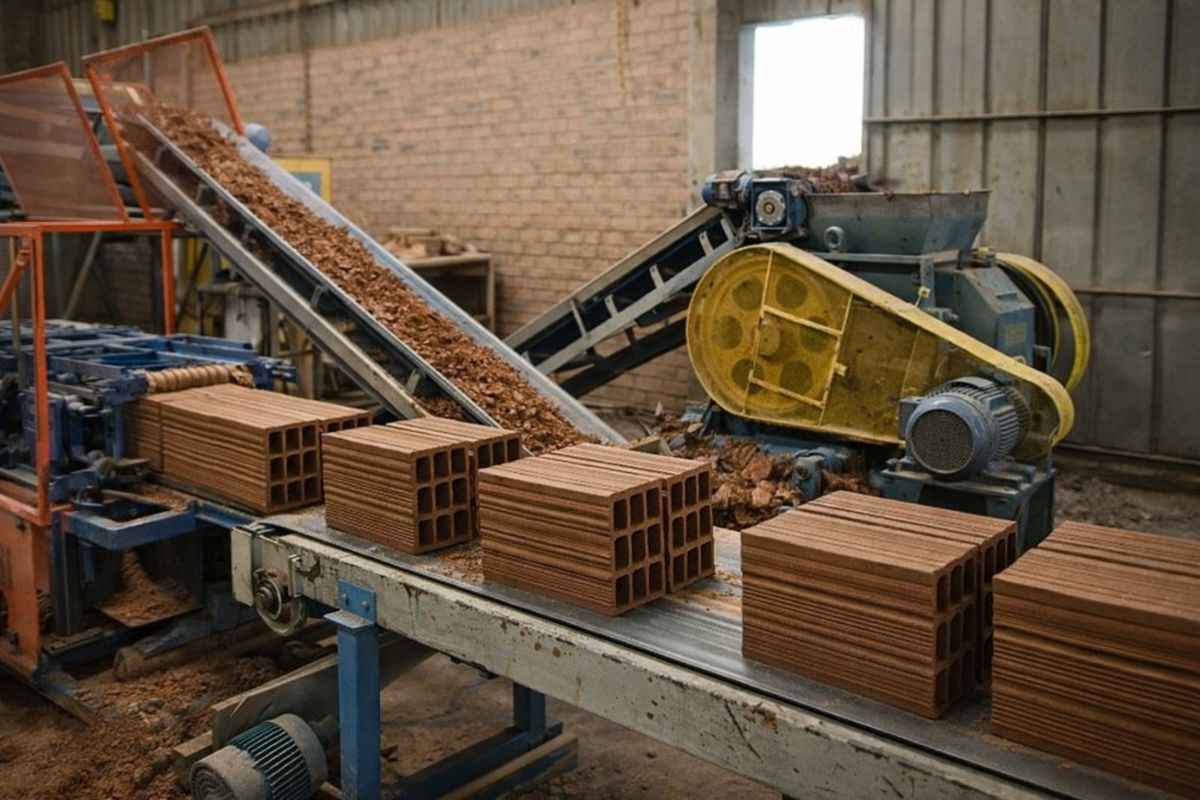
In Joinville, Sludge from the Water Treatment of ETA Cubatão Became Bricks and Decorative Pieces, Reducing Clay Extraction and Lowering Production Costs by up to 20%. Since January 2025, the solution has generated about five million units and 3 thousand tons repurposed here.
The brick that is born where there was once waste is changing the routine of sanitation and the ceramic industry in Northern Santa Catarina. In Joinville, the sludge generated from water treatment has shifted from primarily heading to landfills to entering the production line of bricks and decorative pieces, with environmental and economic benefits.
The change occurs because the residue from ETA Cubatão is transformed into a technical input, analyzed in a laboratory, and mixed with clay in controlled proportions. The result is a material that reduces the pressure on natural deposits and also lowers the production cost of bricks by up to 20%, without the Companhia Águas de Joinville selling the pieces directly, a task left to partner companies.
From Landfill to Brick: What Changed in the Destination of the Sludge

Until the end of 2024, the residues from the water treatment of ETA Cubatão were sent to landfills, following environmental legislation guidance.
-
Trump wanted to spend $400 million on the White House, but the courts prohibited the million-dollar construction.

-
How the Egyptians erected giant structures like pyramids, temples, and obelisks without modern technology, cranes, or engines still amazes the world and reveals the power of engineering based on ramps, levers, ropes, and colossal organization.

-
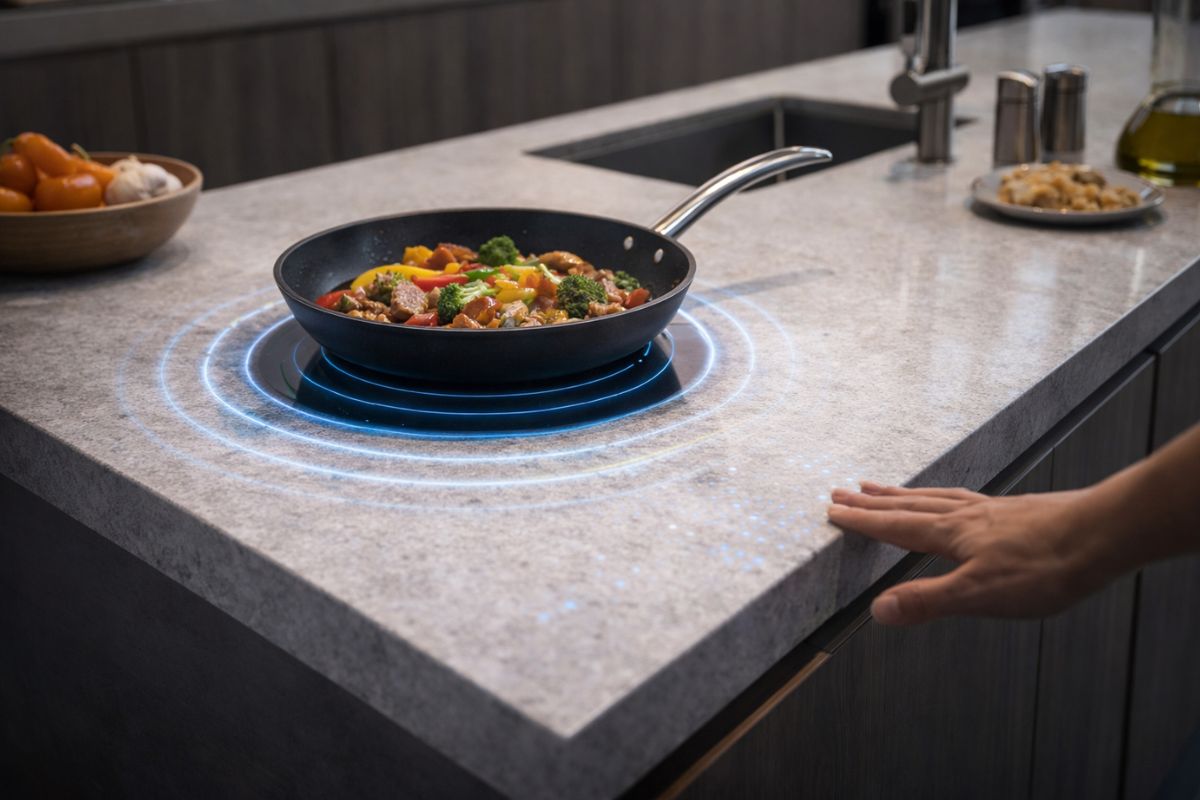
The induction stove you know may be numbered: a new invisible technology hides the stove under the stone countertop, heats only the pot, and promises to cook up to 50% faster while using less energy.
-
Garlic with pure honey undergoes a natural fermentation that transforms the two ingredients into a versatile condiment for marinades, sauces, and roasted vegetables, and it can also be used as a natural treatment in your garden.

The disposal was considered adequate but had a relevant side effect: even in landfills, ETA sludge can release greenhouse gases, reinforcing the search for more circular alternatives.
With the start of operations in January 2025, the residue took a different path: becoming valued raw material for the regional ceramic industry.
The change is not just logistical; it redefines the role of sanitation in the production chain, transforming a liability into an industrial component, with tracking, criteria, and quality control.
How Much Does It Cost, Who Saves, and Why the Reduction Reaches 20%

The savings appear in two complementary fronts. The first is the reduction of the production cost of bricks, estimated at up to 20% when the sludge and mineral components are included in the formulation. This effect is linked to reduced dependence on clay as the main input and the technical adjustment of the mixture, allowing the residue to be incorporated in a controlled manner.
The second front is outside the ceramic factory and within the sanitation operation: by reducing the volume sent to landfills, the need for sludge transportation decreases, generating savings of about R$ 40,000 per month.
Between January and December 2025, more than 3 thousand tons of sludge from ETA Cubatão were reused, decreasing the disposal flow and reinforcing the logic of repurposing.
The Path of Sludge: ETA, ETL, Tijucas, and the Final Destination in Ceramics
After water production, the residue goes to ETL (Sludge Treatment Station), within the ETA Cubatão area. This is where pressing occurs, an essential step to give predictability to the material, as the sludge needs to leave with more stable characteristics to be processed as industrial input.
After this step, the sludge leaving the ETL contains about 20% solids and is transported to Tijucas, in Greater Florianópolis, where it is processed and stored in a warehouse.
This displacement is not a detail: it shows that the project depends on an integrated chain, where sanitation, processing, and ceramic production connect so that the residue arrives at the right point with the necessary quality.
The Technical Control That Avoids Improvisation: Laboratory, Analyses, and Variable Proportions
Before becoming brick, the sludge undergoes evaluation at a laboratory specialized in ceramics, Safira Soluções Minerais. The samples are analyzed with physical, chemical, and thermal criteria, and it is based on these results that the team guides the technically adequate mix of clay and sludge, avoiding “eyeball” decisions.
The proportion is not fixed because the composition of the sludge varies according to the natural conditions of the spring.
The operational reference given is 40 to 60 grams of sludge for every kilogram of clay, adjusting the process according to the need.
After processing, new sampling and analyses are conducted to ensure the quality of the final product; only with the approved batch does the material proceed to a structural ceramic factory in Canelinha, where it enters the production of bricks.
Millions of Pieces and a Direct Effect on Clay and Natural Deposits
Since the beginning of operations in January 2025, around five million bricks containing ETA sludge have been produced. This number reflects the reach of repurposing: it is not a small test, but production that already feeds the industrial logic, with volume and repetition.
At the same time, the initiative reduces clay extraction in natural deposits. Less pressure on deposits means less opening of areas, less soil removal, and less impact associated with the supply chain, especially in regions where the demand for structural ceramics is constant.
The proposal combines environmental preservation and economic viability by turning waste into input.
The Next Step: ETA Piraí and the Advancement of Repurposing in the Municipality
Joinville has another treatment station besides Cubatão: ETA Piraí, which serves 22% of the municipality and generates 15 tons of sludge monthly.
The material will also be destined for the production of ceramic pieces after the modernization works of the unit, expanding the scope of repurposing.
This advancement is significant as it shows a transition from “one station project” to a municipal logic of residue destination.
When the second unit enters the circuit, repurposing ceases to be an exception and begins to become an operational standard, with the potential to further reduce reliance on landfills and consolidate the ceramic chain as a continuous destination for the material.
Recognition and Award: When Circular Sanitation Becomes a Reference
In December 2025, the initiative was awarded the 1st INOVACIJ Award, promoted by the Joinville Business Association.
Named “Circular Sanitation: From Sludge to Sustainable Ceramics,” the project won in the product category and in the medium-sized company segment, reinforcing that repurposing is not only environmental but also innovative.
The award helps to translate what is already reflected in the numbers: repurposed tons, monthly savings, reduction in extraction, and millions of bricks produced.
When a waste product from sanitation becomes industrial raw material with technical standards and traceability, the city stops talking only about disposal and starts talking about the production chain.
Joinville transformed a waste product that was headed for landfills into bricks and ceramic pieces, with a production cost reduction of up to 20%, transportation savings of about R$ 40,000 per month, and more than 3 thousand tons repurposed in 2025.
The sludge from ETA Cubatão undergoes pressing, processing, laboratory analyses, and controlled mixing with clay before arriving at structural ceramics, and the route should expand with ETA Piraí after modernization.
Would you live in a house built with bricks that contain water treatment sludge, knowing that there is analysis and technical control? And in your opinion, what matters more: reducing construction costs, decreasing clay extraction, or cutting waste sent to landfills?








-

2 pessoas reagiram a isso.