





 Portuguese
  English
  Spanish
  5 min of reading
  0 comments


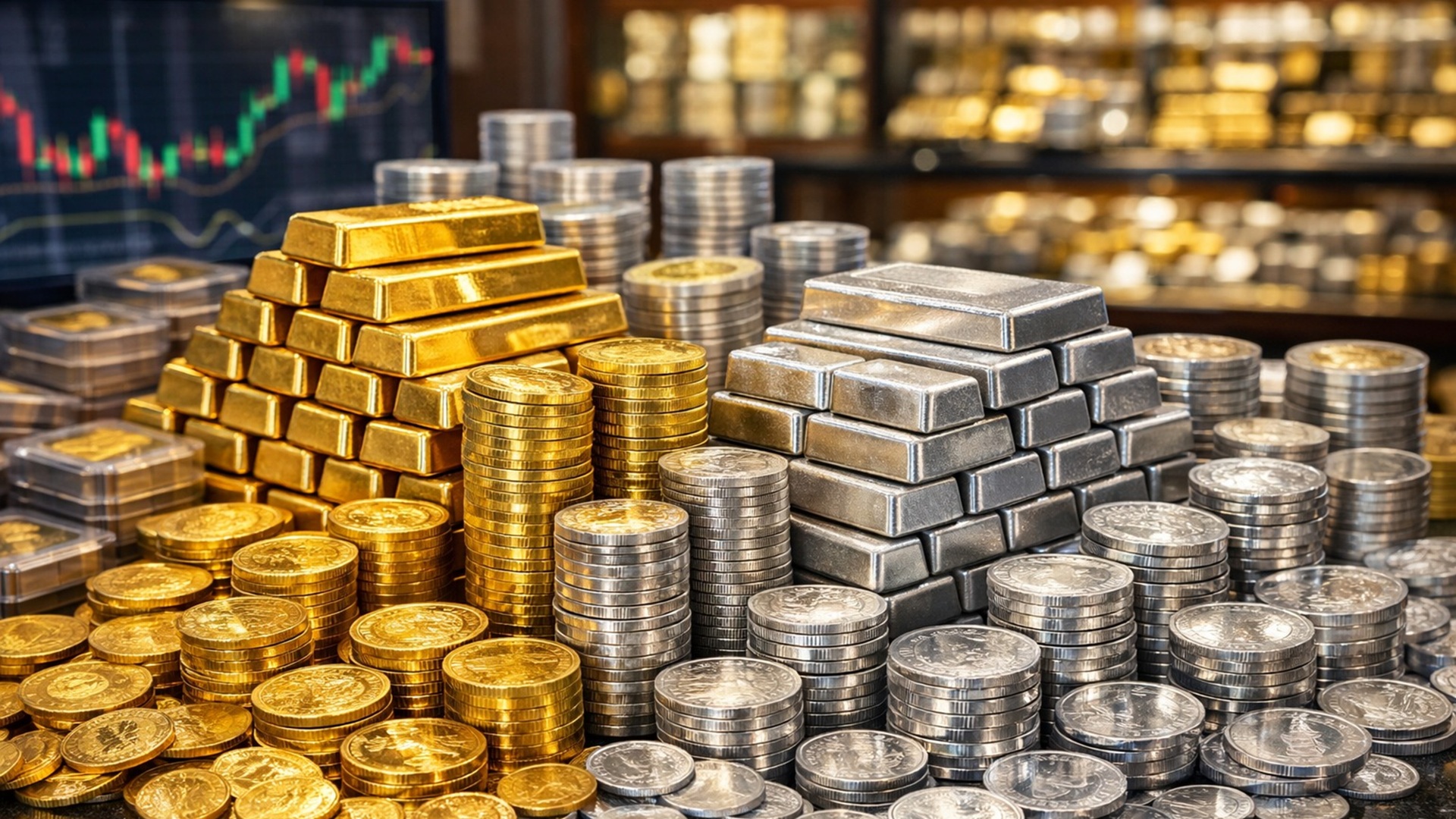
With Gold Prices Above US$ 5,300 and Silver Prices Near US$ 120, the Strong Volatility of the Market Led to a Significant Increase in Physical Metal Supply, Putting Pressure on Coin Stores, Impeding the Flow to Refineries, and Forcing the Adoption of Daily Purchase Limits to Preserve Cash
The precious metals market experienced a start to 2026 marked by strong volatility, with direct repercussions on local coin stores, which are now dealing with excess gold and silver, pressured margins, and difficulty in liquidating the accumulated material, despite prices still being well above levels from a year ago.
Recent Volatility Changes Coin Store Dynamics
After a January described as a “party” for the precious metals market, February began with a scenario of accommodation and hangover. The ounce of gold exceeded US$ 5,300, while silver reached nearly US$ 120 at the end of January, before falling sharply and stabilizing at the beginning of February.
According to James Steel, precious metals analyst at HSBC, the successive swings of gains and losses caused significant damage throughout the chain.
-
The government requests the Federal Revenue Service for a new system to automate the income tax declaration, reducing errors, time, and bureaucracy for millions of Brazilians.

-
Pix in installments, international Pix, and contactless payment without internet: the Central Bank revealed the new features coming to the tool that is already used by almost every adult in Brazil.

-
Mercado Livre has just started selling medications with delivery in up to three hours to your door, and this move could completely change the way Brazilians buy medicines on a daily basis.

-
In Dubai, rising tensions from the war in the Middle East are causing super-rich individuals to leave the Gulf and direct their fortunes to a new financial refuge in Asia.


One of the most affected segments was that of local coin stores, traditional spots where people trade physical gold and silver.
The high prices stimulated an intense flow of sellers. As a result, several stores reported difficulties in finding channels capable of absorbing the excess volume of metals purchased.
This imbalance put traders in an uncomfortable position, where the speed of fluctuations in spot prices began to erode profit margins.
Deals Closed Amid Rapid Price Drops
Even during moments of strong instability, some stores continued to operate. Tim Heuer, in charge of University Coin & Jewelry in Madison, Wisconsin, stated that the company continued closing deals while the market was in free fall.
He reported that a customer came in to sell silver when the spot price was US$ 98 an ounce and on a downward trajectory. By the end of the check issuance process, the price of silver had already dropped US$ 3.50 since the customer entered the store, highlighting the speed of price changes.
This type of situation illustrates how recent volatility directly affects the daily operations of coin stores, which need to price purchases in real-time while taking on significant short-term risks.
Role of Coin Stores in the Physical Circulation of Metals
Coin stores play a crucial role in the physical circulation of gold and silver. They offer a reliable means for individuals to sell bars, coins, or metal scrap, connecting the public to the rest of the precious metals market chain.
An example cited is of consumers who bought gold bars from large retailers, such as Costco, and then seek to convert these assets into cash.
In these cases, a local coin store is often the first destination.
Although part of the material acquired is resold directly, the larger portion is sent to refineries, where the metal is melted down and transformed into new bars or coins. However, this flow has experienced significant interruptions in recent months.
Refineries Face Accumulation and Halt Purchases
The surge in gold and silver prices encouraged more people to trade their metals, resulting in a significant accumulation of raw material at refineries.
This congestion led to supply delays and caused some companies to temporarily halt new acquisitions.
Jarret Niesse, president of Precious Metal Refining Services in Chicago, stated that his company stopped buying silver for recycling in October, when the price surpassed US$ 50 an ounce.
The spike triggered a wave of exchanges of cutlery, platters, and other old items that had been stored for years.
According to Niesse, the market has become even more out of control since then. He indicated that during the intense activity associated with the so-called “silver players,” his company chose to sit it out.
These refineries represent only one stage of the process. A large portion of the melted metal goes to other mints and then is exported, especially to Asian markets, where demand for bars and coins is higher.
With an excess of material to process, these final stages also reduced purchases, directly affecting the cash flow of local coin stores.
A Balancing Act on the Balance Sheet
In this scenario, coin stores cannot simply stop all purchases, as they play a central role in local markets. To continue operating, they are adopting adaptation strategies that require constant financial balance.
Tom Spoerl, manager of Rick’s Olde Gold, also in Madison, stated that mistakes in this process can lead to rapid capital loss.
According to him, this is not the type of business where resorting to loans or bank credit makes sense.
James Steel from HSBC emphasized that it is not advisable to maintain large stocks of metals financed for long periods. In response, stores like Spoerl’s and Heuer’s have started imposing limits on the amount of money they buy from the same person per day.
According to the traders, this measure allows them to serve a larger number of clients and provide resources for immediate needs, such as annual tax payments or medical bills, without excessively compromising their balances.
Still Uncertain Outlook for Prices and Businesses
Despite the limitations adopted, Spoerl and Heuer stated that it is impossible to predict price behavior in the coming weeks. Still, both said they will continue trying to balance customer service with the financial health of their companies.
For Spoerl, stopping all purchases now would be strange, as this is an unprecedented situation. He stated that the current strategy is to monitor market flow and make decisions as events unfold.
Heuer, on the other hand, views the scenario with a long-term perspective. According to him, gold is still 76% above last year’s market value, while silver remains 147% above the same period.
Even considering a one-year horizon, he highlighted that the return remains high, maintaining attractiveness for many investors, despite the volatility.









Seja o primeiro a reagir!