





 Portuguese
  English
  Spanish
  5 min of reading
  0 comments


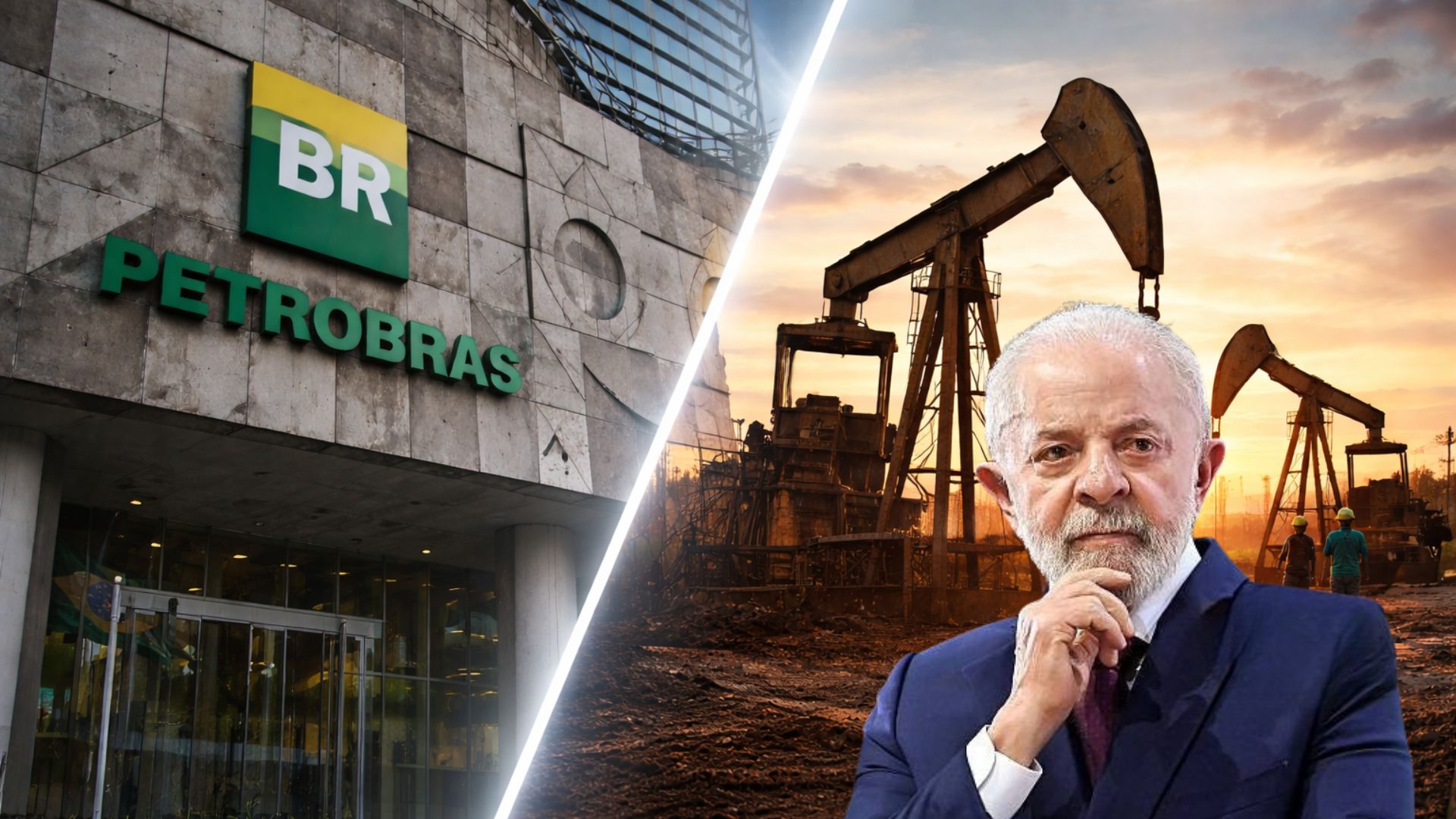
Movement Of The Government Reignites Debate On Venezuelan Debt, Political Risks And Petrobras Investment Priorities, Involving Possible Negotiation With The United States And Impacts On The Brazilian Equatorial Margin.
President Luiz Inácio Lula da Silva intends to discuss with the President of the United States, Donald Trump, a possible return of Petrobras to oil and gas projects in Venezuela, reopening a sensitive debate about political risk, outstanding debt, and the investment priorities of the Brazilian state-owned company.
The indication was revealed, according to a report published by the site Petronotícias on Friday (20), stating that Lula is expected to address the topic at a meeting scheduled in Washington, including the possibility of converting part of the Venezuelan liability into assets related to oil production.
According to information from Petronotícias, the proposal would involve Petrobras’ participation in the exploration of strategic Venezuelan areas, in an arrangement that would depend on alignment with the U.S. government due to international restrictions and the history of sanctions imposed on Caracas.
-
The government requests the Federal Revenue Service for a new system to automate the income tax declaration, reducing errors, time, and bureaucracy for millions of Brazilians.

-
Pix in installments, international Pix, and contactless payment without internet: the Central Bank revealed the new features coming to the tool that is already used by almost every adult in Brazil.

-
Mercado Livre has just started selling medications with delivery in up to three hours to your door, and this move could completely change the way Brazilians buy medicines on a daily basis.

-
In Dubai, rising tensions from the war in the Middle East are causing super-rich individuals to leave the Gulf and direct their fortunes to a new financial refuge in Asia.


In the oil and gas sector, the hypothesis is viewed with caution because the Brazilian state-owned company is executing a robust domestic investment plan and facing regulatory and environmental challenges in its own territory, especially in the new exploratory frontier of the North and Northeast.
Also weighing in is the bilateral history: Venezuela remains delinquent in credit operations linked to Brazilian exports, and the liability was assumed by the Union after the triggering of official guarantees, which shifted the financial impact to the National Treasury.
Venezuelan Debt With Brazil And The Proposal For Conversion Into Oil
Official data provided to Congress indicate that, as of February 28, 2025, Venezuela’s debt to Brazil totaled US$ 1,259,739,811.52, an amount related to payments made by the Union to creditors covered by Export Credit Insurance.
In practice, the mechanism transfers to the Brazilian public sector the cost of contracts signed in the past, while the Venezuelan government has not proposed a definitive solution for repayment, which keeps the negotiations in a holding pattern.


Petronotícias also pointed out that the idea under discussion involves transforming part of this liability into participation in fields or operational assets, a strategy that would require legal guarantees and institutional stability to make economic sense.
Market specialists remind that conversions of this type only sustain themselves when there is regulatory predictability and transparent governance, factors that investors rigorously evaluate before committing resources to long-term projects.
History Of The Abreu And Lima Refinery And The Partnership With PDVSA
The most cited memory when the topic involves agreements with the Venezuelan state-owned PDVSA is the Abreu and Lima Refinery in Pernambuco, conceived in the 2000s as a project of energy integration between Brazil and Venezuela.
According to public records, the plan provided for a shareholding division with 60% for Petrobras and 40% for PDVSA, but the Venezuelan financial contribution did not materialize, and the Brazilian state-owned company assumed the project entirely.
Information disclosed at the time indicated that the initial estimate was around US$ 2.3 billion, an amount later revised upwards throughout the works, which became the target of investigations and scrutiny by oversight agencies.
The formal exit of PDVSA was officialized in 2013, after years of stalemate, ending a partnership that did not materialize as originally announced and leaving a relevant precedent for any new rapprochement.
Oil Production In Venezuela And Evaluation Of Petrobras
Venezuela holds the largest proven oil reserves in the world, but faces operational limitations due to years of underinvestment and loss of productive capacity, especially in refining and supporting infrastructure.
In an interview given to Petronotícias, Petrobras’ Director of Exploration and Production, Sylvia dos Anjos, stated that “All Oil Matters,” but emphasized the need to evaluate stability and economic viability before any decision.
She noted that Venezuelan production, estimated at around 800,000 barrels per day, is lower than that of major Brazilian fields, and that expanding this volume would require significant investments over several years.
The executive also mentioned environmental concerns and risks associated with existing liabilities, highlighting that the company cannot direct resources to projects with a high likelihood of financial loss.

Equatorial Margin And Dispute For Investment Priorities
While the Planalto signals openness to Venezuela, Petrobras maintains focus on the Brazilian Equatorial Margin, a maritime strip that spans from Amapá to Rio Grande do Norte and encompasses five sedimentary basins with relevant potential.
Plans disclosed by the company indicate a forecast of drilling 16 exploratory wells over five years, with an estimated investment of about US$ 3 billion, aimed at researching and confirming the region’s potential.
Estimates cited by industrial entities suggest that the area may concentrate up to 30 billion barrels of oil equivalent, with a projected economic impact of up to R$ 175 billion in Gross Domestic Product, in addition to job creation.
In this context, part of the market questions the coherence of directing capital to asset recovery in a neighboring country when the state-owned company is still seeking licensing and consolidation of reserves in national territory.
Conversation With The United States And Strategic Implications
As the Venezuelan industry operates under international restrictions, any relevant participation would depend on an understanding with Washington, which explains Lula’s intention to take the topic to the White House in dialogue with Donald Trump.
Still, the dynamics of the sector impose a long-term horizon, as exploration and industrial rehabilitation projects typically take years to generate consistent cash flow, regardless of political cycles.
The debate, therefore, involves not only energy diplomacy but corporate governance, credit risk, and business strategy, in a scenario where Petrobras needs to balance reserve expansion, shareholder returns, and fiscal responsibility.








-

Uma pessoa reagiu a isso.