





 Portuguese
  English
  Spanish
  7 min of reading
  0 comments


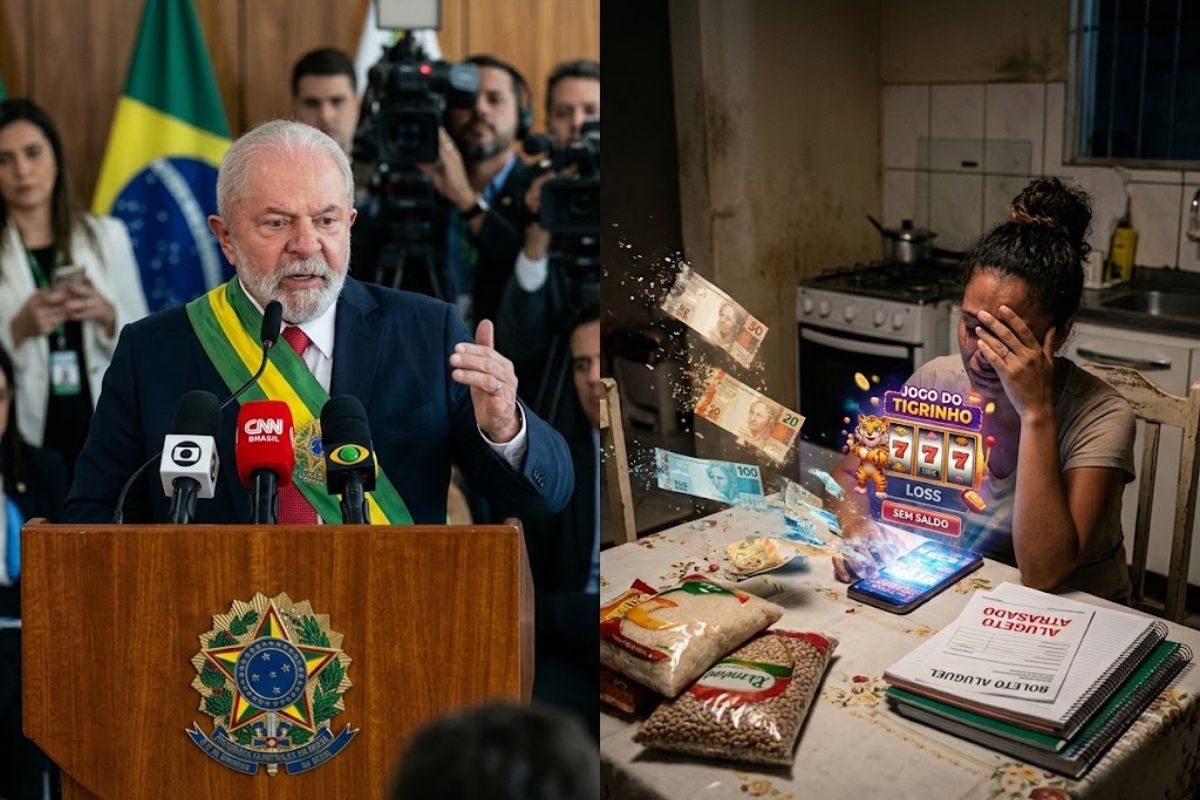
The President’s Speech Placed the Tigrinho Game at the Center of the Debate on Online Gambling by Associating the Advance of Digital Casinos with Family Debt, Loss of Essential Income, and the Need for Joint Response Between Government, Congress, and Judiciary in the Face of an Increasingly Domestic Problem.
The Tigrinho Game was directly mentioned this Saturday (7) by President Luiz Inácio Lula da Silva when announcing that he intends to organize a response against so-called digital casinos in Brazil. In an official statement in Brasília, he stated that online gambling is draining resources that should go to basic expenses, such as food, rent, and school, turning cell phones into gateways to a problem that reaches the heart of domestic life.
The declaration repositions the debate on the sector by linking the growth of these platforms not only to entertainment or the digital market but to a concrete social impact. By Involving Congress and Judiciary in the Response, Lula indicated that he sees the issue as one that surpasses the economic sphere and requires a broader institutional reaction.
The Tigrinho Game Stops Being Just a Platform and Becomes a Symbol of a Bigger Problem
By explicitly mentioning the Tigrinho Game, Lula chose a name already widely recognized in popular imagination to represent something larger: the advance of digital casinos within Brazilian homes. The political weight of this choice lies precisely in the fact that the debate ceases to be abstract. Instead of speaking generically about gambling, the president pointed to a phenomenon identified by the public, associated with the promise of quick gains, continuous cell phone use, and the ease of access at any time.
-
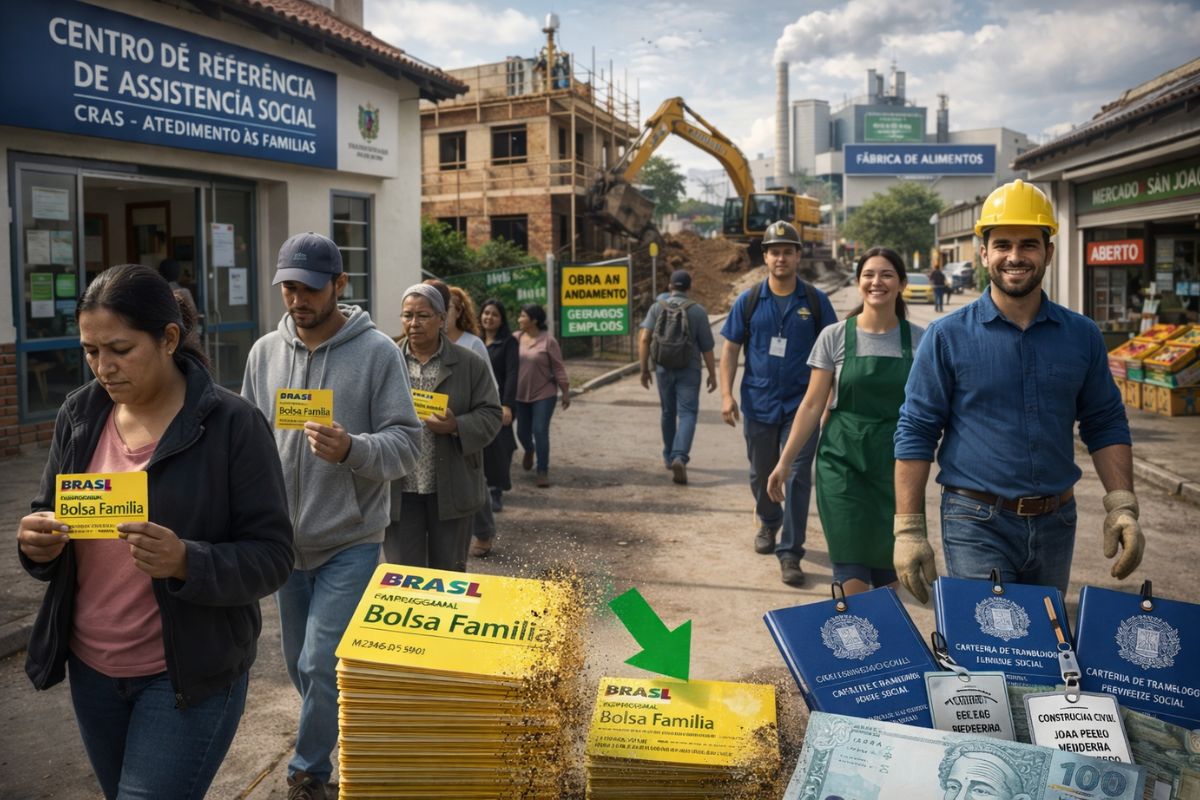
The gaucho city reduced the number of Bolsa Família beneficiaries by almost 40% in just a year and a half with active outreach that connects each registered person directly to job vacancies in Bento Gonçalves in Rio Grande do Sul.
-
The bluest city in Brazil has just gained a new floating bridge for the free crossing between the island and the mainland, connecting residents and visitors to the historic center of São Francisco do Sul every day of the week.

-
In a silent race, Shopee signs a mega contract in Guarulhos and accelerates the e-commerce war with faster deliveries, pressured shipping, and a new threat to rivals in Brazil.

-
Oil surged to $115 a barrel due to the war in the Middle East, and diesel in Brazil has already risen to R$ 7.45 per liter, while the United States…

This framing changes the tone of the discussion. The focus shifts from the isolated platform to the accumulated effect on families’ routines. When the president asserts that money disappears on the cellphone screen, he is not merely addressing an individual practice but a behavior that impacts household budgets, reorganizes priorities, and pressures family relationships, especially in contexts of tight income.
What Lula Promised to Do Against Digital Casinos
In the statement, Lula asserted that he will work to prevent so-called digital casinos from continuing to expand in the country. The strategy mentioned by him involves collaboration between the government, National Congress, and Judiciary, suggesting an attempt to build a response with political and legal backing, rather than just a solitary measure from the Executive. The signal is one of tightening the discourse, even though specific instruments, timelines, or concrete proposals were not detailed at that moment.
This point is central because it shows where the government intends to act. By stating that it makes no sense to allow the entry of the Tigrinho Game and similar platforms into Brazilian homes, Lula establishes a public line of confrontation with the expansion of this market. At the same time, the lack of detail about concrete actions leaves an important question open: how will this reaction be structured in practice, and how far can it go without clashing with the existing regulatory model?
Money for Food, Rent, and School Becomes the Center of Criticism
The strongest part of the presidential speech was the direct association between online gambling and the loss of resources allocated to basic expenses. By mentioning food, rent, and children’s education, Lula shifts the debate to what weighs immediately in daily life. This is not just about financial loss in generic terms, but a dramatic substitution of priorities, where essential values for the household function become consumed by bets made on the cellphone screen.
This approach also naturally responds to the question of how much is at stake: no number is presented, but there is a concrete dimension of loss. The issue, according to the presidential speech, is not about occasional frivolous spending, but about money that should keep domestic life in order. It is this that makes the speech politically sensitive and socially powerful, as it brings the Tigrinho Game closer to the reality of those who feel their budget disappearing before the end of the month.
Why the Burden, According to Lula, Weighs More on Women
Lula stated that while the majority of people who develop gambling addictions are men, the impact mainly falls on women and families. This formulation shifts the analysis from the individual gambler to the network of people affected around them.
The criticism is not limited to the behavior of those who gamble; it extends to the consequences within the home, where others end up absorbing the financial hit, material insecurity, and emotional instability generated by indebtedness.
The political significance of this statement also relates to the context in which it was made, during a speech related to International Women’s Day. By connecting the Tigrinho Game and other online gambling to women’s overload, Lula reinforces the idea that the problem does not end in the app or platform.
It extends to paying bills, managing the household, protecting children, and attempting to restore a budget shaken by losses that often occur silently and continuously.
The Political Contradiction: Harsh Criticism Now, but Regulation Occurred Under the Current Government
One of the most delicate aspects of the debate is the coexistence of current criticism of digital casinos and the fact that the regulation of the sector occurred under Lula’s government, while the authorization for the operation of online gambling was given during Michel Temer’s government. This sequence helps to understand why the issue has gained complexity.
The market did not arise all at once, nor was it shaped by a single decision. There was a prior opening, and then a process of regulation that sought to frame the activity within legal and tax rules.
This creates an inevitable political tension. On one hand, the current government regulated the sector, allowing for tax collection and requirements for operation. On the other hand, the president himself is now raising the tone against platforms associated with the Tigrinho Game and family indebtedness.
This contradiction does not invalidate the criticism but shows that the debate has ceased to be simply legal or fiscal and has also become social, moral, and political, with increasing pressure on the limits of the model adopted so far.
The Statement Expanded the Debate Beyond Gambling
Although the Tigrinho Game garnered much of the repercussion, the statement also addressed the increase in violence against women in Brazil.
Lula mentioned government initiatives aimed at addressing femicide, including the National Pact Against Femicide and operations carried out by the Ministry of Justice in partnership with state governments to arrest aggressors. This broadening of focus shows that, in the design of the speech, gambling did not appear in isolation but alongside other pressures affecting the family structure.
The president also advocated for a discussion on changes in the work schedule known as scale 6×1, arguing that the change could especially benefit women subjected to double shifts.
In this context, the mention of the Tigrinho Game becomes part of a broader picture of social vulnerabilities: violence, domestic overload, compromised income, and the difficulty of protecting family life. The speech, therefore, does not address only digital platforms, but how different problems intersect within the same home.
What Remains Open After the Presidential Speech
Lula’s declaration has an immediate political impact because it transforms the Tigrinho Game into a nominal target of public reaction. Yet, several points remain open.
Details on which concrete measures could be articulated with Congress and Judiciary were not specified, nor how the government intends to differentiate regulated platforms from those considered more aggressive or destructive to household budgets. From now on, the weight of the discourse will depend on the ability to convert criticism into institutional action.
There also remains the dispute over what the limit should be between regulation, restriction, and potential blocking of practices that are currently spreading with enormous digital reach. This is the point where the debate ceases to be merely rhetorical.
When the president says that the money for food, rent, and school disappears on the cellphone, he summarizes a serious diagnosis. However, beyond the strong statement, the country still needs to answer which model can contain social damage without reproducing contradictions that have already marked the recent trajectory of this market.
In the end, Lula’s speech places the Tigrinho Game at the center of a discussion that intertwines politics, household economy, regulation, and real social impact.
The issue has moved out of the app’s realm and fully entered the debate surrounding family, indebtedness, and public responsibility. And this change in tone could redefine the next steps regarding online gambling in Brazil.
And you, do you think the government should harden its stance against platforms related to the Tigrinho Game or is a stricter regulation still the more effective path?









Seja o primeiro a reagir!