





 Portuguese
  English
  Spanish
  5 min of reading
  0 comments


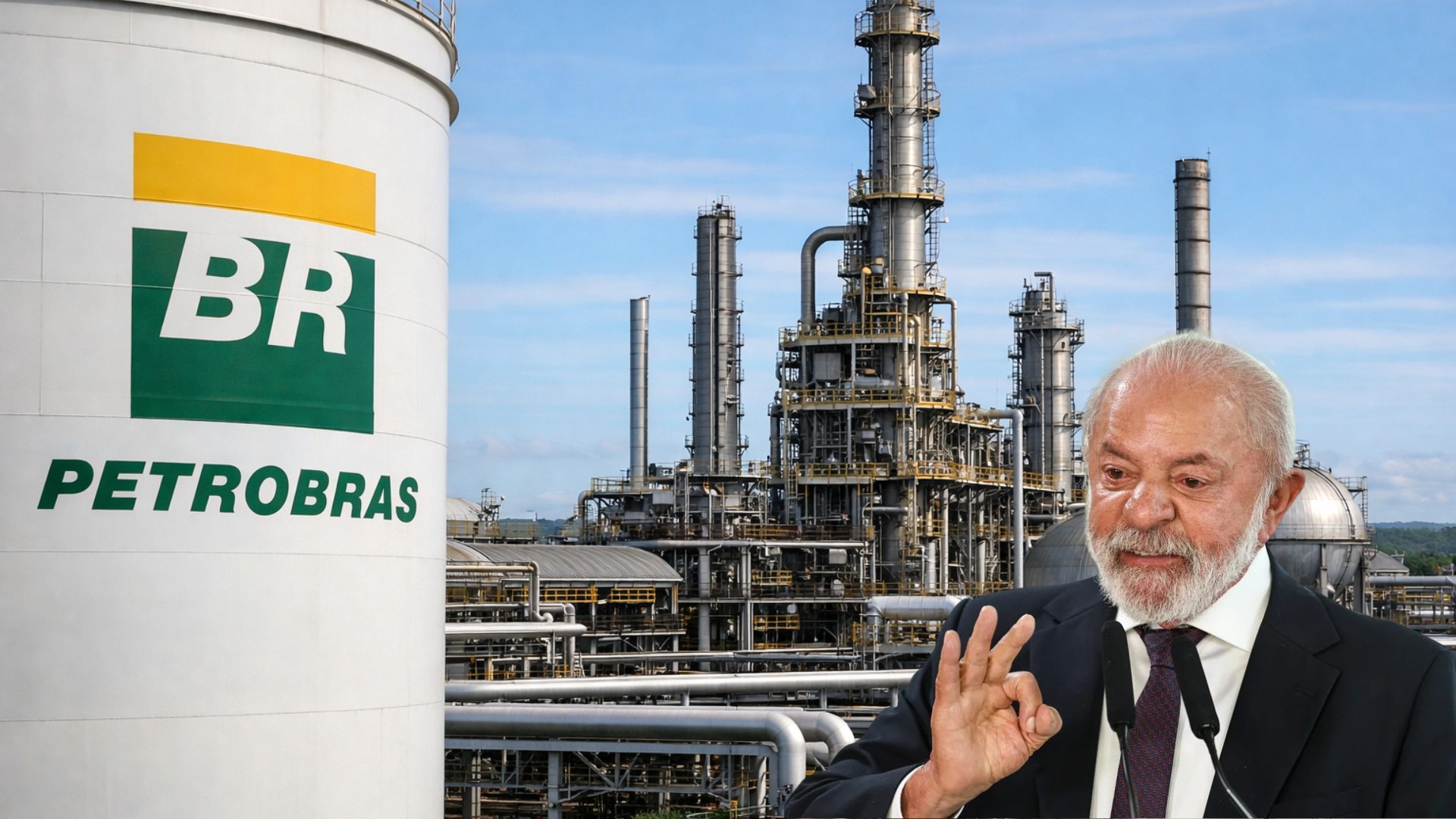
Government movement to resume refinery in Bahia gains strength amid pressure from fuels and dependence on imports, while strategy involves expanding national production, reducing impact of international prices, and strengthening supervision in the Brazilian energy sector.
President Luiz Inácio Lula da Silva stated that Petrobras is evaluating the repurchase of the Mataripe Refinery in Bahia, linking the possible operation to the government’s strategy to contain fuel pressure.
In an interview given to TV Record Bahia this Thursday (02), the president declared that the unit operates below its potential and advocated for increasing production as a way to reduce external dependence.
According to Lula, the federal government has been analyzing the resumption of the asset, privatized in 2021, for some time and considers the refinery strategic for national supply.
-
A study confirms that the natural gas sector will reduce greenhouse gas emissions in Brazil by 0.5% and accelerate the energy transition by 2026.

-
Petrobras implements a severe adjustment and confirms a 55% increase in the price of aviation kerosene with a proposal for installment payments for the companies.

-
The rise in oil prices could ensure an extra revenue of R$ 100 billion for the Federal Government, indicates a recent economic study.
-
Naturgy begins an investment of R$ 1.6 million to expand the gas network in Niterói and benefit thousands of new residences and businesses.

Commenting on the current operation of the unit, he stated that the production level does not correspond to the installed capacity, indicating the need for expansion to better meet internal demand for derivatives.
During the interview, the president criticized the current scenario and maintained that the refinery could have a higher performance.
“It is not fair what they did, a refinery that produces less than half of what it should produce,” he said.
The statement reinforces the government’s position to review assets sold in the past, especially those considered relevant to energy policy.


Petrobras and repurchase of the Mataripe Refinery enter the radar
The possibility of repurchasing the Bahian refinery had already been mentioned by government members and by Petrobras itself in communications to the market.
The state-owned company previously reported that it is evaluating investment opportunities, including potential acquisitions, but did not confirm negotiations at an advanced stage nor detailed the amounts involved.
Located in São Francisco do Conde, in the metropolitan region of Salvador, the refinery is one of the main ones in the country and has a capacity of over 300,000 barrels per day.
The asset accounts for a significant portion of the Northeast’s supply, which increases its strategic weight in any discussion about refining policy.
When addressing the topic, Lula directly associated the recomposition of national productive capacity with the reduction of dependence on imports.
According to him, Brazil still needs to buy part of the diesel consumed, which exposes the country to fluctuations in the international market and pressures internal prices.
Diesel import and impact on fuel prices
In the interview, the president highlighted that about 30% of the diesel used in Brazil is imported, while domestic production covers approximately 70% of the demand.
This scenario, according to Lula, makes it inevitable to pass on external costs when there is a rise in the international price of oil.
“This imported one has no way. It comes with the price of the international market and you are forced to make the adjustment,” he stated.
The statement reinforces the government’s thesis that expanding domestic refining can help reduce price volatility in the internal market, although it does not completely eliminate external impacts.
Additionally, Lula mentioned measures adopted by the federal administration to contain recent increases.
Among them, he mentioned the exemption from taxes and compensation policies aimed at reducing the direct impact on the final consumer, especially during periods of international highs.
Government measures to contain fuel price increases
The president stated that the government eliminated taxes such as PIS and Cofins on fuels in order to avoid more intense pass-throughs to the consumer.
He also mentioned the adoption of compensation mechanisms to balance the difference between tax reductions and the variation in the price of oil in the global market.
According to Lula, these initiatives aimed to prevent abrupt increases, especially in a context of international instability.
He related the pressure on prices to external conflicts and the dynamics of the global energy market, factors that, according to the government, are beyond the direct control of national authorities.
Still during the interview, the president stated that the government is working to prevent these effects from reaching the cost of living for the population.
The concern, according to him, involves not only the price of fuels but also the indirect impact on food and transportation.
Supervision of distributors and combating abuses
Another point highlighted by Lula was the strengthening of supervision in the fuel sector.
The president stated that the government intends to expand monitoring over distributors and other agents in the chain, with participation from agencies such as the Federal Police and the Federal Highway Police.
According to him, there are indications of practices considered irregular in some cases of price increases, which motivated the intensification of control actions.
“There are many people making money by robbing the people, because they had no right to increase and they are increasing,” he declared.
The statement indicates that, in addition to economic measures, the government also intends to act in the regulatory and investigative field to curb distortions in the market.
The strategy combines tax intervention, expansion of domestic production, and stricter supervision.
Strategic importance of the refinery for Brazil
The Mataripe Refinery occupies a relevant position in the Brazilian refining system and is considered strategic for regional supply.
Inaugurated in 1950, it was the first national refinery and remains one of the largest in operation, with diversified production of derivatives.
The eventual repurchase by Petrobras would involve negotiations with the current controller and depend on technical, economic, and regulatory evaluation.
So far, there is no confirmation of advanced negotiations nor a definition on deadlines or amounts for a possible transaction.
Meanwhile, the topic remains at the center of the debate on energy policy in the country, with a direct impact on discussions about prices, supply, and the role of state-owned companies in the sector.







Seja o primeiro a reagir!