





 Portuguese
  English
  Spanish
  3 min of reading
  11 comments


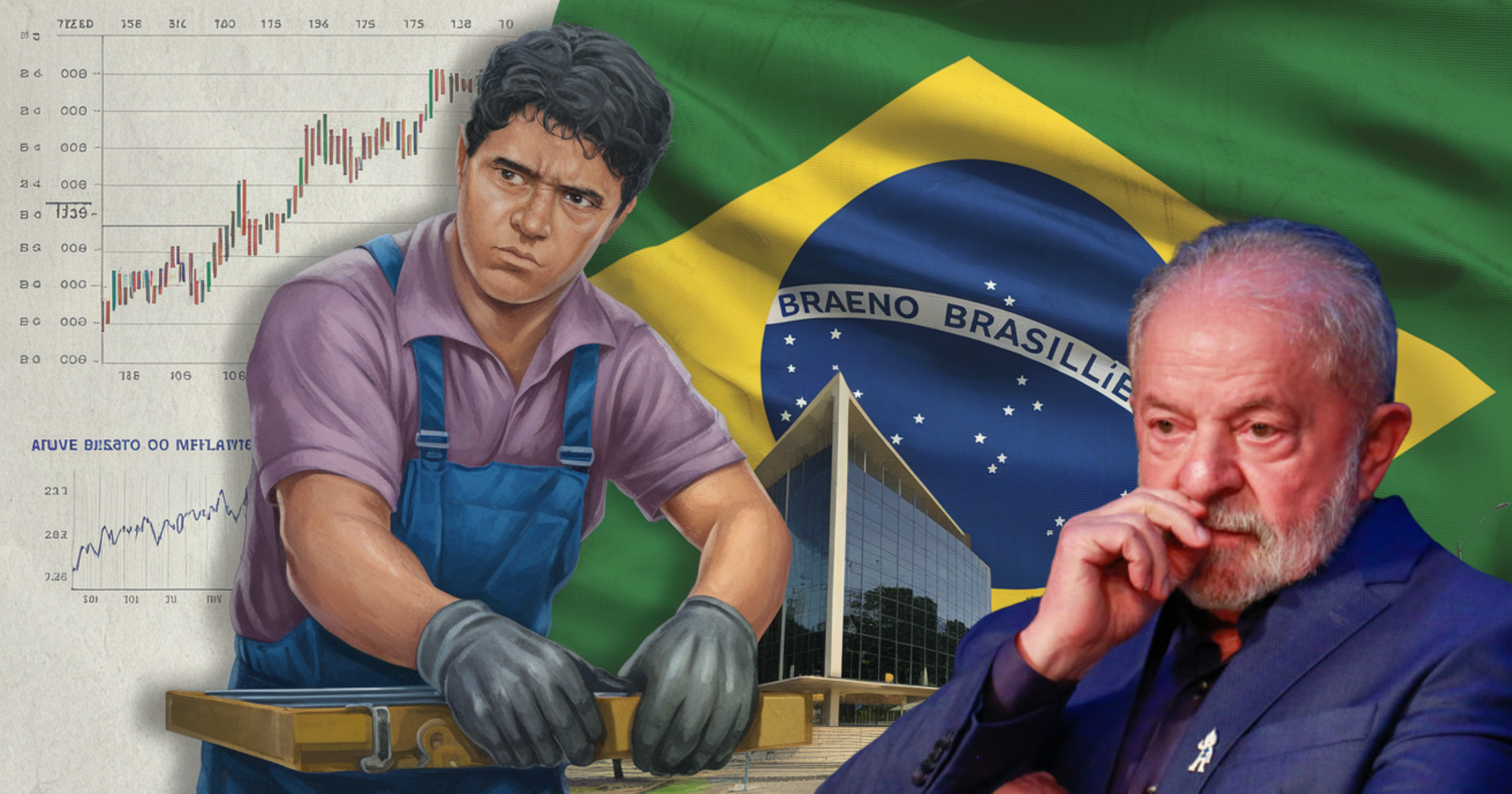


The Lula Government Wants to Limit the Minimum Wage Adjustment to 2.5% Above Inflation, Changing Decades of Real Valorization. The Measure Promises to Save Billions but Also Generates Controversy Among Experts and Workers. Learn How This Could Impact Your Life and Brazil’s Finances!
A controversial proposal is shaking up the government behind the scenes and causing concern among many Brazilians.
With a history of real gains over the past decades, the minimum wage may have its valorization limited starting in 2025.
The measure is part of a strategy from the economic team of President Luiz Inácio Lula da Silva (PT) to curb public spending, particularly with social and pension benefits.
-
A new Brazilian shopping center worth R$ 400 million will be built in an area equivalent to more than 4 football fields, featuring 90 stores, 5 cinemas, a supermarket, a college, and parking for 1,700 cars, potentially generating 3,000 jobs.

-
Larger than entire cities in Brazil: BYD is building a 4.6 km² complex in Bahia with a capacity for 600,000 vehicles per year, but the discovery of 163 workers in conditions analogous to slavery has shaken the entire project.

-
With an investment of R$ 612 million, a capacity to process 1.2 million liters of milk per day, Piracanjuba inaugurates a mega cheese factory that increases national production, reduces dependence on imports, and repositions Brazil on the global dairy map.

-
Brazilian city gains industrial hub for 85 companies that is equivalent to 55 football fields.


What Does the Government Aim to Achieve with This Measure?
According to the economic team, the idea is to tie the minimum wage adjustment to the fiscal framework rules, approved in 2023.
This means that the increase would be a maximum of 2.5% above the National Consumer Price Index (INPC).
This change directly affects mandatory expenses, such as pension benefits, unemployment insurance, and the wage allowance, which are indexed to the minimum wage.
The goal is to apply the same growth limit set in the fiscal framework to these expenses, reducing the impact on public finances.
Currently, each real increase in the minimum wage represents an additional cost of about R$ 400 million to the government’s accounts.
In 2024, spending on pension benefits, BPC (Continuous Cash Benefit), wage allowance, and unemployment insurance rose by R$ 40.7 billion, a significant figure that requires control to avoid fiscal imbalances.
A History of Valorization Above Inflation
Between 1996 and 2024, the minimum wage accumulated an impressive growth of 1,160.7%, far exceeding inflation, which was 429.3% during the same period.
This valorization policy has provided real gains to workers, increasing purchasing power and improving the living standards of millions of Brazilians.
In the past 30 years, on 15 occasions, the minimum wage adjustment surpassed inflation by more than 2.5%, including the years 2023 and 2024.
However, limiting the valorization to 2.5% above the INPC would mark a significant shift in the policy adopted in recent governments.
How Does the Current Minimum Wage Calculation Work?
Since 2023, the minimum wage adjustment considers the variation of the INPC until November of the previous year and the growth of the Gross Domestic Product (GDP) from two years prior.
For example, the increase from R$ 1,320 to R$ 1,412 in 2024 combined a 3.85% increase in the INPC accumulated until November 2023 with a 3% growth in GDP from 2022.
For 2025, the economic team proposed a 6.87% adjustment, bringing the value to R$ 1,509.
However, if the proposal to limit the valorization is implemented, the increase will be smaller.
Based on the INPC accumulated at 4.6% until October 2024 and the GDP at 2.9% from 2023, the minimum wage would be R$ 1,520 under current rules.
But, with the cap of 2.5% above the INPC, the amount would be reduced to R$ 1,513, saving about R$ 2.8 billion.
Impacts on Public Accounts
The minimum wage influences various expenses in the Brazilian economy, such as pensions, unemployment insurance, and wage allowances.
Between January and September 2024, spending on unemployment insurance and wage allowances totaled R$ 68.8 billion, a real increase of R$ 4.6 billion compared to the same period in 2023.
The BPC cost R$ 83.2 billion during the same period, representing a growth of R$ 11.6 billion from the previous year.
By limiting the minimum wage adjustment, the government seeks to reduce pressure on these expenses, balancing the budget and adhering to the rules of the fiscal framework.
What to Expect for the Future?
The discussion about the valorization of the minimum wage is central to the balance between social justice and fiscal responsibility.
While the government argues that the measure is necessary to avoid a loss of control over public accounts, many experts and sectors of society criticize the idea, claiming it could harm workers and the economy.
Is the reduction in the minimum wage adjustment the best solution to balance the country’s finances? Leave your opinion in the comments!









Fake news…
Lógico que mais uma vez aposentados pagam a conta por incompetência do governo. Porque o governo não corta na própria carne , deputados e senadores também têm que dar sua contribuição diminuindo verbas de gabinete e etc…. Porque só o Povo?
Judiciário também tem que fazer sua parte.
Excluindo os rombos decorrentes da corrupção nacional que se somados certamente pagariam boa parte da conta, cabe a pergunta: O tamanho da conta do Sistema Geral da Previdência é conhecida pelos governos e é relativamente fácil projetar o seu crescimento ao longo dos anos, então porque o governo gasta mais do que deve? É mais, o peso irá cair apenas no Sistema Geral da Previdência? E os regimes públicos não sofrerão limitação, sem as costumeiras exceções , mesmo sabendo que os altos salários estão nesses regimes, principalmente no judiciário e legislativo? É muito fácil governar assim. Gasta mal o que não pode e depois manda a conta para alguém pagar.