





 English
  Francês
  Alemão
  Italiano
  Japonês
  Norueguês
  Portuguese
  Spanish
  5 min of reading
  0 comments


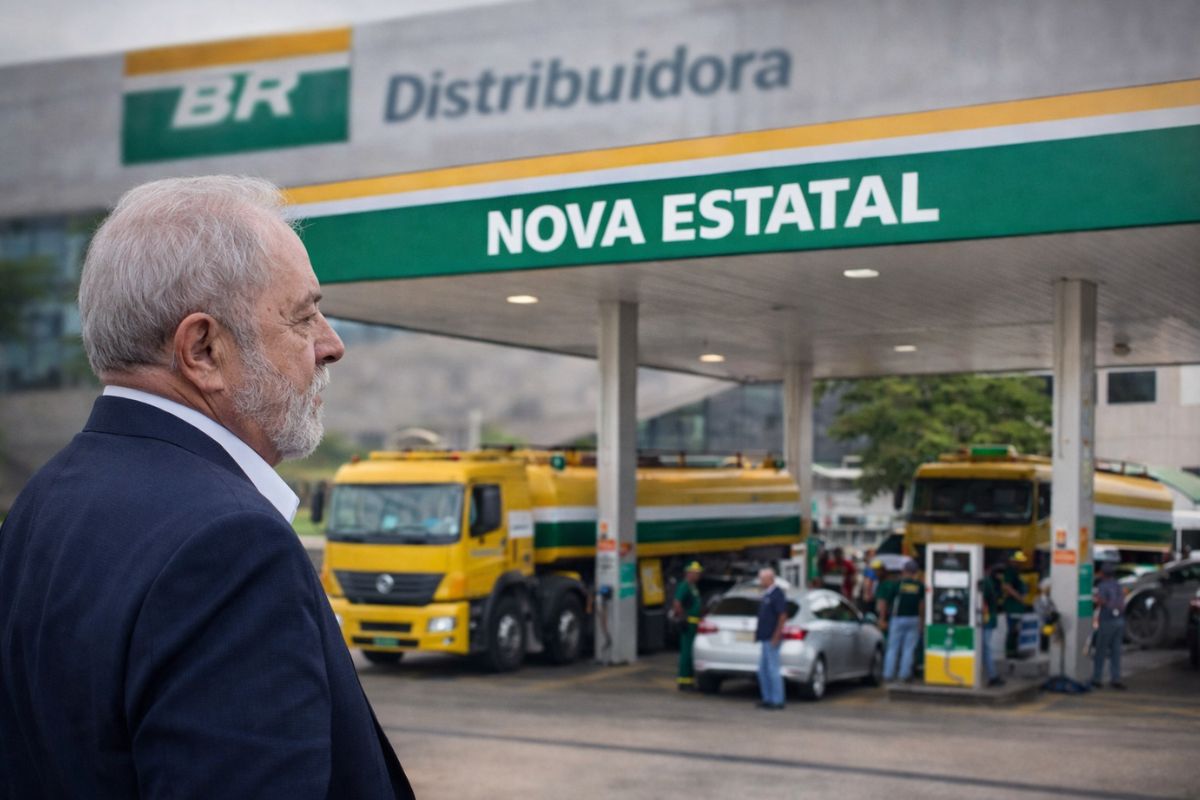
Lula’s allies defend the creation of a new state-owned fuel distribution company as a way to expand government control over pump prices. The proposal arises after the privatization of BR Distribuidora, which removed Petrobras’s direct involvement in retail and reduced the state’s capacity for intervention in the sector.
The debate over fuel prices in Brazil has gone beyond emergency measures and is beginning to advance towards the structural design of the sector. At the center of this discussion is the creation of a new state-owned fuel distribution company, seen by Lula’s allies as a tool to expand the capacity for intervention in consumer prices. The proposal arises amid an assessment that the sale of Petrobras assets in recent years has reduced the state’s reach in regulating the market. The privatization of BR Distribuidora, completed during Bolsonaro’s government, is cited as one of the main factors behind this loss of influence.
Currently, according to InfoMoney, Petrobras is prevented from resuming fuel distribution before 2029, due to clauses established in the privatization process. In light of this limitation, Lula’s allies advocate for the creation of a new state-owned fuel distribution company as a way to circumvent the contractual impediment. The idea is already included in the government plan of the president for a potential fourth term and has been discussed by members of the PT and the allied base, especially at a time of pressure on diesel prices.
Why Lula wants a new state-owned fuel distribution company

The privatization of BR Distribuidora, now called Vibra Energia, removed Petrobras’s direct involvement in the retail fuel market. As a result, the government lost the main instrument it had to directly influence the prices that reach consumers at the pump.
-
Unemployment rises again to 5.8% at the beginning of 2026, raising alarms about the end of temporary positions and its impact on the Brazilian job market.

-
Document organization can cut invisible costs in small businesses, a simple step that prevents waste, rework, and losses in daily operations.

-
Chinese giant worth nearly R$ 4 billion that manufactures cables for electric cars, solar energy, and robotics wants to open a factory in SC.
-
Many employers do not know, but the law guarantees domestic workers a 25% increase in salary during trips, 50% for overtime, 20% for night shifts, and 17 additional benefits that can lead to labor lawsuits if not paid.

For Lula’s allies, this loss of influence is the root of the current problem: when oil prices rise in the international market, the government has no tools to contain the pass-through to the final consumer, especially in times of external shock.
The creation of a new state-owned fuel distribution company is seen as the solution to fill this gap. The government’s logic is that, with a public company directly involved in distribution, it would be possible to control the margin between the refinery price and the pump price.
Distribution is seen as a key piece to reduce the volatility perceived by consumers and ensure that any cost reductions are fully passed on to the final price.
What the privatization of BR Distribuidora changed in the fuel market
BR Distribuidora was privatized during Bolsonaro’s government as part of a broad program of privatization of Petrobras assets. The operation removed the state’s direct involvement in the retail fuel segment, which includes gas stations and the logistics of distribution to resellers.
With the privatization, the company began to operate exclusively under market logic, with no obligation to follow government guidelines on prices.
For Lula’s government, the practical result of this change is that cuts in oil prices or tax reductions do not always reach the final consumer in the same proportion. The government argues that part of the problem lies in the distribution chain, where margins are defined by the market and not by public interest.
This assessment reinforces the argument that a new state-owned fuel distribution company would be necessary to close this gap. Additionally, contractual clauses prevent Petrobras from resuming distribution before 2029, making the creation of a new company the only viable alternative in the short term.
The political articulation: parliamentary front and Lula’s government plan
The proposal to create a new state-owned fuel distribution company is not just a behind-the-scenes idea. Government lawmakers are already moving to provide political support for the project. The allied base is articulating the creation of a parliamentary front aimed at the re-nationalization of the former BR Distribuidora.
The initiative seeks to reinforce the argument that fuel supply should be treated as a strategic issue, with greater state participation, and not just as an activity subject to market dynamics.
The idea is already included in Lula’s government plan for a potential fourth term. This indicates that the proposal is not a one-off reaction to the rise in diesel prices, but rather a long-term strategy. For the PT, regaining state presence in fuel distribution is a way to correct what they consider a mistake of privatization.
The discussion gains momentum at a time when oil prices are pressured by the crisis in the Middle East and the risk of truck driver strikes re-emerges as a concrete threat to the government.
The obstacles: resistance from the private sector and legal challenges
The proposal for a new state-owned fuel distribution company faces significant resistance. The private sector views the measure as excessive intervention with the potential to distort the competitive environment. Private distributors argue that the entry of a state-owned company with subsidized prices would undermine competition and deter investments in the sector.
Vibra Energia, formerly BR Distribuidora, has not officially commented on the proposal, but the market reacts cautiously to any sign of re-nationalization.
In addition to political resistance, the creation of a new state-owned company requires legislative approval and the definition of an operational model, which tends to broaden the debate in Congress. There are also legal questions about the compatibility of the measure with the non-competition clauses established during the privatization process of BR Distribuidora.
If the government creates a new company with functions identical to those of the former state-owned company, private sector lawyers may claim contractual violation. These hurdles make the realization of the proposal a long and politically exhausting process.
Fuels as an electoral issue: the impact of prices on Lula’s popularity
The price of fuels is one of the most sensitive topics in the Brazilian economy and has a direct impact on the popularity of any government. When diesel prices rise, freight costs increase, food becomes more expensive, and public dissatisfaction grows rapidly.
For Lula, the lack of direct instruments to act on prices is a political vulnerability that needs to be addressed before the elections. The proposal for a new state-owned fuel distribution company is part of both the long-term plan and the immediate political strategy of the government.
The pressure from truck drivers, who are already organizing a new strike due to diesel prices, reinforces the urgency of the issue. Vice President Geraldo Alckmin dismissed the possibility of a strike and is betting on a package of subsidies and tax cuts as an immediate response.
But in the medium term, the creation of a new state-owned fuel distribution company is the project that Lula points to as a structural solution. If the proposal advances, Brazil will once again have direct state presence in a sector that was privatized just a few years ago. If it does not advance, the government will remain hostage to the international volatility of oil without tools to protect the consumer.
What do you think of this proposal?






Seja o primeiro a reagir!