





 Português
  Inglês
  Espanhol
  4 min de leitura
  7 comentários


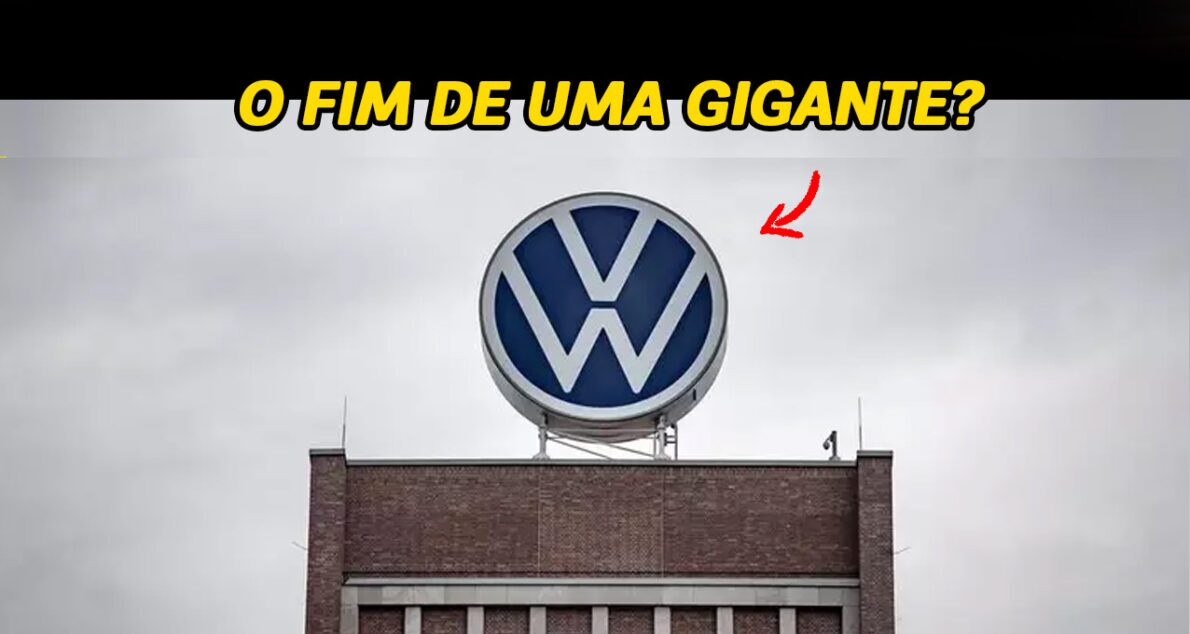

Volkswagen Crisis Threatens to Topple 120,000 Jobs. With Factories at Risk and the Chinese Market Lost, the Government Races Against Time to Prevent a Collapse in the Automotive Sector.
The current situation of one of the largest car manufacturers in the world, Volkswagen, is raising alarm bells for everyone.
What once seemed unthinkable – an automotive industry giant facing financial difficulties – is now a concern for both the business sector and the German government authorities.
But are we really on the brink of seeing the company sink? The government’s recent moves indicate an attempt to reverse the situation, but the crisis seems far from over.
-
OMODA & JAECOO grows in Europe in 2026 with an integrated strategy of sales, innovation, local production, and technological advancement in the United Kingdom, Italy, and Spain.
-
OMODA & JAECOO expands after-sales service in Brazil with competitive maintenance, a 7-year warranty, and high availability of parts for technological SUVs.
-
OMODA & JAECOO appoints Alessandra Souza as executive marketing director in Brazil and accelerates brand expansion with a focus on innovation, networking, and hybrid portfolio.

-
Jaecoo 7 with super hybrid SHS system exceeds 1,200 km of combined range with a 1.5 turbo engine, high-density battery, and intelligent energy management.

The German Minister of Economics, Robert Habeck, has taken the first step by declaring support for Volkswagen, which is undergoing a delicate restructuring process.
According to Habeck, the company’s situation requires attention, and the German government is willing to intervene to prevent a devastating impact on the job market. However, official aid will not come without limits.
The company, which has already broken significant collective agreements with unions, still needs to face tough negotiations with powerful sector entities, and time is running out.
The Red Alert of the Automotive Industry
Volkswagen’s problems extend across various aspects. The factories, which are already operating with low demand, may suffer even more if the crisis continues.
The risk? Up to 120,000 jobs are at stake.
As Habeck pointed out during his visit to the factory in Emden, in the state of Lower Saxony, political help will come, but the company needs to bear a significant part of the responsibility for its recovery. “This is the company’s job,” said the minister.
Concerns also increase due to the impact that factory closures would have on the local and national economy.
The German government is already starting to discuss improvements in infrastructure and incentives for the transition to electric vehicles, one of the bets to save the manufacturer.
But will this be enough? According to Habeck, the government intends to send “the right signals to the market,” seeking to stimulate the automotive sector to adapt to the new demands for electrification, a race that Volkswagen cannot afford to lose.
The End of Chinese Dominance and the European Collapse
The Volkswagen crisis is not limited to a single factor. Two of the manufacturer’s main markets, Europe and China, are in decline, and this is directly impacting the company’s finances.
Arno Antlitz, who leads the financial and operational sectors of the brand, was clear in stating that the European market has shrunk after the pandemic and is not expected to recover to previous levels.
For Volkswagen, this decline in European sales represents half a million fewer cars per year, which inevitably affects profit forecasts and creates idleness in factories.
In China, a former paradise for Volkswagen, the scenario has also changed drastically.
The Chinese market, which for decades was the manufacturer’s “golden goose,” has been taken over by local competitors, notably BYD, which took the lead in 2023.
Oliver Blume, the CEO of Volkswagen, did not hide his disappointment with this shift, stating that the “checks from China” no longer arrive. The Chinese consumer, once loyal to European brands, now favors domestic options, intensifying the crisis.
An Uncertain Future for Volkswagen and the Parallel with Brazil
The restructuring of Volkswagen, expected to last for the next two to three years, is considered a turning point. The German government offers support, but with clear limits.
The manufacturer needs to simultaneously resolve its internal labor relations crisis, adapt to new global trends such as electrification, and regain its competitiveness in the markets that once made it a leader.
And what is the parallel with Brazil? In Brazil, Volkswagen is one of the most important manufacturers, with factories in states like São Paulo and Paraná.
In 2023, the company announced temporary shutdowns in production lines in the country due to low demand and logistical difficulties.
Just like in Germany, the global crisis of the company could directly impact Brazilian jobs.
If the global scenario does not improve, Volkswagen’s factories in Brazil may also be affected, leading to job cuts and reduced production.
Electrification, which the German government is encouraging, is also a significant challenge in Brazil, where the manufacturer faces difficulties in adapting its production line to this new reality.
The transition to electric cars is still slow in the country due to a lack of adequate infrastructure, high costs, and policies that encourage this change.
Thus, the future of Volkswagen in Brazil depends not only on the success of its global restructuring but also on how the Brazilian government and the company itself prepare for this new phase of the automotive industry.
But Will the Company Be Able to Get Out of This Crossroads Without Major Losses?
The outcome of this story is still uncertain, and Volkswagen’s recovery depends not only on government support but on its own ability to reinvent itself.
The fact is that the manufacturer cannot afford to fail – with so many jobs in Brazil and around the world at stake, the responsibility is immense. The next phase of the crisis will be decisive, and the pressure is mounting.
Could the global crisis of Volkswagen cause a collapse in Brazilian factories as well? How should Brazil prepare for this transformation in the automotive market?








Quantas abobrinhas nos comentários,a Europa está ruim desde que começou a financiar a Ucrânia na guerra com a Rússia ao invés de negociar com diplomacia.
Sem lógica um carro popular custar os valores que estão sento vendidos depender de cada estado.
Veja o valor de parcelas e planos…
Está aí motivos não só para v w que tem qualidade e o preço de mercado bem melhor.
A Alemanha esta em queda livre na economia, motivada por politicas sociais e economicas equivocadas. Com este governo radical dos verdes e socialistas, a Alemanha perdeu a competitividade para o Mundo e se tornara, rapidamente, num Pais de terceiro mundo, com aumento do desemprego, da pobreza e aumento da censura.