





 Portuguese
  English
  Spanish
  3 min of reading
  3 comments


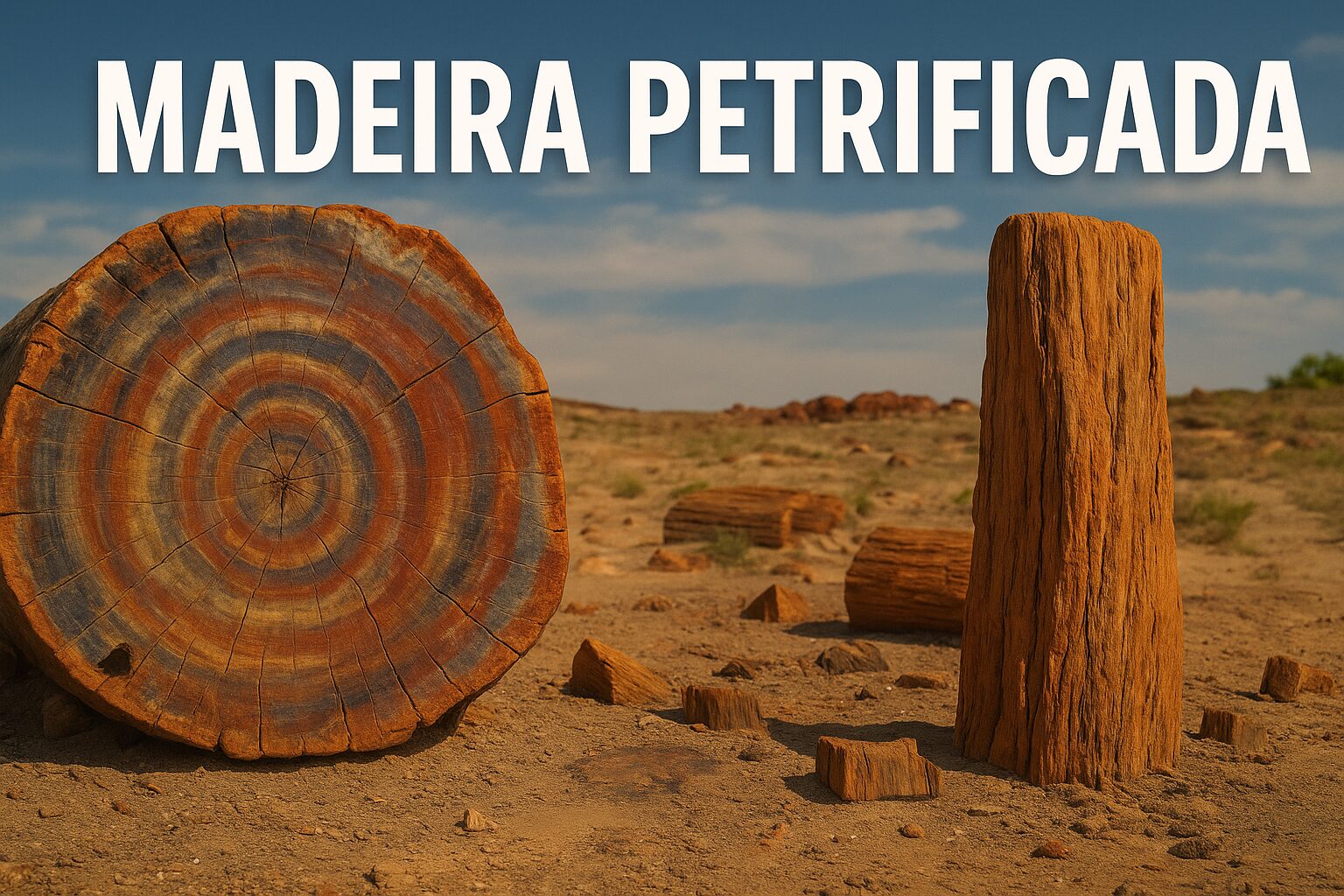


Natural Process Reveals Impressive Details of Earth’s History and Preserves Unique Fossil Records of Ancient Forests
Petrified wood is one of nature’s most fascinating creations. It consists of trees that, over millions of years, underwent a process that turned them into stone. These fossils provide a unique opportunity to observe what forests were like in very ancient times, preserving incredible details of the plant structure.
What Is Petrified Wood?
Petrified wood is formed when the original plant material is replaced by minerals, primarily silica, like quartz. This process, called permineralization, is different from common fossils, which are usually just impressions in rocks.
In the case of petrified wood, the minerals fill every space within the wood, preserving its cellular structure with impressive accuracy. Even after millions of years, it is possible to see growth rings, bark textures, and even insect marks.
-
Motorola launched the Signature with a gold seal from DxOMark, tying with the iPhone 17 Pro in camera performance, Snapdragon 8 Gen 5 that surpassed 3 million in benchmarks, and a zoom that impresses even at night.

-
Satellites reveal beneath the Sahara a giant river buried for thousands of kilometers: study shows that the largest hot desert on the planet was once traversed by a river system comparable to the largest on Earth.

-
Scientists have captured something never seen in space: newly born stars are creating gigantic rings of light a thousand times larger than the distance between the Earth and the Sun, and this changes everything we knew about stellar birth.

-
Geologists find traces of a continent that disappeared 155 million years ago after separating from Australia and reveal that it did not sink, but broke into fragments scattered across Southeast Asia.

The result is a rock that maintains the appearance of wood, but with the hardness and durability of stone. The preserved details help scientists better understand what plant life was like in the distant past.
How Does Wood Petrification Occur?
The petrification process is slow and depends on very specific conditions. First, the tree needs to be buried quickly after it dies. This usually happens through volcanic ash, sediments, or in flooded environments, such as swamps. Rapid burial prevents oxygen from degrading the wood.
Then, mineral-rich water begins to seep into the tree’s tissues. Silica and other dissolved minerals fill the wood cells. Gradually, as the organic material decomposes, these minerals replace the original material.
This replacement process occurs on a microscopic level, ensuring that the internal structure of the wood is preserved. Over time, the minerals crystallize and solidify, turning the wood into stone.
The colors that petrified wood acquires depend on the minerals present. Silica can make it white or gray. Iron oxides bring red, brown, and yellow tones. Manganese contributes pink and purple shades, while copper can create vibrant greens and blues.
Famous Locations
Some places in the world are known for their vast concentrations of petrified wood.
The Petrified Forest National Park in Arizona, United States, is one of the most famous areas. There, fossilized logs over 200 million years old from the Late Triassic period can be found. Some logs can reach lengths of 60 meters and showcase vibrant colors.
Another notable location is the Petrified Forest of Lesbos in Greece. This UNESCO Global Geopark holds sequoias about 20 million years old, preserved by ancient volcanic eruptions.
In Argentina, the Cerro Cuadrado Petrified Forest impresses with fossilized araucarias from 160 million years ago, originating from the Jurassic era.
The Yellowstone National Park, also in the United States, houses several layers of petrified trees, some still standing, indicating very rapid burial due to volcanic activity.
Scientific Importance of Petrified Wood
These fossils offer valuable information for scientists. Analyzing the growth rings of trees can reveal climate patterns from millions of years ago, aiding in the reconstruction of ancient climates.
Moreover, petrified wood helps understand plant evolution by showing how prehistoric species differed from modern ones. It also reveals details about geological processes, such as volcanic eruptions and sediment formation.
By studying these fossilized forests, researchers can reconstruct entire ecosystems and better understand environmental changes throughout time.
Modern Uses of Petrified Wood
Outside of science, petrified wood is also highly valued. Polished, it transforms into beautiful decorative stones used in jewelry, table tops, and sculptures.
Some people attribute metaphysical properties to petrified wood, believing it promotes stability and a connection to the earth.
Whether as a study object or for decoration, petrified wood continues to fascinate those who encounter it, bringing a small sample of Earth’s deep history.








Na cidade de Mata no RS tbm madeira petrificada um museu muito bonito
Seria interessante falar sobre as madeiras petrificadas que existem no rio grande do sul, no “caminho dos dinossauros”
Tenho uma madeira petrificada,está comigo há mais ou menos cinquenta e sete anos.