





 Portuguese
  English
  Spanish
 7 min of reading
  0 comments


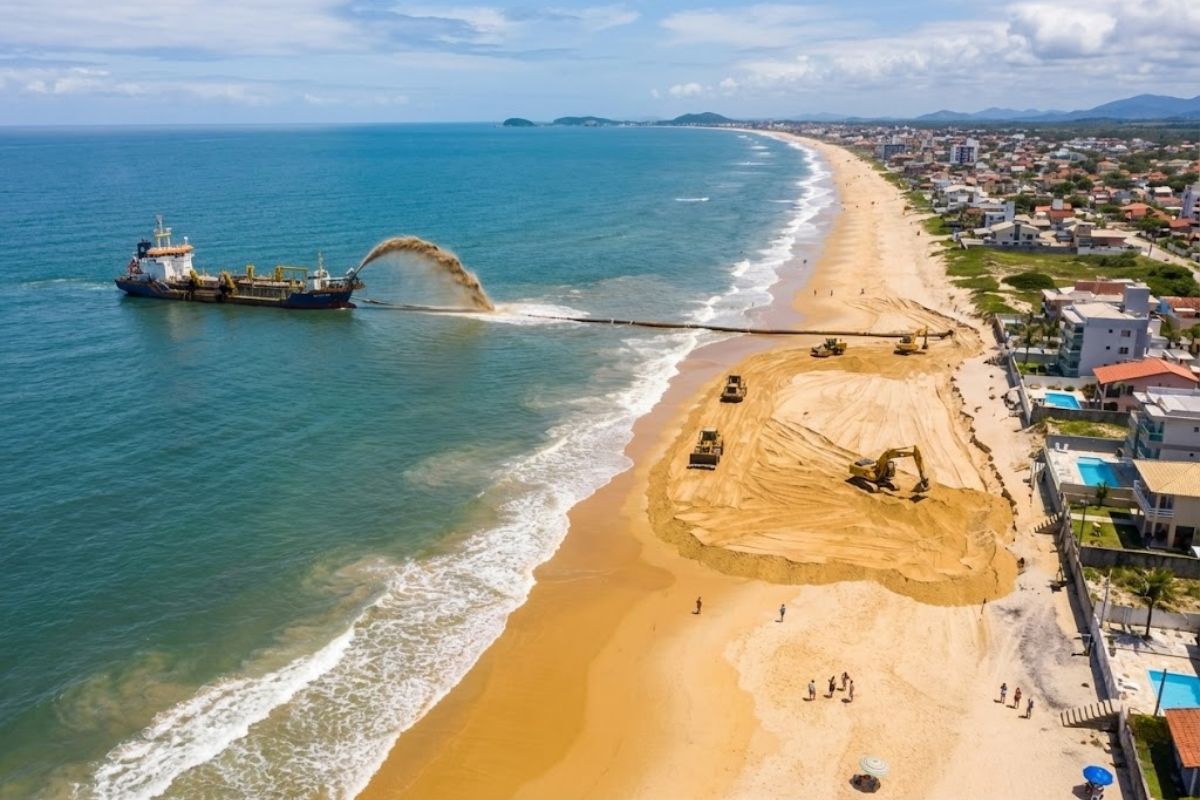
The Largest Beach Widening in Brazil in Itapoá Reaches 58.5% Completion, with 5 km of Sand Already Expanded. The 166.5 m Dredge Operates 24 Hours a Day, Extracting Sediments at 16 m Depth and Has Already Deposited 3.4 Million M³ on the Shore from the Bay of Babitonga.
The largest beach widening in Brazil has progressed in Itapoá, in the North Coast of Santa Catarina, with an update from January 7 showing 58.5% physical execution. The intervention is regarded as a direct response to decades of erosion that press on the shore and require a broader barrier between the sea and urban infrastructure.
In practice, the largest beach widening in Brazil has already delivered 5 kilometers of widened sand strip, within a total projected length of 8.8 kilometers. The sections identified as beneficiaries include Figueira do Pontal, Pontal do Norte, and Princesa do Mar, in a project that combines dredging, port logistics, and environmental monitoring before, during, and after execution.
What Has Changed on the Shoreline Map in Itapoá by January 7

The numbers released by January 7 place Itapoá at the center of a rare intervention in the country due to its scale and integration with port operations.
-
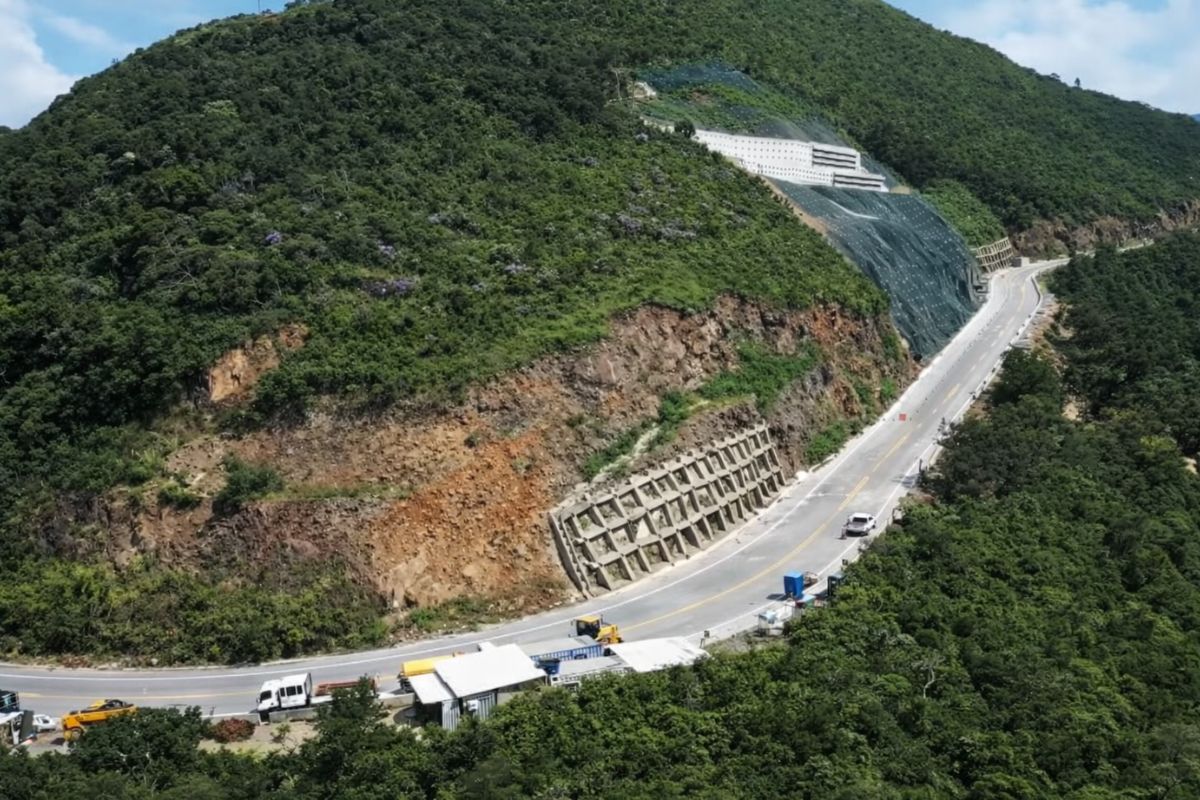
The section of Serra da Rocinha on BR-285 is now open in Timbé do Sul: 50 m tensioned curtains and top-down technique stabilize the slope, with a stairway duct controlling the water.
-
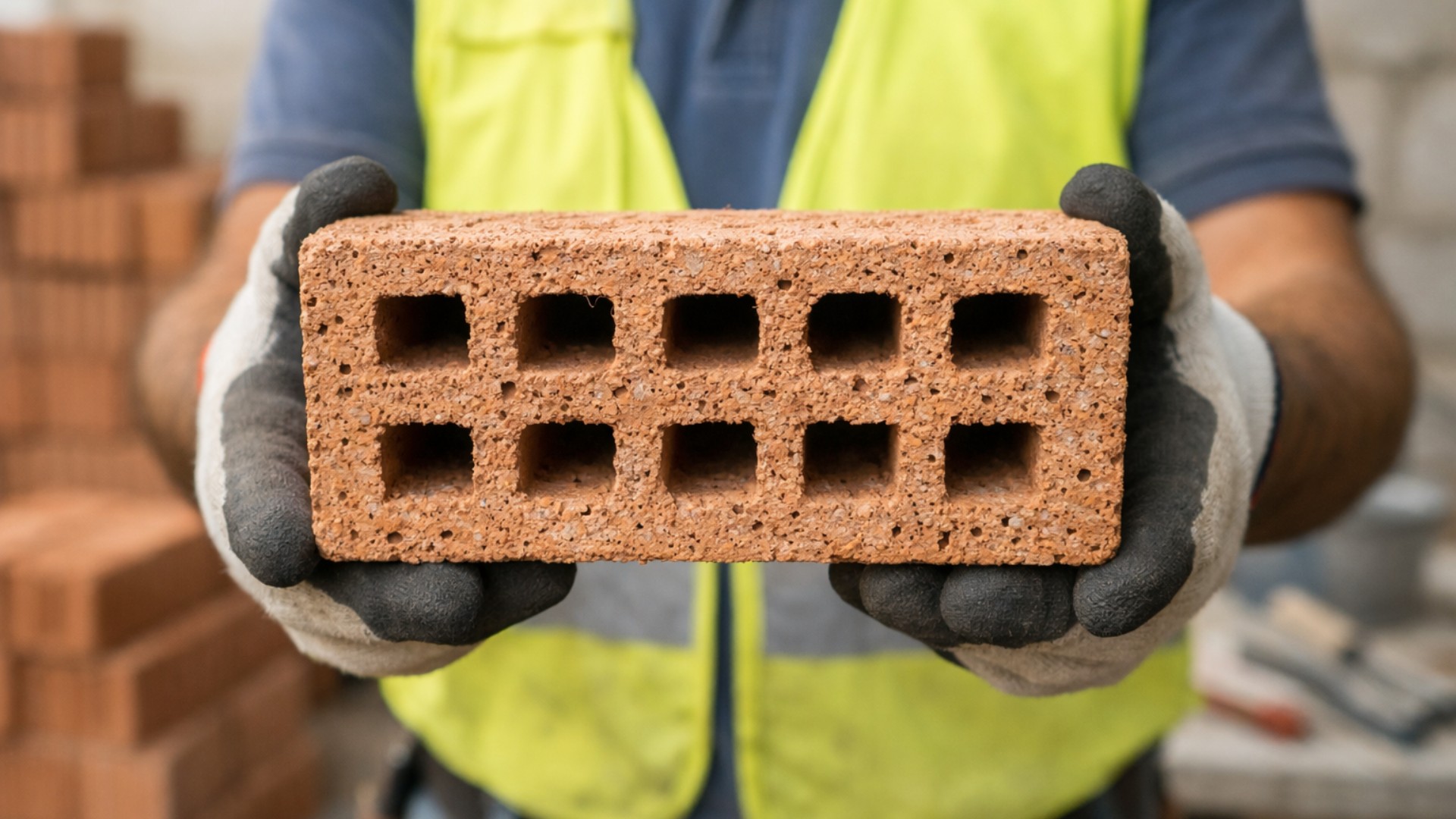
Scientists use sawdust mixed with clay to create a lighter brick, promising efficient thermal insulation and impressing by transforming waste into a solution for construction.
-
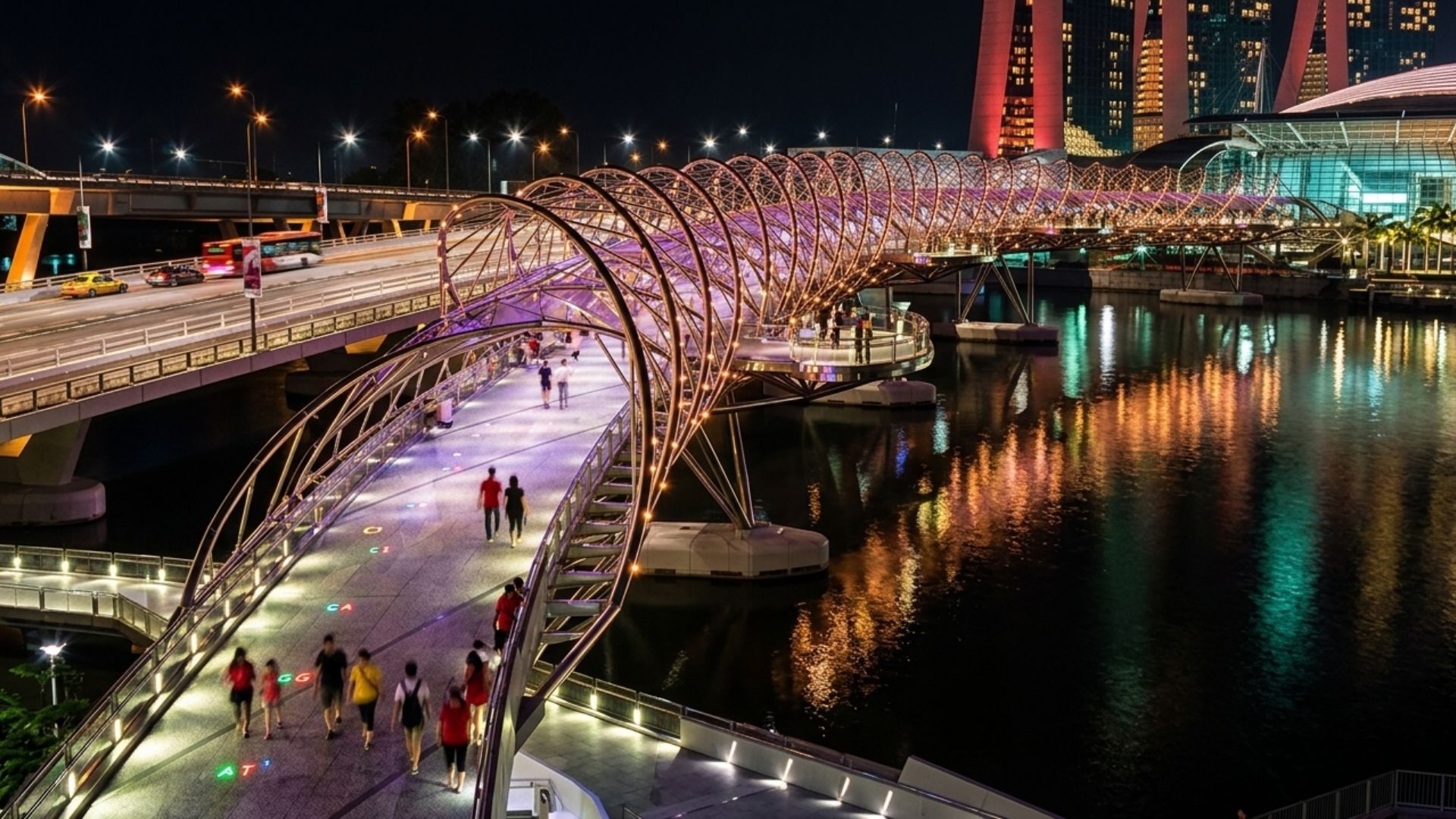
With a DNA shape, this bridge in Singapore draws attention in modern architecture and surprises tourists by transforming a simple crossing into an unforgettable visual experience in the urban heart.
-
Giant underwater pipeline begins to take shape with a R$ 134.7 million project at the Port of Santos: the 1.7 km structure uses 12-meter and 700 mm pipes to supply water to 450,000 people in Guarujá.

The 58.5% advance is presented as total physical progress, while 57% specifically refers to the widening of the shoreline, an indicator that explains why 5 km have already received sand in a planned total of 8.8 km.
From a technical perspective, the largest beach widening in Brazil aims to create a new protective strip against maritime erosion.
The declared focus is to reduce the sea’s advance over sidewalks, roads, and buildings nearby, while preparing the city to accommodate more visitors throughout the year.
How the Dredge Operates and Why the Bay of Babitonga Is Part of the Equation
The operational heart of the project is a dredge measuring 166.5 meters in length, working 24 hours a day.
On each trip, the vessel extracts sand from a depth of about 16 meters, with an approximate load of 18,000 cubic meters of sediment per cycle.
Up to the most recent milestone, 3.4 million cubic meters of sand have been deposited on the new shoreline, resulting from 394 operations between the extraction area and the coast of Itapoá.
The material’s origin is the Bay of Babitonga, a choice that connects two fronts: the recovery of the beach line and the deepening of the access channel to the ports of São Francisco do Sul and Itapoá.
In this arrangement, the dredge is no longer just a coastal construction tool but becomes a part of a regional framework.
By extracting sediments in the Bay of Babitonga, the operation contributes to the replenishment of the beach and, at the same time, integrates with the navigation and port access logic described in the project.
Technical Stages of Widening and What Is Monitored
The process of the largest beach widening in Brazil is described in stages that, when added together, explain how sand is removed from the seabed and becomes a new shoreline. The reported sequence is as follows:
Dredging of sand in the Bay of Babitonga, in a previously studied and licensed area.
Transport of the sediment by the dredge to the coastline of Itapoá.
Discharge of the sand at specific points along the shore, according to the project layout.
Spreading and leveling of the material with machinery on the sand strip.
Environmental and technical monitoring before, during, and after the work.
Monitoring is presented as a permanent component because the intervention involves sediments, temporary turbidity, and coastal dynamics.
Thus, the project links physical execution to continuous environmental monitoring, including the subsequent phase, when stability analysis of the new sand strip and planning for urban and tourism use of the newly created spaces begin.
Why the Project Is Called Unprecedented in Brazil
The classification as the largest beach widening in Brazil relies on two elements of its own scope: extension and volume.
The intervention in Itapoá plans the total deposition of 6.4 million cubic meters of sediment along the outline, more than double the volume used in the Central Beach project of Balneário Camboriú.
Besides the volume, the project highlights integration with regional port activity.
Itapoá has the largest coastline in Santa Catarina and operates an expanding port terminal, benefiting from the deepening of the Bay of Babitonga.
In this context, the largest beach widening in Brazil is presented as a solution that combines coastal protection and logistical efficiency in a single operational arrangement.
Where Safety, Cost, and Transparency Enter the Local Discussion
When a city physically alters its edge with the sea, public debate often revolves around three axes: safety, cost, and transparency.
In the case of Itapoá, the reported investment is R$ 333 million, with execution monitored by percentages and goals for distance and volume.
The dimension of safety appears directly because the largest beach widening in Brazil is described as a strategy to contain erosion and protect urban areas.
The transparency axis tends to rely on objective metrics, such as the progress of 58.5%, the 5 km already expanded, and the number of 394 operations, which help to clarify the pace of sand deposition and the daily work rhythm of the dredge.
Expected Impacts on Tourism and the Local Economy
The public discourse surrounding the largest beach widening in Brazil associates the widening of the sand strip with effects on tourism and the local economy, mainly by providing more space for leisure activities and reinforcing coastal protection.
In practice, the project lists potential gains that connect with the daily lives of residents and visitors.
Among the described benefits are:
Coastal Protection: reduces the risk of erosion and the sea’s advance on urban areas.
Tourism: expands the sand strip, with the potential to attract more visitors and boost the local economy.
Safety: improves protection for residents and infrastructure near the shore.
Environment: helps preserve coastal ecosystems by reducing the impact of erosion.
Property Valuation: properties near the beach gain higher attractiveness.
Leisure: provides more space for activities, sports, and outdoor events.
This combination of effects is presented as the result of an intervention that is not limited to visual aspects.
In the project design, the largest beach widening in Brazil relies on a physical base sustained by sediment volume, regular dredging cycles, and monitoring to track how the new strip behaves.
What Is Needed to Complete the 8.8 km and Reach 6.4 Million m³
With 5 km expanded and 3.4 million m³ already deposited, the project still aims to complete 8.8 km in length and reach 6.4 million m³ of sand.
This final stretch tends to concentrate the most sensitive part of public communication, as it involves fine adjustments to the layout, unloading logistics, and coexistence with the daily use of the beach.
The expectation is that the coming months will focus on completing the remaining stretch, with increasing attention to post-work considerations.
In this phase, the monitoring and evaluation of the stability of the new sand strip gain importance, along with urban and tourism planning, as Itapoá begins to have more usable territory between the sea and the boardwalk.
Questions Residents Ask and What the Project Answers
The execution of the largest beach widening in Brazil tends to raise practical doubts, primarily about water, access, and the solution’s durability.
The project’s own account anticipates some points:
The color of the seawater may change during the work due to temporary sediment suspension, with a tendency to decrease as the material settles.
Access to the beach is usually not completely blocked, but sections may be rotated to allow safe passage for machinery and sand unloading.
The recovery of vegetation and dunes may be evaluated in later phases, as a stabilization measure, according to the approved environmental plan.
The sea may continue to advance even after the widening, because the work reduces the impact of erosion, but does not eliminate the natural action of the sea, highlighting the need for monitoring and possible maintenance over the years.
What to Observe Going Forward in Itapoá
To understand what lies ahead, it is worth observing three simple indicators: the evolution of total execution percentage, the actual length delivered in kilometers, and the total volume deposited.
These three numbers measurably translate the pace of the largest beach widening in Brazil and help minimize misunderstandings around isolated perceptions.
On the ground in the city, it is also important to observe how the operation of the dredge organizes itself in the Bay of Babitonga and how the discharge areas are alternated along the shoreline.
Given the coexistence with tourism, housing, and logistics, the predictability of work fronts and respect for isolated sections are fundamental conditions for the schedule to progress safely.
The largest beach widening in Brazil in Itapoá enters 2026 with 58.5% completed, 5 km already expanded, and 3.4 million m³ deposited, supported by a dredge of 166.5 m operating 24 hours a day and a cycle of 394 operations from the Bay of Babitonga.
For those who live in or visit the area, keeping track of official updates on the schedule and respecting the rotating work sections is the safest way to navigate the final phase without surprises.
Do you think the largest beach widening in Brazil will really reduce erosion in Itapoá in the long term, or will the city need new interventions in a few years?









-

-

-

-

-

13 pessoas reagiram a isso.