





 Português
  Inglês
  Espanhol
  5 min de leitura
  0 comentários


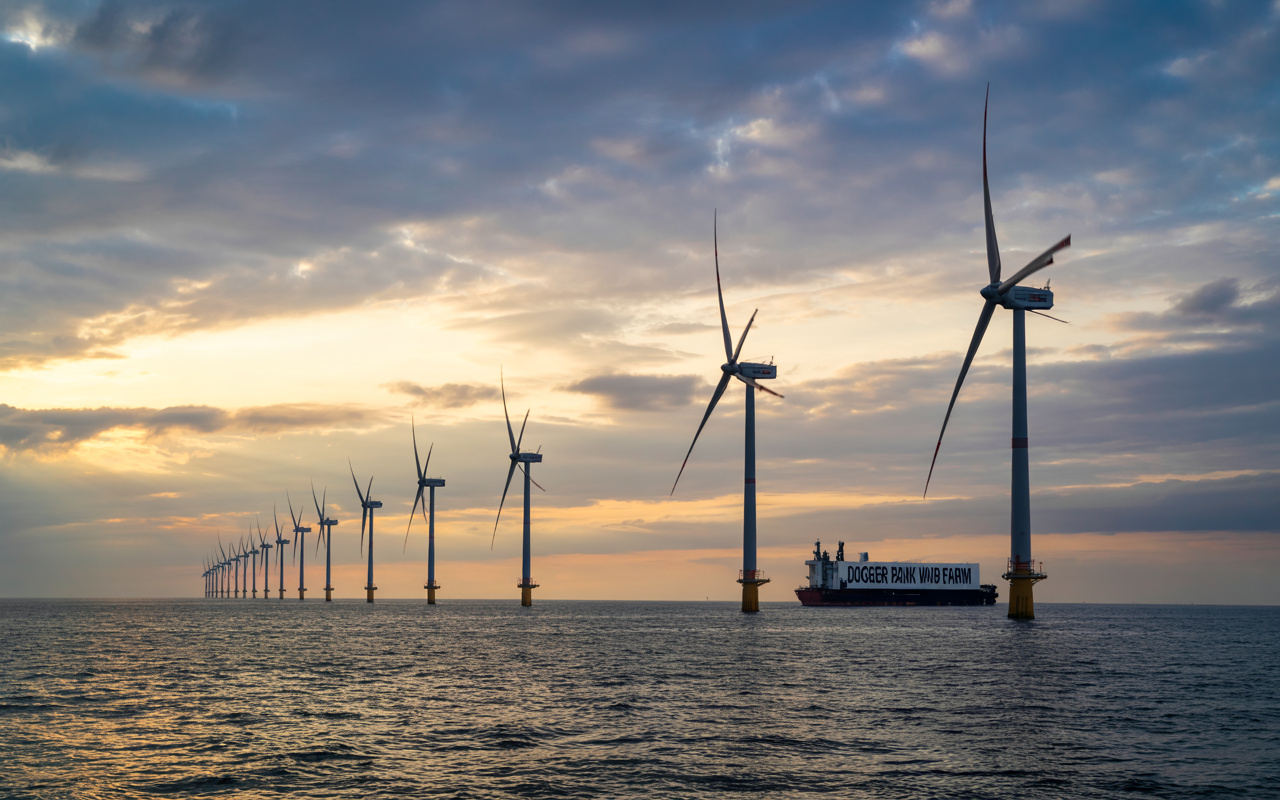
Dogger Bank, The Largest Offshore Wind Farm In The World, Has Started Operating In The UK And Will Generate Energy For 6 Million Homes With 3.6 GW Of Capacity.
In the middle of the North Sea, hundreds of kilometers from the English coast, a new type of megacity is emerging. But instead of skyscrapers, giant metal towers rise there, each with blades the size of airplane wings. This is the Dogger Bank Wind Farm, the largest offshore wind energy complex ever built on the planet — and one of the most ambitious projects in the global energy transition. With a total estimated capacity of 3.6 gigawatts (GW) at the end of construction, the complex will have enough energy to power 6 million British homes — equivalent to more than 15% of all households in the UK. To give an idea of the size, the total area occupied by the turbines will be larger than the Greater London area.
More than a cutting-edge engineering project, Dogger Bank is a symbol of the European energy future — where ocean winds replace coal, gas, and oil as the engines of the economy.
The Offshore Wind Farm That Challenges The Sea – Dogger Bank Wind Farm
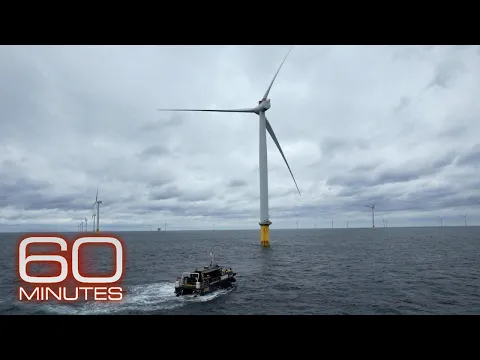

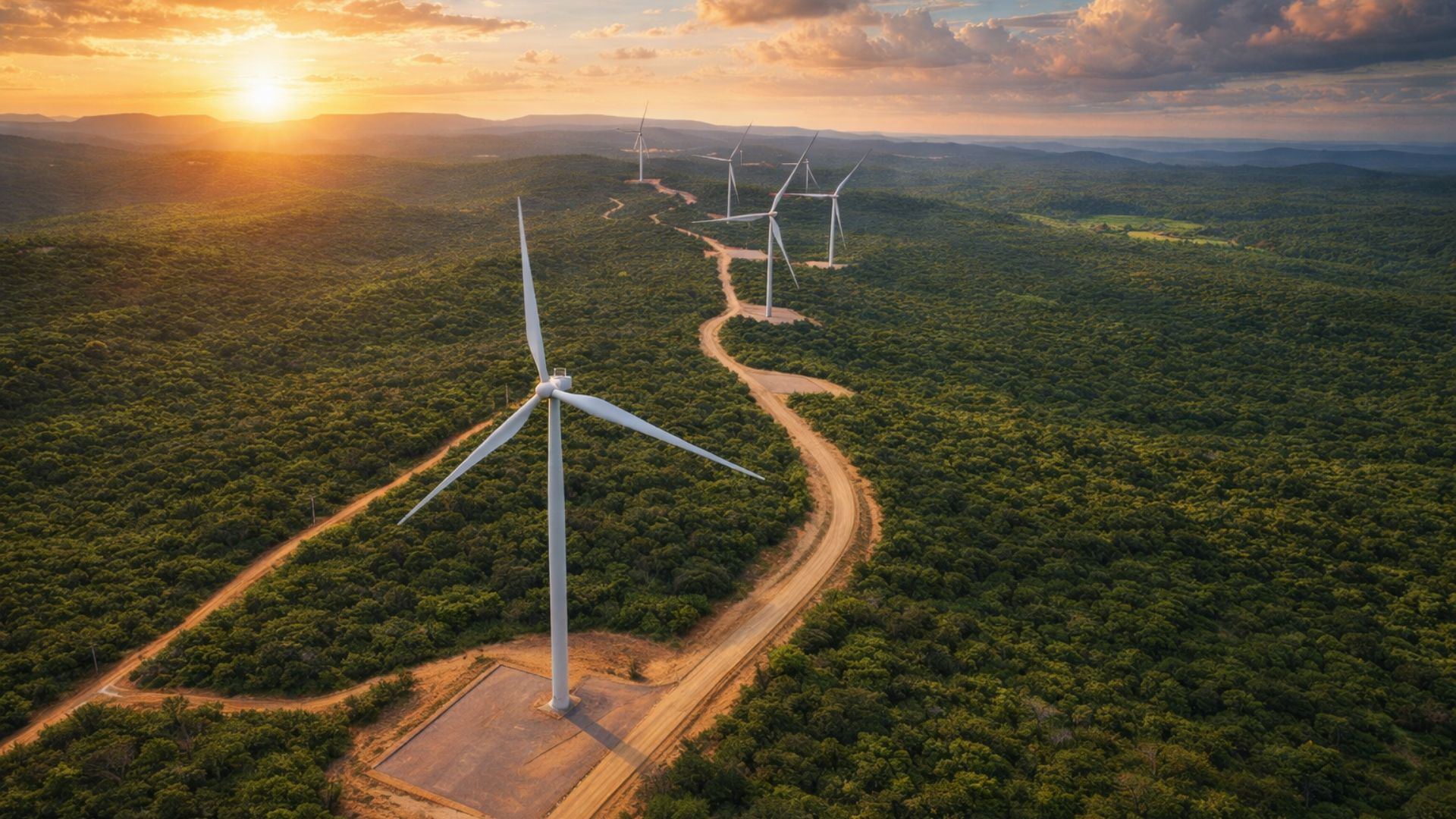
Dogger Bank is being built in an area with depths ranging from 20 to 40 meters, between 130 and 190 km from the northeast coast of England. This region is historically known as Doggerland, an ancient land bridge that connected the United Kingdom to mainland Europe during the Ice Age, now submerged.
-
231 turbines of 260 meters at 160 km from the coast, monopiles weighing as much as nine blue whales embedded in the North Sea, and a crane ship taller than the Eiffel Tower: Hornsea 3 will be the largest offshore wind farm on the planet by 2027, and its first components have already arrived in England.
-
International Certification Puts Senai Norte on the Renewable Energy Map and Expands Access to Essential Training for Qualified Wind Power Professionals
-
The Winds of the Northeast Are in Foreign Hands: Nearly 70% of the Region’s Wind Farms Are Owned by International Companies, with France, China, and Italy Leading Investments in Wind Energy in Brazil
-
Echoenergia’s Wind Farms Receive Diamond and Platinum Seals and Boost Carbon Credits with Projects that Prevent Large Volumes of Annual Emissions

The location was strategically chosen for three reasons:
- Strong and consistent winds, ideal for efficient generation.
- Relatively shallow waters, which facilitate the installation of the turbines.
- Sufficient distance from the coast, reducing visual and environmental impacts.
The project is divided into three main phases: Dogger Bank A, B, and C — each with a capacity of 1.2 GW. There are also plans for a fourth phase, Dogger Bank D, which could raise the total capacity to 4.8 GW in the future.
Giant Turbines: Each Generates Energy For 16 Thousand Homes
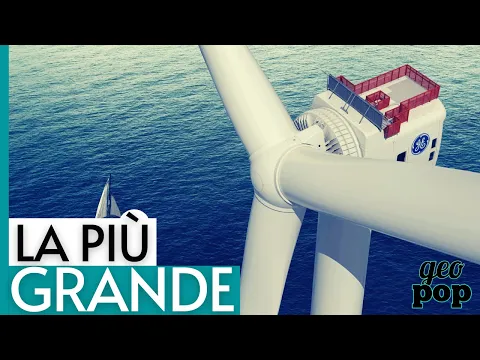
The turbines used in the project are of the Haliade-X class, developed by GE Renewable Energy. Each unit has impressive:
- 260 meters of total height (taller than the Eiffel Tower)
- 220 meters rotor diameter
- 13 MW capacity per turbine
Just one of these turbines can generate enough energy to power up to 16 thousand British homes per year. The complete complex will have more than 270 turbines when all phases are completed.
The towers are mounted on “monopile” bases, cylindrical structures that are driven directly into the seabed. Transport and installation require specialized vessels, such as the Voltaire from Jan De Nul, and state-of-the-art ships with dynamic positioning and 3,000-ton cranes.
Generation Capacity And National Impact Of The Dogger Bank Wind Farm
The United Kingdom is already a world leader in offshore wind energy, and Dogger Bank consolidates this position. With its 3.6 GW, the project represents:
- Nearly 30% of the current installed offshore capacity in the UK
- More than half of the new GW goal to be installed by 2030
- Energy to power 1 in every 5 homes in the country
In addition to reducing CO₂ emissions by more than 6 million tons per year, the project is attracting billion-dollar investments, creating thousands of direct and indirect jobs, and repositioning ports like Newcastle and Hull as logistics centers for the new green economy.
A Global Partnership Behind The Mega Project
The Dogger Bank Wind Farm is the result of a joint venture among three global giants:
- SSE Renewables (United Kingdom)
- Equinor (Norway)
- Vårgrønn (joint venture between Eni and HitecVision)
Funding for the first phase already totals US$ 6 billion, and the total estimated investment exceeds US$ 15 billion upon completion of the project.
The companies are betting on automation technologies, artificial intelligence, and remote monitoring to ensure that the park is one of the most efficient and well-managed in the world.
The Future Of Electricity In The United Kingdom Is At Sea
With the war in Ukraine, natural gas volatility, and the urgent need to reduce carbon emissions, the UK has accelerated its energy transition plans. And offshore wind energy is at the center of this strategy.
The British government’s goal is to reach 50 GW of offshore capacity by 2030. Dogger Bank alone accounts for over 7% of this goal, and will serve as a model for new installations not only in Europe but also in emerging markets like Brazil, Taiwan, India, and the United States.
Additionally, the UK plans to build state-of-the-art HVDC submarine transmission lines to connect Dogger Bank directly to the London and Manchester grids, with minimal energy loss.
Challenges And Continuous Innovation
Installing a wind farm of this magnitude in the middle of the sea is no simple task. The main challenges faced by the team include:
- Severe weather conditions, which delay maritime operations.
- Complex logistics, with equipment weighing up to 700 tons.
- Continuous environmental monitoring, to preserve marine flora and fauna.
To overcome these obstacles, the Dogger Bank Wind Farm adopts the latest in automation: underwater drones, real-time climate sensors, predictive software, and a digital platform that integrates data on generation, maintenance, and weather 24 hours a day.
A Milestone In The Global Energy Transition
Dogger Bank is not just a British project. It is a symbol of the new energy era taking shape on the planet. It shows that it is possible to think big, execute with excellence, and drastically reduce dependence on fossil fuels — without compromising economic growth.
For engineers, public managers, and investors in the energy sector, Dogger Bank serves as an international benchmark, both for its scale and for its execution capability. And, more importantly: it is a reminder that the major projects of the future will no longer be centered on oil, but on wind, sun, and the collective intelligence of humanity.









Seja o primeiro a reagir!