





 Portuguese
  English
  Spanish
  4 min of reading
  0 comments


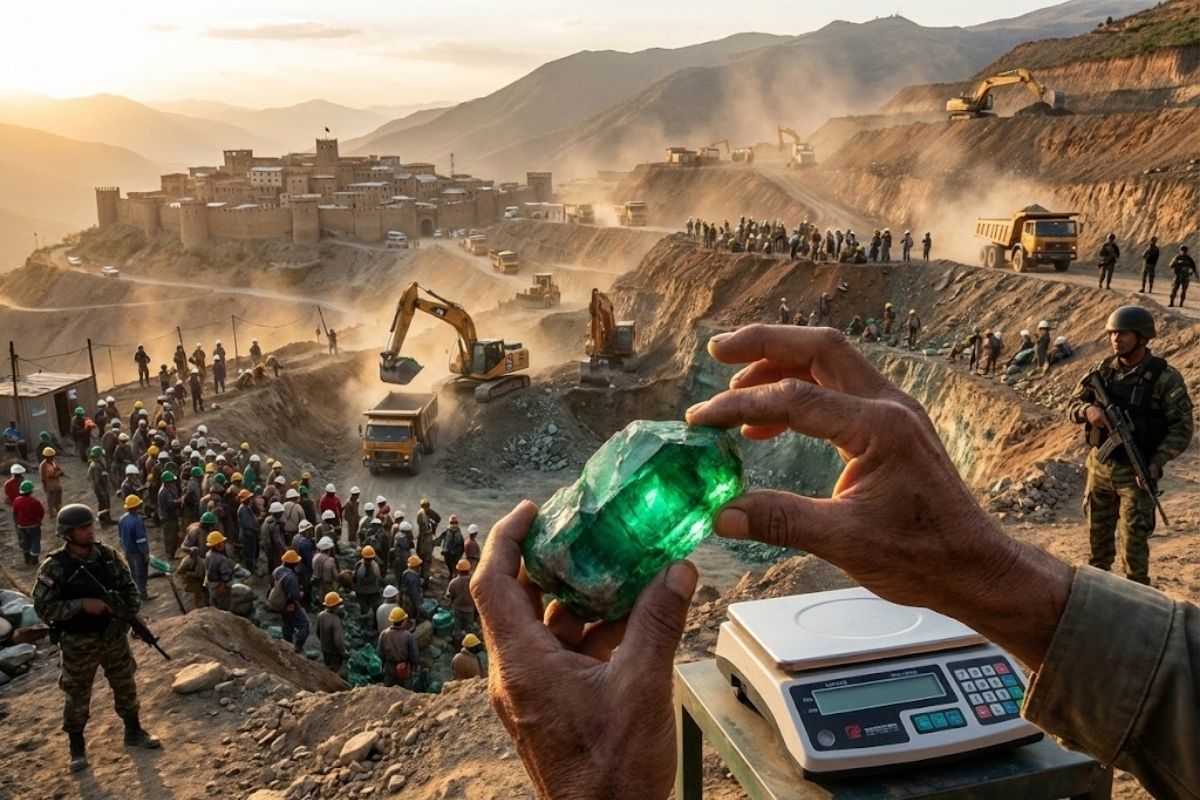
With Concentrated Deposits in Boyacá, Municipalities Like Muzo, Quípama, Maripí, and Pauna Support the Mining of the World’s Largest Emerald Producer, While Discoveries Like the Nose of the Devil in 2012 Attracted Crowds, Required Police Blockades, and Exposed the Contrast Between Wealth and Conflicts That Marked Decades in the Sector
The largest emerald producer in the world is located in South America and carries a central name in the international market: Colombia. The country leads the global supply of the gemstone and maintains economic and geological relevance even under social, political, and security challenges that have accompanied the activity for decades.
Beyond its commercial weight, Colombian mining supports cities, drives exports, and also reveals a history of disputes for territories rich in high-value stones. In recent years, the sector has tried to shift towards a logic of professionalization, investment, and control, without erasing the marks of the past.
Colombia at the Top and the Economic Strength of Emeralds

Colombia appears as a historical and economic reference in emeralds, accounting for a large part of the international supply and sharing the spotlight with countries like Zambia and Brazil.
-
Maria Branyas Morera lived to be 117 years old, eating three yogurts a day without developing cancer or dementia, and when scientists analyzed her DNA, they found a secret that no one expected: her biological clocks indicated an age two decades younger than her actual age.

-
Upside Down House transforms abandoned warehouses from the 1970s, blending art with concrete and steel engineering, becoming a phenomenon in South Korea and impressing with a surreal experience that attracts tourists from around the world.

-
Brazil became 18 square kilometers smaller in the new official update from IBGE, which redrew the boundaries of 784 municipalities in 13 states and even changed the names of cities that you might know, such as Açu, which is now called Assú.

-
Stephen Hawking said that the worst enemy of knowledge is not ignorance but the illusion of knowledge, and he dedicated his entire career to proving that science dies when people act as if they already have all the answers.


Within this context, the gemstone consolidates as a significant slice of exports and as an asset that constantly attracts the global market’s attention.
According to the entity representing producers, Colombia exports about US$ 64 million per year in emeralds.
The figure is considered relevant, but also as a sign of margin for growth, provided there is more investment and control in the activity.
Boyacá as the Center of Rare Deposits
The Boyacá region, in the center of the country, is presented as the heart of Colombian mining.
Municipalities such as Muzo, Quípama, Maripí, and Pauna concentrate deposits recognized for their intense color and high purity of the stones, reinforcing the geological weight that sustains the country’s leadership.
In practice, this concentration makes entire cities depend directly or indirectly on the mineral cycle, with economic impacts spreading through trade, services, and local routines.
It is also in this environment that specific discoveries can turn into large-scale events within hours.
Pauna and the Green Fever of the Nose of the Devil in 2012
In 2012, Pauna gained international prominence after workers found emeralds during the construction of a road in an area known as Nose of the Devil.
The episode is described from a specific scene: a worker was drilling a rock with a hydraulic hammer when he came across a bright green stone.
The news spread quickly and attracted hundreds of people in search of new stones.
To avoid disorder and accidents, the police blocked the road and the slope where the emeralds were found.
One of the stones was sold for about 4 million Colombian pesos and was destined for the United States.
Extreme Wealth and Green Wars in the 1960s and 1980s
The high value of the mineral is accompanied by a harsh history.
In the 1960s and 1980s, disputes over mines and territories rich in emeralds fueled the so-called green wars, armed conflicts between families and producer groups that left hundreds dead.
This past casts a persistent shadow over the activity, as it shows how the control of extraction areas can turn into violent disputes when wealth is concentrated and mediation capacity is low.
The memory of this period remains a reference whenever security and governance in the sector are discussed.
Modernization and Attempt at Legal and Sustainable Production
The sector seeks to professionalize and attract investments to expand production legally and sustainably.
The directive presented is clear: grow with control, reduce risks associated with informality, and increase export capacity, keeping Colombia as a market reference.
At the same time, the challenge is to reconcile economic expansion with social stability and security, especially in regions where mining structures local daily life.
Modernization, in this context, is not just technology or capital, but also organization and rules.
Do you think modernization can reduce the historical conflicts of mining, or will the logic of dispute over deposits always return when the stone is worth millions?








-

-

-

-

-

-

125 pessoas reagiram a isso.