





 Portuguese
  English
  Spanish
  5 min of reading
  0 comments


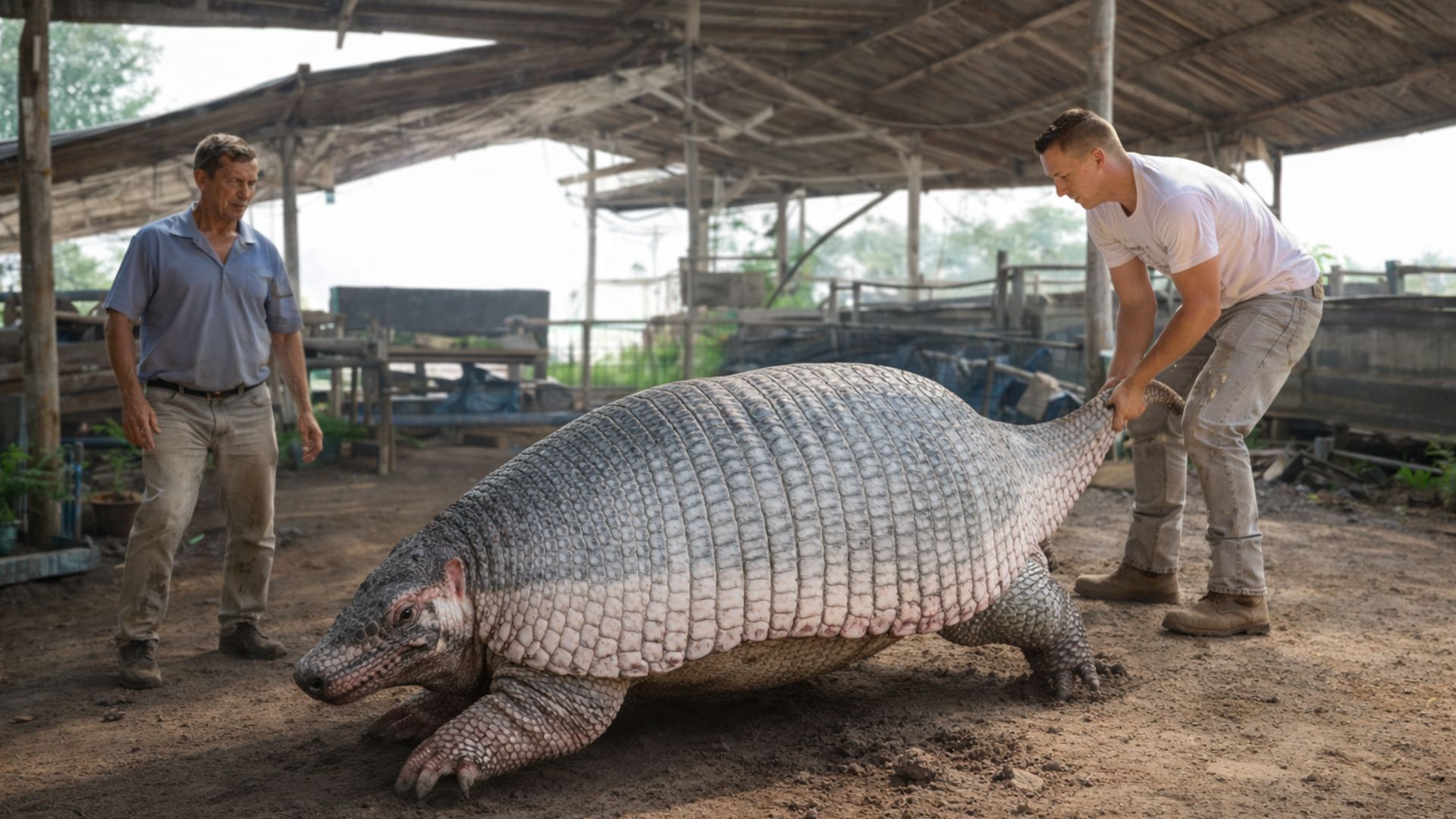
Recent Videos Reveal Little-Known Behavior of One of the Rarest Animals in Brazil, Highlighting Impressive Size, Digging Strength, Environmental Impact, and Conflicts with Human Activities in Rural Areas, According to Records That Went Viral on Social Media.
Videos circulating on social media in recent days have rekindled curiosity about a little-known animal even among those living in rural areas of Brazil.
The images, released by the channel Fatos Rurais, show an unusually large armadillo digging in a private property and, in another recording, walking slowly along a dirt road.
The size of the animal and the ease with which it moves the soil drew attention and raised questions about the species.
-
The eggshell that almost everyone throws away is made up of about 95% calcium carbonate and can help enrich the soil when crushed, slowly releasing nutrients and being reused in home gardens and vegetable patches.

-
This farm in the United States does not use sunlight, does not use soil, and produces 500 times more food per square meter than traditional agriculture: the secret lies in 42,000 LEDs, hydroponics, and a system that recycles even the heat from the lamps.

-
The water that almost everyone throws away after cooking potatoes carries nutrients released during the preparation and can be reused to help in the development of plants when used correctly at the base of gardens and pots, at no additional cost and without changing the routine.

-
The sea water temperature rose from 28 to 34 degrees in Santa Catarina and killed up to 90% of the oysters: producers who planted over 1 million seeds lost practically everything and say that if it happens again, production is doomed to end.


The scenes went viral precisely because they contrast with the more common image of the armadillos seen in the country.
Unlike smaller species, the animal depicted in the videos is identified as the giant armadillo, noted as the largest armadillo in the world.
According to the information presented by Fatos Rurais, this is a rare species, with solitary and nocturnal habits, that spends a large part of its life in underground tunnels.
Giant Armadillo: Giant Species and Difficult to Observe
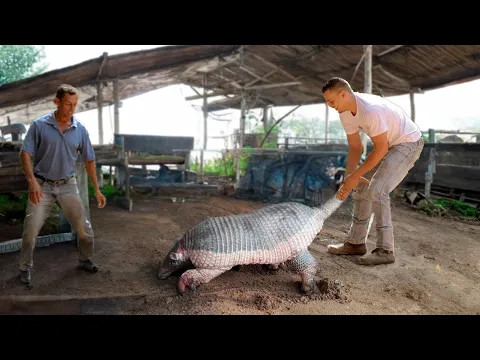

Despite living in regions like the Pantanal, finding a giant armadillo is described as a rare event.
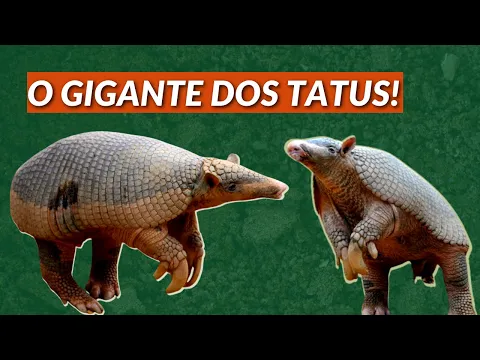
The animal mainly comes out at night to feed, with a diet based on ants and termites, and can spend most of its life protected within deep burrows.
For those lucky enough to see it, the visual impact is immediate.
According to the content presented by Fatos Rurais, the giant armadillo can reach a length of 1.5 meters, weigh up to 60 kilograms, and have claws that reach 20 centimeters on the third toe, considered the longest in the animal kingdom.
This set of characteristics explains the impressive digging ability showcased in the recent videos.
Isabel, the Giant Armadillo Who Changed Scientific Knowledge
Among the cited specimens, one female gained international prominence.
Named Isabel, she became a reference for researchers by helping reveal previously unknown information about the species.
According to the account reproduced by Fatos Rurais, until a few years ago, there was a scarcity of basic data on the behavior and reproduction of the giant armadillo.
It was with the aim of investigating this almost unknown animal to science that, in 2010, researcher Arnold des Bz, associated with the Institute for the Conservation of Wildlife, began work in the Pantanal using camera traps.
In the beginning, he reportedly spent nights trying to follow the female on foot and, at dawn, he would search for the holes of her burrows to confirm her passage.

Documentary Revealed First Records of Cub
The discoveries associated with Isabel gained worldwide attention in 2017.
In that year, a BBC documentary presented the results of the first seven years of monitoring.
Among the scenes highlighted in the material cited by Fatos Rurais are the first images ever recorded of a giant armadillo cub.
The camera traps caught Isabel sharing a burrow with a male.
About five months later, the first cub was recorded.
This monitoring allowed researchers to confirm that the female gives birth to only one cub at a time and clarify previously unknown aspects, such as gestation.
Underground Burrows Create Shelter for Other Species
The monitoring over the years also helped identify the preferred areas of the giant armadillo.
According to the gathered information, the species typically chooses the so-called murundus, small elevated fields, usually with a termite mound in the center and typical Cerrado vegetation around.
In these locations, the armadillo digs its burrows under the termite mound.

This strategy offers protection against predators such as ocelots and jaguars.
The images captured in the burrows associated with Isabel also showed that, when the female was not at the site, dozens of other species used the space.
Small rodents, southern tamanduas, and even capybaras were recorded using the burrows.
The animals take advantage of the spot to protect themselves from heat, escape predators, or cool down.
The giant armadillo, when digging, ends up altering the environment and creating new habitats, according to the account.
Reduced Population and Large Home Ranges
Estimates cited in the material indicate that, in 2021, the population density was about seven individuals per 100 square kilometers.
The home range of each animal is estimated to be approximately 25 square kilometers.
Each armadillo can travel more than 1.5 kilometers in a single night, especially males, which move more when searching for females in estrus.
Data from ICMBio mentioned by Fatos Rurais points to a reduction of about 30% in the population of the giant armadillo over 24 years.
Among the main threats cited are hunting, deforestation, roadkill, and fires.
Case in Cassilândia Exposed Digging Strength
Even though it is rare, the giant armadillo sometimes gets involved in situations that attract attention due to their proximity to inhabited areas.
One of the cited cases occurred in Cassilândia, Mato Grosso do Sul.
In this incident, an animal weighing more than 40 kilograms put the structure of a house at risk by digging underneath the property.
The Military Environmental Police were called after a site employee reported that the armadillo had opened a hole with more than 50 centimeters beneath the residence.
According to the account, the continuation of the digging could cause the house to collapse.
After unsuccessful attempts to make the animal leave, the team had to break the flooring and dig until they found it.
Uninjured, the armadillo was returned to nature.
Conflict Between Giant Armadillos and Beekeepers Grows in the Fields
Another point addressed by Fatos Rurais is the conflict between giant armadillos and beekeepers, particularly in Mato Grosso do Sul.
The deforestation of the Cerrado, described as one of the main habitats of the species, has reduced the food supply.
As a result, the animal has started looking for alternatives to survive.
With fewer termites and ants available, the giant armadillo began attacking beehives in search of bee larvae.
The reported losses reach thousands of reais for honey producers.
There are records of reprisals, including the death of animals, characterized as environmental crimes.
Researchers point out that habitat fragmentation isolates armadillos in areas with few food options.
Nocturnal by nature, the animal quickly learns to access beehive boxes.
Videos show the armadillo hanging, pushing, and insisting until it reaches the larvae.
These episodes have contributed to the negative image of the species among rural producers.
How to reconcile the preservation of one of the rarest animals in Brazil with the reality of producers who directly depend on environmental balance to maintain their activities?









-

-

-

-

6 pessoas reagiram a isso.