





 Portuguese
  English
  Spanish
  3 min of reading
  0 comments


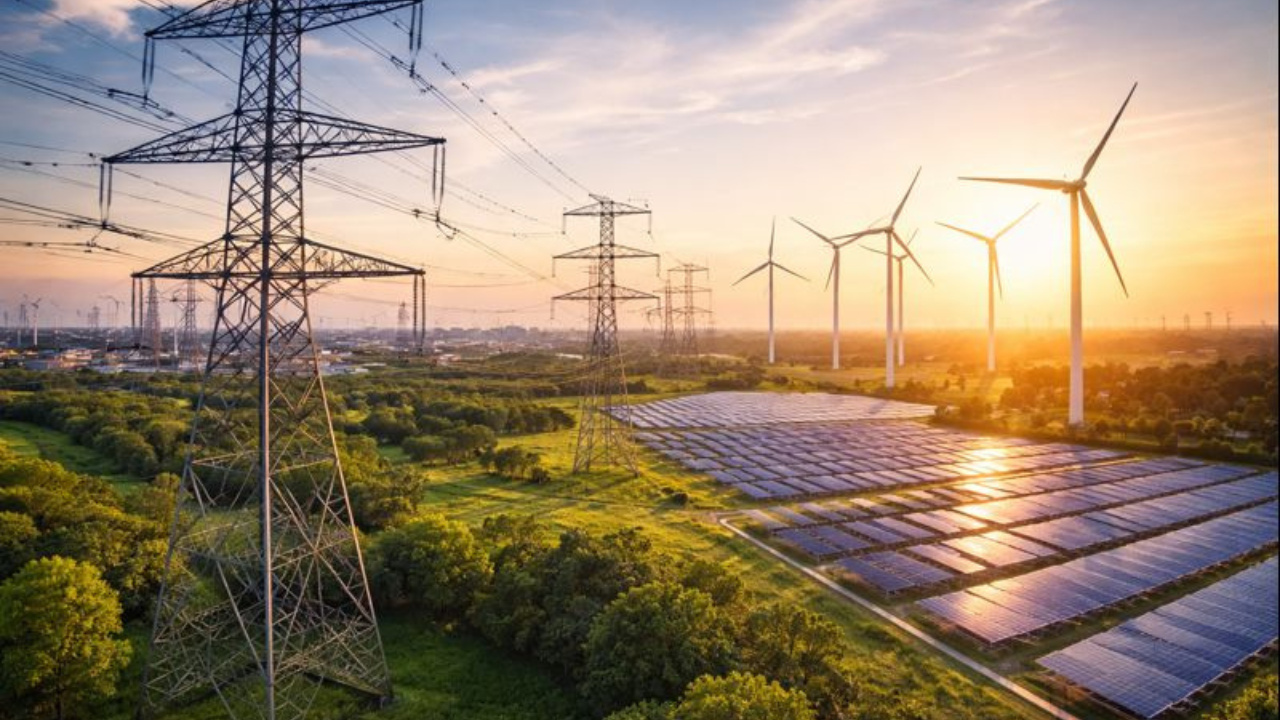
CCEE Data Shows Strong Migration of Consumers and Expansion of the Free Energy Market in the Brazilian Electric Sector.
The free energy market registered significant progress in Brazil in 2025, with 20,626 consumers migrating from the regulated model to the free contracting environment between January and November, according to official data from the CCEE.
The movement occurred throughout the country, gained strength outside large urban centers, and reflects the direct impact of the opening of the electric market, which allows consumers to choose their suppliers, negotiating prices, deadlines, and generation sources.
This growth signals a structural transformation in the Brazilian electric sector, driven by the pursuit of efficiency, cost predictability, and greater autonomy.
-
A new Brazilian shopping center worth R$ 400 million will be built in an area equivalent to more than 4 football fields, featuring 90 stores, 5 cinemas, a supermarket, a college, and parking for 1,700 cars, potentially generating 3,000 jobs.

-
Larger than entire cities in Brazil: BYD is building a 4.6 km² complex in Bahia with a capacity for 600,000 vehicles per year, but the discovery of 163 workers in conditions analogous to slavery has shaken the entire project.

-
With an investment of R$ 612 million, a capacity to process 1.2 million liters of milk per day, Piracanjuba inaugurates a mega cheese factory that increases national production, reduces dependence on imports, and repositions Brazil on the global dairy map.

-
Brazilian city gains industrial hub for 85 companies that is equivalent to 55 football fields.


Services Sector Leads Consumer Migration in 2025
CCEE data shows that the migration of consumers was led by the Services sector, accounting for 6,478 new consumer units during the analyzed period.
Next, the Commerce sector follows, with 3,945 adhesions to the free energy market.
Together, these two segments concentrate most of the migrations recorded in 2025.
The explanation lies in the wide reach of these businesses, present in practically all regions of the country.
In addition to the growing need for control over operational costs in a challenging economic scenario.
Expansion of the Free Market Advances Beyond the Southeast-South Axis
Although the Southeast and South still account for the largest base of consumers, the advancement of the free energy market has intensified outside the traditional axis.
According to CCEE, the Northeast registered more than 3,370 new consumers, with highlights for Bahia, Ceará, and Pernambuco.
In the Central-West, over 2,000 new migrations were recorded, led by Mato Grosso.
The North added around 2,000 adhesions, predominantly from Pará.
Even so, the Southeast and South together accounted for more than 14,000 new units, with São Paulo leading the national ranking, with almost 6,000 migrations during the period.
Free Market Ceases to Be a Niche and Gains National Scale
For CCEE, the numbers indicate that the free energy market is no longer a niche restricted to large industries located in specific economic hubs.
Now, the model is consolidating as a viable alternative for different consumer profiles in various regions of the country.
This movement anticipates challenges and opportunities associated with the full opening of the electric market, which is expected to significantly increase the number of participants in the coming years.
Furthermore, the growth reveals greater institutional and regulatory maturity within the Brazilian electric sector.
Understand How the Free Energy Market Works
In the free market for energy, consumers can negotiate directly with generators and marketers aspects such as price, contract duration, and generation source, including solar, wind, or hydropower.
This differs from the regulated market, where energy purchasing must occur through the local distributor, with tariffs defined by regulatory rules.
Currently, access to the free market is still restricted to consumers connected at high voltage, such as industries and medium to large businesses.
However, this scenario is about to change definitively.
Opening of the Electric Market Progresses with New Legal Framework
Law 15.269 of 2025 established the official timeline for the total opening of the Brazilian electric market.
The rule provides a period of up to 24 months for industries and low-tension businesses to migrate and up to 36 months for residential consumers.
Thus, for the first time, all Brazilians will be able to exercise the right to choose their energy supplier, a historic milestone for the Brazilian electric sector.
Free Market Already Accounts for 43% of Electricity Consumption in the Country
Currently, the free energy market comprises around 82,000 consumer units and accounts for approximately 43% of all electricity consumed in Brazil.
About a decade ago, this participation was just over 20%, highlighting a significant advancement of the model.
According to CCEE, the growth reflects the search for cost reduction, budget predictability, and contractual flexibility.
The ability to align energy consumption with sustainability goals, factors that are increasingly strategic for companies of all sizes.










-

-

-

-

5 pessoas reagiram a isso.