





 Portuguese
  English
  Spanish
  3 min of reading
  0 comments


The Tragic Maritime Accidents That Resulted in the Loss of More Than 400 Million Dollars in Luxury Cars, See the Circumstances and the Financial Consequences of the Disasters Involving Vehicle Carrier Ships.
In the deep blue of the ocean lie sunken fortunes, narratives of maritime tragedies where luxury and loss collide with devastating force. The maritime transportation of luxury cars, an industry that moves millions, faces immense risks, evidenced by spectacular accidents that resulted in astronomical financial losses. The saga of these car carriers is not just a story of material damage, but a warning about the complexity and inherent dangers of maritime transport.
From the dramatic listing of the UEG Osaka to the fire on the Sincerity Ace, and the tragic sinking of the MV Baltic Ace, each incident unfolds a dark chapter of the sea, highlighting the technical challenges, climatic adversities, and severe economic repercussions. Unraveling how more than 400 million dollars in value were swallowed by the ocean abyss, and bringing to light the lessons learned at the intersection of opulence and calamity.
Hoegh Osaka Ship
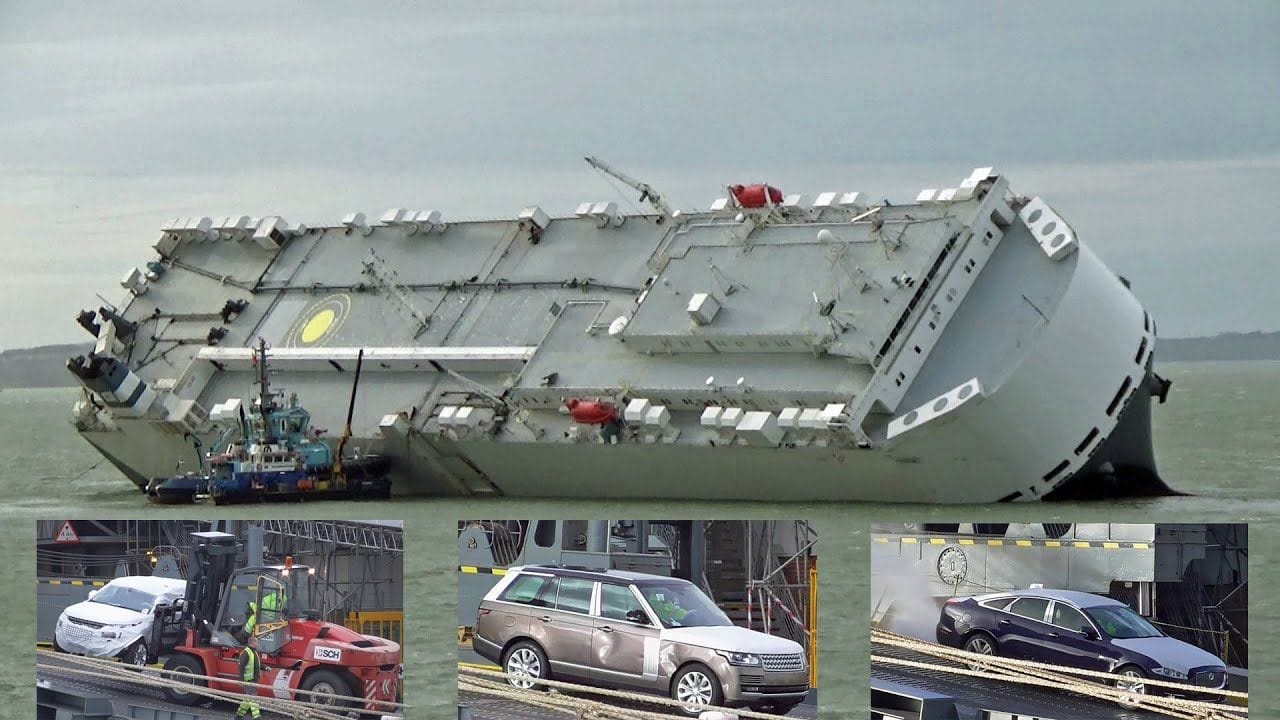
On January 3, 2015, the Hoegh Osaka, operating under the Norwegian flag, faced a disaster while sailing from Southampton, England, to Bremerhaven, Germany. The incident, marked by a severe list that threatened the ship’s stability, resulted in the loss of valuable luxury cars, including Land Rovers and Rolls-Royces, part of a total cargo of 10,000 vehicles. Salvage efforts managed to rescue the ship, but the financial losses were astronomical.
-
São Paulo surprises the world with a colossal railway network project that promises over 1,000 km of tracks, R$ 194 billion in investments, and 40 projects connecting the capital to the interior with fast and sustainable trains.
-
The world’s largest escalator, measuring 905 meters in China, reduces urban travel time from 1 hour to about 20 minutes and transforms mobility in mountainous regions with an engineering solution adapted to the terrain.

-
A R$ 300 million logistics giant is taking shape in Serra with over 100,000 m² and raises a question: how can this transform e-commerce and distribution in the state?

-
Could Uber Rides Lose Minimum Fare? Understand What’s Happening!


Sincerity Ace
The tragedy was not limited to this case. The Sincerity Ace, in December 2018, suffered a fatal fire in the Pacific, leading to the loss of 3,500 Nissan vehicles and raising an alert about the dangers of transporting electric vehicles by sea.
MV Baltic Ace
The incident of the MV Baltic Ace in December 2012, another dramatic example, resulted in the loss of 1,400 Mitsubishi cars after a collision in the North Sea, emphasizing the risks of navigation and maritime transport.
Cougar Ace
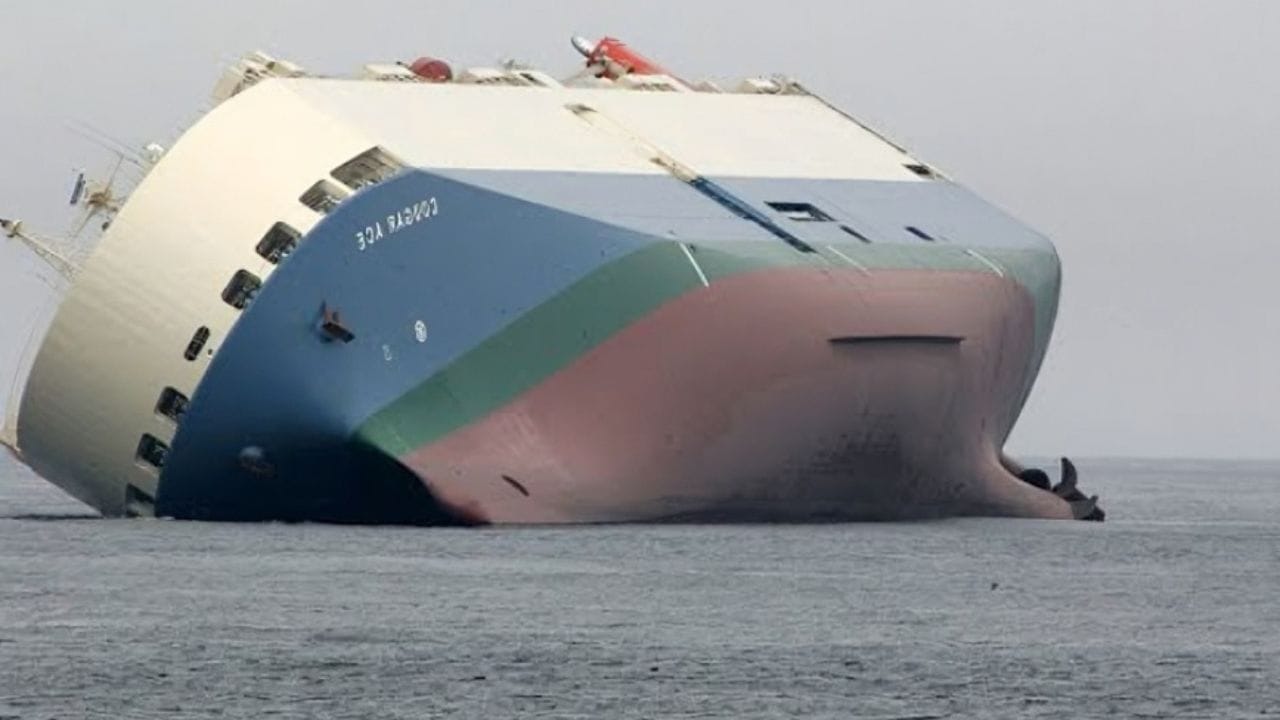
In addition to these, the Cougar Ace, a Singapore-flagged ship, highlighted the dangers in July 2006, nearly sinking with 4,700 new Mazda vehicles onboard, after a ballast transfer error. The recovery was only possible nearly a month later, with losses estimated at 103 million dollars.
These maritime disasters involving car carriers underscore the fragility of maritime transport and its massive financial implications, reiterating the need for stringent operational procedures and enhanced safety measures.
But, Do You Know What the Ship That Transports Cars Is Called?
Diving deeper into the discussion of maritime transport, the Ro-Ro ship stands out for its efficiency in transporting cars, allowing vehicles to be simply driven in and out of the ship, minimizing damage and speeding up the loading and unloading process. This type of ship is essential in the automotive sector, especially for the transport of luxury cars, whose exorbitant value requires additional care in handling and transport.
Car carriers, in turn, play a crucial role in global trade, transporting a diversity of products beyond vehicles. Oil tankers, for example, are essential for transporting oil and its derivatives, while tankers handle a variety of bulk liquids. Gas carriers transport liquefied gases under controlled conditions to avoid accidents. Container ships, perhaps the most well-known, move standardized containers, facilitating logistics and the distribution of manufactured goods and various products.
Specialized Ships
In addition to these, there are specialized carrier ships for specific cargo, such as general cargo ships, which can transport varied items, from heavy equipment to perishable cargo. This flexibility makes general cargo ships a valuable option for routes and loads that do not fit the standards of container ships or other specialized vessels.
Maritime transport, therefore, is a complex web of specialized operations that connect markets around the world, with each type of ship playing a vital role in the global supply chain. The integration of these different types of ships and cargo underscores the complexity and scale of maritime trade, essential for the global economy.









Seja o primeiro a reagir!