





 Portuguese
  English
  Spanish
  5 min of reading
  0 comments


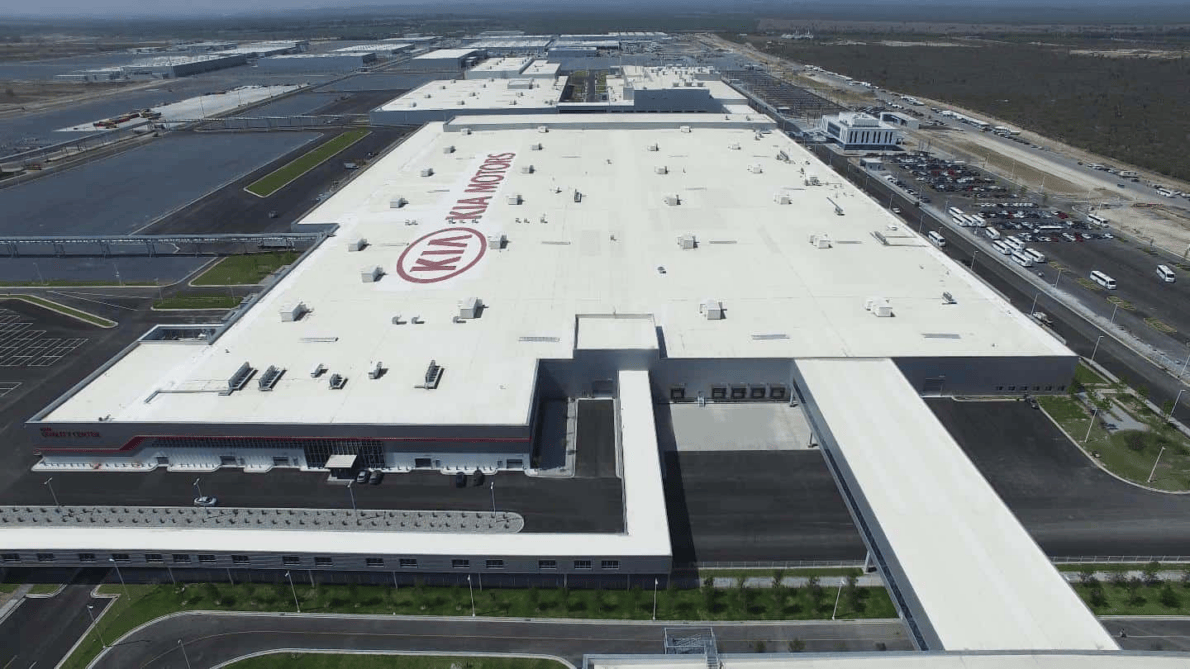
A Kia Motors Plant In India Becomes The Scene Of A Parts Theft Scheme. Mystery And Lack Of Leads Trigger A Global Alert For The Automotive Industry.
One of the biggest recent industrial scandals involves South Korean automaker Kia Motors and its factory in India, where more than 900 engines have mysteriously disappeared over nearly five years without raising immediate suspicions.
The plant located in Penukonda, in the Sri Sathya Sai district, in the Indian state of Andhra Pradesh, is responsible for producing hundreds of thousands of vehicles annually.
However, an internal audit conducted at the end of operations in 2024 revealed the disappearance of hundreds of engines, indicating a highly organized scheme that may have involved several employees.
-
The Argentine government celebrates the lowest poverty rate in 7 years, but experts warn that the methodology has changed, real wages have fallen, unemployment has risen, and the number of people on the streets of Buenos Aires has increased by 57% since Milei took office.

-
The 2026 electric Vitara arrives in Brazil and proves that Suzuki is not leaving: 4×4 traction, 184 hp, 61 kWh LFP battery, 293 km range, R$ 259,000, and a trunk capacity of 224 L.

-
7.8 magnitude earthquake in Indonesia frightens the population, triggers tsunami alert, and hits an island with over 200,000 inhabitants this Thursday.

-
Google will finally let you change that embarrassing Gmail address you created in your teenage years without losing any accounts, logins, or old emails: the feature is already available in the United States.


Audit Reveals A Silent Scam
The revelation came to light only after a thorough review of inventories, carried out as part of the 2024 annual balance, according to information from the Times of India.
The audit uncovered inconsistencies that were later attributed to the systematic disappearance of entire engines — bulky, heavy, and high-value components.
Since then, the Indian police have intensified their investigations, with a special focus on employees and former employees with direct access to the logistics and assembly sectors.
A police spokesperson, in an interview with the PTI agency, confirmed that the thefts began in 2020 and were carried out over five years, without any alarms being triggered or irregularities detected by internal control systems.
Focus On The Assembly Line And Internal Logistics
Initially, there was a hypothesis that the engines were being diverted during transportation between production units.
However, the investigations indicate that the scheme was executed directly within the factory itself, taking advantage of gaps in logistics and inventory control.
The Penukonda plant supplies the local market with popular Kia models such as Sonet, Seltos, Carens, and the recent Syros, an SUV aimed at a young audience.
With an annual production ranging from 300,000 to 400,000 units, the volume of parts in circulation is so large that a specific disappearance could easily go unnoticed, especially in an environment with highly automated processes and rotating teams.
Still, industry experts claim it is unusual for such a significant volume of components to disappear without leaving concrete traces.
Suspicion Of Internal Acting And Parallel Market
Authorities believe that the engines were sold illegally in the parallel market, where there is high demand for original parts from renowned manufacturers.
Complete engines are high-value items, potentially fetching tens of thousands of dollars on the black market, especially if resold to clandestine workshops or exported to neighboring countries with less stringent tax regulations.
The police are working on the hypothesis that the scheme involved not only the physical diversion of the engines but also the forgery of records, in order to mask the losses as defects or recycled scrap.
This type of corporate crime requires technical knowledge, privileged access, and, above all, sophisticated planning.

Kia Has Not Yet Issued An Official Statement
Despite the seriousness of the situation, Kia Motors has yet to issue a detailed official statement regarding the case.
The company has only confirmed that an audit detected inconsistencies and that it is cooperating with the investigations.
According to experts in industrial security and logistics, the case represents a concerning alert for the global automotive industry, where production growth and process digitalization do not guarantee, by themselves, absolute control over the physical inventory.
Companies with extensive supply chains and multiple operational units are especially vulnerable to internal fraud, and cases like Kia’s show that human supervision still plays a crucial role, even in environments with a strong presence of automated technologies.
Repercussions In The Industry And Ongoing Investigations
The case has generated international repercussions and has been closely monitored by automotive industry experts.
Although the estimated financial loss has not yet been disclosed, it is believed that the damage exceeds 5 million dollars, considering the average value of each engine and the associated transportation, insurance, and auditing costs.
Meanwhile, the police continue to map the logistics movements of the factory and interview employees who worked at the plant in recent years.
The complexity of the case, however, requires time: it is a long-duration criminal operation, with potential ramifications outside India.
The possibility of the involvement of international intermediaries in receiving the parts is not ruled out, which could elevate the case to the federal and even international investigation sphere, should there be evidence of illegal export.
Other Automakers Strengthen Security Systems
In light of the incident, other automakers operating in Indian territory, such as Hyundai, Tata Motors, and Mahindra, are reassessing their internal tracking and inventory control systems.
Some have already announced the strengthening of their surveillance systems, adopting technologies such as RFID tags (Radio Frequency Identification), real-time weighing sensors, and anomaly detection algorithms.
Industry companies warn that the prevention of internal thefts must involve not only technology but also continuous employee training, frequent audits, and an organizational culture that values transparency and ethics.
A Warning Sign For The Global Industry
The Kia case exposes a vulnerability that goes beyond the South Korean company.
In a globalized market, where factories are outsourced and assembly lines operate at a frenetic pace to meet demand, strict control of parts and supplies becomes an increasing challenge.
Experts warn that automation does not eliminate the need for human oversight — on the contrary, it can mask gaps that internal criminals learn to exploit over time.
Now, the automotive sector is closely watching the developments of the case. The expectation is that, in the coming months, new developments will reveal the exact extent of the scheme and its impacts on Kia’s image, as well as on the modern production model.
Do you believe that other factories around the world are also vulnerable to schemes like this? Have you ever wondered how so many engines could have vanished without drawing attention?









Seja o primeiro a reagir!