





 Portuguese
  English
  Spanish
  4 min of reading
  0 comments


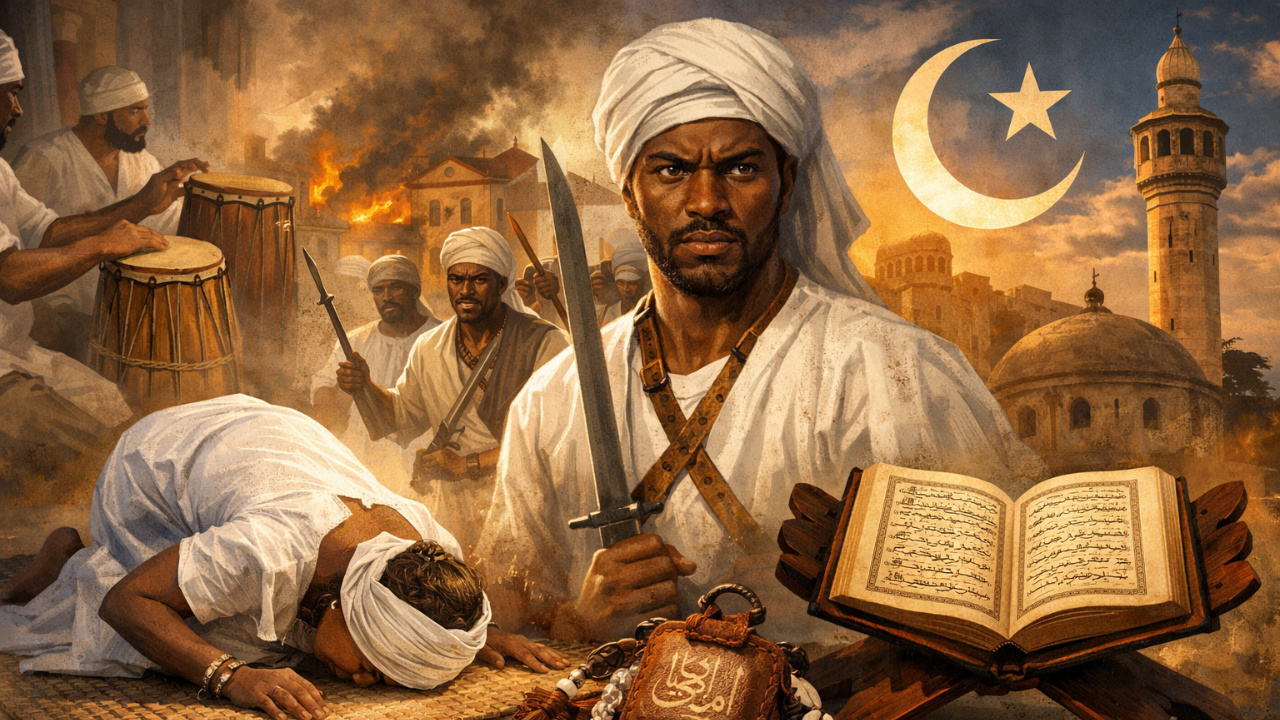
From the Revolt of the Malês to Current Rituals, African Islam Left Symbols and Practices in Afro-Brazilian Religions.
The African Islam influenced the formation of Afro-Brazilian religions starting with the arrival of enslaved Muslim Africans in Brazil between the 18th and 19th centuries, especially in Salvador.
These groups, known as Malês, brought religious practices, spiritual symbols, and organizational forms that, over time, were incorporated and reinterpreted in traditions such as Candomblé, Umbanda, and Quimbanda.
This influence occurred amid slavery, religious repression, and the need for cultural survival.
-
Tourists were poisoned on Everest in a million-dollar fraud scheme involving helicopters that diverted over $19 million and shocked international authorities.

-
Hidden beneath the dense forest of the Sierra Nevada, Betoma emerges in a neighbor of Brazil as the greatest archaeological discovery of the century, revealing a colossal ancestral city covering over 18 km², with 8,334 stone structures and the potential to rewrite the history of South American civilizations.

-
Goodbye iron: new technology from Xiaomi promises to revolutionize the way we iron clothes with 500 kPa steam, continuous flow of 120 g/min, heating in 65 seconds, and six smart modes for different fabrics.

-
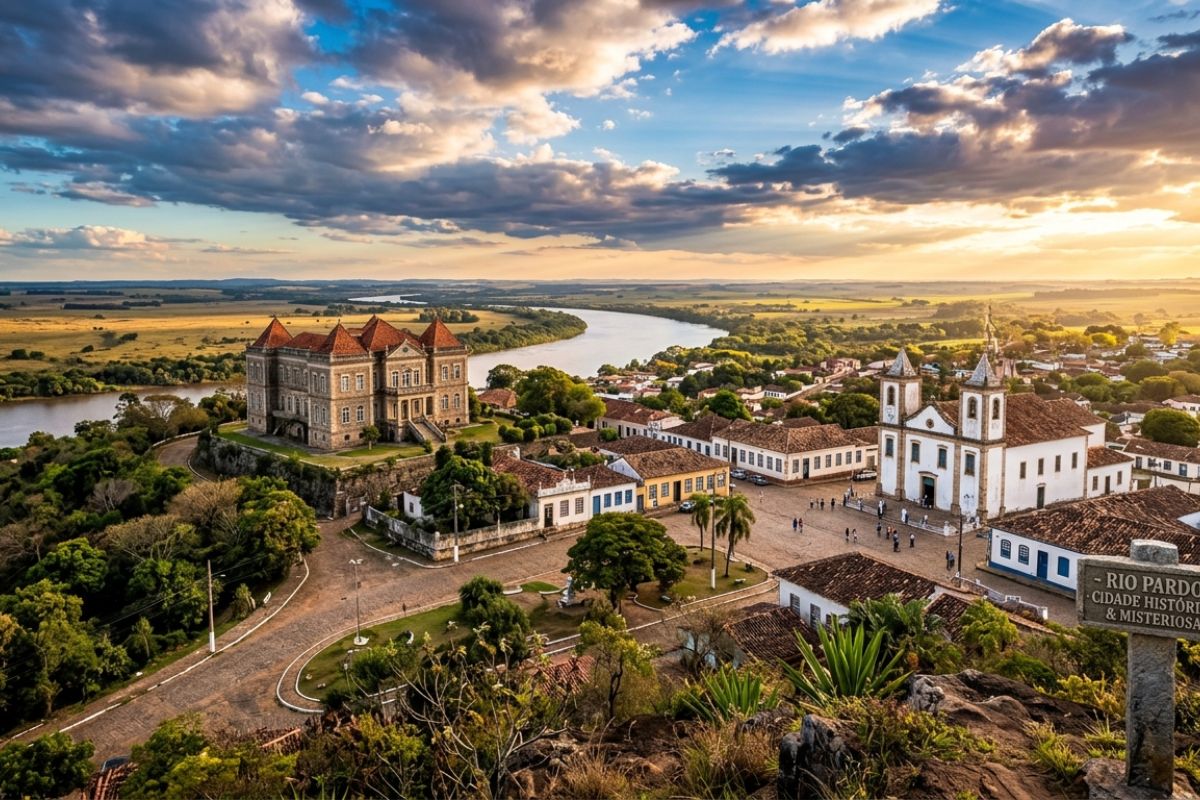
Rio Pardo, the most mysterious city in Rio Grande do Sul: untouched Pampas castle, the missing treasure of the Devil Boy, bride’s saint, invisible tunnels, and a 200-year curse today.

As a result, Islamic elements did not remain as a structured religion but were absorbed into processes of religious syncretism and spiritual adaptation.
Who Were the Malês and What Was Their Historical Importance
The Malês were Muslim Africans primarily from the Benin Gulf. Many arrived in Brazil already literate in Arabic, with knowledge of the Quran and solid religious training.
According to anthropologist Francirosy Campos Barbosa from USP, the term has Yoruba origins and refers to a Muslim, master, or scholar—indicating the social prestige they had in their regions of origin.
Living mainly in Salvador, they maintained structured prayers, fasting, and religious education.
This common foundation strengthened social cohesion.
“As Muslims, they recognized each other, even if they did not come from the same region. Religion created a bond that facilitated collective organization,” Barbosa explains.
The Revolt of the Malês and the Fear of the Authorities
The peak of political and religious organization occurred in the Revolt of the Malês on January 25, 1835, in Salvador.
According to historian Wilher Freitas Guimarães, about 600 enslaved Africans participated in the uprising, most of whom were Muslim.
Dressed in white and carrying protective amulets, they faced colonial forces.
Although quickly repressed, the revolt became a symbol of black resistance and the presence of African Islam in Brazil.
The episode generated fear among the elites, mainly due to the concern of a scenario similar to the Haitian Revolution.
“This fear led to the persecution of Muslims, attempts at deportation, and the strengthening of control over their religious practices, which ultimately reinforced the erasure of their presence in official history,” explains Vitor Queiroz from UFRGS.
Repression, Erasure, and Demographic Decline
After the revolt, surveillance over Muslims increased.
Additionally, demographic factors contributed to the weakening of this presence.
With the ban on the Atlantic slave trade in 1850, the arrival of Africans from West Africa, the most Islamized region, drastically decreased.
Without population replenishment and under repression, organized Islamic influence began to dissolve.
Later, Arab immigration and orthodox Islamic currents overshadowed this African heritage.
Symbols of African Islam in the Terreiros
Even fragmented, the heritage remained in the Afro-Brazilian religions.
Among the most visible examples is the use of white clothing, especially on Fridays.
In Islam, the color symbolizes spiritual purification.
“Muslims wear white clothing because it was the clothing that the Prophet Muhammad wore.
It is a garment that must be clean, purified, especially for the Friday prayer,” Barbosa states.
Nonetheless, researchers caution against direct associations.
“We must have epistemological care not to directly associate Islamic influence as structuring the religious practices of African matrix,” says Guimarães.
Amulets, Sacred Writing, and Spiritual Protection
Another point of convergence is the patuás.
In African Islam, there are ta’wiz—amulets with verses from the Quran handwritten.
The writing serves a protective function.
“By writing on the patuá, [a person] increases the bond with spiritual forces and clarifies their intention, in the object, with the forces they believe in,” explains Guimarães.
The practice was reinterpreted in the terreiros, integrating into the Afro-religious symbolic universe.
Clothing, Turbans, and Atabaques
Anthropologist and babalorixá André Aluize highlights influences in the batas, head adornments, and turbans.
He also points out the role of the atabaque.
Although of African origin, it arrived in Brazil with peoples of strong Islamic identity.
In rituals, the instrument became sacred, indispensable for spiritual communication.
Religious Syncretism or Cultural Survival?
Experts suggest caution with the term religious syncretism.
For Aluize, it is a dialogue forced by slavery.
He identifies two moments: the common African ancestry and the encounter in Brazil.
“Regardless of historical time, conventions, territorialities, dogmas, and doctrines, the notion of the sacred and the relationships with it have origins in the African continent,” he emphasizes.
Barbosa reinforces that there was no balanced fusion.
“It is not a balanced fusion, but an approach built by enslaved Africans who needed to create strategies to keep their beliefs alive.”
Guimarães complements:
“Perhaps it is more productive to speak of religious survival.
It was not a free mixture, but a calculated adaptation to continue existing in a repressive environment.”
Historical Recognition Is Still Limited
Researchers point out that the presence of the Malês remains invisibilized in school curricula.
Recovering this history broadens the understanding of slavery beyond forced labor, highlighting African intellectuality and organization.
“Unfortunately, there is the stigma of a terrorist Islam that oppresses women. There is not enough knowledge about Muslims, their rich history of knowledge and expansion.
With Africans, it is even worse because we live in a racist country.
It is difficult to see black religious figures being protagonists,” laments Barbosa.
See more at: How Islam Influenced African Matrices in Brazil – BBC News Brazil








Seja o primeiro a reagir!