





 Portuguese
  English
  Spanish
  6 min of reading
  0 comments


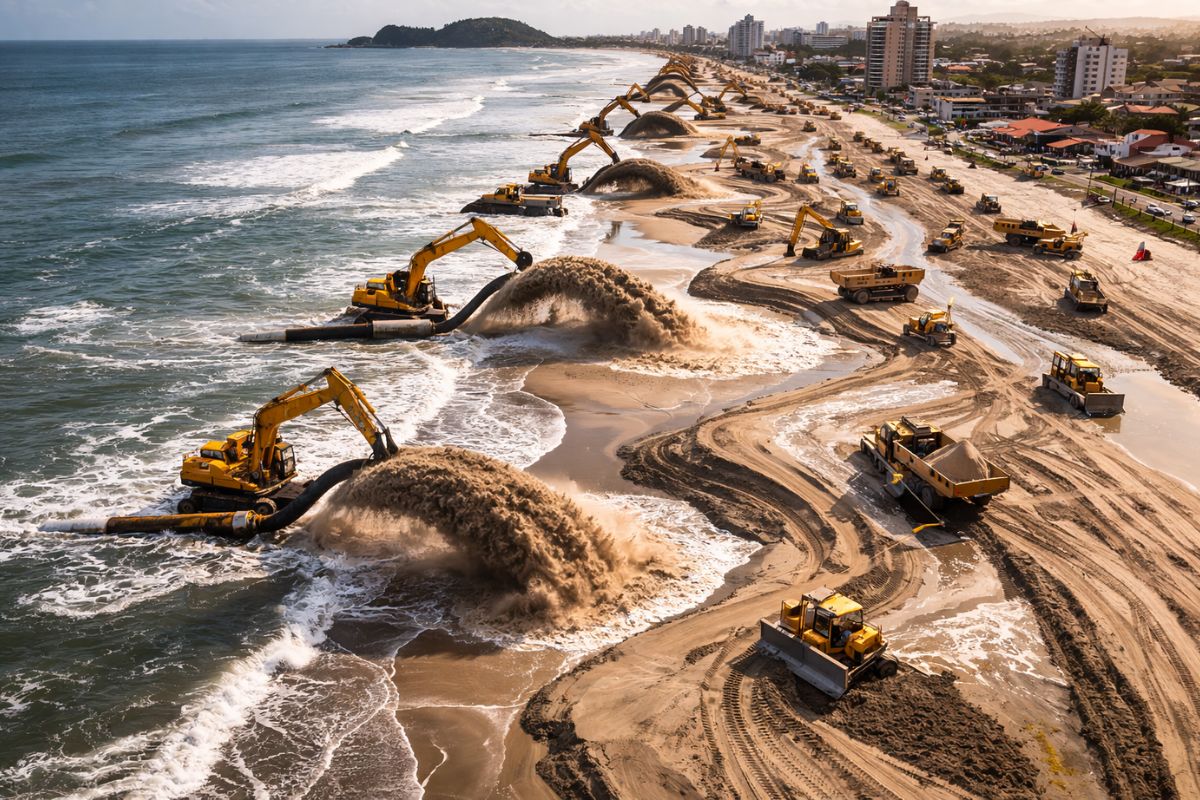
The Sand Dumped in Matinhos Integrates the Largest Coastal Expansion Project in Brazil, Using More Than 3 Million Cubic Meters to Expand the Beach, Sustain the Fill Over 6.3 Kilometers and Try to Give the Coast of Paraná a Less Temporary Defense Against Coastal Erosion for Years.
The sand launched in Matinhos on an unprecedented scale has become the focus of an intervention that aims to concretely change the relationship between the beach and the sea on the coast of Paraná. With more than 3 million cubic meters displaced to the coastal strip, the project expands the beach by up to 100 meters and bets that the fill can hold back erosion without relying on small and repeated corrections.
The intervention has been treated by the state government as the largest coastal expansion project in Brazil and received an investment of R$ 354.4 million. By February, 97% of the project had already been completed, with only final drainage and urbanization stages remaining. It’s not just a wider beach in Matinhos, but a heavy reconfiguration of the coast to try to provide more stability to the most pressured section of the Paraná coastline.
What the Project Really Moves in Matinhos

In Matinhos, the fill was not presented as an isolated action, but as part of a larger transformation of the Paraná coast.
-
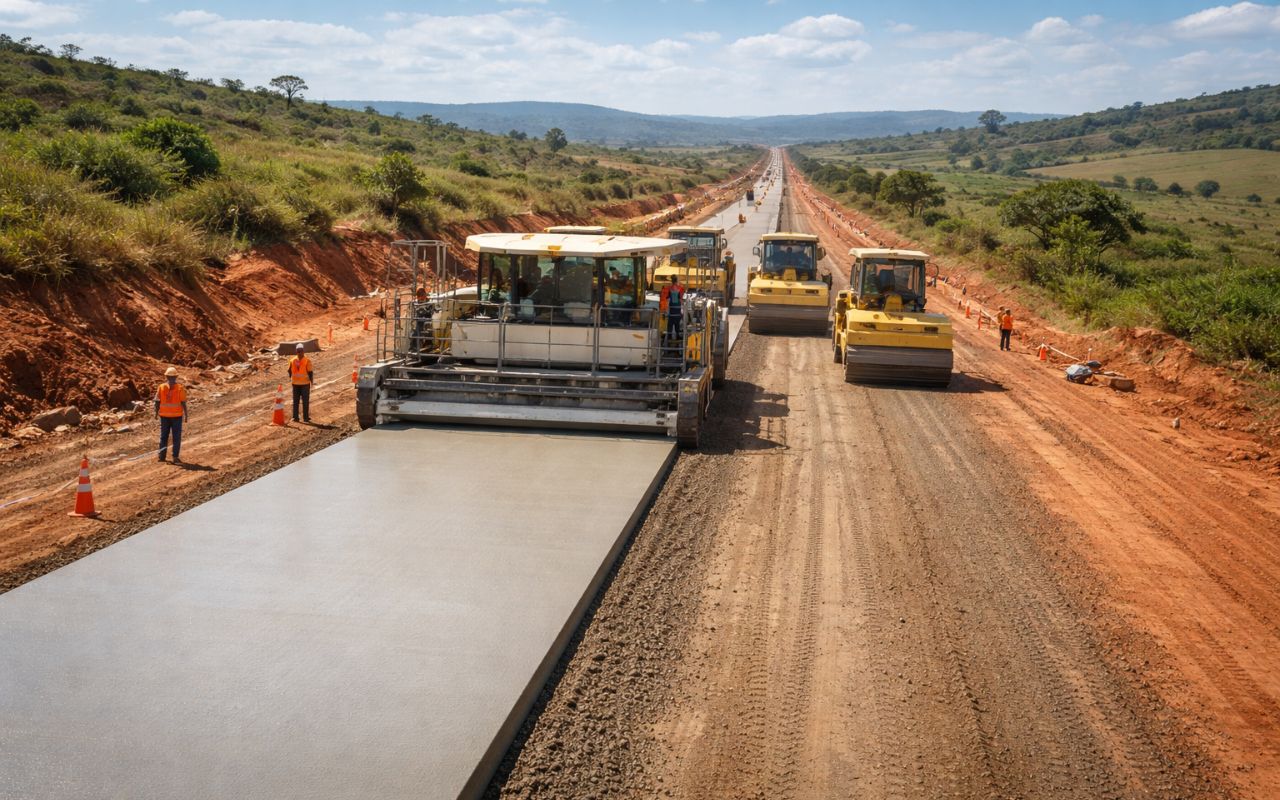
New CCR concrete paving technology promises roads up to 3x more durable, less maintenance, and cost reduction in Brazil.
-
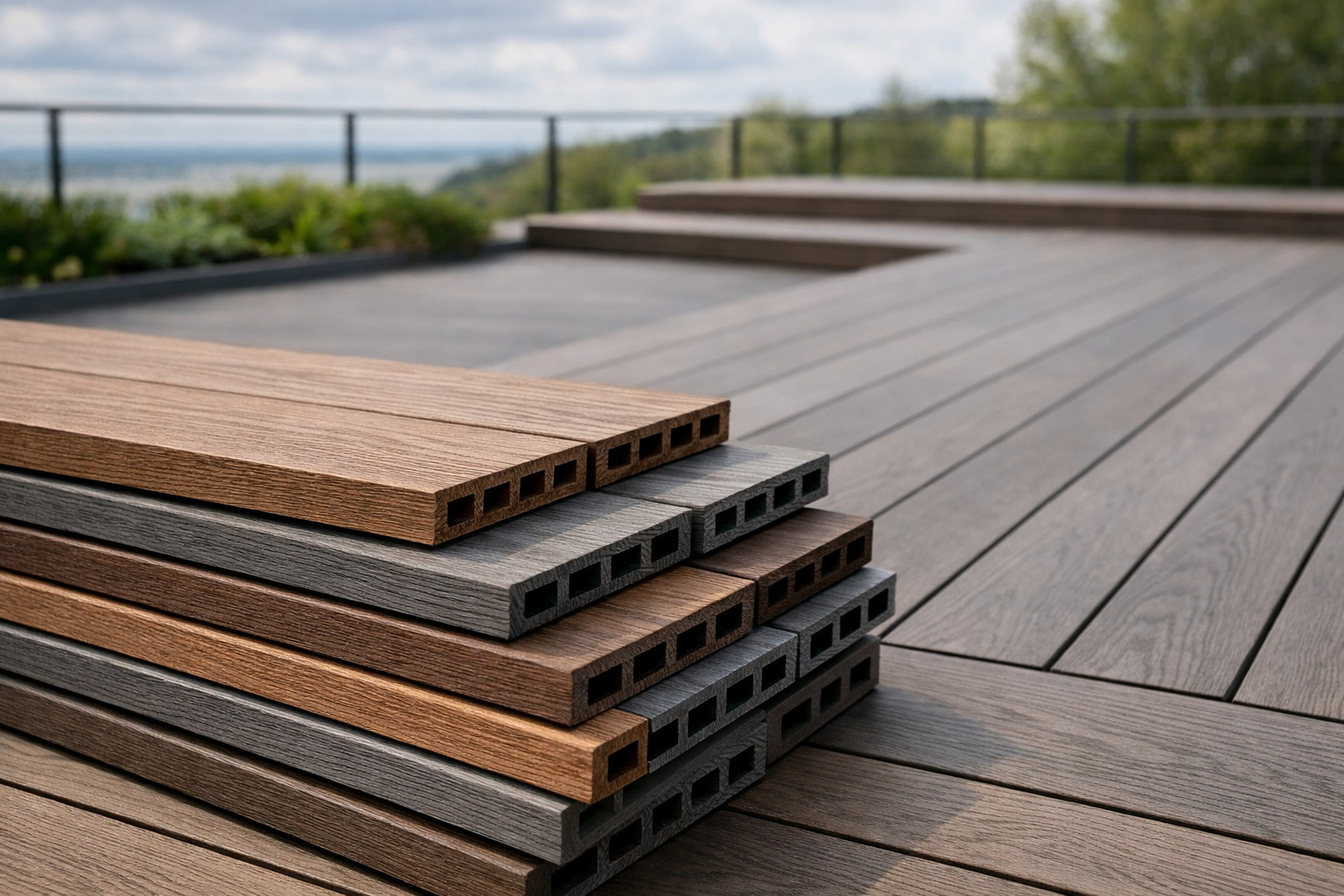
Made from recycled plastic, plastic wood is gaining space in the construction industry because it does not rot, resists moisture, and reduces maintenance costs over the years.
-
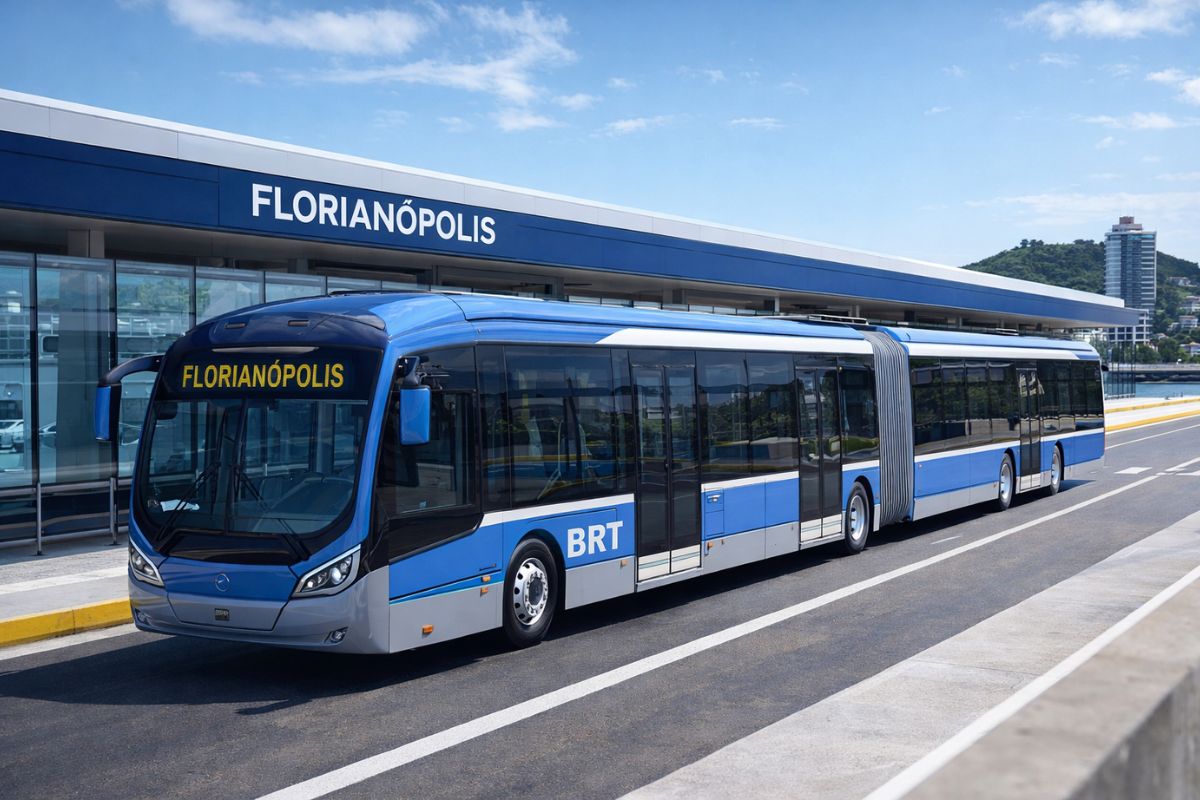
Florianópolis will receive a million-dollar BRT that will begin construction in 2026 with nearly 400 million in funding from the federal government and the Inter-American Development Bank, and the map already shows the routes for the exclusive bus corridors.
-
Without a blueprint, without an engineer, and using scrap from the dump, a father spends 15 years building an 18-room castle for his daughter, featuring tram tracks, 13 fireplaces, and over 700 m², which may now be demolished.

The core of the intervention lies in the 6.3 kilometers of beach that received more than 3 million cubic meters of sand, an amount equivalent to 220 thousand trucks.
This number helps to understand the scale of what has been done: it is a massive material replenishment operation along the coast, not a targeted adjustment in localized sections.
The direct objective is simple to understand. By increasing the beach width by up to 100 meters, the project aims to create a larger physical margin between the sea and the city.
The wider the beach, the greater the capacity to absorb the advance of water and the energy of the tides, reducing the immediate vulnerability of the coast during periods of coastal pressure.
Instead of waiting for erosion to consume urban space and then correcting damages, the bet was to act beforehand, using sand in large volumes to reshape the coastline.
This physical dimension also helps to explain why Matinhos has become the showcase of the project. The city concentrates one of the most ambitious interventions on the Paraná coast and serves as a reference for other municipalities that are now also coming onto the state radar.
What is being tested there is not just the efficiency of a fill, but the ability of a large coastal project to alter the beach behavior over an extended period.
Therefore, the project cannot be read solely as beautification. The new strip of sand changes the available space for circulation, leisure, and urban use, but the central function remains structural.
The widening of the coast in Matinhos aims to transform the beach into a protection zone, and not just into a renewed postcard.
How the Fill Tries to Hold Back Coastal Erosion

The logic of the fill is based on an objective problem: coastal erosion. When the beach strip narrows, the sea approaches too close to urban infrastructure, and the coast becomes more fragile in response to tides and continuous wear.
In Matinhos, the chosen solution was to return sand on a scale sufficient to recreate this cushioning strip and stabilize a section that has already been under pressure.
But the fill does not work alone. During the intervention, thousands of tetrapods were also installed at six points along the coast.
These four-point concrete pieces, 3 meters tall and weighing over 10 tons each, were placed to reduce the tide’s impact on the groins and make it difficult for the newly placed sand to be carried back to the sea.
Without containment, the sand can leave as quickly as it came in. With the tetrapods, the project seeks to prolong the permanence of this new beach profile.
This point is central to understanding the difference between patching and reconfiguration.
A small replenishment of sand may temporarily alleviate the problem, but tends to require frequent repetition when the coastal dynamics remain adverse.
In Matinhos, the volume used indicates another ambition: to create a more robust coast profile, wide enough to better resist wear and reduce the need for annual corrections.
Still, the very scale of the intervention shows that success depends on the behavior of the sea over time.
The fill provides space, volume, and safety margin, but only the following years will show how much of this sand will remain on the beach and how much the coastal system will actually incorporate this new shape.
The project was designed to last longer, not to eliminate the dynamics of erosion definitively.
What Goes Into the Project Beyond Beach Sand
The new face of Matinhos was not conceived solely with sand. The revitalization includes planting coastal vegetation, bike paths, walking trails, and new sidewalks, enhancing the urban function of the coast after the fill.
This matters because the project does not only aim to contain the sea but also to reorganize the use of coastal space for residents and visitors.
The reasoning of the state government is clearly reflected in this package. While protecting the beach, the project also seeks to boost tourism and quality of life.
In the case of Matinhos, this means turning the coast into infrastructure for coexistence, circulation, and leisure. The sand widened the beach, but the rest of the project aims to consolidate what to do with this new space.
This model of intervention also helps explain why the coast of Paraná has begun to receive a broader cycle of investments.
Other fronts are advancing in Pontal do Paraná, Guaratuba, and Paranaguá, always combining urban revitalization, new leisure structures, and interventions related to the coast.
In other words, the fill in Matinhos was not presented as an exception, but as the first major showcase of a broader state strategy.
Nevertheless, the symbolic weight of Matinhos remains significant.
The city concentrates the largest coastal expansion project in the country, has received the most visible load of sand, and has become the point where the government tries to prove that the coast of Paraná can be redesigned with heavy investment, and not just with emergency maintenance.
If the model works in Matinhos, it is likely to serve as an argument for other expansions along the coast.
Why Matinhos Became a Scale Test for the Coast of Paraná
The most decisive aspect of the intervention is precisely the scale. Dumping more than 3 million cubic meters of sand on a beach is not a routine measure.
It is a large-scale coastal engineering bet, with a high cost, immediate visual impact, and an expectation of prolonged effect.
In Matinhos, this transforms the city into a real laboratory on how far the fill can sustain a new form of coast for several years.
This test interests Paraná because urbanized coastlines suffer when they rely solely on fragmented responses.
Small repairs, localized recomposition, and isolated works can relieve symptoms, but rarely change the root of the problem.
By increasing the beach by up to 100 meters, the Matinhos intervention tries to tackle the geometry of erosion, not just its most visible consequence.
The idea is to return enough mass and width so that the coast has more breathing room.
There is also a strong political component in this choice.
By investing R$ 354.4 million in a single intervention and making it the largest coastal expansion project in Brazil, the state signals that it views the coastline as a strategic economic and urban asset.
Matinhos ceases to be just a beach resort and is treated as a space where coastal infrastructure, tourism, and territorial protection need to work together.








-

-

-

7 pessoas reagiram a isso.