





 Portuguese
  English
  Spanish
 7 min of reading
  1 comment


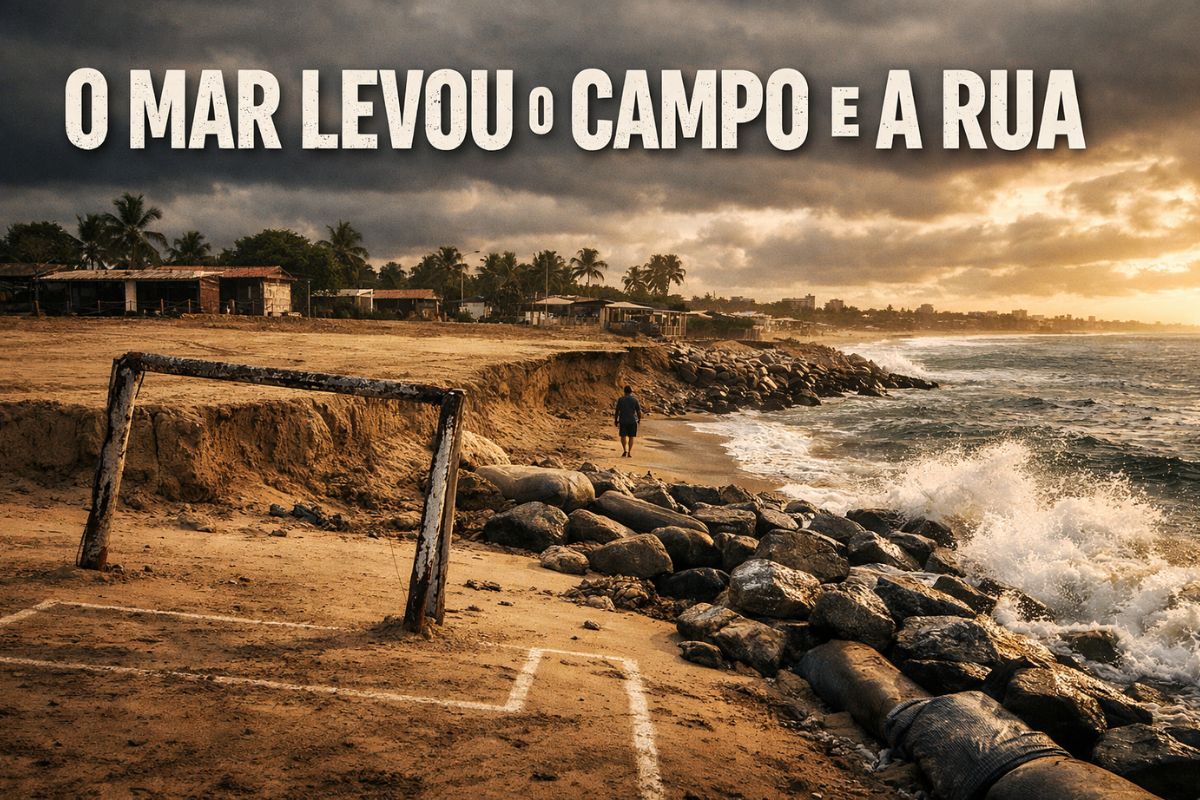


After The Sea Swallows A Piece Of Island Near Salvador, Residents Of Cacha Pregos Report Loss Of Bars, Houses And Road, Advance Of Up To 150 Meters, Collective Psychological Trauma And Cautious Hope With Containment Delivered In July 2024 On The Coast Of The Locality Of Cacha Pregos, In Vera Cruz
In 2018, residents of the tip of the island belonging to the municipality of Vera Cruz, near Salvador, began to notice that the sea was swallowing a piece of island near Salvador in a way different from the cycle they had known since childhood. What was predictable ebb and flow of the tides became a definitive advance: a soccer field disappeared, the street vanished, houses fell, and traditional kiosks ceased to exist before the eyes of those who lived from local tourism.
Between 2018 and subsequent years, the sea advanced, according to residents, between 60 and 150 meters in some stretches, dragging structures, swimming pools, and walls, until it reached the walls of the houses. In July 2024, a containment work funded by the government of Bahia was completed on the coast of Cacha Pregos, and now residents say they see the strip of sand slowly returning, although the feeling of insecurity remains strong and the economic scar is still open.
Soccer Field, Streets And Bars Erased By Erosion

Before the sea swallowed a piece of island near Salvador, the landscape described by residents included a soccer field between the houses and the sea, a street with electricity poles, and several beach kiosks.
-
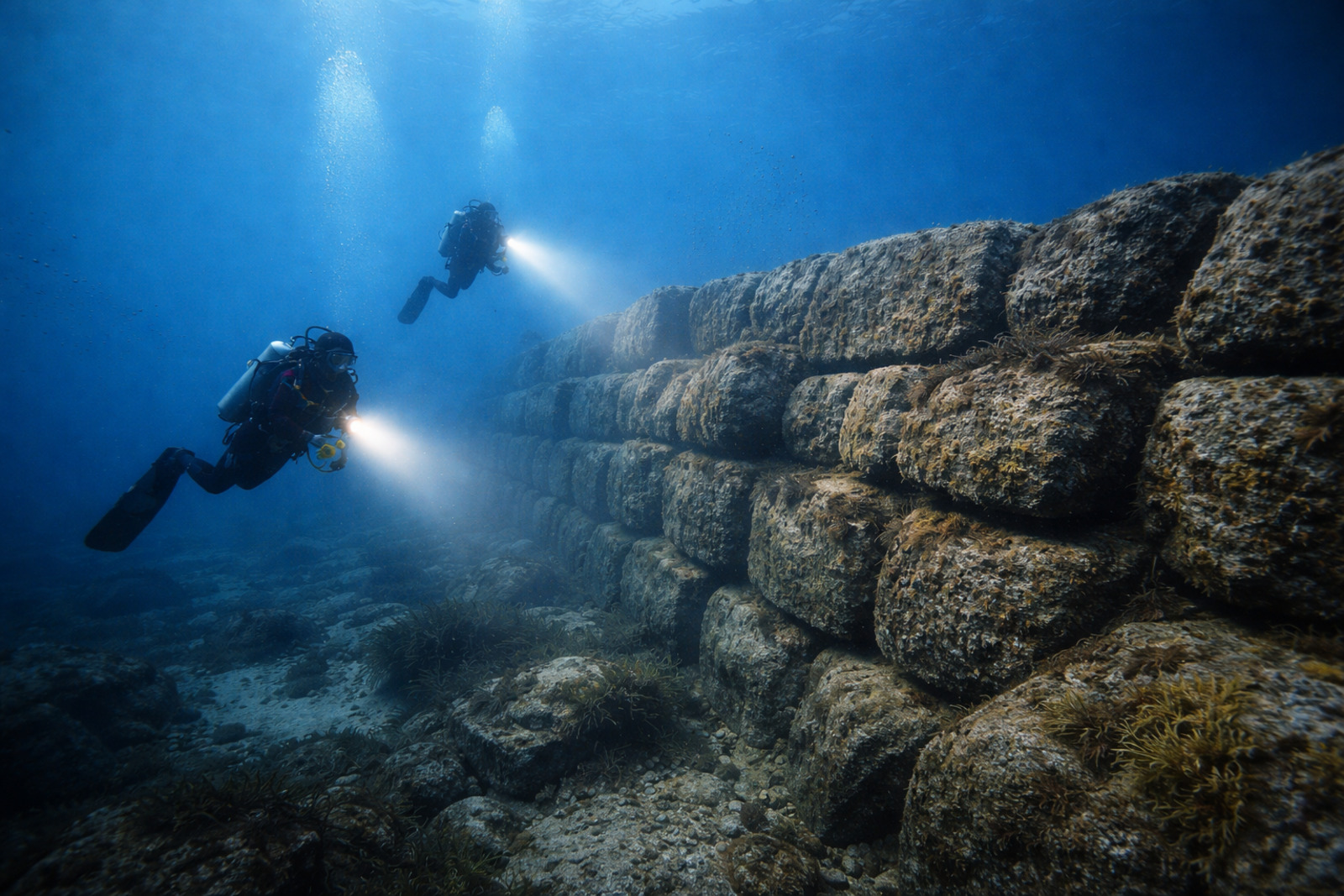
Archaeologists have discovered a colossal submerged wall in the Atlantic, dating back 7,000 years and weighing 3,300 tons, regarded as the largest prehistoric submerged structure ever found in France.
-
Scientists have discovered a gigantic magnetic anomaly hidden beneath the soil of Australia that mirrors the shape of the entire continent and holds geological records of two and a half billion years that could change what we know about the Earth.

-
The heatwave that has been affecting Brazil in recent weeks is coming to an end: a cyclonic vortex is moving in during Holy Week with heavy rains, and a cold air mass is already threatening to lower temperatures in the South starting in April.

-
(VIDEO) Cameras from an astronomical observatory captured two meteors falling over Santa Maria in Rio Grande do Sul with only a one-minute difference and such close trajectories that scientists are now investigating whether the two objects have the same origin.


The place that today ends in stones, containment rings, and water crashing against the walls was, according to old family records, a leisure space built by the natives for games on Saturdays, Sundays, and holidays.
Residents point to names that have disappeared from the map: Martas Bar, Piratas Bar, other smaller booths, as well as a road that allowed cars to enter and leave in front of the houses.
Today, in several places, “there are no more streets” – you have to go down by the sand or the stones, because the sea has taken the space of the road and the former circulation area.
In some properties, pools had to be demolished after erosion reached the edge of the structures.
In one reported case, two pools – one for children and the other for adults, measuring 8 by 4 meters – were removed when the beach disappeared and the backyard started to be directly hit by the high tides.
When The Advance Stopped Receding And Became A Permanent Threat

Residents report that, for decades, the advance of the sea followed a pattern considered “normal”: in March and September, the highest tides would come closer to the houses but then receded, and the beach would return to its previous state.
However, starting in 2018, the sea advanced, invaded, and did not return to what it was before, initiating a period in which the strip of sand was literally being eaten wave after wave.
One of the testimonials recalls that, in ten years, the sand would have been pushed against the base of the protective stones, reducing the support of the walls.
Cracks appear year after year in the seaside houses, forcing families to rebuild walls, relocate gates, and reinforce structures.
In one account, the main gate had to be moved back because the high tide began to hit inside the yard, wetting the interior of the residence.
Trauma, Stroke, Cancer And The Emotional Weight Of The Sea At The Front Door


Erosion has left its marks not only on the physical coastline of Cacha Pregos. A 34-year-old resident recounts that, in 2019, she suffered a stroke associated with emotional stress.
Before that, she had been diagnosed with cancer and advised by her oncologist to “slow down,” living closer to nature.
The family had a vacation home in the region, where she recovered from the illness. Shortly after her release, her mother died, and that same year, the sea began to advance aggressively.
She describes the sound of the waves crashing against the wall at night as a “trumpet,” associated with the expectation that, at any moment, the sea would come inside her house.
The fear of losing the property and family memories combined with mourning and health history, creating a strong anxiety framework.
The resident says she spent two to three years without being able to enter the sea and that even today, high tide still triggers traumatic memories and insecurity.
Real Estate Greed, Altered Lot And Residents Without Exit
Another resident points to a subdivision called Santa Bárbara, where the lots were originally set back from the beach line.
According to her, over time, the four lots in front were “pulled” toward the sea, creating new lots behind for sale, with formal authorization from the competent authorities.
In the view of those who live there, the combination of greed and official authorization placed houses closer to the shore than would be prudent.
With the waves advancing, many of these properties began to be directly hit.
Residents report that some families managed to sell or move, but others, like those living in the more exposed properties, have “no other option” but to stay there, reinforcing walls, spending on stones, and dealing with daily risk.
Tourists Left When The Sea Swallows A Piece Of Island Near Salvador
In addition to the houses and local infrastructure, tourism took a direct hit when the sea swallows a piece of island near Salvador.
Restaurants that relied on the beach report that, during the most critical period, the scenario changed from a strip of sand and palm trees to “exposed gravel,” ugly, unattractive to those coming from outside.
With the beach gone, guests and customers also disappeared. Businesses that, in July, received groups from Rio de Janeiro and São Paulo for vacation began to experience cancelled reservations and a sharp decline in traffic.
Without a beach, without a pool, and with destroyed walls, the economic equation stopped making sense for many local businesses.
Stone On Stone: Improvised Defense And Spending More Than 20 Thousand Reais
In an attempt to contain the water on their own, owners invested in stones and informal reinforcements.
One resident reports initially spending between 4 and 5 thousand reais to form a first line of stones at the foot of the pier when the tide began to hit the base of the wall.
Later, in a new episode of strong erosion, in recent March and April, the wall was knocked down again, and more stones had to be purchased, raising the spending on this type of protection to something over 20 thousand reais, adding new rounds of work.
Even so, the high tide can still occasionally pass over the wall, leaving the backyard wet and marked by saltwater.
Containment Work In 2024: Geocycles, Geocylinders And Beach Returning Slowly
After years of community pressure, the containment work on the coast of Cacha Pregos was completed in July 2024, coordinated by the state government.
The section is an area of the Navy, under the responsibility of the Secretariat of Patrimony of the Union, which, according to reports, did not respond to the questions made by the report that monitored the intervention.
The structure, according to official information reported to residents, combines deflectors that reduce the force of the waves with geocylinders that help retain sediments, allowing the sand to start accumulating in front of the containment.
Residents point out that it is already possible to see the formation of a new strip of sand in front of the blocks, with the sediment “hitting and returning,” indicating an attempt at natural recomposition of the beach in some areas.
Criticisms Of The Scope Of The Work And Distrust With The Public Authority
Despite signs of recovery where the work was installed, some residents criticize the size and scope of the intervention.
Local leaders say they have organized into groups, participated in meetings, and pressured authorities, but evaluate that “they achieved nothing in reality” beyond the executed section.
The Bahia Secretariat of Infrastructure did not respond, until the closure of the material used as a base, if the containment would be extended to other points on the coast of Cacha Pregos.
In the view of those who live there, the slow and partial response fuels the feeling that politics does not keep pace with the erosion, leaving families and businesses in a vulnerable situation whenever a new cold front or high tide approaches.
Between Hope, Faith And Fear That History Will Repeat Itself
With about 3,000 residents, Cacha Pregos tries to reconcile the hope of seeing the beach return with the fear of reliving the accelerated advance recorded since 2018.
In one of the accounts, the word “hope” is described as a thin line: it can make sick those who wait too much for a solution that does not come, or strengthen those who believe in some form of miracle “on top of the system”.
As the strip of sand slowly recomposes in front of the new containment, traumas remain.
There are those who admit to having spent years without entering the sea, gradually resuming the habit of swimming in the sea only to discover, with each high tide, the fear that everything will happen again.
For many, the question is not whether the sea has the power to take the front of the island again, but whether the public authorities and the community itself will be able to react in time if the cycle repeats.
In light of this story where the sea swallows a piece of island near Salvador, erases houses, streets, and a soccer field, and only now slowly retreats with the help of containment, do you think the works done in Cacha Pregos are sufficient or is the public authority still behind on protecting those who live on the front line of coastal erosion?









Testing