





 Portuguese
  English
  Spanish
  5 min of reading
  0 comments


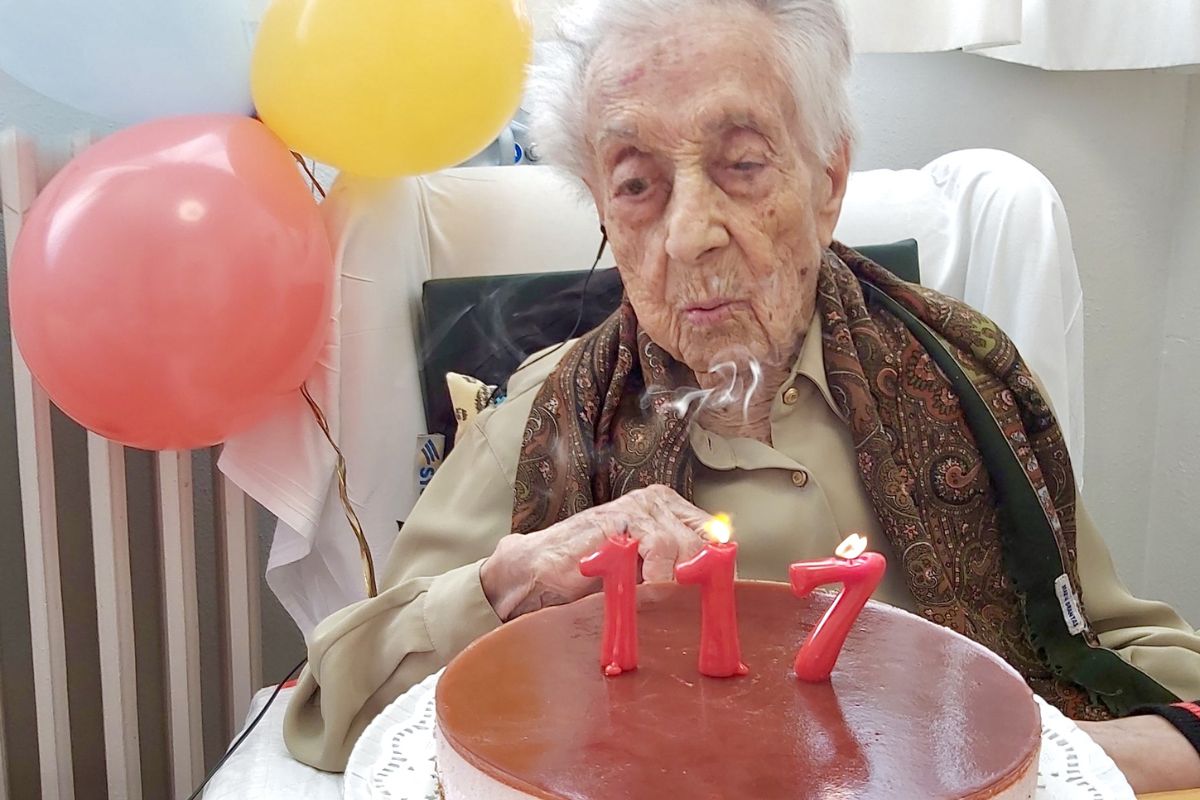
Maria Branyas Morera lived 117 years and 168 days without developing cancer, dementia, or serious heart disease, and when an international team of scientists analyzed her blood, genome, and intestinal bacteria, they discovered that her epigenetic clocks indicated a biological age about two decades younger than the actual, with exceptional levels of good cholesterol and intestinal bacteria that normally disappear with age
Maria Branyas Morera held the title of the oldest person in the world when she passed away in her sleep in August 2024, at 117 years and 168 days. Born in 1907 in San Francisco to Spanish parents, she moved to Barcelona in childhood and spent her last decades in a nursing home in the city of Olot, Catalonia. What made Maria Branyas Morera an extraordinary case for science was not only her age but the fact that she never developed cancer, dementia, or any diagnosed neurodegenerative disease throughout her life.
An international team led by Eloy Santos Pujol and senior author Manel Esteller analyzed nearly all layers of Maria Branyas Morera’s biology: genes, metabolism, intestinal bacteria, and epigenetic clocks. The study, published in the journal Cell Reports Medicine, revealed that, although Maria Branyas Morera’s body exhibited classic signs of advanced age, her biological indicators appeared much younger, and her epigenetic clocks marked an age about two decades younger than the actual.
The DNA of Maria Branyas Morera and the paradox of shorter telomeres in the laboratory

The scientists measured the telomeres of Maria Branyas Morera using a technique called high-throughput Q FISH. Telomeres are protective structures at the ends of chromosomes that shorten with each cell division.
-
Upside Down House transforms abandoned warehouses from the 1970s, blending art with concrete and steel engineering, becoming a phenomenon in South Korea and impressing with a surreal experience that attracts tourists from around the world.

-
Brazil became 18 square kilometers smaller in the new official update from IBGE, which redrew the boundaries of 784 municipalities in 13 states and even changed the names of cities that you might know, such as Açu, which is now called Assú.

-
Stephen Hawking said that the worst enemy of knowledge is not ignorance but the illusion of knowledge, and he dedicated his entire career to proving that science dies when people act as if they already have all the answers.

-
A man gathered Styrofoam, PET bottles, sand, and cement to build a recycled block using a mold made from an old board and a 50mm pipe to easily raise walls.


Hers were among the shortest ever recorded by the laboratory in healthy volunteers. Short telomeres are typically associated with a higher risk of cancer and age-related diseases, but Maria Branyas Morera never developed any of these conditions.
The researchers suggest that, in the case of Maria Branyas Morera, telomere loss functioned more as an accurate clock of age than as a trigger for diseases. The hypothesis is that short telomeres may have limited the ability of potential tumor cells to continue dividing.
Her blood also showed mutations in genes such as SF3B1 and TET2, common in the elderly and often seen as early signs of blood cancers, but she remained tumor-free throughout her life.
Maria Branyas Morera’s body aged, but the diseases that normally accompany aging simply did not come.
The genetic and metabolic profile that protected Maria Branyas Morera for 117 years
The complete genome sequencing of Maria Branyas Morera revealed thousands of rare genetic variants, including a set that was not found in any of the 75 Iberian women used as a comparison group.
Several of these variants are located in genes linked to immune control, brain protection, heart development, and energy production in mitochondria, and she possessed favorable versions of longevity-associated genes without carrying high-risk forms of the APOE gene.
Maria Branyas Morera’s blood showed extremely low levels of triglycerides and low-density lipoproteins, along with high levels of HDL, the so-called good cholesterol. Chronic inflammation markers (GlycA and GlycB) were also low.
In practice, this means that Maria Branyas Morera’s body was not caught in the slow inflammatory process that increases the risk of heart attacks and diabetes in most elderly people.
Only a few markers, such as elevated lactate and creatinine, indicated that her organs were finally reaching their limits near the end of life.
The three yogurts a day and the intestinal bacteria that defy age
When scientists analyzed the intestinal bacteria of Maria Branyas Morera, they found exceptionally high levels of Bifidobacterium, a group of bacteria that typically decreases with age but remains abundant in centenarians and supercentenarians.
These bacteria are associated with anti-inflammatory effects and a healthier fat metabolism, exactly the profile that Maria Branyas Morera exhibited in her blood tests.
The habit that sustained this intestinal flora was simple: Maria Branyas Morera consumed about three yogurts a day containing bacteria that promote the growth of Bifidobacterium.
It was not high-tech medicine. It was a daily habit that, according to researchers, supports evidence that a Mediterranean dietary pattern may influence the intestinal microbiome to favor species that contribute to healthy aging. Three yogurts a day for decades. Just that simple.
The epigenetic clocks that showed Maria Branyas Morera two decades younger
Epigenetic tests that read patterns of chemical markers in DNA showed that Maria Branyas Morera’s genome exhibited many age-related changes, as expected. But repetitive sections of DNA remained rigorously controlled, which may help keep the genome stable.
In various epigenetic clocks, including a ribosomal DNA clock, Maria Branyas Morera’s biological age appeared to be about two decades younger than her chronological age.
The researchers describe this as a fascinating duality: clear signs of extreme aging coexisting with strong indications of healthy longevity. The case of Maria Branyas Morera shows that age and disease are not always as closely linked as presumed.
Her cells could feel younger than the calendar indicated, and biology managed to extend the healthy phase of life without completely escaping the marks of aging.
117 years, three yogurts a day, and a body that refused to get sick
Maria Branyas Morera lived 117 years without cancer, without dementia, and without serious heart disease. Her DNA carried rare protective genetic variants.
Her blood had good cholesterol at exceptional levels and virtually no chronic inflammation. Her intestinal bacteria appeared to be from someone decades younger.
And her biological clocks confirmed: Maria Branyas Morera’s body was biologically about 20 years younger than her actual age, sustained by a combination of favorable genetics, efficient metabolism, and a habit as simple as eating three yogurts a day throughout her life.
Do you eat yogurt regularly? Do you think Maria Branyas Morera’s longevity is genetic, habitual, or luck? What would you do if you knew your biological clock was 20 years younger? Leave your thoughts in the comments and share this article with anyone interested in longevity and health.







Seja o primeiro a reagir!